4.2.3 Case Study 3: Wireless Charging in Rotterdam
4.2.3 Case Study 3: Wireless Charging in Rotterdam
Wireless charging is still in the very early stages of development, with a number of small-scale trials currently underway. Wireless charging has no above-ground hardware at/near the parking space and requires an induction pad to be installed on the vehicle and in the pavement. This technology is useful for fleet vehicles making many short stops or where there is not appropriate space for above-ground hardware. Its applications could include use by taxis, small electric public-service vehicles, light-duty commercial vehicles, or shared EV-use schemes (such as car clubs).
was also found that the charging infrastructure had a very low impact on street views and had the potential to integrate with future technologies such as autonomous EVs. The trial allowed the municipality to simultaneously gather useful data (for future technological and software development) and insights into user experiences. These experiences showed that reliability (which was an issue during the trial) was considered to be more important than ease of use.
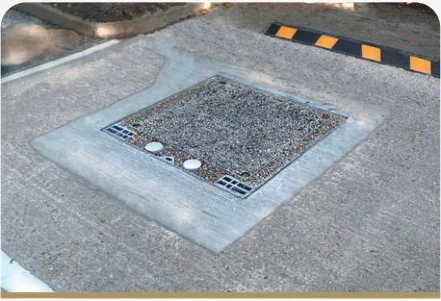
Figure from page 40
In 2016, for example, the city of Rotterdam carried out pilot trials of wireless charging, with three city companies participating in the trial. The scheme required two years of preparatory work and the use of speciallyconverted vehicles60. During the trial, several potential benefits of wireless charge points were identified61. These included increased ease of use for drivers, as there was no need to connect or pack up cables at the start and end of charging (with possible increased benefits for drivers with limited mobility and for taxis). It
Photo: Char.gy wireless charging, Marlow, Buckinghamshire, United Kingdom
60 Dutch News - no-strings-attached-rotterdam-trials-wireless-electric-car-charging.
61 Rotterdam-electrical-innovation-wireless-charging-in-practice

Figure from page 41
Pages 40–41 · View in original PDF