8.8 billion litres
an increase of 44.6% from the 2021 price.
of our dairy products.
Figure from page 93
General Market Situation Ireland and EU Ireland
The dairy industry in Ireland is built on the family-farm tradition, with over 16,000 dairy herds registered to supply milk, utilising close to one quarter of the grassland area of Ireland. The family story behind Irish food and drinks production is part of what makes it uniquely appealing to consumers all over the world.
Ireland is a global leader in the dairy sector in terms of the safety, sustainability, and traceability of dairy production. The quality and nutritional value of Irish milk produced from a sustainable grass-based production system gives it a key competitive advantage. According to a study from the European Commission Joint Research Centre called Evaluation of the Livestock Sector’s Contribution to the EU Greenhouse Gas Emissions (GGELS), Ireland is rated as having the most carbon efficient dairy production in the European Union, along with Austria, primarily attributable to our grass-based systems of production.
The dairy industry is one of Ireland’s largest and most profitable sectors. Irish dairy exports reached €6.9 billion in 2022, accounting for 36% of agri-food exports. This represents a 32% increase in value compared to 2021. In 2022, the sector exported nearly 1.6 million tonnes of dairy products to over 120 different countries around the globe. According to ITC Trade Map Ireland is currently the 8th largest dairy exporter in the world, exporting 90% of our dairy products to the EU and beyond.
The foundation for this growth was a solid year for milk collections on Irish farms, over 8.8 billion litres of milk was produced in Ireland in 2022. This was despite lower fertiliser usage and relatively slow grass growth in the spring and early summer. There were strong market returns across the core categories of butter, cheese, and powders.
Natural butter exports were valued at €1.35 billion. While the value of natural butter exports has increased from 2021 by 43%, the volume of butter exports decreased by 14.7%. The EU, United Kingdom and North America remained the key markets for this product, accounting for 95% of exports. Exports of butter to the United Kingdom recovered in 2022 with 42,700 tonnes exported there compared to 30,000 tonnes in 2021 and 42,140 tonnes in 2020, reflecting a return to more usual trading patterns.
Exports of cheese were valued at almost €1.3 billion, a significant 22% increase in value compared to 2021. EU markets accounted for over half of this growth. While exports to the United Kingdom have fallen in recent years, exports there accounted for €364 million or 28% of total cheese exports, 60% of which were cheddar. Germany and the Netherlands both accounted for over 12% of cheese exports, while close to 6% went to Japan.
Figure 3.5 Dairy Exports by Category, 2022
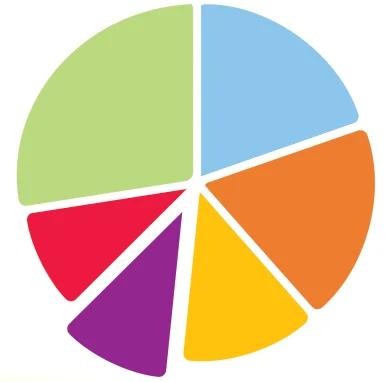
Figure from page 94
n Natural Butter 20%
n Cheese 19%
n FFMP 13%
n Infant Formula 11%
n Casein 10%
n Other 27%
Source: CSO
Exports of Fat Filled Milk Powders (FFMP) increased by €212 million in 2022 to €906 million, 30% up on a relatively slow performance in 2021, despite a drop of 4.1% in volume. Exports of specialised nutritional powders, incorporating the baby powders groups, increased by €95 million in 2022 to €765 million, 14% up on 2021 figures and arresting a four-year trend of declining export value. Exports of casein powders increased by €207 million in 2022 to €681 million, up 44% on 2021 export figures.
Table 3.3 Top 5 Dairy Export Destinations 2022
Rank Country € Million Tonnes
| 1 | United Kingdom | €1,272 | 458,442 |
|---|---|---|---|
| 2 | Netherlands | €1,020 | 226,556 |
| 3 | United States | €676 | 7,406 |
| 4 | Germany | €518 | 101,851 |
| 5 | China | €447 | 79,467 |
Source: CSO
EU and Global Milk Production Despite expectations of a lower overall milk output, 2022 EU milk production remained stable. EU dairy exports declined in volume but recorded record highs in value terms as a consequence of high prices and limited supply. EU domestic dairy use slightly increased despite increasing food inflation.
Globally, the demand for dairy remained strong in 2022 despite initial concerns of decreasing demand linked to increased inflation and elevated prices. Inflationary prices were driven by increased input costs on energy, fuel, feed, high freight costs and a strong US dollar.
Figure from page 95
Ireland’s domestic milk intake grew by 0.8% to slightly over 8.8 billion litres in 2022 compared to 2021. This is the lowest annual increase in domestic milk intake since milk quotas were abolished in 2015. Domestic milk intake by creameries and pasteurisers in 2014 was 5.6 billion
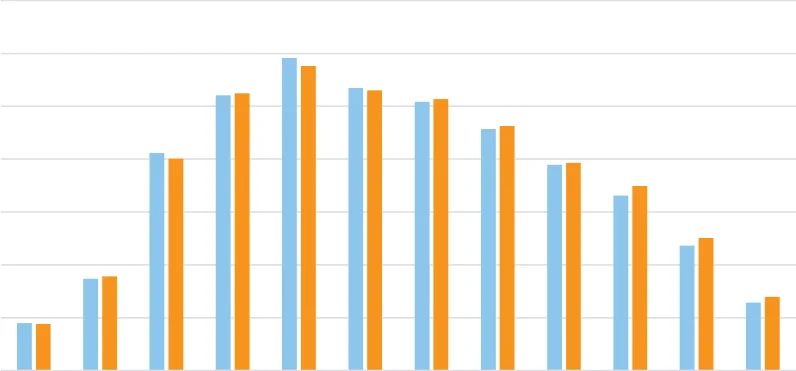
Figure 3.6 Domestic Milk Intake by Creameries & Pasteurisers 2021 & 2022 by Month
May
July
March
April
June
August
2021 2022
EU milk intake reached slightly more than 144 million tonnes in 2022. Germany produced 22% of the milk followed by France at 17%, the Netherlands at 10%, with Italy and Poland at 9% each, followed by Ireland at 6%.
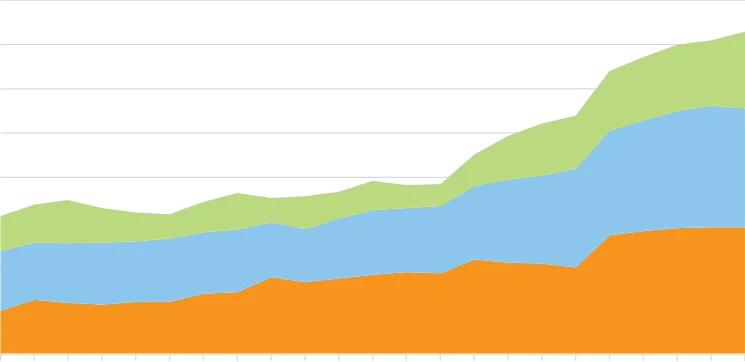
Figure 3.7 Production of Irish Dairy products (Thousand Tonnes), 2000 – 2022
2003 2004 2005 2006 2007 2008 2009 2010 2011 2012 2013 2014
2015
Cheese Butter SMP
Prices 2022 The average 12-month price paid to Irish farmers in 2022 according to the CSO was €56.88/100kg, an increase of 44.6% from the average 2021 price, which was €39.31/100kg. In 2022, EU Commission figures show that the 12-month EU average raw milk price was €49.41/100kg, an increase of 35% from the average 2021 price of €36.52/100kg.
€60
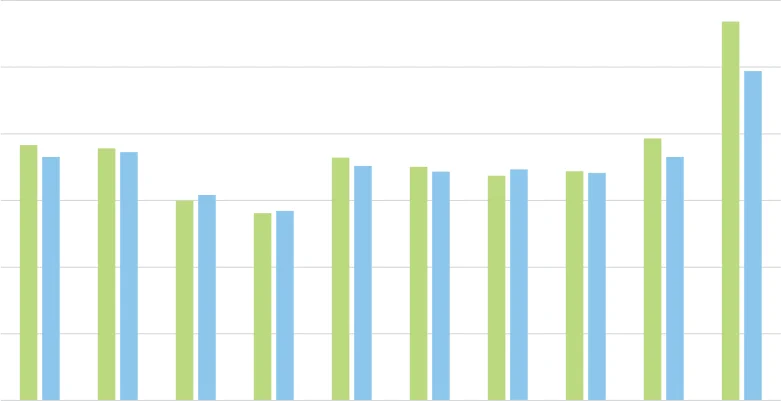
Figure 3.8 Raw Milk Prices, Ireland and the EU, 2013 – 2022 (Euro/100Kg)
€50
€40
Price per 100kg
€30
€20
€10
€0
2013
2014
2015
2016
2017
2018
2019
2020
2021
2022
Ireland EU
Source: EU Milk Market Observatory
New Markets 2022 In 2022, Irish exporters delivered nearly 1.6 million tonnes of dairy products to over 120 different countries around the globe. Ireland is currently the 8th largest dairy exporter in the world, exporting over 90% of our dairy products to the EU and beyond. Irish dairy produce benefits from being the most diversified category in the Irish food and drink export category. In 2022, over 45% of Irish dairy exports were destined for markets outside the United Kingdom and the EU27.
From a market perspective, all priority regions performed strongly in value terms. Regions where a significant proportion of trade is butter, cheese and casein such as the EU, North America, and United Kingdom (average combined value growth of 46%), performed ahead of markets in Africa, Asia and Middle East (average combined value growth of 13%) where milk powders are the major export.
There was a significant increase seen in exports of the specialised nutrition powders including infant formula, particularly to the United States where reduced availability of domestic supplies saw product being airfreighted into the market during early summer 2022 to satisfy market demand.
Irish dairy exports to the continent of Africa amounted to €841 million in 2022, representing a year-on-year increase of €148 million (21%). The African continent now accounts for 12.2% of dairy exports in value terms. Irish dairy exports to Asia were just over €1 billion in value, similar to the last seven year and in 2022 accounted for 15.3% of total dairy exports.
Figure from page 98
Sustainability Being one of the largest dairy exporters in the world, Ireland will have to pave the way when it comes to the environmental, economic, and social sustainability of our food production systems. The Food Vision Dairy Group was established in early 2022 to advance the actions for the dairy sector identified in the Food Vision 2030, taking account of the requirement for the sector to contribute to achieving the targets set for agriculture emissions in the Climate Act process.
The first priority for the Group was to chart a pathway to achieving the legally binding target of a 25% reduction in greenhouse gas emissions from agriculture by 2030, equivalent to a reduction of 5.75 MT of carbon dioxide equivalent. The Dairy Group met throughout 2022 and submitted its final report in October 2022, which has been published on DAFM’s website. The report identified 19 potential measures which could contribute to reducing emissions from the dairy sector. The publication was timely as it then served to inform the Climate Action Plan 2023, which was launched in December 2022.
Highlights
In 2022, Ireland exported dairy products to over 130 countries, amounting to a record M value of €6.9 billion and 1.6 million tonnes.
Top 5 dairy exports by value in 2022 were natural butter at €1.4 billion, cheese at M €1.3 billion with cheddar at €862 million, food preparations at €902 million and infant formula at €756 million.
Top 5 dairy product export destinations by value in 2022 were the UK at 18.5%, M Netherlands at 14.8%, United States at 9.8%, Germany at 7.5% and China at 6.5%.
Natural butter exports were €1.4 billion despite the volume of butter exports M decreasing by 14.7%.
There was a notable increase in infant formula exports to the Unites States. Exports M to the United States increased from 2,400 tonnes in 2021 to 16,450 tonnes in 2022, with the value increasing from €24 million to €149 million.
The Food Vision Dairy Group was established in 2022 to advance the actions for the M dairy sector identified in the Food Vision 2030, taking account of the requirement for the sector to contribute to achieving the targets set for agriculture emissions in the Climate Act. The Group’s final report identified 19 potential measures which can contribute to reducing emissions from the dairy sector.
Challenges
The last few years have been challenging as the sector has experienced continued M uncertainty regarding Brexit, coped admirably with the shocks arising from the COVID-19 pandemic and the illegal Russian invasion of Ukraine. The sector has shown remarkable resilience and continued to supply into the domestic and export markets in 2022 against this backdrop of ongoing global supply chain disruption, as well as soaring input, processing, and logistical costs.
Despite the strength of this overall performance of Irish exports, 2022 presented a M particularly challenging year in the form of increasing inflationary pressures. Muted buyer activity in some key import regions and continued uncertainty exacerbated by the war in Ukraine, are factors which will impact on prospects into 2023.
Ireland Outlook
It is expected that there will be no increase in Irish milk production for 2023, compared M to 2022. Milk production in the first half of 2023 was down 0.9% on the same period in 2022. Grass growth conditions have been somewhat unfavourable in 2023, with July being the wettest month on record in many parts of the country. Reflecting the trend of recent years, feed use increased in 2023. Dairy cow numbers in 2023 are up marginally, and milk yields per cow appear to be down slightly, relative to 2022.
Fertiliser prices have been declining in 2023, but it remains very expensive relative to M prices two years ago. The volume of fertiliser sold is likely to be lower in 2023 than in 2022. Feed prices in 2023 are likely to be about 10% higher than the 2022level. Average total milk production costs per litre in 2023 are likely to be similar to the 36 cent per litre recorded in 2022.
With little change in total milk production costs likely, the extent of the decline in M milk prices in 2023 will determine farm margins. In 2023 the average Irish dairy farm should see a net margin of close to 9 cent per litre, a decrease of over 60% on the 2022 level. This average net margin would translate into an average income level of close to €70,000 in 2023, a decrease of over 50% compared to 2022.
In terms of global dairy product demand, demand in H1 and H2 2023 has remained M sluggish, even though dairy product prices have declined considerably from their high in 2022. Chinese imports of powders in 2023 have fallen relative to 2022. The challenging cost of living situation is limiting dairy demand growth on the EU market.
Source: Teagasc Situation and Outlook for Irish Agriculture July 2023
EU Outlook
The European Commission is predicting that EU milk collections will continue to M decline marginally in 2023, although fat and protein levels should improve to counter this deficit.
In 2023, cow slaughtering is likely to increase, responding to declining raw milk M prices, which could also be partly compensated by increasing milk yields (assuming normal weather conditions). Despite a slight decrease in EU milk deliveries, down 0.2%, processing availability might still be kept stable thanks to higher milk fat and protein contents. The cheese and whey processing stream is expected to be favoured by the industry, due to EU export potential and relatively stable domestic cheese consumption. Butter and SMP production could decline due to the larger than usual stocks taken over from 2022, which could partially cover the increase in exports and domestic use.
Overall, EU consumption is expected to face some consumer preference shift to lower M quality products, impacting the value and not the total volume. Expected recovery in import demand in China would assist EU export growth but demand from China remains weak.
Pages 93–100 · View in original PDF