4.6 Forestry Health & Afforestation Programme
4.6 Forestry Health & Afforestation Programme
Forest Health Status Ireland’s forest health status overall is relatively good. Ireland does not have the range of forest pests and diseases that are endemic on the continent and further afield and which have been influenced by the impact of climate change in recent years, causing enormous damage. However, Ireland has had a number of outbreaks of organisms harmful to trees and forests, which have had significant impact in recent years. These include the impact of Hymenoscyphus fraxineus (ash dieback disease) and Phytophthora ramorum disease outbreaks in Japanese larch. Both of these harmful organisms continued to have significant impact in 2022.
The Plant Health Regulation (PHR) EU 2016/2031 and Official Controls Regulation (OCR) EU 2017/625 The Forestry Inspectorate of DAFM is responsible for the implementation of the forestry aspects of the EU Plant Health Regulation 2016/2031 which includes forest health surveys for a wide variety of forestry pests, requirements for the implementation of traceability systems (Plant Passporting Systems) for the movement of forestry plants, coniferous wood and wood products. The Plant Health Regulation is implemented to the requirements of the OCR.
Figure from page 165
The Forestry Inspectorate also oversees the national implementation of the FAO, IPPC International Standard for Phytosanitary Measures (ISPM) 15, Regulation of Wood Packaging Material in International Trade also under the requirements of the OCR. Not only is this important in terms of imports and protecting Ireland’s forests but also for companies exporting who require compliant wood packaging, thereby facilitating Irish exports of goods of all kinds.
Key Forest Health activities and events 2022
The Department launched the Mid-Term Report on the Plant Health and Biosecurity Strategy M 2020-2025 on 9th December 2022. The Plant Health and Biosecurity Strategy 2020-2025 sets out the importance of plant health and biosecurity for Ireland as well as ensuring that all stakeholders are aware of the risks to plant health, and their role and responsibilities to reduce that risk. The strategy seeks to minimise the threat posed to plants by the potential introduction and establishment of plant pests and diseases. The Mid-Term Report provides an assessment of progress across the 18 recommendations in the strategy.
Brexit export certification and import control functions continued as significant M responsibilities for DAFM in terms of import controls and export certification.
Following the first finding of the eight-toothed spruce bark beetle Ips typographus in M Kent in England in 2018, new breeding populations of the beetle were identified in Kent and east Sussex in 2021. There were further findings of the bark beetle in south-eastern England in 2022 and the demarcated area was extended by the British authorities. As part of the additional risk-based surveys since 2019, DAFM, in collaboration with Coillte, has maintained a supplementary network of risk-based bark beetle monitoring plots distributed through the Coillte estate. These new targeted monitoring plots complement and enhance the existing systematically distributed network of plots.
In August 2022, the Scottish forestry authorities informed DAFM that the large larch bark M beetle Ips cembrae had been detected in traps at three locations within the Pest Free Area (PFA) of Scotland. In total six beetles were captured. This is the first recording of the beetle inside the Scottish PFA. Scottish Forestry has conducted inspections in surrounding areas and no evidence of beetle activity or the presence of a breeding population have been found. As a result of the finding, DAFM in association with authorities of Northern Ireland agreed that exports of larch roundwood and bark from the PFA to the island of Ireland are suspended. Scottish Authorities have stated that they will not be issuing Phytosanitary Certificates for roundwood of larch from the PFA while wider surveillance is completed.
In late 2021 a new Phytophthora, P. pluvialis was detected in Great Britain causing damage M to western hemlock and douglas fir. The risk posed by this is still uncertain as the scientific understanding is developing. Surveys for its presence in Ireland were conducted in 2022 with no findings.
A new system for the assessment of competence of authorised operators to issue Plant M Passports hosted on the Forest Health web-page was developed and rolled-out to the sector. Fifteen forestry operators were authorised to issue plant passports in 2022.
There were no findings of any EU priority pests or pests for which Ireland has current EU M Protected Zone status in Irish forests, during annual surveys in 2022.
Fifty four Irish companies are currently registered in Ireland to produce wood packaging M material to the FAO IPPC International Standard for the Regulation of Wood Packaging Material in International Trade (ISPM No. 15), facilitating the export of goods worldwide from Ireland on compliant pallets and crates.
In October 2022 DG SANTE of the European Commission conducted an audit of DAFM in M order to evaluate implementation of the Plant Passport system in Ireland.
DAFM’s Forest Health webpage continued to be developed, providing information for all M forest stakeholders.
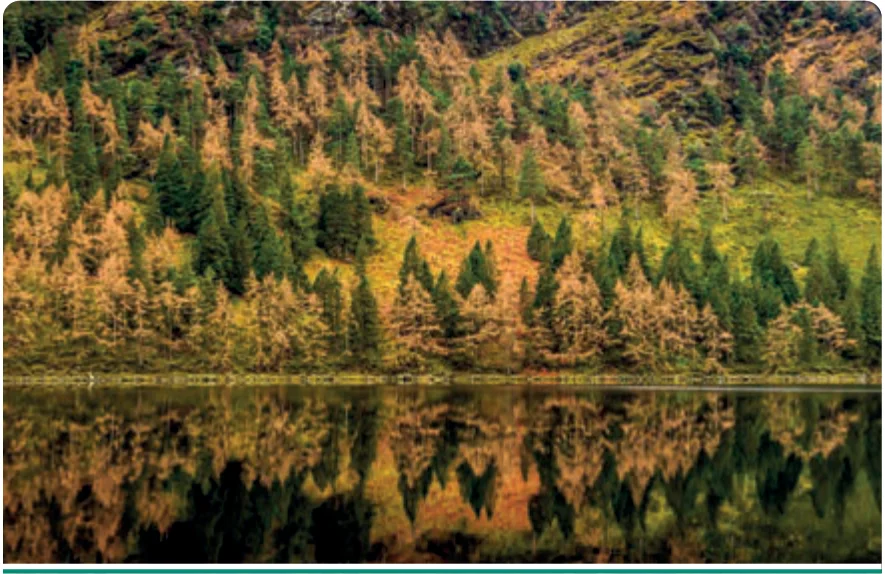
Figure from page 167
Forest Reproductive Material DAFM is responsible for implementing EU Council Directive 1999/105/EC on the marketing of forest reproductive material. Forest reproductive material (FRM) describes seeds, plants and cuttings, which are important for forestry purposes. The aim of the legislation is to ensure that forest reproductive material, which is marketed, is from approved suitable sources and is clearly labelled and identified throughout the entire process from tree seed collection to processing, storage, forest nursery production and delivery to the final forest user.
During 2022 DAFM continued to supply services in the:
Registration of seed stands and maintenance of the National Register of Basic Material M
Registration of suppliers of forest reproductive material - seed collectors, nurseries, seed M and plant importers and brokers
Issuing of seed collection permits and master certificates of provenance for seed collections M
Advice on forest seed and plant regulations M
A dedicated FRM webpage provides information to stakeholders on Forest Seed and Plant Marketing Regulations incorporating links to Ireland’s List of Basic Material and the EU Commission’s Forest Reproductive Material Information System (FORMATIS)
During 2022, DAFM engaged with the ongoing EU review of plant reproductive material and forest reproductive material legislation. The Commission is revising the legislation, with the aim to modernise it and to better align it with the goals of the European Green Deal and the Farm to Fork, Biodiversity, new EU Forest and EU Adaptation Strategies. The revision will seek for the legislation to be implemented in a more harmonised way across the EU, efficient and effective, more open to integrating new and future developments, and to contribute to sustainability goals, the protection of biodiversity and adaptation to, and mitigation of, climate change. The Commission is due to adopt its proposals for the revision of the legislation in the first half of 2023.
DAFM is also the National Designated Authority in Ireland for the OECD Forest Seed and Plant Scheme. This international scheme encourages the production and use of forest seeds, parts of plants and plants that have been collected, transported, processed, raised and distributed in a manner that ensures their trueness to name. Material covered by the scheme is intended for use in a variety of forestry purposes.
Since 1 January 2021 the OECD scheme is now the certification system required for all imports and exports of forest reproductive material to and from Great Britain. As the United Kingdom is no longer a Member State, two EU legislation decisions were enacted in early 2021 to recognise the necessary ‘equivalence’ of OECD certification for imports of FRM from Great Britain which were Decision (EU) 2021/536 of the European Parliament and of the Council and Commission Implementing Decision (EU) 2021/77.
During 2022, 83 OECD Certificates of Provenance were issued for exports to Great Britain – this included certification of forest plant and seed exports mostly for contract stratification and preparation. There were also significant quantities of forest seed imports in 2022 from Great Britain, which were certified under the OECD scheme, and from which multi-million numbers of forest plants will be produced. The import of seed in 2022 from Great Britain also included seed for contract growing of forestry seedlings for re-export to Great Britain.

Figure from page 168
Pages 165–168 · View in original PDF