4.2 General Forestry Situation
In 2020 it was estimated that 35% of the land area in the 27 EU countries, including United Kingdom, was covered by forests compared to 11% in Ireland. Despite Ireland lagging behind its EU partners, significant progress has been made over the past half century. Between 1950 and 2022, an average of 8,957 hectares of forestry was planted each year. In recent years however, the level of planting has been declining and in 2022, 2,273 hectares of new forests were created, well below the current target of 8,000 hectares per year under the Climate Action Plan.
Table 4.1 Afforestation in Ireland 1918 to 2022
| Year Area (ha) % of Total Land Area | ||
|---|---|---|
| 1918 | 100,717 | 1.4 |
| 1928 | 89,000 | 1.2 |
| 1942 | 89,403 | 1.3 |
| 1950 | 98,073 | 1.4 |
| 1965 | 254,350 | 3.7 |
| 1973 | 323,654 | 4.6 |
| 1985 | 411,529 | 5.9 |
| 2006 | 697,730 | 10.1 |
| 2012 | 731,650 | 10.5 |
| 2017 | 770,020 | 11.0 |
| 2022 | 808,848 | 11.6 |
Source: DAFM Annual Forest Statistics
Long-term afforestation trends, such as the change from state-led to private-led afforestation in the 1980s and 1990s, and the level of annual afforestation, are shown in Figure 4.1. Private afforestation came to the fore in the mid-1980s following the introduction of grants and, particularly, an annual premium scheme for afforestation. Farmers have accounted for 81% of private lands afforested between 1980 and 2022.
20,000
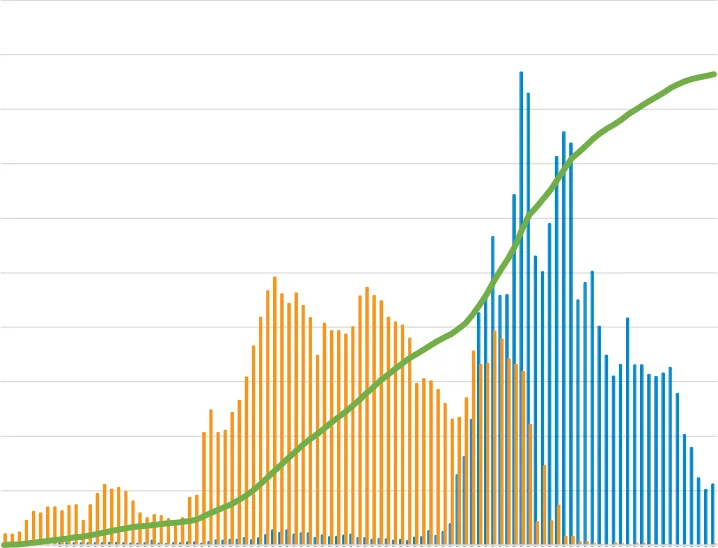
Figure 4.1 Annual state and private afforestation 1922-2022
18,000
16,000
14,000
12,000
10,000
8,000
6,000
4,000
2,000
1922 1926 1930 1934 1938 1942 1946 1950 1954 1958 1962 1966 1970 1974 1978
1982
1986
1990
1994
1998
n Public n Cumulative – Private
Source: DAFM Forest Statistics
Key Statistics from Forest Statistics Ireland 2023 1. In 2022, €70 million was spent by DAFM on forest activities including afforestation, maintenance grants, annual premium payments and grants for forest road infrastructure. This is an increase of €4.5 million on expenditure in 2021.
-
During 2022, 2,273 hectares of new forests were created. Cork had the highest afforestation area at 400 hectares, followed by Clare at 211 hectares.
-
The proportion of broadleaves in new forests created during 2022 was 42%, which was up from 41% in the previous year.
-
Farmers have accounted for 81% of private lands afforested between 1980 and 2022. Since 1980, nearly 24,000 private landowners have received grant aid to establish forests. The average size of private grant-aided afforestation since 1980 is 8.64 hectares.
-
In 2022, 62% of the area afforested was by people aged 60 years or more. 59% of the total area that received premium payments was owned by people aged 60 years or more.
-
In 2022 the volume of roundwood removals was at 4.14 million cubic metres, a decrease of 192,000 cubic metres on the previous year.
Figure from page 159
-
The construction of 70 kilometres of private forest roads was funded during 2022. This reflects the projected increase in timber and wood to be harvested, which is expected to double by 2030.
-
Felling licences were issued during 2022 for the thinning of 25,044 hectares and the clearfelling of 23,009 hectares. Felling licences issued for clearfell in the private sector increased significantly, from 8,278 hectares in 2021 to 14,006 hectares in 2022.
-
Approximately half of Ireland’s forest estate is certified by international non-governmental organisations to promote good forest practice. The vast majority of this area is in the public forest estate, with 15,680 hectares of private forest currently certified.
-
Forests and forest products play an important role in mitigating climate change by sequestering and storing atmospheric carbon dioxide. The national forest estate is a sink for approximately 323 million tonnes of carbon.
-
The number of people employed directly in the forestry and logging sector averaged 2,800 between 1998 and 2017.
-
In 2020 total employment generated by activities in the forest and wood products sector was estimated to be 9,500 full time equivalents.
National Forest Inventory The purpose of the NFI is to record and assess the extent and nature of Ireland’s forests, both public and private, in a timely, accurate and reproducible manner. Reliable, current and consistent information is required to inform domestic forest policy, to support forest research and fulfil national and international reporting commitments. The fourth NFI will facilitate the on-going monitoring of the national forest estate, including the assessment of change over time. In particular, the evaluation of volume increment and harvesting volume will facilitate the monitoring of Sustainable Forest Management (SFM).
The fourth National Forest Inventory (NFI) cycle commenced in 2020. Fieldwork and data analysis were completed during 2022. The national forest estate is still expanding and has now reached 11.6% of the total land area, with a wide variety of forest types present. The total forest area has increased from 697,842 hectares (ha) in 2006 to 808,848 ha in 2022. The increase in area is a result of afforestation and natural development of semi-natural forests. Between 2006 and 2022 semi-natural forests are responsible for one-third (33.1%) of the new forest areas captured.
Broadleaf tree species account for nearly one-third (30.6%) of the stocked forest area, while conifer species are the dominant species present (69.4%). The share of broadleaf species nationally increased by 5.9% between 2006 and 2022.
The total growing stock volume of Irish forests is over 142 million m³, an increase of over 25.5 million m³ since 2017. The balance between increment and fellings is an important indicator as it describes the sustainability of wood production over time, the current availability of wood and the potential for the future. Gross annual volume increment between 2017 and 2022 was 10 million m³ per year, while over the same period the mean annual standing volume felled was 4.1 million m3 per year. This wood mobilisation represents a valuable source of revenue for forest owners and a source of employment in the rural economy through harvesting, transport and downstream processing. Notably, the forest ownership balance has changed, where private forest owners, mainly farmers, now own approximately 50.9% of the national forest estate with the remainder in public ownership, mainly Coillte. In recent years non-farmers are responsible for the majority of private planting.
Afforestation in 2022 Payments were made by the Department in 2022 in relation to the afforestation of 2,273 hectares of land. Broadleaf planting, which includes the planting of native woodlands, accounted for 43% of this figure. Counties Cork, Clare, Galway and Roscommon had the highest levels of afforestation during 2022, with a range of between 400 and 176 hectares afforested. All counties had some level of afforestation, but counties Waterford, Dublin, Carlow and Monaghan had less than 10 hectares afforested each.
Figure 4.2 Afforestation by County in 2022
425 400 375 350 325 300 275 250 225 200 175 150 125 100 75 50 25 0
Area (ha)
Galway
Kerry
Kilkenny
Carlow
Offaly Roscommon
Tipperary
Wicklow
Cavan
Clare
Cork
Donegal
Dublin
Kildare
Laois
Longford
Leitrim
Limerick
Louth
Mayo
Meath
Monaghan
Sligo
Waterford
Wexford
Westmeath
Source: DAFM Forest Statistics
Figure 4.3 Percentage of forest cover in each county
25%
20%
15%
10%
5%
0%
Offaly
Tipperary
Kerry
Wicklow
Galway
Kilkenny
Carlow
Leitrim
Clare
Laois
Waterford
Cork Roscommon
Sligo
Donegal
Cavan
Limerick
Mayo
Longford
Wexford
Monaghan
Westmeath
Kildare
Dublin
Meath
Louth
Source: National Forest Inventory
The level of planting of native woodlands in 2022 was 703 hectares, compared to 598 hectares in 2021, which is the highest level under the Forestry Programme so far and slightly exceeds the target. Broadleaf planting as a percentage of total planting also exceeded the 30% target set out in the Forestry Programme, with 42% of broadleaves planted in 2022.
Since 2015, 8,322 hectares of broadleaf forestry has been established, which is 25.5% of the total new forestry established since 2015. Additional measures, such as support for tree guards and fencing to protect crops from deer damage, continuous cover forestry and additional supports for thinning of broadleaf forests were introduced in early 2019. These were important schemes for the support of the industry and contributed to the high level of broadleaf planting.
Pages 157–161 · View in original PDF