3.5 Pigmeat
3.5 Pigmeat
Figure from page 118
The Pig & Poultry Investment
Four of the top five destinations for pigmeat
The average slaughter
Scheme provides 40% grant funding on eligible expenditure up to a maximum investment ceiling of
price for pigmeat
exports are outside the
in 2022 was 15% higher than the 2021 average.
EU, namely United Kingdom, China, Australia and Japan.
€500,000.
Figure from page 118
General Market Situation Ireland
The Irish pigmeat sector supports approximately 8,000 jobs spanning production, slaughter, processing, feed manufacture and services. Price volatility was a significant issue for the sector in 2022, highlighting the cyclical nature of prices in the sector. This in tandem with the input cost crisis on foot of the illegal invasion by Russia of Ukraine, had put significant pressure on the sector in 2022. This was recognised by DAFM and significant support of more than €17 million was provided through the Pig Exceptional Payment Schemes.
The value of pigmeat exports have continued to grow over the past number of years and the value of exports in 2022 at €956 million were 30% up on the 2016 exports of €734 million. In 2022 there was an increase of 2.1% in exports over 2021, in terms of value (+€19.8 million) and a decrease of 2% in volume, at 285,700 tonnes.
Table 3.8 Top 5 Pigmeat Export Destinations 2022
| Rank Country € Million Tonnes | |||
|---|---|---|---|
| 1 | United Kingdom | €410.7 | 20,741 |
| 2 | China | €125.2 | 11,891 |
| 3 | Australia | €68.7 | 10,635 |
| 4 | Denmark | €58.7 | 6,576 |
| 5 | Japan | €56.5 | 2,136 |
Source: CSO
The share of total value of exports to the United Kingdom have fallen from 56% in 2017 to 43% in 2022, with other third country exports accounting for 38% of the value, up from 25% in 2017. Diversification and growth are evident in a number of markets, notably Australia, up 48% in value in 2022 to €69 million, South Korea up 42% to €28 million, Philippines up 72% to €24 million and Poland up 109% to €15 million.
According to TRACES, in addition to the export of pigmeat, 440,400 live pigs were exported in 2022, up 0.5% on 2021. The main destination for these pigs was Northern Ireland. Other countries featured included Spain, Italy, Poland, Czech Republic & Germany. Exports to other markets are smaller in number and primarily for breeding purposes.
€1,200
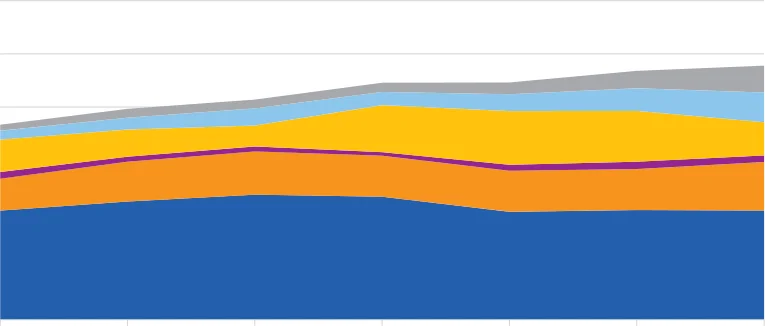
Figure 3.17 Value of Pig Meat Exports by Region, 2016-2022
€1,000
€800
Million Euro
€600
€400
€200
€0
UK EU27 USA China Asia except China Other
Source: CSO
The output value of the pigmeat sector in 2022 was €620 million, up from €555 million in 2021, which is a 12% increase, while the number of pigs was down 6%.
Table 3.9 Output Value (€m) and Numbers (‘000s) of Pigs 2021/2022
2021
| Value €m | Number ‘000 | Value €m | Number ‘000 | |
|---|---|---|---|---|
| Live Exports | 57.52 | 465 | 62.18 | 438 |
| Slaughterings | 502.47 | 3,690 | 570.37 | 3,636 |
| Total disposals | 559.99 | 4,155 | 632.54 | 4,074 |
| Imports | 3.94 | 32 | 4.50 | 32 |
| Changes in Stocks | -0.64 | 35 | -7.81 | -143 |
| Total | 555.41 | 4,158 | 620.23 | 3,899 |
Source: CSO
EU EU pigmeat production, as compiled by the European Commission, decreased by 5.1% in 2022, as was the case in 2021. Spain is the largest pigmeat producer in the EU with 24% of the market share, while Germany accounts for 20% and France 10%. However, pigmeat production has decreased by 2.9% in Spain, 9.2% in Germany and 1.4% in France.
According to European Commission pigmeat trade data, the EU exported about €14 billion of pigmeat in 2022, down 6% on 2021. The five largest exporters in value terms are Spain, Denmark, Netherlands, Germany and Ireland. Collectively they accounted for over 76% of the market share. The EU’s largest trading partners were China, the United Kingdom and Japan, valued at €3.5 billion, €2.9 billion and €1.5 billion respectively.
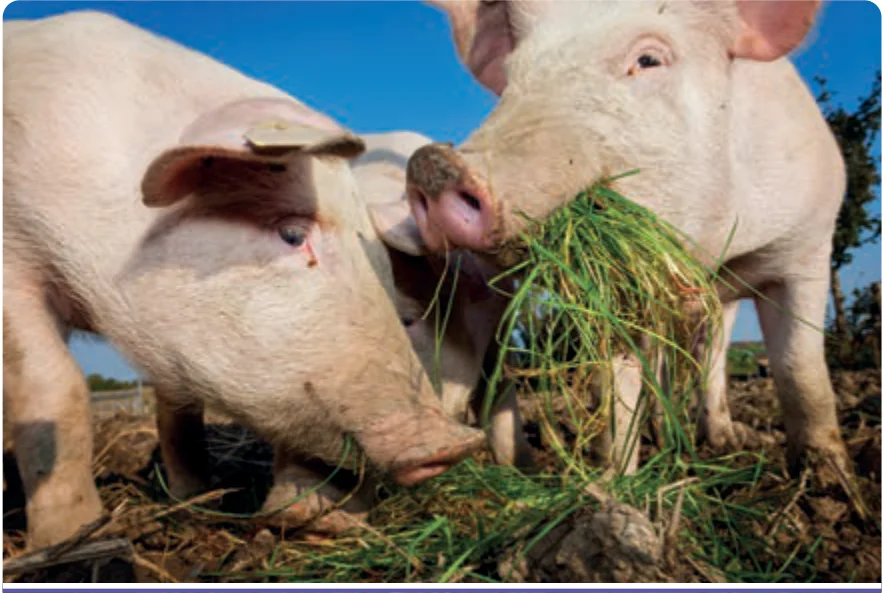
Figure from page 120
Production According to the CSO livestock slaughtering data, 2022 saw a decrease of 1.5%in pigmeat production compared to 2021, with the total pigs slaughtered for the year at just over 3.64 million head, down from 3.69 million in 2021.
Despite the decrease observed in 2022, over the past five-year period there has been growth of 5.5% in production, equalling an additional 188,770 pigs. About 3.5 million pigs were slaughtered at DAFM-approved plants, while about 0.09 million were slaughtered at Local Authority approved abattoirs.
3.8 3.7 3.7 3.6 3.6 3.5 3.5 3.4 3.4 3.3 2018 2019 2020 2021 2022
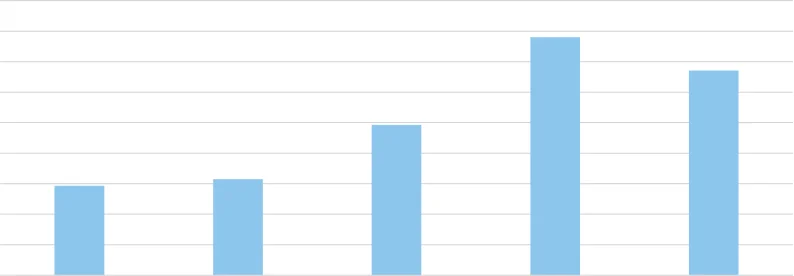
Figure 3.18 Pigs Slaughtered 2018 to 2022 (Non-Zero Axis)
Million Pigs
Source: CSO
Pigmeat Prices 2022 Price volatility remains a significant challenge for the pigmeat sector emphasising the cyclical nature of its prices. The advancement of African swine fever (ASF) into the German domestic pig herd in 2021 had a negative effect on pig prices, as bans on German exports to large markets such as China and Japan created a glut of oversupply within the single market. At the same time there was a resurgence seen in the Chinese national pig herd and a subsequent slump in imports from mid-2021, driving prices down. While Irish prices fell steadily from Q3 in 2021, Ireland had remained above the EU average through the year, and well above other export orientated nations such as Germany, Poland and the Netherlands.
205
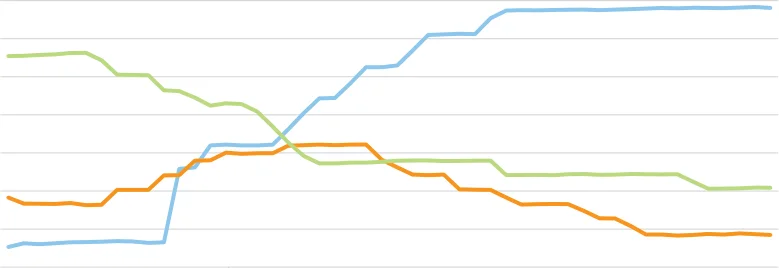
Figure 3.19 Irish Average Grade E Pig Price, 2020 – 2022 (Non-Zero Axis)
195
185
Cent Per Kg
175
165
155
145
135
July
January
February
May
October
November
December
September
June
March
April
August
Source: DAFM, Meat Market Report
However, by late spring 2022 the average grade E pig price was €141.46/100kg, significantly lower than the EU average price for this period. From Q2 2022, there was a gradual increase in price, with a year-end price of €203.12/100kg. The average price for 2022 of €178.39/100kg was 15% higher than the 2021 average and 11% higher than the 5-year average price of €161.33/100kg.
The volatility of pig prices is demonstrated in the chart, showing the highest average price since 2010 was 197cent/kg in 2012, while the lowest was 139 cent/kg in 2018 (almost 30% lower).
220
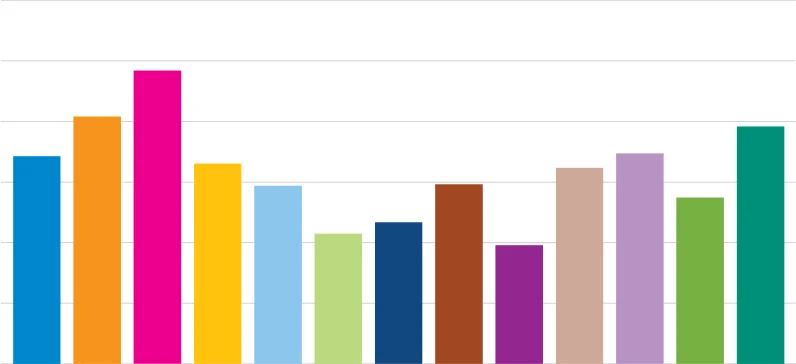
Figure 3.20 Average Grade E Pigmeat Prices, 2010 – 2022 (Cent per kg) (Non-Zero Axis)
200
180
Cent Per Kg
160
140
120
100
2010201120122013201420152016201720182019202020212022
Source: DAFM, Meat Market Report
Sustainability Sustainability and the reduction of environmental impact plays a key role in the development of the pig sector. Sustainability also encompasses economic and social factors. Food productions system now and into the future must be sustainable in terms of developing a supply of safe, authentic and healthy food with low environmental impact in terms of emissions and biodiversity. This will require a highly enhanced level of innovation, major improvements in efficiency and waste production, and access to new types of technology. With consumer awareness around sustainability an ever-increasing factor, any increases in production must be offset by interventions such as improvements in feed formulation and efficiency at farm level. In the current climate the focus will need to remain on the reduction of greenhouse gases and ammonia emissions. This can be assisted by investigating the use of lower protein diets, housing management and the potential of certain feed ingredients to reduce emissions.
The pig sector will also need to avail of circular economy opportunities. Pig slurry is a valuable fertiliser that offers an organic alternative to, and opportunity to make savings on, chemical fertiliser purchases. Effective nutrient management and planning is vital to allowing farmers maximise the amount of pig slurry that may be used on-farm, thereby reducing input costs.
The high-level objective of the Teagasc Pig Programme is to enhance the sustainability of Irish pigmeat production. The current research programme encompasses a broad range of topics relevant to this area such as nutrition, performance, management, health and welfare.
First launched in 2015, the Pig & Poultry Investment Scheme provides 40% grant funding aimed at improving energy efficiency at farm level. TAMS 3, released in early 2023, will see grant aid paid on approved, completed, and eligible expenditure up to a maximum investment ceiling of €500,000.
Highlights
Irish pigmeat exports reached record levels of €956 million. M
Access gained to Malaysian market for pigmeat. M
Growth observed in key third country markets such as Japan, South Korea, Australia, M and Philippines.
Challenges
The illegal invasion of Ukraine continues to have very serious impacts on animal feed M supplies and price. Ireland imported close to 12% by volume of its imported animal feed from Russia, Ukraine and Belarus combined in 2019 and 2020, but this has fallen to less than 6% in 2022. Russia and Ukraine are significant sources of global cereal exports, so the price and availability of cereals globally is impacted by the conflict. Availability and price of animal feedstuffs are a concern across all farming systems. The impact is being felt most sharply in the intensive pig and poultry sectors where feed costs represent a very significant portion of overall productions costs.
Typically, feed costs represent about 37% of total direct costs on farms ranging from M 11% on tillage farms to 45% on dairy farms, with cattle and sheep farms around 38%. For intensive pig and poultry farms, feed costs are the main costs of production at about 75% of the total cost.
Pig production is completely dependent on the use of compound feed, because pigs M as monogastric animals and cannot eat grass, and is thus significantly more exposed than other livestock sectors to fluctuations in feed prices.
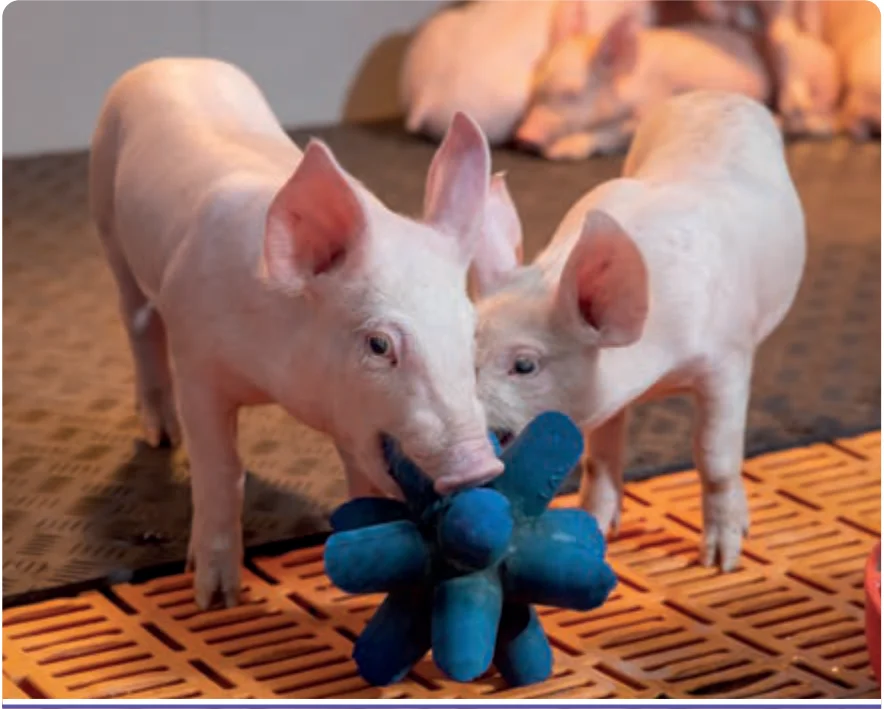
Figure from page 123
Ireland Outlook
Teagasc cashflow forecasts project that farm income losses experienced in 2022 are M expected to continue, although at a moderately low level until Q2 2023. The sector is then forecast to return to profitability, with financial margins improving as the year progresses. Overall, the year is expected to deliver very moderate profitability.
Throughput is also expected to decrease slightly in 2023, as an outcome of the M reduction of the sow herd in 2022, partly due to farmers exiting the sector as well as the 10% breeding pig reduction conditionality of the Pig Exceptional Payment Scheme 2.
The outlook for the Irish pig price is multifactorial, however, the two key drivers will M be Chinese pigmeat demand and EU pigmeat supply.
EU Outlook
According to the EU Short Term Outlook, African Swine Fever is forecasted to continue M to have an impact on pigmeat production in the EU for 2023, combined with the pressure on margins for many farmers across the EU in 2022. EU pigmeat production is expected to decrease by 5% in 2023. Spain, the EU’s largest pigmeat exporter, has suffered a disease outbreak which has resulted in a supply contraction of 9.2% in Jan- Apr 2023 compared to 2022.
This, in conjunction with the sow herd decrease in the other main EU pig producers M (Germany, Netherlands, France and Poland), will result in a lower supply of pigmeat on the EU market. This reduced supply will continue to support the pig price through 2023 and into 2024.
Consumption of pigmeat in the EU has been in decline in recent years and this trend M is expected to continue, with EU domestic consumption forecast to fall from 31.8kg to 30kgs per capita.
EU pig prices are expected to remain at their current high plateau throughout 2023 M due to tight EU pigmeat supply volumes.
Pages 118–124 · View in original PDF