7.5 Organisation for Economic Cooperation and Development
Introduction The Organisation for Economic Cooperation and Development (OECD) Committee for Agriculture provides an evidence base and analysis to support governments in improving policy performance and creating an enabling environment for the sector to thrive. They produce two publications annually that are of particular use to policy makers. The 2023 Agricultural Policy Monitoring and Evaluation report is scheduled to be published in the fourth quarter of 2023. This annual report is a unique source of up-to-date estimates of support to agriculture and is complemented by individual chapters on agricultural policy developments in all countries covered in the report. The other publication is a joint OECD-FAO Agricultural Outlook which provides market projections for major agricultural commodities, biofuels and fish. The latest OECD FAO Agricultural Outlook 2023-2030 was published in July 2023 and some of the highlights are outlined below.
OECD-FAO Agricultural Outlook 2023-2032 The Outlook provides a consensus assessment of the ten-year prospects for agricultural commodity and fish markets at national, regional, and global levels, and serves as a reference for forward-looking policy analysis and planning. The report is a collaborative effort between the OECD and FAO, prepared with inputs from Member countries and international commodity organisations. It highlights fundamental socio-economic trends driving the global agri-food sector, assuming no major changes to weather conditions or policies. However, the authors note that there is an increasing risk that greater uncertainties will lead to deviations from the current projections. This year’s Outlook includes estimates of Food Loss and Waste (FLW) and the impact of rising fertiliser prices on food costs.
Key Messages Global agricultural and food production are projected to continue to increase in the next ten years, but at a slower pace of growth than the previous decade due to a foreseen slowdown in population and per-capita income growth. Uncertainty has risen due to geopolitical tensions, adverse climate trends, animal and plant diseases and increased price volatility for key agricultural inputs. Following from these challenges, global production of crops, livestock products and fish are projected to grow at an average annual rate of 1.1% during the period, half the pace recorded in 2015. The question of food security will continue to be high on the agenda in the next decade, notably as input prices could increase.
This year’s Outlook includes a special assessment of key farming input prices, which have risen significantly in the past two years. The analysis shows that every 10% increase in fertiliser prices leads to an approximate 2% increase in food costs. This is on average and varies considerably by commodity, with crop prices affected more and the burden falling hardest on the poor.
Greenhouse gas emissions from agriculture are expected to increase by 7.5% in the next decade, considerably less than the projected output growth. This indicates a significant fall in the carbon intensity of agricultural production. Global trade in agricultural commodities covered in the Outlook is projected to expand by 1.0% annually. This is half the pace recorded in the past decade, mostly due to slower growth in demand among middle-income countries.
Macroeconomic Outlook and Population Trends For the coming decade, real per capita income growth of 1.7% per annum is expected in the EU and the world overall. This will be accompanied by a slowdown in global per-capita income growth in the near term to 1% in 2023, compared with the 2% recorded in 2022. Global GDP is expected to grow at an annual average rate of 2.6% over the next decade, although the rate of growth will be lower in OECD countries at 1.6%. Equally, poorer socio-economic groups in developing countries may lag overall trends in real income growth. The World population
is expected to grow by 0.8% on average during 2028-32, a slowdown compared to 1.1% per annum over the last decade. Population growth will be concentrated in developing regions, with the global population rising from 7.9 billion in 2022 to 8.6 billion by 2032.
Consumption It is expected global demand for agricultural commodities for food use will grow by 15% over the coming decade. Population growth will be the main determinant of overall demand for most commodities, with Asia continuing to play the most significant role in shaping global demand for food.
OECD Sub-Saharan Africa India China NENA Rest of World
MT
160
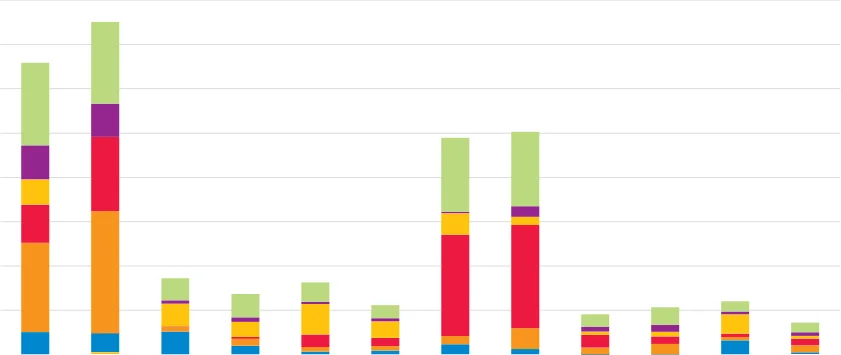
Figure 7.2 Regional Contributions to Food Demand Growth, 2013-2022 and 2023-2032
140
120
100
80
60
40
20
0
2013-22 2023-32 2013-22 2023-32 2013-22 2023-32 2013-22 2023-32 2013-22 2023-32 2013-22 2023-32
Cereals Meat Fish Dairy Sugar Vegetable oil
Note: Each column shows the increase in global demand over a ten-year period, split by region, for food uses only. NENA stands for Near East and North Africa
Source: OECD-FAO Agricultural Outlook
Consumers in middle-income countries are expected to increase their food intake and diversify their diets in the coming decade, generating higher demand for animal products. Diets in low-income countries will remain largely unchanged, with staples continuing to comprise the majority of calorie intake. Among high-income countries, per capita consumption of most food commodities is expected to level off due to saturation. Convergence in diets across regions and income groups will be limited. Consumption of dairy products is projected to expand, while global consumption of meat is expected to increase by 2.5% (0.7 kilograms per capita) over the Outlook period.
This year’s Outlook also addresses Food Loss and Waste, which reflects inefficiencies in the Global food system. Fourteen percent (US $400 billion) of the world’s food is lost on an annual basis between harvest and the retail market. At the same time, an estimated further 17% of food is wasted at the retail and consumer levels. Reducing food loss and waste is a significant lever for improving food security and sustainability as well as increasing the efficiency of food systems.
Production The global production of crops, livestock and fish commodities is expected to increase by 1.1% per annum. This is a slower rate than in previous decades, driven by a weakening of expected gross returns for producers from both sales and due to costs developments. Projected flat or slightly declining trends of real world prices, and slower population growth, will mean the rate of growth of producer returns will slow. Input costs are expected to increase, notably because of the nexus between energy and fertiliser prices and tightening of environmental regulations. Investments and human capital will be key to productivity gains to drive production increases. The Outlook also notes that there is heightened uncertainty around agricultural production due to factors such as Russia’s illegal war against Ukraine, policy changes, risks linked to animal and plant diseases and climate change.
Middle- and low-income countries will continue to drive growth. By 2032, the whole Asian region is expected to account for more than half of global crop production, almost half of livestock production, and almost three-quarters of fish production. Production growth will be driven almost entirely by anticipated productivity improvements. Growth will be slowest in Europe and Central Asia, and this will be driven by productivity improvements in Central Asia and Eastern Europe.
Global livestock & fish production is expected to expand by 10% in the coming decade, with milk and poultry output anticipated to increase by 17% and 14%, respectively. Dairy will be the fastest-growing livestock sector to 2032. Overall beef production is set to expand by 9% due to higher carcass weights as feed costs decline and animal genetics improve.
Figure 7.3 Global Livestock and Fish Production on a Protein Basis
Mt of protein
Meat Milk Eggs Fish 30
25
20
15
10
5
0
2020-22 2032 2020-22 2032 2020-22 2032 2020-22 2032 2020-22 2032 2020-22 2032 2020-22 2032 2020-22 2032
China India Asia Pacific (excl China and India)
Sub Saharan
Near East and
Europe and Central Asia
North America Latin America and
North Africa
Caribbean
Africa
Source: OECD-FAO Agricultural Outlook
Increases in global dairy production will be driven by expanding yields due to optimisation of milk producing systems, improvements in genetics, better animal health and feeding efficiencies. Dairy production in the EU is expected to decline slightly in response to the ongoing transition towards environmentally sustainable production, the expansion of organic production, and the shift from intensive to pasture-based production systems.
Global fish production is expected to grow by 12% over the period, a slowdown compared to the previous decade. This is due to policy changes in China toward more sustainable practices, as well as the expectation that 2024, 2028 and 2032 will be El Nino years that will result in lower production. Aquaculture is expected to account for a majority of global fish production by 2032.
Prices Over the coming decade, most commodities are expected to see real prices stagnate or decline at a low rate. Real food prices, following a spike induced by market disruptions in recent years, are expected to moderate at their current level. The overall FAO food price index will fall sharply in the early years of the Outlook forecast period. Nominal prices will increase from 2025, although prices will moderate in real terms.
(2019 = 100) – Soybeans – Wheat – Maize – Beef – Pork
500
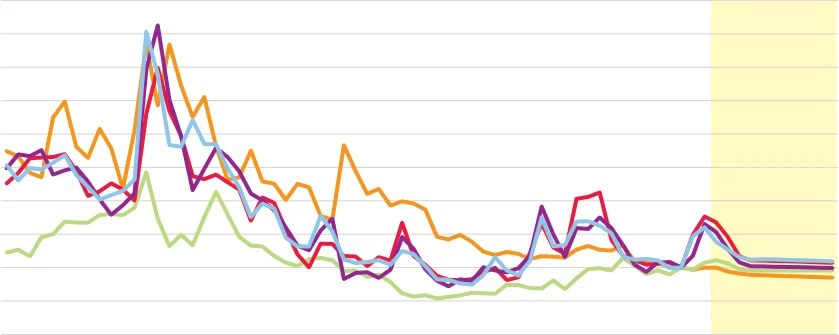
Fig 7.4 FAO Long-term Evolution of Commodity Prices, in Real Terms
450
400
350
300
250
200
150
100
50
0
1960 1962 1964 1966 1968 1970 1972 1974 1976 1978 1980 1982 1984 1986 1988 1990 1992 1994 1996 1998 2000 2002 2004 2006 2008 2010 2012 2014 2016 2018 2020 2022 2024 2026 2028 2030 2032
Source: OECD-FAO Agricultural Outlook
Meat prices are projected to decline in 2023 and continue to gradually fall in real terms over the next decade. This will be driven by demand weakening, supply chains stabilising, continued productivity growth and decreasing feed costs. Dairy prices are expected to stabilise at their 2023 level in real terms, following the decline from elevated prices in 2021 and 2022.
Trade International agricultural trade plays a critical role in improving the efficiency of food systems. It enables the flow of products from countries that are relatively well-endowed in natural and other resources, to processors and consumers in less well-endowed countries. Agricultural trade is therefore essential to ensure food security in some regions, and an important source of income in others. Over the coming decade, some countries are projected to experience large population and/or income-driven increases in food demand, but without sufficient resources to supply that demand. Moreover, socio-cultural and lifestyle-driven changes are transforming consumption patterns in most regions. Trade will also help to smooth food supply fluctuations and share production risks across countries, acting as a buffer in case of shocks to domestic or international markets. The share of production traded is stabilising, with growth in trade and production expected to be more closely aligned.
Over the next decade, agricultural trade will expand for most commodities although at a slower pace, mainly because there will be a slowdown in demand growth from China. Europe has moved from being a net importer to a net exporter, partly due to a static population and flat per capita consumption, which have limited domestic demand. Net exports from Europe and Central Asia are expected to continue to increase. However, the rate of increase in trade surpluses is expected to slow in the short run because of Russia’s war against Ukraine. The small trade deficit seen in recent decades in Western Europe, in aggregate, will continue to fall in the coming decade. At a global level, a shift from globalisation to regionalisation of agricultural supply chains is anticipated.
OECD meeting of Agricultural Ministers 2022 The OECD meeting of Agricultural Ministers was held on 3rd & 4th November 2022. The meeting was the first such meeting since 2016 with over 45 agricultural Ministers in Paris. The purpose of the meeting was to share experiences and agree priority actions for OECD related work to contribute to “Building Sustainable Agriculture and Food Systems in a Changing Environment: Shared Challenges, Transformative Solutions”. The meeting was co-chaired by the Canadian and New Zealand Ministers for Agriculture. The main outcome of the meeting was the adoption of a Ministerial Declaration that sets the priorities for the sector over the coming five years and calls for OECD analyses for specific topics related to the triple challenge of ensuring food security, strengthening sustainability and ensuring livelihoods. Minister McConalogue attended the meeting and chaired a breakout session on “Building Long-Term Resilience”. The Minister also addressed the plenary session outlining Ireland’s vision for a sustainable future for the agri-food sector and how working together will help to identify best-practice solutions.
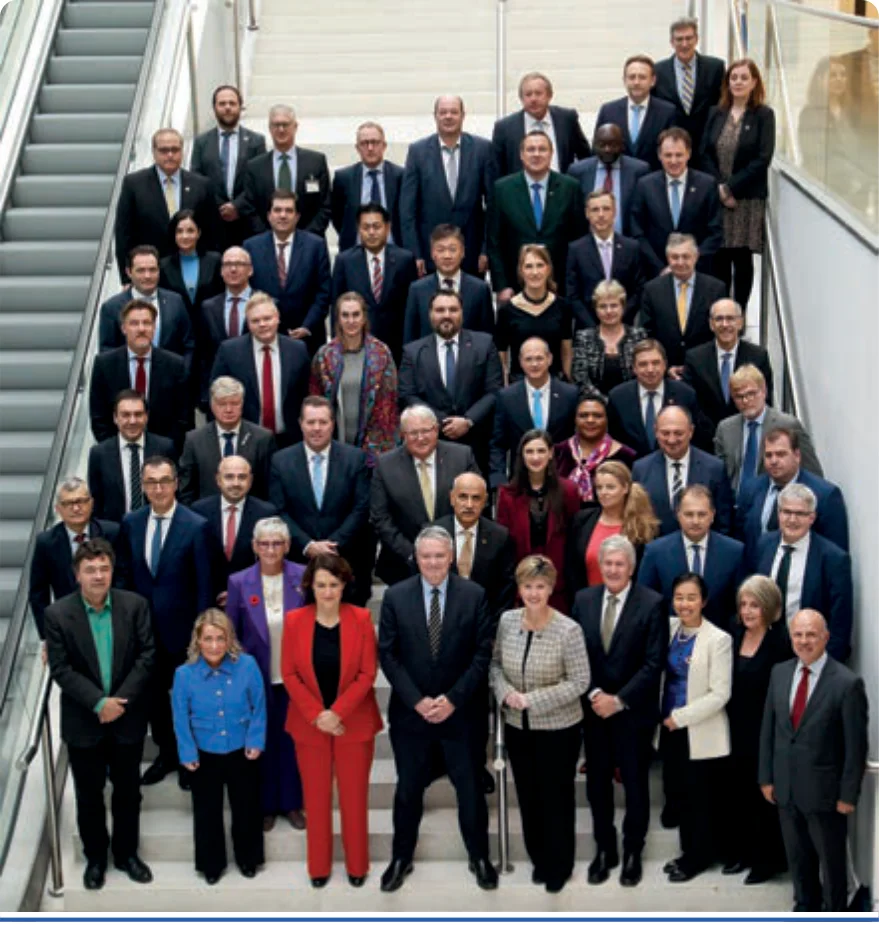
Figure from page 235
Pages 231–235 · View in original PDF