7.2 CAP Strategic Plan & Rural Development Programme 2023-2027
Ireland’s CAP Strategic Plan 2023-2027 (CSP) was submitted to the European Commission in December 2021 and was approved in August 2022 following an intensive period of negotiation in the first half of the year. The Government approved the plan on 4th October 2022 and noted the completion of its strategic environmental assessment and appropriate assessment.
Ireland’s CSP will support the development of the agriculture sector, and improve its resilience, by helping it to meet the twin challenges of delivering viable incomes for farmers and producing food in an environmentally sustainable manner. It also will contribute to maintaining vibrant rural communities. It will do so by contributing to each of the nine specific objectives of the Common Agricultural Policy (CAP), across the three areas of economic, environmental and social sustainability, as well as to the cross-cutting objective of enhancing performance through agricultural knowledge and innovation systems.
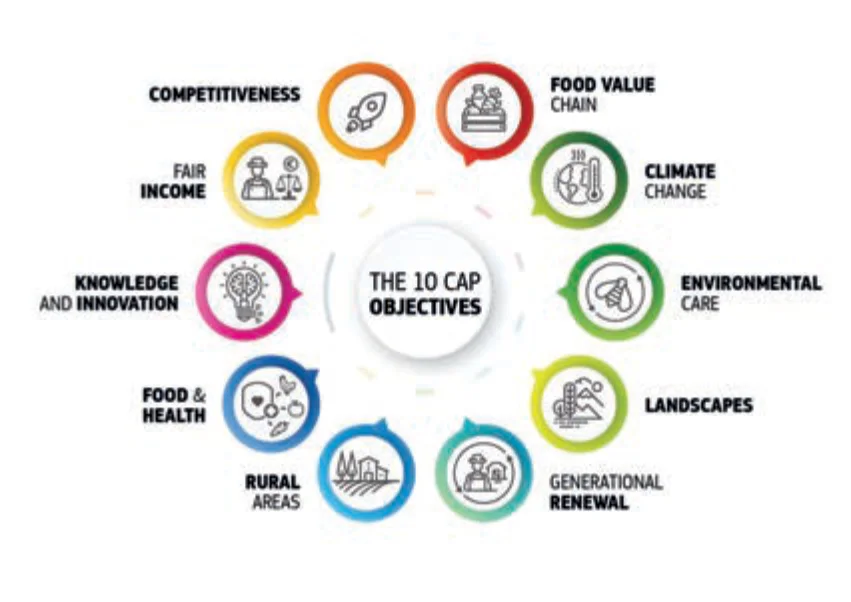
Figure 7.1 CAP Key Objectives Focusing on Social, Environmental and Economic Goals
| The Plan will achieve the objectives through several direct support and sectoral interventions under Pillar 1, and through a range of Pillar 2 rural development interventions. The rules for Pillar 1 are set out at EU level, although Member States have flexibility to target and design measures to address their specific situations. The interventions were developed following a lengthy strategic planning process, and in close consultation with stakeholders through the national CAP Stakeholder Consultative Commitet e, over an 18-month period. Financial Allocation The EU budget agreement in 2020 provided for total CAP funding for Ireland of €7.53 billion over the five-year period from 2023 to 2027. This funding is split between Pillar I (direct payments and sectoral interventions - €5.97 billion) and Pillar II (rural development - €1.56 billion). The allocation from the national exchequer to co-fund the rural development element of the CSP was agreed between the Minister for Agriculture, Food and the Marine and the Minister for Public Expenditure and Reform, at €2.30 billion. This funding includes carbon tax funding of €723 million. This will bring the total budget for the rural development aspects to €3.86 billion (with an efef ctive national co-financing rate of almost 60%), and total combined EU and national funding for the CSP to €9.83 billion. Table 7.1: Indicative breakdown of Ireland’s 2023-2027 CSP by Pillar 1 interventions Pillar 1 intervention €Million Basic Income Support for Sustainability (BISS) €3,642.5 Complementary income support for young farmers (CIS-YF) €177.9 Complementary redistributive income support for sustainability €593.1 (CRISS) Eco-Scheme €1,482.9 Sectoral Intervention for the Apiculture sector €0.6 Protein Aid €35.0 Sectoral Intervention in the Fruit and Vegetable Sector €39.0 Total Pillar 1 €5,971.0 Source: DAFM 212 | |
|---|---|
| 21 | |
| Basic Income Support for Sustainability (BISS) | €3,642.5 |
|---|---|
| Complementary income support for young farmers (CIS-YF) | €177.9 |
| Complementary redistributive income support for sustainability (CRISS) | €593.1 |
| Eco-Scheme | €1,482.9 |
| Sectoral Intervention for the Apiculture sector | €0.6 |
| Protein Aid | €35.0 |
| Sectoral Intervention in the Fruit and Vegetable Sector | €39.0 |
| Total Pillar 1 | €5,971.0 |
Table 7.2: Indicative breakdown of Ireland’s 2023-2027 CSP by Pillar 2 interventions
| Pillar II Intervention €Million | |
|---|---|
| Areas of Natural Constraint (ANC) | €1,250.0 |
| Agri-Climate Rural Environment Scheme (ACRES) | €1,500.0 |
| Agri-Climate Rural Environment Scheme (ACRES) Training | €21.5 |
| Straw Incorporation Measure | €50.0 |
| Organic Farming | €256.0 |
| On farm investments | €100.0 |
| Suckler Carbon Efficiency Programme including training | €260.0 |
| Early-Stage support for Producer Organisations | €1.5 |
| Continuous Professional Development for Advisors | €1.9 |
| European Innovation Partnerships (EIPs) | €36.1 |
| Knowledge Transfer Groups | €71.1 |
| Dairy Beef Welfare Scheme | €25.0 |
| Sheep Improvement Scheme | €100.0 |
| Collaborative Farming Grant | €2.0 |
| Technical Assistance | €6.3 |
| LEADER | €180.0 |
| Total Pillar 2 | €3,861.6 |
Source: DAFM
Monitoring and Evaluation of the CSP The new delivery model for the CSP involves a shift from a compliance-based to a performancebased system focused on outputs and results. It will involve regular reporting on performance, monitoring and evaluation activities through annual performance reports. The evaluation plan of the CSP must be submitted to the European Commission by 31st August 2023. It will outline all monitoring and evaluation activities and topics to be covered over the lifetime of the plan.
CSP Interventions
Pillar 1 - Direct Income Support and Sectoral Interventions
Basic Income Support for Sustainability
The Basic Income Support for Sustainability (BISS) is the main income support provided under the CAP Strategic Plan. It will provide direct income support to over 127,000 farmers in order to underpin their continued sustainability and viability. It will also help to ensure security of food supply. This intervention builds on the similar support provided by its predecessor, the Basic Payment Scheme (BPS). The annual financial allocation will be circa €728.5 million.
Complementary Income Support for Young Farmers
To encourage generational renewal, the Complementary Income Support for Young Farmers (CIS-YF) will provide support for up to 5 years to appropriately qualified young farmers entering the agriculture sector. Over €35 million per annum will be available to support young farmers in the years immediately following setting up as head of the holding, either solely or jointly.

Figure from page 222
Complementary Redistributive Income Support for Sustainability
The Complementary Redistributive Income Support for Sustainability (CRISS) is a new mandatory scheme in the CAP to better redistribute CAP funds from larger farms to medium and smaller sized farms. The aim is to ensure that support through CAP is targeted at those who need it the most, or those who are contributing most to the CAP objectives. It is paid to all farmers on their first 30 hectares and will redistribute amounts of over €118 million per annum.
Eco-Scheme
In line with the strong focus on environmental sustainability in the CAP, a new voluntary annual agri-environmental scheme, known as the Eco-Scheme, has been introduced under Pillar 1. It is open to all eligible farmers and rewards them for undertaking actions beneficial to biodiversity, climate, environment, and water quality. Over €296 million per annum will be available to support over 127,000 farmers who undertake at least two of the following eight proposed Agricultural practices:
-
Space for Nature*
-
Extensive Livestock
-
Limiting Chemical Nitrogen Usage
-
Planting of Native Trees/hedgerows*
-
Use of a GPS-controlled fertiliser spreader or GPS controlled sprayer
-
Soil Sampling and Appropriate Liming on all eligible hectares
-
Planting of a break crop(s)
-
Sowing of a Multi Species Sward
*Includes an enhanced option, which can count as two agricultural practices.
Apiculture Programme
The Apiculture Programme will provide support for research actions in the apiculture sector. There has been an overall decline in pollinator species in Ireland, and annual funding of over €100,000 will be dedicated to the implementation of the National Apiculture Programme.
Coupled Income Support for Protein Aid
The coupled income support for protein aid has increased to €35 million over the period. It will incentivise the production of domestic protein crops with a view to reducing the reliance on imports of protein feed materials. It will target an increase from 8,400 hectares of protein grown nationally to 20,000 hectares by the end of the Plan period.
Sectoral Intervention in the Fruit and Vegetables Sector
A sectoral intervention will provide support for existing and new Producer Organisations in the fruit and vegetables sector in order to enhance their competitiveness and improve their sustainability.
Pillar 2 - Rural Development Interventions
Areas Facing Natural Constraints
The Areas Facing Natural Constraints (ANC) scheme will provide €1.25 billion in support to farmers in designated areas who face significant hardship from factors such as remoteness, difficult topography and poor soil conditions. These payments are in recognition of the challenges faced by farmers in these areas and will help to improve farm viability and reduce the risk of land abandonment.
Agri-Climate Rural Environment Scheme
The Agri-Climate Rural Environment Scheme (ACRES), which will see total five-year expenditure of €1.5 billion, will help farmers to address a range of biodiversity, climate, and environmental issues.
The Scheme has two approaches, namely:
ACRES General - available nationally (outside of the high priority geographical area defined M for the ACRES Co-operation approach). It offers a range of actions for individual farmers to carry out on their farms.
ACRES Co-operation - available to farmers with all or part of their holdings in defined high M priority geographical areas (‘zones’). It offers results-based payments for actions appropriate to these areas, as well as bespoke farm and landscape actions. Farmers in these areas will be supported by local project teams.
Agri-Environment Climate Training
The Agri-Environment Climate Training scheme will provide training to farmers who participate in ACRES. It is aimed at increasing farmers’ understanding of climate change, of the impact that farming activities have on natural resources and biodiversity, and of how the ACRES actions will address those issues. It will also provide them with the knowledge and skills to effectively implement the actions, in order to optimise the delivery and ongoing management of the commitments.
Straw Incorporation Measure
This measure, with funding of €10 million per annum, and targeting 40,000 hectares per annum, will encourage tillage farmers to increase soil organic carbon levels by chopping and incorporating straw from cereal crops and oilseed rape. In addition to positive impacts on soil biology, workability and drought resilience, the measure will sequester carbon in tillage soils, thereby reducing greenhouse gas emissions. This will help to further improve the environmental sustainability of the tillage sector.
Organic Farming Scheme
The Organic Farming Scheme will see a five-fold increase, to €256 million, in support for organic farming. It will support farmers who wish to convert from conventional farming systems to organic farming systems, as well as to support their continuation after the initial period of conversion. The support aims to increase the share of land farmed organically to 7.5% over the period of the CSP.
On-farm Capital Investment Scheme
This scheme will provide support for capital investments by farmers aimed at improving the economic and environmental sustainability of their farms, as well as improving animal health and welfare, and farm safety. The financial allocation of €100 million will target 20,000 operations over the period. Higher grant rates will be available for women, young farmers and organic farmers.
Suckler Carbon Efficiency Programme (including training)
This scheme will provide support to beef farmers to improve the environmental sustainability of the national beef herd. It will build on the gains delivered thus far through the Beef Data and Genomics Programme (BDGP) and the Beef Environmental Efficiency Programme (BEEP) by improving the genetic merit of the Irish suckler herd and reducing the greenhouse gas intensity of Ireland’s beef production.
Early-Stage Support for Producer Organisations
Early-Stage Support for Producer Organisations will provide support to groups of producers wishing to be recognised as Producer Organisations in the beef, sheep, potato, tillage, plant amenity, and fruit and vegetable sectors. The funding of €1.5 million over the five-year period will encourage the development of Producer Organisations (45 new groups in the first three years) and will assist primary producers in strengthening their position in the supply chain.
Continuous Professional Development for Advisors
Continuous Professional Development (CPD) for Advisors, with funding of €1.9 million over the five-year period of the CSP, will provide the necessary support and resources to allow for the up-skilling and professional development of advisors in the agricultural sector. Participation in these activities will allow advisors to enhance their knowledge base on an ongoing basis, and to ensure that they are familiar with the latest techniques, technologies and regulatory and scheme requirements in a rapidly changing agricultural industry. It will promote the development of knowledgeable, professional and competent advisors, thereby enhancing the quality of service provided to farmers.
European Innovation Partnership (EIP-AGRI) Operational Groups
Innovation support will be provided through this measure. It will provide support to a range of actors in the agricultural sector who are looking to come together to form Operational Groups to develop and test innovative solutions to particular challenges identified in the sector. The broad potential for the EIP model is recognised, with the need to encourage the application of research and innovation at farm level identified. Competitive calls will be launched over the period.
Knowledge Transfer Programme
Knowledge Transfer is an important element of the CSP, with over €70 million available over the period to 2027. It is expected that over 19,000 farmers will participate. It will support the deployment of research and innovation at farm level by providing farmers with a platform to share knowledge and to engage in learning, facilitated by professional agricultural advisors with the appropriate experience and expertise. Increasing farmers’ understanding of topics such as biodiversity, water, climate change, animal welfare, and farm management, including financial management and succession planning, will ensure that the Irish agricultural sector remains resilient.
Dairy Beef Welfare Scheme
The Dairy Beef Welfare Scheme will provide support to farmers who undertake actions to improve the viability of male dairy calves in locally based production systems, by adjusting their breeding strategy to better integrate with the beef sector.
| Sheep Improvement Scheme The Sheep Improvement Scheme (SIS), with an annual budget of €20 million over the five-year period to 2027, will support actions that improve animal health and welfare in the sheep sector through targeted interventions in lameness control, parasite control, genetic improvement, flystrike and appropriate supplementation. Collaborative Farming Grant A key barrier preventing younger farmers accessing land is a reluctance for older farmers to release the land. The Collaborative Farming Grant, with funding of €400,000 per annum, will provide support for the administrative cost in establishing registered partnerships, as well as a parallel support for older farmers to encourage succession planning and facilitate generational renewal. LEADER Programme The LEADER Programme is a key rural development tool for supporting the economic and social development of rural communities, by providing the resources necessary for communities to support their own development and create capacity at local level. An allocation of €180 million over the five-year period of the CSP will support a community-led local development approach by funding initiatives that emerge through local development strategies aimed at addressing local challenges. The Programme will be operated by the Department of Rural and Community Development. Technical assistance The technical asssistance budget will provide support for the operation of the National CAP Network, for innovation support services, and for monitoring and evaluation requirements over the lifetime of the CAP Strategic Plan, as well as other related costs. | |||
|---|---|---|---|
| 17 |
Pages 219–225 · View in original PDF