2.13 Expenditure, Investments, Borrowing and Interest
Borrowing Central Bank data on Small and Medium-sized Enterprises (SME) and Large Enterprise Credit and Deposits for 2022 shows that credit advanced to Primary Industries, namely (i) agriculture, (ii) forestry, logging, mining, and quarrying and (iii) fishing and aquaculture sectors in 2022 stood at €700 million, indicating a steady reduction from the 2021 amount of €757 million and the 2020 amount of €781 million. Further analysis shows that new lending to the primary agriculture sector accounts for 88.5% or €620m of this total. Forestry, logging, mining, and quarrying accounts for almost 3.5% or €25m, with fishing and aquaculture accounting for 7.5% or €53m.
Credit outstanding for the primary industries at the end of 2022 remains at slightly over €3 billion, in line with 2021 and slightly lower than the €3.3 billion in 2020. Primary Agriculture currently accounts for 16% of the €18.3 billion in total outstanding debt held by all Irish SMEs, or 24% when Financial Intermediation and Property Related Activities are excluded.
The Department of Finance SME Credit Demand Survey April – September 2022, published January 2023, indicates demand for credit remained largely unchanged in the six months to September 2022, with only 17% of SMEs applying for bank finance during the period. The main reasons stated for not seeking credit during this period were:
(a) no requirement for credit (68%),
(b) a preference not to borrow (11%)
(c) fear of possible rejection (2%) or
(d) too expensive to borrow (2%).
When broken down by firm size, credit demand has increased slightly among micro companies and decreased by 3% in respect of medium companies. However, medium sized companies continue to have the highest level of credit demand at 22%. Demand for credit was highest for construction - 20%, wholesale - 17% and business services - 17%. Demand was lowest in sectors such as hotels and restaurants at 13% and manufacturing at 12%. Expected future credit demand is 17%, up 10% from September 2021. This reflects the current difficult business environment.
50%
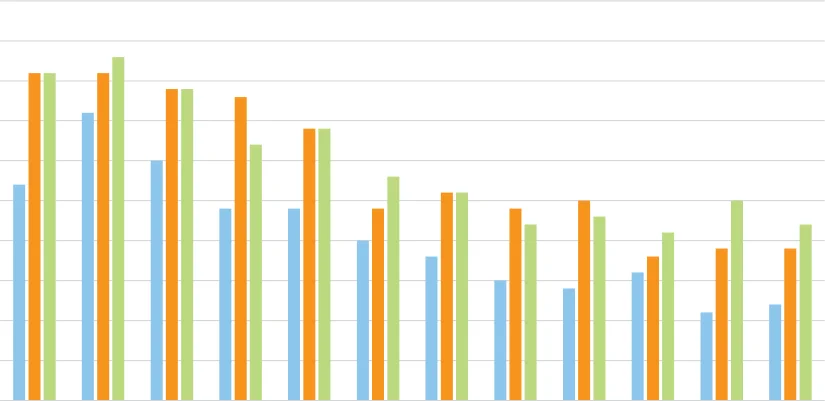
Figure 2.32 Credit Demand by Company Size, 2011 - 2022
45%
40%
35%
30%
25%
20%
15%
10%
5%
0%
Sept-11Sept-12Sept-13Sept-14Sept-15Sept-16Sept-17Sept-18Sept-19Sept-20Sept-21Sept-22
Micro Small Medium
Source: Department of Finance and B&A
New loans and leasing/hire purchase were the most requested finance products followed by new overdrafts. Compared to September 2021, there was an increase in the percentage of new overdraft products requested while requests for new loans decreased over the period.
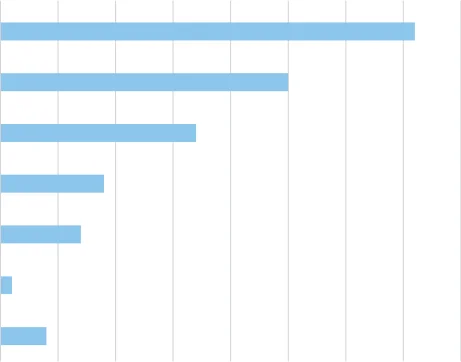
Figure 2.33 Lending Products Requested by SMEs - Most Recent Request
New Loan
Leasing or Hire Purchase
New Overdraft
Renewal/ Restructuring of Existing Loan
Renewal/ Restructuring of Existing Overdraft
Invoice Discounting
Other
0% 5% 10% 15% 20% 25% 30% 35% 40%
Source: Department of Finance and B&A
Demand for non-bank finance remains an area of growth with 5% of SMEs availing of traditional finance such as leasing/hire purchase (44%) or new loans (20%) from a non-bank provider during the period.
A range of Government support measures were introduced during the period to help support small and medium sized enterprises during the aftermath of Russia’s illegal invasion of Ukraine, which coincided with some re-structuring and down-sizing of the domestic banking sector, with the exit of Ulster Bank and KBC Bank. These measures include the Temporary Business Energy Support Scheme (TBESS) to assist with increasing energy costs and Ukraine Credit Guarantee Scheme (UCGS) to ensure that adequate credit is available to fund SMEs in Ireland.
The Credit Review Office assists SMEs, including agri-food sector borrowers, who have had an application for credit of up to €3 million declined or reduced by participating banks, and who feel that they have a viable business proposition. The Credit Review Office also looks at cases where borrowers believe that the terms and conditions of their existing loan, or loan offer, are unfairly onerous or have been unreasonably changed to their detriment. Currently the participating institutions are Bank of Ireland, AIB, Ulster Bank and Permanent TSB.
Investments According to preliminary results from the Teagasc National Farm Survey (NFS) 2022, gross new investment on Irish farms declined by 11% in 2022. Amounting to over €1.35 billion across the 85,000 farms represented by the survey, levels of investment vary by farming system. Investment on dairy farms was up by 2%, accounting for over half of total investment for 2022. Investment on tillage farms was down 24% year-on-year to an average of €21,997 per farm.
Investment across drystock systems decreased further in 2022 with average investment expenditure for cattle rearing farms amounted to €5,085, from €5,939 in 2021. Equivalent figures for cattle other farms were €6,904 and on sheep farms €8,543.
Across all farming sectors the NFS found that overall debt on Irish Farms increased in 2022, up 1%, with the majority (75%) of farm-related debt classified as medium to long-term. In addition, the NFS recorded 61% of farmers have no farm business related debt, although it is notable that levels vary according to farm type. Two-thirds of dairy farms had related borrowings compared to just over one-quarter of cattle rearing and one-third of cattle other farms. Similarly, three out of 10 sheep farms and four out of 10 tillage farms had outstanding farm debt. The below bar chart shows the debt-to-income ratio for all farms.
Figure 2.34 Farm Debt to Income Rations for All Farms and Those with Debt 2022
2.5
2.0
Debt to Income
1.5
1.0
0.5
0.0 Dairy Cattle rearing Cattle other Sheep Tillage
All farms Farms with debt
Source: Teagasc, National Farm Survey – Preliminary results 2022
Although only 27% of cattle other farms reported having debt in 2022, the debt-to-income ratio of those with borrowings remains relatively high compared to other farm systems, at 2.14. The comparative figure on sheep farms was also relatively high, at 1.42, double the rate of 0.71 in 2021.
The debt to Family Farm Income (FFI) ratio reported on tillage farms in 2022 was 0.69 on average. Dairy farms were more likely to have debt than other farm types and were also more likely to have substantially higher absolute levels of debt. However, given their comparatively higher income levels, the average debt to income ratio on dairy farms improved, reducing by 0.51, from 1.28 in 2021 to 0.77 in 2022. Reductions in the debt to FFI for dairy farms generally occur in years when there are elevated income levels. More recently, this has resulted in the increased funding of investment using earnings as opposed to borrowings.
The composition of investment across farm systems shows that machinery accounted for the majority of on-farm investment across sectors. It accounted for just over half of on-farm investment on the average dairy farm, three-quarters of investment on the average sheep farm and between 60% and 70% on drystock farms in 2022. The remaining investment was allocated to buildings and land improvement.
Figure 2.35 Average Composition of Farm Investment by Farm System 2022
Building Machinery Land improvement
| 20 | 76 | 4 | ||||||||
| 25 | 69 | 6 | ||||||||
| 30 | 60 | 11 | ||||||||
| 18 | 71 | 11 | ||||||||
| 40 | 53 | 7 | ||||||||
Tillage
Sheep
Cattle other
Cattle rearing
Dairy
Source: Teagasc, National Farm Survey – Preliminary results 2022
Interest Rates Interest rates for the primary agriculture sector remain at similar levels to 2020 and are higher than the average across all SME sectors. Central Bank figures show the average rate on outstanding amounts in the sector for 2021 was 4.40% against 4.28% for 2021 and 4.42% for 2020, while the average for all SMEs was 3.78%. Some of the difference may be attributable to the profile of the loans, as loans to the agriculture sector tend to be lower in value and higher in volume with fixed costs therefore spread over smaller repayment amounts.
Figure 2.36 Average Cost of credit (Interest Rate) For outstanding Loans
From 0.001% to 4%
| 15 | 17 | 12 | 17 | |||||
|---|---|---|---|---|---|---|---|---|
| 13 | 12 | 16 | 9 | |||||
| 9 | 4 | 11 | 11 | |||||
| 9 | ||||||||
| 8 | 5 | 12 | ||||||
| 12 | 15 | 13 | 8 | |||||
| 43 | 43 | 43 | 43 | |||||
From 4% to 5%
From 5% to 6%
From 6% to 7%
7% or More
Don’t Know
Total Micro Small Medium
Source: Department of Finance and B&A
The average rate for new lending in the primary sector for 2022 was 4.52%, up from 4.43% in 2021 and down from 4.67% in 2020. This compares with the average rate of 4.19% for all SMEs in 2022. The Department of Finance’s SME Credit Demand Survey provides further insight into interest rates charged in Ireland. It outlined that the average reported cost of credit on outstanding loans was 5.13%, an increase from 4.59% as reported in September 2021. It is worth noting that a significant percentage of SMEs responding to the credit survey were unaware of the cost of their outstanding loans. As can be seen from the table, interest rates payable vary depending on the size of the company.
The Central Bank of Ireland’s Trends in SME and Large Enterprise Credit and Deposits for Quarter 4 2022 published in March 2023, reports that new loans to SMEs by Irish resident credit institutions was €959 million in Q1 2022, down 6% compared to the same period in the previous year. New lending trends differ substantially across SME economic sectors with lending to hotels particularly strong in Q1 demonstrating the highest new lending volumes since the onset of the COVID-19 pandemic. In contrast, lending to SMEs in the in primary industries was 26% lower in Q1 2022 relative to the previous year.
Outstanding SME credit on the balance sheets of Irish banks stood at €18.4 billion, a decline of 1.4% over Q4 of 2022. This included €5.6 billion relating to property and construction and €12.5 billion of core SME credit. Net lending to SMEs was down €272 million in Q4 2022, representing the first quarterly decline in over a year. Annually, repayments exceeded new lending by €8 million over the year to end-December.
Gross new lending to SMEs was €952 million during Q4 2022. This represents a decrease of €145 million or 13% when compared to Q4 2021, marking the lowest volume of gross new SME lending since Q3 2021. Gross new lending to SMEs was €4.2 billion to end December 2022, an increase of 4.3% on 2021.
The weighted average interest rates on outstanding SME loans increased over the quarter, to 4.47% one of the largest quarterly and yearly increases in interest rates since the central bank started reporting trends in the sector.
The interest rate on new SME loan drawdowns increased by 112 basis points over Q4 2022, standing at 5.23%. SME interest rates on new loans increased across all sectors over the whole of 2022. Higher than average rates were charged to the construction, transportation & storage, human health & social work, and other community and social sectors. Interest rates charged to the primary Industries during 2022 averaged 5.5%, up from 4.45% in Q1 2022 and 4.76% in Q1 2021
The total outstanding amount of credit to all Irish resident private-sector enterprises, comprising both SMEs and large enterprises, stood at €73 billion at end 2022, up €2.7 billion from end 2021 figures.
Deposits from all Irish private-sector enterprises saw an increase across the majority of sectors, up by €6.6 billion over the whole of 2022. This marks the lowest volume of year-on-year deposit growth reported in a calendar year since 2018.
Central Bank of Ireland Financial Stability Review 2023 The Central Bank of Ireland Financial Stability Review published in June 2023 found that Irish businesses have performed remarkably well during the current inflationary episode. While input costs have risen, firms have largely passed these costs on to customers and maintained or increased their profit margins. This has been facilitated by robust demand, even as real household incomes fell. SMEs in aggregate appear resilient under baseline projections, but profit margins may be vulnerable to a decline in aggregate demand.
Although circa half of SMEs have no financial debts and the sector has deleveraged substantially over the last decade, debt service costs are rising for indebted firms and small firms remain sensitive to a deterioration in credit conditions. Loan performance indicators are
not yet showing any substantial deterioration in the repayment capacity of indebted firms. The pandemic fallout continues, with insolvency rates increasing and a considerable level of accrued liabilities still outstanding.
Despite the significant pressures facing firms, economic activity has been robust. SME turnover for 2022 has returned to pre-pandemic levels for most sectors, with 77% of firms in the accommodation and food sector reporting increased turnover and unemployment levels remain low indicating the strength of the economic recovery, even in the context of rising costs. Future challenges may emerge due to ongoing inflationary pressures and, more particularly, the tapering of Government supports which have offset losses and provided considerable support to firms in recent years.
SME debt fell by 70% between 2012 and 2022. Debt in the primary sector fell by in the region of 30% in Q1 of 2022 as compared with Q1 of 2012. Irish SMEs use external financing less frequently than their European counterparts and are more likely to use internal financing to fund investment. Lower indebtedness will provide support in the face of rising interest rates, relative to other economies.
Profit Margins With consumer demand more robust than expected in the face of very large price rises, SME profit margins have broadly held steady or increased over the period. However, they remain sensitive to a decline in consumer demand and continued cost pressures.
Inflation Inflation rates remain higher than rates of the past two decades and are expected to remain elevated over the remainder of 2023 and into 2024. The outlook for inflation remains heavily dependent on energy prices and any additional negative shock to these could lead to a further decline in real incomes and increase the pressure on the debt servicing capacity of SMEs.
Tighter financing conditions Many parts of the economy are reporting a tightening of financing conditions from lenders. While tighter financial conditions will impact all sectors of the economy to differing degrees, when coupled with higher interest rates, this may be contributing to a reduced appetite for borrowing among SMEs due to concerns over future ability to service debt.
Domestic Growth While SMEs are weathering the current economic disruptions so far, weaker than expected domestic growth, coupled with a challenging international trading environment, may function as a drag on revenue growth. At the same time, firms in some sectors continue to face capacity constraints and elevated operating and input costs. Financial conditions are expected to continue tightening having a potential impact on SME investment decisions and competitiveness.
Insolvency Following a period of exceptionally low levels of company failure, the rate of insolvent liquidation ticked upwards during the second half of 2022. 58% of companies that entered insolvency to date in 2023 were wage subsidy claimants during the pandemic. Deferred liabilities built up during the pandemic also remain substantial with over €2 billion of deferred tax liabilities still to be repaid and repayment plans outstanding still to be agreed with over 60,000 businesses. Current economic challenges arising from the conflict in Ukraine and the increased potential for debt default is reflected in domestic banks continuing to classify a high proportion of corporate loans as exhibiting an elevated level of credit risk.
Credit Supply The latest domestic bank lending survey results, published in April 2023, showed a tightening in credit standards in Q1 of 2023. These are most evident in the interest rates being charged on new lending. Rates have increased from 4.1% in November 2022 to just under 5% in March of 2023. The results also indicate a further tightening of credit standards is to be expected. All of this is influencing lending rates with overall credit growth declining marginally. The number
of non-banks actively lending to SMEs has fallen steadily over 2022, both in new lending and in number of active lenders. Data from the Central Credit Register for Q4 2022 showed that Irish SMEs owed non-bank lenders €4.5 billion in comparison to €18.4 billion owed to banks per the SME and Large Enterprise Credit and Deposits report. The share of new lending by non-banks to SMEs decreased by 20% annually to December 2022. A total of nine non-bank lenders ceased lending in 2022.
Pages 76–83 · View in original PDF