SE Principles
Delivery
To achieve our ambitions, we will continue pursuing outcome-driven actions across TII, embedding sustainability into our daily operations in transport infrastructure and services.
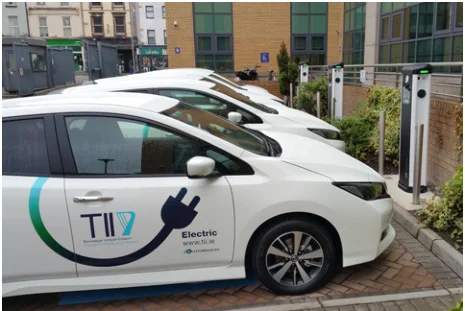
Figure from page 19
Figure from page 19
Sustainability-related activities now span every part of the organisation and involve collaboration with our stakeholders and partners. This plan represents a pathway for us to achieve our sustainability ambition and create a positive influence on areas outside our direct control.
The six sustainability principles act as the framework for the implementation of key activities across our organisation. We understand that to achieve sustainable development across Ireland we need to deliver on our remit and go beyond this to support and influence our stakeholders, enhancing the environment, enabling economic benefits and providing positive social impact.
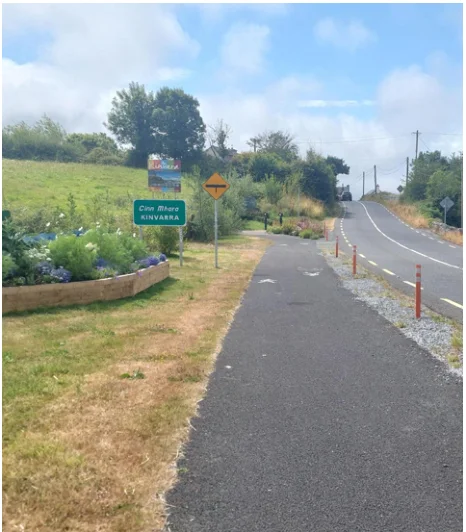
Figure from page 19
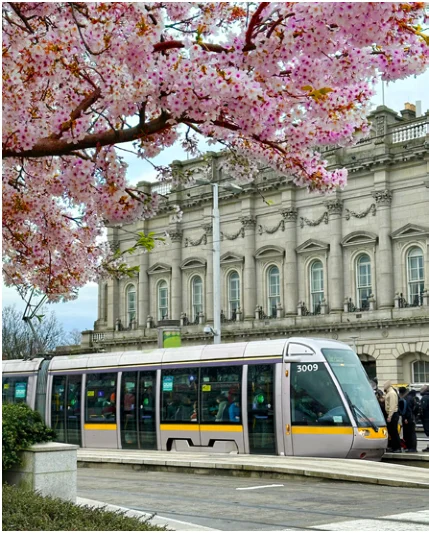
Figure from page 19
TII Sustainability Implementation Plan | Our Future| 2026
Social Impact
TII works to improve the quality of life for communities across Ireland through providing sustainable transport, supporting economic growth, respecting the environment, and creating positive social impact on communities. We strive to create equitable transport systems which enable the following:
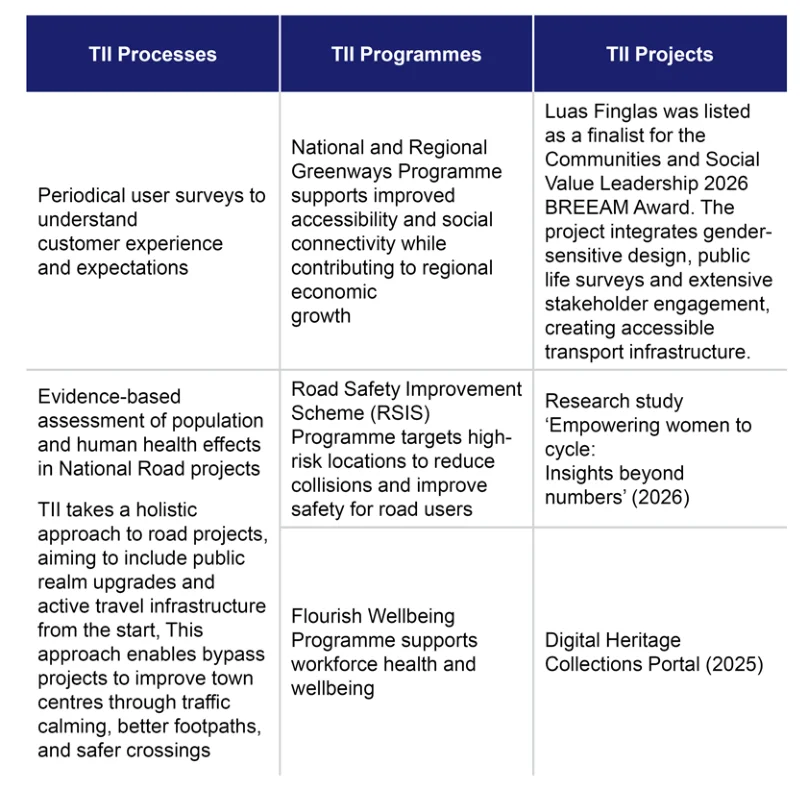
Figure from page 20
Embedded local economic inclusion relationships
Enhanced community
A happier, healthier and safer workforce
Increased workforce capabilities across Ireland
Transport infrastructure should be safe, attractive and accessible for all users, including people with reduced mobility and other minority and vulnerable groups. We work in partnership with local authorities, government departments and agencies to align transport delivery with wider social policy and needs, integrated planning across land use, transport and services to support inclusive communities. We also carry out ongoing engagement with stakeholders to ensure equity, accessibility and community needs are reflected throughout project lifecycles. Continuing to gather and analyse data will be critical in ensuring we understand, monitor and respond to the impacts of our services and activities on communities across Ireland, enabling evidence-based decision making and continuous improvement.
TII Sustainability Implementation Plan | Our Future| 2026
| Sample of TII’s Sustainability Activities | |||||||||
| Our six Sustainability Principles have been developed to reflect our organisational ambitions and the | |||||||||
| future we envision delivering with our Sustainability Implementation Plan. | |||||||||
| 1. Provide effective, efficient and equitable mobility Circular Economy | |||||||||
| 2. Enable safe and resilient networks and services Transport & Mobility 3. Collaborate for a holistic approach • Circular Economy Policy and Strategy 4. Deliver end-to-end improvements • Bus priority routes • Reused and recycled road 5. Transition to net zero • Delivery of greenways and cycleways construction materials and • ZEVI and EV charging infrastructure components 6. Create total value for society • Luas Red and Green lines carrying 55m passenger • Luas Finglas Circular Economy Pilot journeys per annum • Environmental Product Declarations • Park and Ride/Share facilities • Luas Cork • Luas Finglas • Metrolink | |||||||||
| Social Impact • Population and Human Health | |||||||||
| Assessment • Biodiversity in Schools | |||||||||
| • Ireland’s Supply Chain Sustainability School • Travelling in a woman’s shoes • Gender lens for sustainable | Adaptation and Resilience | ||||||||
| transport infrastructure • | Climate Guidance for Na Roads, Light Rail, and R | tional ural | |||||||
| Cycleways | |||||||||
| • | Climate Assessment of P | roposed | |||||||
| Carbon | • • | National Roads - Standard National Roads Climate Adaptation Implementation Plan TII Climate Adaptation Strategy | |||||||
| • TII Carbon Tool • Road Emissions Model • Mass Haul Tool (Earthworks) | |||||||||
| • Road Freight Decarbonisation | |||||||||
| • Carbon KPIs for pavement renewals | |||||||||
| • CO2 Performance Ladder | |||||||||
| • Lighting upgrades along the National Roads Network • Solar PV • Alternative fuel eg HVO | Nature & Biodiversity • Biodiversity Metric Tool • Biodiversity design standards | ||||||||
| TII’s Sustainability Implementation Plan is underpinned by TII’s Statement of Strategy and the Climate Action and Low Carbon Development (Amendment) Act 2021 | • Bog and Peatland restoration • Native woodland planting • Implementation of Soft Landscape • Water Impact Assessment • Air Quality Assessment | ||||||||
| TFIigI uSrues 1ta0i:n TaIIb’sil iStyu sImtapinlaebmileityn tAacttiiovniti ePslan | Our Future | 2026 | 19 | ||||||||
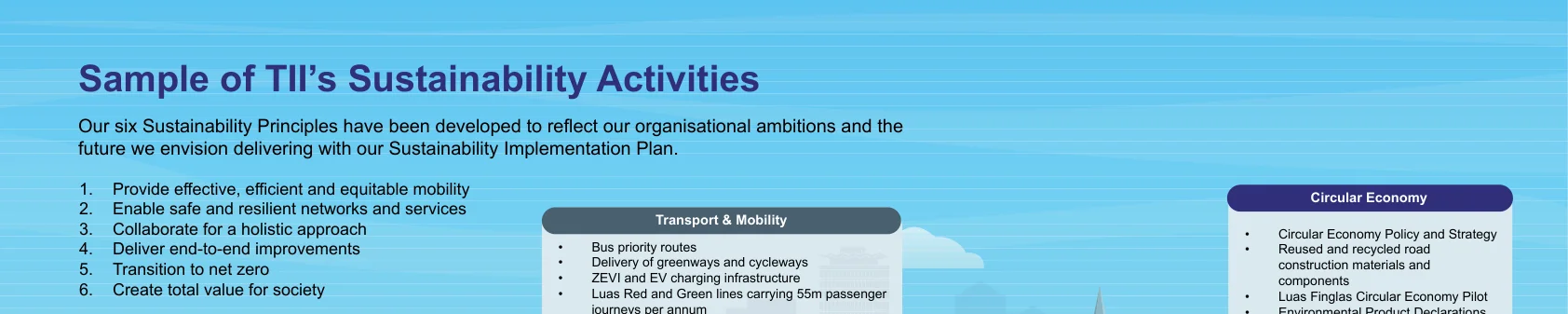
Figure from page 21
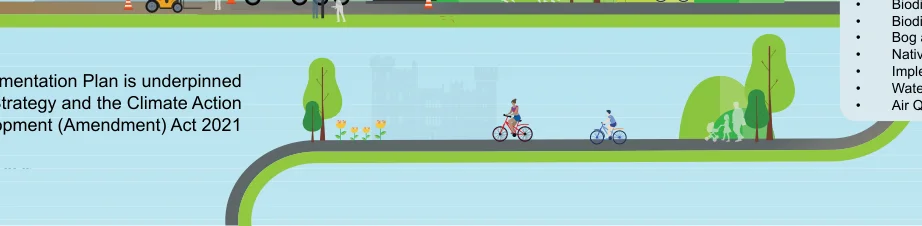
Figure from page 21
Measuring Progress
TII has made significant progress in delivering on the original SIP. Details are set out in Appendix D and E. Progress is currently assessed qualitatively but where possible TII is capturing quantitative metrics. TII has created management processes, engagement platforms and reporting lines that have resulted in a higher level of awareness and accountability for delivery progress across the organisation.
Sustainability Outcomes
SIP review
Enhancing Reporting
Through the establishment of a clear Sustainability Outcomes Framework, TII has put in place a structured approach for translating national policy objectives into measurable, organisation wide outcomes. These outcomes support prioritisation of key sustainability activities, government commitments and guide the development of business activities towards more sustainable deliverables for TII overall. The Sustainability Outcomes for each Sustainability Principle are set out in Appendix B and illustrate the progress TII is making towards applying the Sustainability Principles in all of our work.
The SIP will be reviewed on a periodic basis as appropriate. This will enable us to benchmark our progress, realign our ambition and determine if there are new opportunities to take that will accelerate our journey to a sustainable future.
Tracking sustainability progress is critical to ensuring TII delivers on the SIP and embeds the six Sustainability Principles in all its activities. Regular meetings of, and reporting to, the Assurance Board, have been supplemented with annual Highlights Reports, quarterly reports on the Sustainability Outcomes, contributions to the TII Annual Report and an annual Climate Action Roadmap all capturing the tangible progress achieved.
Metrics
Existing TII KPIs are used to measure TII’s progress towards delivering each of its key national targets, as set out in each of the Sustainability Outcomes tables found in Appendix B. These metrics are used to support the internal tracking of TII’s strategic objectives. Building on this foundation, further development of KPI based measurement will enable TII to monitor progress, ensure data quality and accountability, and support evidencebased decision making across its programmes and projects. It will provide confidence that sustainability commitments are being embedded consistently and effectively throughout the organisation and across the asset life cycle.
Robust measurement and reporting also underpin transparent communication, strengthening assurance to stakeholders, supporting collaboration across the transport sector, and maintaining public trust.
By prioritising outcomes led measurement, TII demonstrates leadership in sustainable infrastructure delivery, aligns with EU and national requirements, and supports contribution to the UN Sustainable Development Goals and wider climate objectives.
Embedding sustainability
Sustainability underpins the strategic objectives set out in our Statement of Strategy 2026 - 2030. Sustainability is a priority at Executive and Board level. Sustainability is included in annual staff performance reviews to further empower and enable staff.
TII is developing enhanced reporting to document progress towards the SIP ambitions.
TII Sustainability Implementation Plan | Our Future| 2026

Figure from page 23
Governance Engagement
Governance is critical to ensuring the successful delivery of our Sustainability Outcomes. TII’s Sustainability Portfolio consolidates and aligns sustainability activities across divisions and enables a collective approach towards achieving TII’s sustainability goals.
TII recognises that embedding sustainability across all of its work, both internally and externally, requires ongoing and proportionate engagement with stakeholders. This engagement drives shared understanding, collaboration and effective delivery.
Engagement includes:
• Undertaking collaborative research with relevant stakeholders, where appropriate;
TII’s Sustainability Portfolio can be defined through three vertical levels of governance: Assurance, Progress, and Steering, which are supported by a centralised Portfolio Management Office (PMO). The Sustainability Leaders within TII drive sustainability awareness and knowledge sharing within their divisions, and within an established forum for sharing divisional sustainability activities. Sustainability delivery is embedded as business-as-usual for all divisions. A Planning and Delivery Group at Progress Level ensures ongoing progress towards achieving our Sustainability Outcomes. Furthermore, the Assurance Board provides strategic oversight in terms of achieving the SIP outcomes. Reporting within this governance model is being developed to further enhance TII’s overview of our sustainability progress. This enhanced reporting will balance flexibility and control in addressing key issues, risks and required decision making. The Governance structure is included in Appendix E.
• Communicating TII’s Sustainability Outcomes, commitments and the targets we are working towards, both internally and externally; and
• Ensuring sustainability is integrated into business as usual activities across the organisation.
We are committed to clear and consistent communication on sustainability, communicating progress and accountability, and continuous improvement.
TII Sustainability Implementation Plan | Our Future| 2026
Our Future
Our people are crucial to delivering our Sustainability Outcomes. Everyone has a role to play in delivering change.
We deliver societal impact through our projects and programmes. This is achieved through leadership, collaboration, partnerships, and empowering our people to deliver the SIP.
Delivering change requires thinking creatively, adapting the way we work, and re-evaluating what success looks like for TII where necessary. We have made significant progress on embedding sustainability across TII, and we will continue to focus on the delivery of the Sustainability Outcomes.
Creating positive change for all and building a better future needs all of us to act.
TII Sustainability Implementation Plan | Our Future| 2026
Appendix A Policy Context and Framework

Figure from page 25
Appendix A | Policy Context and Framework
Policy Context and Framework
Policy scope and objectives This Policy Review provides a comprehensive overview of the international, national, regional and local policies, plans and strategies that are relevant to Transport Infrastructure Ireland (TII) and that influence the delivery of sustainable transport infrastructure in Ireland. The purpose of the review is to capture all current and applicable sustainability related policy and legislative drivers affecting TII, and to demonstrate how TII is actively embedding sustainability considerations into its projects, programmes and dayto-day operations in response to these requirements.
Policy hierarchy and governance The policies included in this review are structured to reflect the hierarchy and governance arrangements that influence sustainability outcomes for transport infrastructure in Ireland. Policies are grouped under the following key sustainability themes to provide a clear and coherent framework for assessment;
Within each theme, policies are organised according to their scale and level of influence, distinguishing between international and European level frameworks, national policies and strategies, and relevant regional and local policies and plans. This hierarchical approach recognises the way in which high-level international and national policy commitments are translated into sector-specific, regional and local requirements that directly affect TII’s planning, investment and project delivery. It also provides transparency on how governance responsibilities and policy obligations influence different levels of government, ensuring that TII’s sustainability actions are aligned with overarching policy objectives while remaining responsive to regional and local contexts.
• Environment;
• Transport;
• Social;
The review is structured to support the implementation of TII’s Sustainability Implementation Plan (SIP), with a particular focus on how the evolving policy landscape underpins and reinforces TII’s sustainability ambitions. In doing so, the review links the identified policies to the six SIP Principles through the dedicated icons, illustrating how these principles act as the core framework through which TII’s commitment to sustainability is governed and delivered across its activities.
• Economic; and
• Resilience and adaptation.

Figure from page 26
Appendix A | Policy Context and Framework
Policy Review
Environment The following policies are shaping the environmental performance of the transport sector by driving decarbonisation, advancing circular economy principles, improving energy efficiency, and promoting the protection and enhancement of biodiversity.
The revision of the EU Energy Efficiency Directive (2023) significantly raised EU ambitious targets on energy efficiency, giving it legal-standing for the first time, meaning energy efficiency must be considered by EU member states in policy development and investments put forward in the energy and non-energy sectors. The EU Renewable Energy Directive aims to increase renewable energy in the EU energy mix, raising the target to 42.5% for 2030, compared to the previous target of 32%.
The EU Action Plan: ‘Towards Zero Pollution for Air, Water and Soil’ to 2050 (2021) has a zeropollution vision for 2050 for air, water and soil pollution to be reduced to levels no longer considered harmful to health and natural ecosystems.
The EU Water Framework Directive (WFD) is the main law for water protection in Europe and ensures an integrated approach to water management, respecting the integrity of whole ecosystems, including by regulating individual pollutants and setting corresponding regulatory standards.
European policies The European Green Deal (2019) recognises the importance of multimodal transport and commits to increasing the efficiency of the transport system and reduce GHG emissions. The European Commission under the EU Green Deal has proposed new CO2 emissions targets for heavy-duty vehicles from 2030 onwards, with all new city buses being zero-emission by 2030, contributing to the EU’s climate and zero pollution objectives, and providing benefits for transport operators and users, aiming to ‘accelerate the shift to sustainable and smart mobility’. The EU’s Fit for 55 is a package of policy proposals that aim to reduce the EU’s greenhouse gas emissions by 55% by 2030, relative to 1990 levels, responding specifically to the second objective of the European Climate Law (55% greenhouse gas emission reduction by 2030). The Fit for 55 package has been adopted and begun implementation across multiple directives. It requires increased emission reduction targets for all Member States across sectors by 2030, which will further impact requirements of emission reductions required by the transport sector.
The EU revised the Ambient Air Quality Directives (2022), including closer alignment to World Health Organisation recommendations, and aims to achieve zero air pollution by 2050.
At EU level, controls on per- and polyfluoroalkyl substances (PFAS) in water have been significantly strengthened through Directive (EU) 2026/805, which entered into force in May 2026 and updates the Water Framework Directive, Groundwater Directive and Environmental Quality Standards Directive. The Directive introduces groups of PFAS into the EU’s regulated pollutant framework, strengthens monitoring requirements, and provides the basis for future environmental quality standards for groups of PFAS in surface water and groundwater. While the Directive requires transposition into Irish law by December 2027, it signals a clear tightening of regulatory expectations for emissions and runoff management.
The EU Circular Economy Action Plan (2020) outlines a number of key actions to promote the transition of a linear model to one that is circular, keeping materials and resources in use for longer. Construction and buildings need to focus on addressing the sustainability performance of construction products in the context of the revision of the Construction Product Regulations (2024) and introduce recycled content requirements for certain construction products, taking into account their safety and functionality.
The EU Nature Restoration Law (2024) establishes legally binding obligations to restore degraded ecosystems and improve ecological resilience, requiring Member States to implement effective restoration measures to restore 20-30% of degraded ecosystems by 2030, and restore all degraded ecosystems by 2050.
Appendix A | Policy Context and Framework
National Policies The Climate and Low Carbon Development (Amendment) Act (2021) establishes a legally binding pathway to net-zero emissions by 2050. The act aims to transition to a climate-resilient, biodiversity-rich, and climate-neutral economy by 2050. Under this Act, annual Climate Action Plans are published to outline a pathway towards meeting Ireland’s international obligations in reducing greenhouse gas emissions and improving energy efficiency. The Plans include a wide range of actions at a national level, whilst also mandating specific targets and actions for public sector bodies such as TII. The Climate Action Plan 2025 (CAP25) is Ireland’s roadmap to reduce greenhouse gas emissions by 51% by 2030 and achieve climate neutrality by 2050. It is the final plan of the first carbon-budget period and explicitly positions Ireland for transition into the second carbon-budget period (2026-2030), where emissions reductions must accelerate significantly. Within this framework, the transport sector is required to reduce emissions by 50% by 2030, relative to 2018 baseline. Under this act, Local Authorities are also required to develop Local Authority Climate Action Plans (LACAP).
decarbonisation measures, with progress reporting as part of ongoing implementation.
incorporating 50 strategic aims and 75 success metrics with progress monitored and reported annually. This framework reinforces the importance of biodiversitysupportive land and roadside management practices, including those relevant to transport infrastructure and corridor management.
Ireland’s National Biodiversity Action Plan (NBAP) (2023–2030), sets the national biodiversity agenda and promotes a “whole of government, whole of society” approach to conservation and restoration; it also strengthens expectations on public bodies to incorporate biodiversity considerations into their activities and decision‑making. The All-Ireland Pollinator Plan (2026-2030) provides a coordinated, all-island programme of actions to address pollinator decline through improved habitat management across Ireland. This iteration of the plan promotes the creation of ‘pockets of nature’ every 200 metres across Ireland’s landscapes, supporting biodiversity, climate resilience, ecological connectivity and enhancing health benefits. Delivery is structured around 10 work packages,
The Waste Action Plan for a Circular Economy (2020-2025) is Ireland’s roadmap for waste planning and management, embedding circular practises and climate action into processes and focuses on preserving resources; aligned with a zero-waste future. Complementing this plan is the Whole of Government Circular Economy Strategy 2026-2028: Accelerating Action incorporates circular practices into economic competitiveness, social wellbeing and environmental sustainability, as well as supporting decarbonisation targets and protecting natural resources.
| European Green Deal (2019) | EU’s Fit for 55 | European Climate Law (2021) | EU Energy Efficiency Directive (2023) |
|---|---|---|---|
| EU Renewable Energy Directive | Ambient Air Quality Directive (2022) | EU Circular Economy Action Plan (2020) | Construction Product Regulations (2024) |
| EU Nature Restoration Law (2024) | EU Water Framework Directive (2025) | EU Action Plan: Towards Zero Pollution for Air, Water and Soil to 2050 (2021) | |
| Climate and Low Carbon Development (Amendment) Act (2021) | Climate Action Plan 2025 (CAP25) | National Energy and Climate Plan 2021–2030 (NECP) | National Energy and Climate Plan 2021–2030 (NECP) |
| National Biodiversity Action Plan (NBAP) (2023–2030) | All-Ireland Pollinator Plan (2026-2030) | Waste Action Plan for a Circular Economy (2020–2025) | Whole of Government Circular Economy Strategy 2026– 2028: Accelerating Action |
| Local Authority Climate Action Plans (LACAP) |
European National Local
The National Energy and Climate Plan 2021–2030 (NECP) is the framework within which Ireland must notify their climate and energy objectives, targets, policies, and measures to the European Commission. The NECP brings together the information relating to climate and energy obligations under various EU Regulations and Directives into one document for all of the public sector. Within its transport section, it contains actions to make growth less transport intensive through better planning, remote working and modal shift towards sustainable mobility by 2030.
Ireland’s Clean Air Strategy for Ireland (2023) provides the national framework to reduce air pollution through integrated cross‑government measures, explicitly linking cleaner air outcomes to actions such as reduced transport emissions and wider
Figure 11: Policies reviewed under environment
Appendix A | Policy Context and Framework
as expanding shared mobility options, improving permeability, reallocating road space, and enhancing active travel infrastructure across all types of journeys, thus reducing carbon emissions and providing healthier, more sustainable choice of travel.
Transport The following transport frameworks play a central role in advancing sustainable mobility, strengthening national connectivity, and supporting transport-oriented development.
| National Sustainable Mobility Policy Action Plan (2026–2030) | Programme for Government: Securing Ireland’s Future (2025) |
|---|---|
| National Sustainable Mobility Policy (2022–2030) | Project Ireland 2040 – National Planning Framework (NPF) (2025) |
| Statement of Strategy (2025–2028) – Department of Transport, Tourism and Sport | National Development Plan (NDP) (2021–2030) |
| Moving Together Strategy (2026–2030) | Our Rural Future: Rural Development Policy (2021–2025) |
The Programme for Government: Securing Ireland’s Future (2025) prioritises public transport projects that enhance regional and rural connectivity supported by infrastructure investment , in line with the Project Ireland 2040 National Planning Framework (NPF) (2025), and the National Development Plan (NDP) (2021-2030). The revised NPF (2025) reinforces this approach by prioritising the accelerated delivery of transport‑oriented development at both greenfield and brownfield locations in proximity to major public transport hubs across Ireland’s cities including Dublin, Cork, Limerick, Galway and Waterford, as well as key suburban and metropolitan towns. The revised framework strengthens the focus on climate neutrality and renewable energy development, supporting Ireland’s target of a 51% reduction in greenhouse gas emissions by 2030. Similar to the Moving Together Strategy, it emphasises the application of the Avoid– Shift–Improve model, with particular attention to enhanced network permeability, the promotion of active travel, and measures to reduce transport emissions in parallel with the rollout of the EV Charging Network Plan and the expansion of shared and sustainable mobility options.
National policies The National Sustainable Mobility Policy Action Plan (2026–2030), published under the National Sustainable Mobility Policy (2022-2030), provides the strategic direction for developing sustainable transport infrastructure which prioritises active travel and public transport. The policy outlines 95 actions to transform Ireland’s current mobility landscape, prioritising active travel and public transport. This approach is reinforced by the Statement of Strategy (2025-2028) Department of Transport, Tourism and Sport, which sets out departmental priorities to deliver a safer, inclusive and more sustainable transport system through targeted investment, policy reform and coordinated delivery across both urban and rural areas.
The Moving Together Strategy (2026-2030) was developed to improve transport efficiency, support decarbonisation, and create a sustainable network which provides equitable, inclusive and cost-effective transport systems. It was developed in response to commitments made in CAP23 and reinforces the ‘Avoid-Shift-Improve’ model framework. The Moving Together Strategy represents the ‘Avoid and Shift’ aspect, encouraging collaboration across public and private sectors.
Our Rural Future: Rural Development Policy 2021– 2025 outlines key deliverables for enhancing rural living, including the provision of improved rural public transport services, piloting new transport initiatives to enhance the quality of life for people in rural areas, and ensuring public transport services in rural and regional areas are accessible to persons with disabilities and reduced mobility.
The National Sustainable Mobility Policy and the Moving Together Strategy both support the strategic framework to 2030 for developing active travel infrastructure. The report assessed travel behaviour and identified that educational and social activities are the primary reasons for journeys taken after work or business reasons. It emphasised the potential for substantial reductions in car kilometres, particularly for shorter trips, by implementing measures such
Appendix A | Policy Context and Framework
Social The following policies are shaping the social outcomes of the transport sector by increasing active travel, improving transport safety, promoting an accessible, equitable and inclusive mobility system, and enhancing community wellbeing. The UN Sustainable Development Goals shape social, environmental and governance development providing a global framework of targets. The Sustainable Development Goals Report (2025) is a progress report towards assessing all 17 goals for 2030 and the current global status. The assessment reports while notable progress has been achieved since the 2015 baseline, advancement still remains insufficient. The stark reality of SDG progress underscores the need for accelerated action, international cooperation and continued investment in the remaining years of the agenda.
Active travel and local connectivity are increasingly positioned as core enablers of sustainable mobility outcomes. The National Physical Activity Framework (2024-2040) is a cross-sectoral approach that promotes physical activity. This framework is supported by a series of action plans, including the National Physical Activity Action Plan (2024- 2029) outlining a number of goals and actions to increase physical activity as part of everyday routine. Furthermore, active travel infrastructure development is supported in the Strategy for the Future Development of National and Regional Greenways (2018). It establishes a strategic approach to developing a segregated off-road experience linking places of interest, recognising their value as transport and recreation corridors that can strengthen connectivity in rural areas and contribute to health and wellbeing outcomes.
sets out Government commitments to reduce poverty and social exclusion by improving access to essential services, including transport, particularly for disadvantaged and marginalised groups. This is reinforced by the Sustainable, Inclusive and Empowered Communities Strategy (2019–2024), a five-year plan which promotes community development and highlights the importance of accessible transport in strengthening community participation, connectivity and resilience, especially in disadvantaged urban and rural areas.
The National Disability Inclusion Strategy (2017– 2021) further underpins this agenda by setting out actions to improve accessibility and remove barriers for people with disabilities, including the provision of accessible transport services and infrastructure that enable independent travel and equal participation in society. Furthermore, the Framework Policy for Local and Community Development in Ireland (2015) provides the overarching policy context for community‑led development, emphasising integrated service delivery and the role of transport in supporting social inclusion, local economic opportunity and quality of life.
European policies The European Commission’s latest progress report on the European Declaration on Cycling (2024) positions cycling as a critical tool for climate action, social inclusion, and affordable mobility. Between 2021 and 2027, over €4.5 billion has been allocated to cycling, enabling the delivery of more than 12,000 km of new or upgraded cycle paths. In addition to supporting healthier and more liveable urban environments, cycling is emerging as a key strategy to address transport poverty, with financial supports such as bike and e‑bike subsidies and targeted interventions for low-income households.
The Healthy Ireland Framework (2013–2025) supports improving population health and reducing health inequalities, explicitly promoting environments that support active living, reduced sedentary behaviour and healthier travel choices. The Roadmap for Social Inclusion (2020–2025)
| The Sustainable Development Goals Report (2025) | European Declaration on Cycling (2024) | ||
|---|---|---|---|
| Vision Zero 2050 Our Journey Towards Vision Zero: Ireland’s Government Road Safety Strategy (2020–2030) | National Physical Activity Framework (2024–2040) | National Physical Activity Action Plan (2024–2029) | Strategy for the Future Development of National and Regional Greenways (2018) |
| Roadmap for Social Inclusion (2020–2025) | Sustainable, Inclusive and Empowered Communities Strategy (2019–2024) | National Disability Inclusion Strategy (2017–2021) | Framework Policy for Local and Community Development in Ireland (2015) |
European National
National policies Safety is a core consideration of sustainable infrastructure delivery, with Ireland’s commitment to Vision Zero 2050 articulated through Our Journey Towards Vision Zero: Ireland’s Government Road Safety Strategy 2020–2030, which adopts a safe systems approach and places responsibility on infrastructure design, speed management and network operation to reduce fatalities and serious injuries.
Figure 13: Policies reviewed under social
Appendix A | Policy Context and Framework
Figure from page 31
Economic The following policies are shaping the economic outcomes of the transport sector by addressing congestion costs, enhancing connectivity to support local businesses and regional growth, and guiding strategic investment in transport infrastructure. European policies The EU Cohesion Policy (2021-2027) is the EU’s main investment policy and targets all regions and cities in the European Union in order to support job creation, business competitiveness, economic growth, sustainable development, and improve citizens’ quality of life. EU Cohesion Policy contributes to strengthening economic, social and territorial cohesion in the European Union. It aims to correct imbalances between countries and regions. It delivers on the Union’s political priorities, especially the green and digital transition. The Trans-European Transport Network (TEN-T) policy promotes multimodal, efficient and sustainable transport across the EU. The network involves rail, inland waterways, short sea shipping routes and roads that link urban nodal points, ports, airports and terminals.
The National Investment Framework for Transport in Ireland (NIFTI) (2021) is a strategic framework designed to guide land transport investment decisions for the Department of Transport. It forms part of the Department of Transport’s role in Project Ireland 2040 National Planning Framework, which aims to build a more sustainable and inclusive Ireland, facilitating a growing population whilst striving to achieve climate and decarbonisation targets. The framework emphasises the importance of investing in regional and local road network to ensure transport can continue to provide vibrancy and connection to Ireland’s towns, villages and rural areas. The Government of Ireland’s Infrastructure Guidelines (2023) sets out the State’s value for money framework for the evaluation planning and management of public investment projects in Ireland, including capital works, asset purchases and acquisitions of shareholdings. They replace the Public Spending Code for capital expenditure and apply to all public bodies and agencies in receipt of Exchequer funding, ensuring that investment decisions are evidence‑based, proportionate and aligned with national policy objectives.
The Government of Ireland’s Transport Appraisal Framework (TAF) (2025) provides appraisal and implementation guidance for investment in transport infrastructure, fulfilling the needs of society, align with strategic policy objectives, and deliver value for money through a streamlined framework for appraising transport investments in accordance with the Infrastructure Guidelines (2023).
National policies The Planning, Land Use and Transport Outlook 2040 considers how fiscal, environmental and technological developments might impact on transport investment; and identifies strategic priorities for future investment to ensure land transport infrastructure provision facilitates the objectives of Project Ireland 2040.
Appendix A | Policy Context and Framework
Regional policies The Sectoral Investment Plan (2026-2030) allocated €22.3 billion for various modes of transport including -public transport, active travel, roads, maritime, and aviation over the next five years. This funding will both maintain and enhance current transport infrastructure, and support new projects aimed at boosting connectivity in urban and rural areas and promoting sustainable development. The Regional Economic and Spatial Strategies (RSES) provide a long-term, strategic development framework for the future physical, economic and social development of Ireland’s regions.
Local policies The Economic Cost of Congestion in the Greater Dublin Area (2022–2040) provides an updated long‑term assessment of the economic impacts of congestion, demonstrating how increasing delays on strategic corridors affect labour productivity, business costs and regional competitiveness, while also undermining quality of life. Alongside this, the Transport Strategy for the Greater Dublin Area (2022-2042) establishes a long‑term framework for sustainable land‑use and transport integration, directing infrastructure investment towards compact growth, high‑capacity public transport corridors and enhanced active travel networks.
| EU Cohesion Policy (2021–2027) | Trans‑European Transport Network (TEN‑T) (2024) |
|---|---|
| Planning, Land Use and Transport Outlook 2040 | Infrastructure Guidelines (2023) |
| Sectoral Investment Plan (2026-2030) | Regional Economic and Spatial Strategies (RSES) |
| The Economic Cost of Congestion in the Greater Dublin Area (2022–2040) | Transport Strategy for the Greater Dublin Area (2022-2042) |
European National Regional Local
Figure 14: Policies reviewed under economic
Appendix A | Policy Context and Framework
Resilience and adaptation The following policies are shaping climate adaptation and resilience of the transport sector by strengthening transport infrastructure against climate risks, integrating forward-looking risk assessments into planning, and promoting measures to ensure continuity of services under changing climate conditions. European policies EU Adaptation Strategy (2021) sets out how the European Union can adapt to the unavoidable impacts of climate change and become climate resilient by 2050. The Strategy has four principle objectives: to make adaptation smarter, swifter and more systemic, and to step up international action on adaptation to climate change.
Conclusion In 2024, we reviewed existing policy documents, and categorised policies by alignment to the relevant SIP Principles. This updated review restructures that approach. We reviewed newly published policies and systematically structured all under thematic categories to which we assigned the SIP principles to, as indicated by the icons above.
The Second National Implementation Plan for the Sustainable Development Goals (SDGs) 2022-2024 outlines how the Irish government plans to achieve the 17 SDGs by 2030. The plan ensures that quality, reliable, sustainable and resilient infrastructure is developed, including regional and transborder infrastructure, to support economic development and human well-being, with a focus on affordable and equitable access for all.
This policy review demonstrates how evolving European, national, regional and local policy landscape continues to strengthen and clarify expectations places on Transport Infrastructure Ireland in delivering sustainable transport infrastructure. Since the previous review, significant policy developments - particularly in areas of transport and sectoral adaptation plans - have reinforced the need for accelerated action across planning, investment and project delivery. By aligning these policy drivers with TII’s Sustainability Implementation Plan and its six sustainability principles, the review provides a clear and up-to-date framework to guide decision-making, ensure regulatory compliance and support consistent implementation of sustainability across TII’s activities over the 2026-2030 period, and meet EU and national 2050 targets.

Figure from page 33
| Transport Climate Change Sectoral Adaptation Plan (T‑SAP II) (2025) | EU Adaptation Strategy (2021) |
|---|---|
| National Adaptation Framework (2024) | |
| Second National Implementation Plan for the Sustainable Development Goals (SDGs) (2022–2024) |
National policies Transport Climate Change Sectoral Adaptation Plan (T-SAP II) 2025 is Ireland’s primary policy for climate adaptation in the transport sector, setting out how Ireland’s transport systems will become more resilient to extreme climate events. The comprehensive risk assessment and set of strategic actions included in the Plan focus on policy reform, infrastructure upgrades, nature-based solutions, and improved asset management.
The National Adaptation Framework (2024) establishes a Sectoral Adaptation Planning approach to climate adaptation, strengthening the focus on implementation, monitoring and the integration of climate resilience into thirteen key sectors. All thirteen sectors require the development of Sectoral Adaptation Plans (SAPs) which set out actions to assess climate risks concerning coastal, built and urban environments, health impacts and disaster risk and to embed adaptation measures into planning, investment and asset management.
Figure 15: Policies reviewed under resilience and adaptation
Appendix A | Policy Context and Framework
Appendix B Sustainability Outcomes

Figure from page 34
Appendix A | Policy Context and Framework
Sustainability Outcomes
Sustainability Outcomes have been developed to ensure delivery against our commitments, setting out a clear pathway from activities to results and demonstrating how we will achieve our targets in response to national policy and TII’s sustainability priorities.
The Sustainability Outcomes tables map National Targets and Actions to the SIP Principles and convert them into measurable activities embedded across TII programmes and projects. These are consolidated into TII‑specific targets and supported by clear metrics and KPIs, enabling TII to track progress and embed sustainable delivery across its activities.The tables outline the activities currently being undertaken by TII under each Sustainability Principle to support the achievement of our targets.
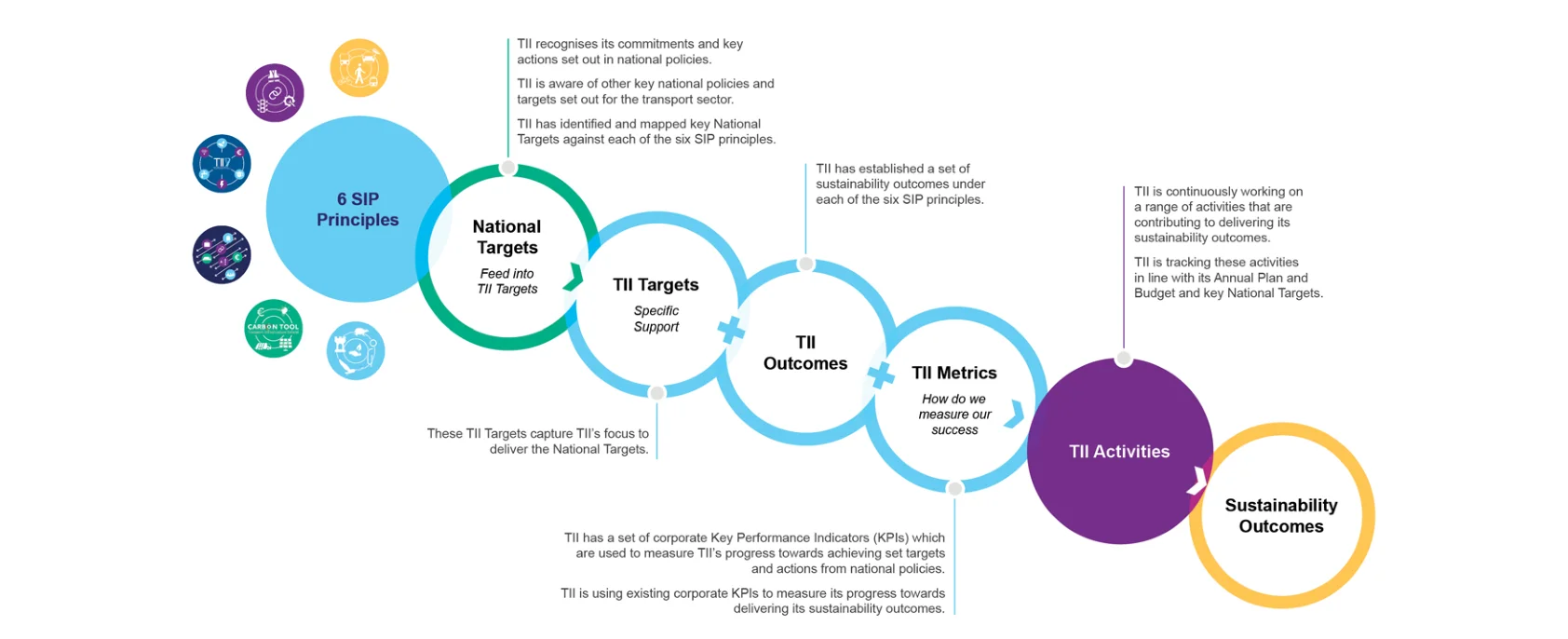
Figure 16: The development process of Sustainability Outcomes, starting from the six Sustainability Principles
Appendix B | Sustainability Outcomes

Figure from page 36
Relevant Policy Abbreviations
| National Policies Abbreviations | |
|---|---|
| BCCSAP | Biodiversity Climate Change Sectoral Adaptation Plan 2025-2030 |
| CAP | Climate Action Plan 2025 Annex of Actions |
| MTS | Moving Together Strategy 2026-2030 |
| RHS | National Road Haulage Strategy 2022-2031 |
| RSS Phase 2 | Our Journey Towards Vision Zero Ireland’s Government Road Safety Strategy Phase 2 Action Plan 2025-2027 |
| RSS | Our Journey Towards Vision Zero Ireland’s Road Safety Strategy 2021-2030 |
| SMP | Sustainable Mobility Policy Action Plan 2026-2030 |
| T-SAP II | The Transport Sectoral Adaptation Plan II 2025 |
Appendix B | Sustainability Outcomes
Principle 1 - Sustainability Outcomes Provide effective, efficient and equitable mobility TII Specific Existing TII KPIs
National Actions
RHS Action 19 - Map the current infrastructure available to haulage and freight including rest stops and refuelling
SMP Action 45 - Continue the development of the greenways network (to include urban greenways)
SMP Action 47 - Conduct a review of the Bike to Work scheme to boost
take-up among all workers and to inform the following action
stations and identify priority projects for advancement
SMP Action 31 - Continue the delivery of the National Cycle Network
SMP Action 35 - Increase the number of Park and Share sites to facilitate increased car-pooling, as delivered on the M1 Park
RHS Action 6 - Complete study examining the feasibility of Freight Consolidation
plan (to include greenways, road space reallocation and quiet roads
Centres to consolidate and rationalise freight transport & identify next steps
initiatives) to ensure establishing linkages with towns and villages.
and Share facility, with both safety and emissions benefits.
CAP Action TR/25/7 - Advance roll-out of walking/cycling infrastructure
in line with National Cycle Network (NCN) and Cycle Connects
RHS Action 8 - Launch a call to the private sector re specific transport
plans. The steps identified for the delivery concern putting in
operations which may be suitable for a Longer Semi-trailer Trial
RSS Action 7 SRR (Safe roads and roadsides - Sustainability Pillar). Develop a programme of Park and Share facilities to remove unsafe parking
place governance arrangements for the delivery of NCN
and manoeuvres and to reduce pedestrian activity on hard shoulders and junctions of National Roads, including delivering a minimum of four
RSS Action 39 - Develop a National Cycle Network plan for interurban rural cycling and walking, providing connections to active
MTS Action 3a - Develop local DM strategies in line with guidance provided by DoT/ NTA (see Recommendation 4) that facilitate compact growth targets
Park and Share sites on or adjacent to the National Road Network.
travel networks and Greenways. Develop an implementation plan
outlined in the NPF and the Regional Spatial and Economic Strategies.
for delivery in Phases 2 & 3 of the Road Safety Strategy
TII Targets
Contribute to accessibility from the north-west of Ireland and between
Contribute to the creation of attractive, liveable, well designed, high quality urban places that are home to diverse and integrated communities that enjoy
centres of scale separate from Dublin will be significantly improved, focused on cities and larger regionally distributed centres and on key east- west and north-south routes. (National Planning Framework 2025)
Contribute to designing infrastructure according to Universal Design Principles and the Hierarchy of Road Users model. (Sustainable Mobility Policy 2026-2030)
a high quality of life and well-being. (National Planning Framework 2025)
TII Outcomes
National road, light rail and active travel infrastructure that contributes to compact growth, sustainable mobility, enhanced regional accessibility and the transition to a low-carbon future.
Metrics
% of major roads capital
% of major roads capital projects
eFlow user customer
% of minor projects (incl. active travel) on or ahead
% of greenway projects
Luas complaints (per
M50 Toll compliance
% of scheduled service km delivered.
projects on or ahead of
on or ahead of 2026 milestone
satisfaction (ease
on or ahead of 2026
100,000 passenger journeys)
rate (quarterly)
2026 milestone target (at construction).
target (at planning and design
of use reported.
of 2026 milestone target
milestone target
or proceeding to application)
Sample of TII Ongoing Activities
TII is expanding the greenway network establishing
TII is commencing the delivery of MetroLink.
TII is exploring the potential of urban freight consolidation centres to reduce kilometres of travel
linkages with towns and villages in line with
Recent relevant TII Standards and Guidance: Project Appraisal Guidelines for National Roads Unit 13.0 – Appraisal of Active Modes Technical Document. Rural Cycleway Design (Offline and
the strategic national cycle network.
by heavy goods vehicles in urban areas.
TII is implementing a Bus Priority Measures Pilot Scheme between M4 Junction 6 and Junction 5. Work
Greenways) Standard Document. Environmental Impact Assessment of Rural Cycleways (Offline & Greenway) – A
TII is developing a plan to assess future of tolling/ funding
TII is taking a holistic approach to bypasses and associated public realm upgrades, integrating active
for the operation and maintenance of the National
is progressing on M4 Jn 6 to Jn 5 in-bound which has
Road network post expiry of PPP (2033 - 2052).
been developed and designed so that the solution is
Practical Guide Technical Document.
travel infrastructure and complementary measures
accommodated within the existing road footprint.
to improve connectivity and accessibility.
Appendix B | Sustainability Outcomes
Principle 2 - Sustainability Outcomes Enable safe and resilient networks and services TII Specific Existing TII KPIs
National Actions
RSS Action 8 - Expand speed management measures on National,
RSS Action 65 - Embed the Safe Systems approach within Transport
RSS Action 1 - Develop and implement a safety rating indicator for National Road infrastructure, which will help target investment on sections
Regional and Local roads using Periodic Speed Limits at schools, Vehicle Activated Signs and Average Speed Cameras in collaboration
Infrastructure Ireland standards and guidance documents.
of National Roads with the highest risk of fatal or serious injury
with An Garda Síochána at appropriate high-risk locations.
RSS Action 3 SRR - Progress implementation of divided
roads across the National Road Network in-line with the
RSS Action 9 SRR (Safe Roads and Roadsides - Sustainability
RSS Action 13 SWRR (Safe work-related road use – Sustainability Pillar)
RISM directive and the Speed Limit Review.
Pillar) - Continue to participate in InterNational Road Safety Research Programmes – DG Move, CEDR, ITF and PIARC.
- Co-ordinate the development and implementation of a driver education programme focused on preventing unsafe behaviours in road work zones.
RSS Action 12 SHMT(Safe and healthy modes of travel– Sustainability
Pillar) - Deliver safety improvements to National Roads adjacent
to schools to reduce speeds and improve active travel.
T-SAP II Action R3 - Continue to implement the existing
RSS Action 2 SRR - Delivery of the EU Road Infrastructure Safety Management
climate adaptation strategy for Roads.
SMP AP Action 34 - Complete a series of Quiet Road pilots in rural areas with suitable signage and traffic calming measures to support safe cycling.
Directive – Statutory delivery, including the following programmes: • High
Collision Location (HCL) Programme • Road Safety Inspection (RSI) Programme • Pavement skid resistance (SCRIM) Programme • National Road Pavement Condition Programme • Life Cycle Renewal Programmes
RSS Action 10 SRR - Increase the length of divided roads on the National Primary Network by constructing 18km of new divided road on the N21 and N28.
RSS Action 5 SRR - Maintain the National RSA Portal for Road
for Road Signs and Road Lines to ensure appropriate luminosity.
Safety Auditor Approval and Road Safety Audit records.
RSS Action 8 SRR - Publish the first mandatory Network
T-SAP II Action R6 - Enhance collaboration between the National Transport Authority, local authorities, bus operators and Transport
RSS Action 6 SRR - Continue to raise public awareness of Variable
Wide Road Safety Assessment for National Roads
Speed Limits and Lane Control Measures on the M50.
Infrastructure Ireland on climate-proofing urban roads.
RSS Action 1 SRR - TII to provide training to local authority engineers,
RSS Action 3 SRR - Deliver on average four Minor Safety Improvement Schemes on National Roads per year at road sections
planners and relevant planning authorities to incorporate safe
T-SAP II Action LR1 - Digitalise asset data for the Luas system.
systems approach in their review of planning applications.
with low safety levels, as required by the RISM Directive.
TII Targets
Contribute to the Road Safety Strategy’s target to reduce fatalities and serious injuries by 50%
Implement the adaptation actions and measures outlined within the Climate Adaptation
by 2030 (compared to a baseline of the average for 2017-2019). (RSS 2025-2030).
Implementation Plans within 5 years of development. (Climate Adaptation Strategy)
TII Outcomes
Safe transport infrastructure that is resilient to the impacts of future change, delivering better accessibility and sustainable mobility for people and goods. A reduction in the risk and number of collisions, injuries and deaths on TII’s transport infrastructure.
Metrics
Fatalities on the National
Serious injuries on the National
No. of major injuries and fatalities per
Luas anti-social behaviour complaints M50 incident response (avg time).
Roads Network (YTD) (Same Period Last Year)
Roads Network (YTD) (Same Period Last Year)
1,000,000 km light rail operated
Sample of TII Ongoing Activities
TII is developing a bus-based park and share at Junction 4 of the M1at Lissenhall.
TII is delivering an average of 60 road safety
Recent relevant TII Standards and Guidance: Geometric Design Standard DN-GEO-03036. Climate Guidance for National Roads, Light Rail, and Rural Cycleways.
TII published a draft Park and Share Policy for consultation and published a Louth Park and Share: Pilot and Trial Ex-Post Evaluation
improvement schemes - and funding an average of four minor realignment schemes on National Roads per year, to create forgiving
It has over 800 car parking spaces.
Climate Assessment of Proposed National Roads – Standard.
report which has identified potential new
roadsides, self-explaining roads, and a safe
Drainage Systems for National Roads- Standard. Design of Road Lighting for the National Road Network- Standard.
sites for Park and Share facilities.
TII Climate Adaptation National
environment for vulnerable road users.
Roads Implementation Plan.
Appendix B | Sustainability Outcomes
Principle 3 - Sustainability Outcomes Collaborate for a Holistic Approach TII Specific Existing TII KPIs
National Actions
MTS Action 5a - The co-ordination and implementation of demand management measures will be supported through the existing National Guidelines and Standards Group with the aim of revisiting and prioritising
MTS Action 13a - Working with delivery partners, implement additional
measures to support captive car users, further supporting the objectives of the SMP. This should include, inter alia, the roll-out and
RHS Action 23 - NTA to lead, in consultation with key stakeholders, the development of Strategies for Sustainable Freight Distribution for the Greater Dublin Area and the Metropolitan Areas Cork, Galway, Limerick and Waterford.
space for transport modes that are less carbon and space intensive;
scaling up of shared mobility/mobility hubs at a national level.
as well as for reallocation of destinations to promote proximity.
MTS Action 2b - Consider learnings and potential next steps
MTS Action 8d - Develop a long-term strategy and implementation
on the implementation of a National Road user charging
plan for the Sustainable Mobility Academy.
model taking account of latest international practice.
MTS Action 8b - Develop evidence-based guidance for LAs and
others to engage effectively with communities in pre and post scheme development, through Sustainable Mobility Academy.
RHS Action 2 - Commission a study to establish current
RHS Action 3 - Following completion of the data audit; engage
data availability and quality, identify key data gaps and
with stakeholders to identify data sources or collection points
explore at a high level how these might be filled.
which can be used to fill the identified data gaps.
TII Targets
Contribute to regenerating and rejuvenating cities, towns and villages of all types and scale as environmental assets that can
Contribute to promoting smart and integrated
Contribute to promoting sustainable mobility
accommodate changing roles and functions, increased residential population and employment activity, enhanced levels of amenity and design and placemaking quality, in order to sustainably influence and support their surrounding area to ensure
mobility through innovative technologies and development of appropriate regulation.
through research and citizen engagement.
(Sustainable Mobility Policy 2026-2030)
progress toward national achievement of the UN Sustainable Development Goals (National Planning Framework 2025)
(Sustainable Mobility Policy 2026-2030)

Figure from page 39
TII Outcomes
The achievement of TII’s Statement of Strategy’s goals and strategic objectives through engagement and collaboration, partnering effectively with external parties, both nationally and internationally.

Figure from page 39
Metrics
Number of employees (FTE) eFlow user customer satisfaction (ease of use reported).
Sample of TII Ongoing Activities
TII has commenced the installation
TII is a Partner and Board Member of Ireland’s
TII is implementing its Strategic Communications and Engagement Strategy and Plan, incorporating TII’s Stakeholder Engagement Framework.
TII is introducing a process to track carbon savings from environmental award criteria and specification changes
of ten new Weigh in Motion (WIM) deployments on National Roads in consultation with stakeholders such as
Supply Chain Sustainability School. The school and its partners are working to enable
a world class sustainable built environment
in suitable strategic procurements.
Recent relevant TII Standards through knowledge and collaboration.
DoT, An Garda Síochána and RSA.
and Guidance: Guide to the Implementation of Sustainability
for TII Projects Technical Document. Project Manager’s Manual for Greenway
Projects – Technical Document.
TII continues engagement and collaboration with TII’s asphalt supply chain to plan the implementation of carbon reductions in the production, transport and laying of asphalt pavement materials
TII collaborates internationally and has, for example, joined a pan European initiative termed Leap to Zero, spearheaded
TII continues to provide training to key stakeholders e.g. Local Authorities, An
by Rijkswaterstaat (Netherlands), which aims to accelerate
Garda Siochana on relevant topics.
the transition to zero emission construction sites.
and maximising the application of circular economy principles.
Appendix B | Sustainability Outcomes
Principle 4 - Sustainability Outcomes Deliver end-to-end Improvements TII Specific Existing TII KPIs
National Actions
T-SAP II Action R3 - Continue to implement the existing climate adaptation strategy for roads.
T-SAP II Action LR1 - Digitalise asset data for the Luas system.
RSS Action 3 - Increase the length of divided roads on the National Primary
SMP Action 34 - Complete a series of Quiet Road pilots in rural areas with suitable
Network from 1,310km (2020) to 1,366km (2024).
signage and traffic calming measures to support safe cycling.
SMP Action 45 - Continue the development of the greenways network (to include urban greenways).
SMP Action 4 - Review expenditure and prepare IMMAC for 2031-2035 period.
RSS Action 4 SRR (Safe Roads and Roadsides - Sustainability Pillar) - Continue to deliver training (including CPD training) in accordance with the RISM Directive to maintain a high level of
SMP Action 31 - Continue the delivery of the National Cycle Network plan (to include greenways, road
space reallocation and quiet roads initiatives) to ensure establishing linkages with towns and villages.
professional competency in Road Safety in Ireland - Road Safety Audit and Engineering.

Figure from page 40
TII Targets
Contribute to active participation, across sectors, on the All-Island Circular Economy Forum to maximise opportunities in developing an All-Island Circular Economy. (Whole of Government Circular Economy Plan: Accelerating Action)

Figure from page 40
TII Outcomes
The achievement of TII’s circular economy vision.
Metrics
% of major roads capital projects on or ahead of
% of major roads capital projects on or ahead of 2026 milestone
% of major roads capital projects on or ahead of 2026 milestone
2026 milestone target (construction)
target (planning and design or proceeding to application)
target (planning and design or proceeding to application)
% of Scheduled Service Kilometres delivered % of greenway projects on or ahead of 2026 milestone target
Sample of TII Ongoing Activities
The TII Circular Economy External Collaboration Committee
The TII Circular Economy External Collaboration Committee
The TII Circular Economy External Collaboration Committee
continues to meet to promote implementation of circularity
continues to meet to promote implementation of circularity
continues to meet to promote implementation of circularity
and adoption of TII’s Sustainability Implementation Plan.
and adoption of TII’s Sustainability Implementation Plan.
and adoption of TII’s Sustainability Implementation Plan.
Recent relevant TII Standards
and Guidance: Project Appraisal Guidelines Unit 6.0 – Cost Benefit Analysis Overview – Technical Document.
New appropriate Life Cycle Assessment (LCA) models will be used which strike a balance between economic, environmental and social costs. Guidance
Circular Economy pilot projects show ~10% material savings. Findings will be incorporated into
TII is gathering data relating to resource consumption
using asset management systems.
new guidance on LCA and procurement.
on LCA and procurement will be published.
Appendix B | Sustainability Outcomes
Principle 5 - Sustainability Outcomes Transition to Net Zero TII Specific Existing TII KPIs
National Actions
RHS Action 20 - Fulfill the requirements of the future TEN-T Regulation including in relation to upgraded
RHS Action 3 - Following completion of the data audit; engage with stakeholders to identify
road infrastructure, safe and secure parking and recharging and refueling Infrastructure.
data sources or collection points which can be used to fill the identified data gaps.
RSS Action 39 - Develop a National Cycle Network plan for interurban rural cycling and walking, providing
RHS Action 2 - Commission a study to establish current data availability and quality,
connections to active travel networks and Greenways. Develop an implementation plan for
identify key data gaps and explore at a high level how these might be filled.
delivery in Phases 2 & 3 of the Road Safety Strategy.
TII Targets
Improve energy efficiency by 50% by 2030 compared to 2009. (Public Sector Climate Action Mandate 2025).
Contribute to a 35% reduction in GHG emissions in the Industry Sector by 2030 compared to 2018 (CAP23).
Reduce greenhouse gas (GHG) emissions associated with energy from TII’s operations by 73% to 7,606 tonnes of Carbon Dioxide equivalent (tCO2e) by 2030, compared to a 2016-2018 (average) baseline of 28,533 tCO2e (Public Sector Climate Action Mandate 2025).
Contribute to a 50% reduction in GHG emissions in the transport Sector by 2030 compared to 2018 (CAP23)

Figure from page 41
TII Outcomes
Decarbonisation of transport and contribution to sustainable mobility achieved by supporting the use of emerging technologies while extending the life and optimising the use of transport infrastructure.
Metrics
CO2 emissions from blacktop used in TII’s Thermal final energy (kWh / tonnes of CO2eq) Electricity final energy (kWh / tonnes of CO2eq) Transport final energy (kWh / tonnes of CO2eq)
pavement programme (per km)
Sample of TII Ongoing Activities
TII has now received certification for ISO
Recent relevant TII Standards and Guidance:
1400:2015 Environmental Management System for its Dublin head office.
TII Road Emissions Model (REM): Model Development Report – Technical Document. TII Carbon Tool for Road and Light Rail Projects: User Guidance Document – Technical Document.
Fulfil the requirements of the future TEN-T Regulation
including in relation to upgraded road infrastructure,
Ongoing collection of data for freight fleet and associated emissions (Action 2 and 3 of RHS).
safe and secure parking and recharging and
refuelling Infrastructure (Action 20 of RHS).
N22 Carbon Benchmarking and Analysis – Technical Document.
Continue the design and implementation process to
support the installation of additional EV charging at TII’s 9 motorway service areas together with planning
for future reconfiguration of parking arrangements in TII’s service areas, to allow for the upgrade and expansion of electric vehicle charging facilities within
the service areas, in line with AFIR requirements.
Update processes for vehicle procurement to meet target for purchase of zero emission vehicles where operationally feasible, as well as the minimum targets
TII actively engages staff in Organise staff workshops
Collecting current emissions data such as scope 1-3 for
(at least annually) to engage on climate issues, including a focus on decreasing the organisation’s
the annual emissions inventory, M&R (Monitoring and Reporting) tracking and Gap-to-Target modelling for scope
Delivery of alternative fuels infrastructure project
set out by SI381/2021 Clean Vehicles Directive.
carbon footprint. Staff and management training.
1 and 2 (annual updates in line with SEAI guidelines).
(EVCI) supports the transition to low carbon
freight solutions (Action 23 of RHS).
Appendix B | Sustainability Outcomes
Principle 6 - Sustainability Outcomes Create Total Value for Society TII Specific Existing TII KPIs
National Actions
SMP Action 69 - Consult and engage with disabled people in the design and implementation of transport infrastructure where it interacts with the associated built environment, ensuring application of a universal design and ‘whole of journey’
RSS Action 71 - Facilitate the improvement of an average of 10 rural bus stop facilities annually on the National Road
SMP Action 77 - Commission study to assess potential
for policy measures to incentivise car-pooling.
Network in line with a Safe System approach.
approach in line with the objectives of the National Sustainable Mobility Policy.
BCCSAP Action 3.8.10 - Local Authorities, Transport Infrastructure Ireland (TII), NPWS and OPW will encourage a more reliable supply and use native
species, varieties, and landraces from appropriate native sources in their landscaping works, where possible.
TII Targets
TII Biodiversity Plan Medium- and Long-term goals.
Mandate detailed investigation of potential
impacts of habitat fragmentation at a
Identification and classification of key wildlife corridors of relevance to
Eradicate, control and prevent the spread of Invasive Alien Species on new
Identification and mitigation, where feasible, of priority species collision hotspots on the existing road network.
Address legacy impacts on biodiversity through
landscape scale for all new projects, including detailed understanding of existing
the implementation of targeted research, mitigation and, where applicable, compensation.
the existing transport network.
projects and the existing network.
baseline conditions at a landscape scale.

Figure from page 42
TII Outcomes
To have demonstrated leadership in the delivery and operation of sustainable transport infrastructure and services, delivering a better quality of life.
Metrics
eFlow user customer satisfaction (ease of use reported) Percentage of staff that would recommend TII as an employer Senior leadership representation - by gender %
Sample of TII Ongoing Activities
Establishing TII’s Strategic Framework
Participation in ongoing Local Transport Plans
eFlow sponsorship of Biodiversity
Recent relevant TII Standards and Guidance: Biodiversity Impact Assessment of National Road, Greenway
for gender sensitive data collection
and metropolitan area transport strategies
in Schools Competition.
on public transport projects.
with Local Authorities and the NTA.
and Active Travel Projects – Literature Review. Biodiversity Metric Tool for Road, Greenway, and Light Rail
Projects: User Guide Document; Technical Report. Population and Human Health Assessment of Proposed National Road – Standard.
Water Impact Assessment for Proposed National Roads – Standard Document.
TII has facilitated the improvement of an average of 10 rural bus stop facilities
Air Quality Assessment of Proposed National Roads – Standard. Applying a Gender Lens to TII Public Transport Projects Technical Document.
Conducting research on Appropriate Facilities for Age Friendly Active Travel.
Developing the MetroLink Project
annually on the National Road Network
Sustainability Plan.
in line with a Safe System approach.
Appendix B | Sustainability Outcomes
Appendix C Five Year Scenario Progress to Date

Figure from page 43
Appendix A | Policy Context and Framework
Appendix C | Five Year Scenario Progress to Date
Appendix C | Five Year Scenario Progress to Date
Appendix D SIP Plan Timeline Progress to Date

Figure from page 46
Appendix A | Policy Context and Framework
Appendix D | SIP Plan Timeline Progress to Date
Appendix D | SIP Plan Timeline Progress to Date
Appendix E Governance

Figure from page 49
Appendix A | Policy Context and Framework
Pages 19–49 · View in original PDF