Updates
This report sets out the progress made in the three years since the Policy was launched in April 2022, as well as an update on the implementation of actions since the last report was published in August 2024.
Completed
50.5%
SMP Progress to end of April
On Schedule 2025
6.6%
Delay Anticipated
16.5%
Ongoing
5.5%
Delayed
Modified
15.4%
5.5%
Figure 1: Action delivery status to end April 2025
It should be noted that the action status categorisation, as outlined in Figure 1 and the remainder of the report, is by necessity an imperfect tool. For example, where actions consist of several sub-actions, a small delay to only one sub-action will render the full action incomplete. This often misrepresents the level of progress that has been delivered across
an action, particularly where the remaining sub-actions are on schedule for delivery or are fully completed. Accordingly, this report seeks to provide a detailed account of the delivery of each action, as set out below and in Annex 1. For those actions that are delayed, this report seeks to reflect the specific elements that have led to delay.
For ease of reference, the following explains the action status categories in line with Figure 1:
| Table 1 Category | Action Status Categories Description |
|---|---|
| Complete | The action and related outputs in the SMP Action Plan have been fully completed. |
| On Schedule | The action and related outputs in the SMP Action Plan are due for delivery at the end of 2025 and are currently expected to be delivered on time. |
| Ongoing | The action and related outputs in the SMP Action Plan refer to areas of work which take place annually or on an ongoing basis. |
| Modified | The original action in the SMP Action Plan has progressed but has diverged in scope and/or direction impacting timescales and output definitions. This reflects the need for agility and adaptability. This is a new category in the Year Three report. |
| Delayed | The action and related outputs in the SMP Action Plan are past their scheduled date for delivery and have not yet been fully completed. |
| Delay Anticipated | The action and related outputs in the SMP Action Plan are due for delivery in Q4 2025 and it is not now expected that they will be fully delivered by that date. This category was referred to as “At Risk of Delay” in previous reports. |
Completed
technologies (Action 10) through the SPSV Grant Scheme.
In the first two years, 33 actions were fully completed, including the Young Adult Travel Card, the commencement of legislation to permit Powered Public Transporters (PPTs) and the publication of the National Cycle Network. In its third year, significant progress was made with 13 further key actions being completed, several ahead of schedule. These achievements continue to support the Policy’s core objectives of enhancing accessibility, promoting low-emission transport, and improving cycle infrastructure across Ireland.
As well as making our transport system more sustainable, great progress has also been made to make it accessible. The Travel Assistance Scheme (Action 49) was expanded to Galway, Limerick, Cork and Waterford, as well as Dublin. Additionally, Action 50, which aimed to expand the number of wheelchair accessible vehicles (WAVs) in the SPSV fleet by 25%, was also completed. As of 30 September 2024, 4,080 WAVs were in operation, representing a 25.5% increase of WAVs in the fleet.
In terms of promoting low-emission transport, the transition of the PSO bus fleets in Cork, Galway and Waterford to low- and zeroemission vehicles (Action 14) was completed ahead of its original end-2025 target. The goal of achieving a 40% transition was surpassed, with 41.3% of the fleet now operating as low- or zero-emission vehicles. Additionally, implementation has commenced on transitioning the Small Public Service Vehicle (SPSV) fleet to lower- and zero-emission
Action 33 was also completed in Year Three of the SMP. This involved a pilot project in Leitrim which integrated public, disability and health transport services. Following the successful pilot, the programme is now being mainstreamed. The Department of Transport, in collaboration with Department of Children, Disability and Equality (DCDE), the National Transport Authority (NTA), Transport For Ireland (TFI) Local Link and the Health
Service Executive (HSE), will continue to work on expanding this initiative in line with Programme for Government commitments.
Action 86 was also completed in Year Three, through the development of a national consolidated customer contact centre for transport. This year saw all major PSO operators and the NTA migrating to the new TFI contact centre.
The All-Island Strategic Rail Review (Action 16), which aims to enhance the rail system across Ireland and Northern Ireland, was published on 31 July 2024. In addition, pedestrian enhancement plans for the five metropolitan areas were finalised and reviewed by the NTA, completing Action 17.
Under Action 35, 507 bus shelters have been installed for regional and rural services since the start of the SMP — more than doubling the original target of 200.
Finally, a new equitable fares strategy was implemented in July 2025 for the GDA (Action 52), introducing more integrated and equitable fares in Dublin commuter areas within 50km of Dublin city centre.
Meanwhile, under Action 27, a major programme of active travel infrastructure for regional growth centres and key towns outside the GDA is underway, with 922km of cycling and 762km of walking infrastructure in development — approximately 40% of which is located outside the GDA. This significantly surpasses the target in the SMP Action Plan for 100km of active travel infrastructure to be constructed or under construction in regional growth centres and key towns outside the GDA by the end of 2025.
On Schedule
As outlined in Figure 1, 6.6% of actions, equating to six actions, are due for delivery by the end of 2025 and remain on schedule. These include actions related to the rollout of awareness campaigns on public transport, and a series of activities to improve accessibility in public transport vehicles and stations (Actions 2 and 48).
The expansion of bike share schemes in cities (Action 18) is also now complete with the commencement of operations in Waterford in 2022, and 100 e-bikes put into operation in Cork. A further 400 e-bikes will be delivered to the remaining regional cities by the end of the year. New bike stations have also been installed in Cork and Limerick with a substantial increase in the usage of the bikes as a result (+50% in the first five months of 2025). It is also intended to further expand the range of shared mobility services in the regional cities during 2026.
Other actions include the delivery of additional active travel infrastructure in the GDA and the regional cities (Action 19), with
388km of the targeted 400km in the GDA now complete or under construction, while the target of 200km in the regional cities has been substantially surpassed - 327km of active travel infrastructure in these cities is either complete or currently being constructed.
The implementation of a programme for secure bicycle parking (Action 41), has also been achieved with secure cycle parking added in urban centres, train stations and bus stop locations. Over 3,200 publicly accessible cycle parking spaces were implemented in 2024 alone, with an additional 1,800 added in school, campus and hospital grounds. More bike parking is planned across many locations, including in Dublin where a newly signed contract will facilitate the delivery of 300 bike lockers to be rolled out from end 2025.
The commencement of the review of the Regional Spatial and Economic Strategy (RSES) for the Eastern and Midland Region as well as the development of local transport plans are also progressing On Schedule (Actions 76 and 77).
Ongoing
Several SMP actions relate to areas of work which take place annually or on an ongoing basis, which are monitored via quarterly updates. These include the provision of
training and annual work programmes to improve road infrastructure. Each of these actions continued to progress satisfactorily in Year Three.
(SETU) in Carlow in 2025 to expand the number of road engineering courses, all of which Local Authority staff can undertake via the annual training grant. The Department and LASNTG have also had meetings with Engineers Ireland in 2025 and added a number of their road engineering courses to the list of courses which Local Authority staff can attend via funding from the annual grant allocation.
Modified
Five of the actions set out in the SMP Action Plan – Actions 26, 31, 33, 60 and 87 – have been modified somewhat in response to changing circumstances. This refers to actions which have progressed but have diverged in scope and/or direction to the extent that the originally envisaged outputs have now been superseded. In such cases, the objective of the original action is being addressed in an alternative way.
Actions 31 and 87 both relate to the development of shared mobility options, an area which has advanced considerably since the Action Plan was published in 2022. Action 31, ‘Develop a model for bike share schemes (including the potential for electric bikes) in regional growth centres and key towns’ included two outputs: the development of the model by end 2023 and the introduction of pilot projects by end 2024. A micromobility strategy detailing how this system will be operated and managed has been completed by the NTA, and has informed an ongoing micromobility tender process which will expand both the geographical area and the variety of shared modes available in Cork, Limerick, Galway and Waterford, as well as establishing a qualifications system for micromobility providers that can also be availed of by other local authorities who wish to operate a shared micromobility scheme. However, as several local authorities in regional growth centres and key towns have rolled out shared mobility schemes in partnership with commercial shared mobility providers since 2022, and shared mobility hub networks will be tested through the Mobility
Action 60, ‘Expand continuous professional training for key design skills and application of national standards’ included two specific outputs in the Action Plan: carrying out a series of online workshops by end 2022 and introducing a graduate training programme by end 2023. The first output was completed, with eight online Design Manual for Urban Roads and Streets (DMURS) workshop taking place in 2022 with over 3500 attendees. However, rather than introducing a specific graduate programme, the Department has worked with a series of institutions to expand the availability of suitable training for local authority staff. This includes funding courses in Atlantic Technological University (ATU) through the Local Authority Services National Training Group (LASNTG) and working with the South East Technological University
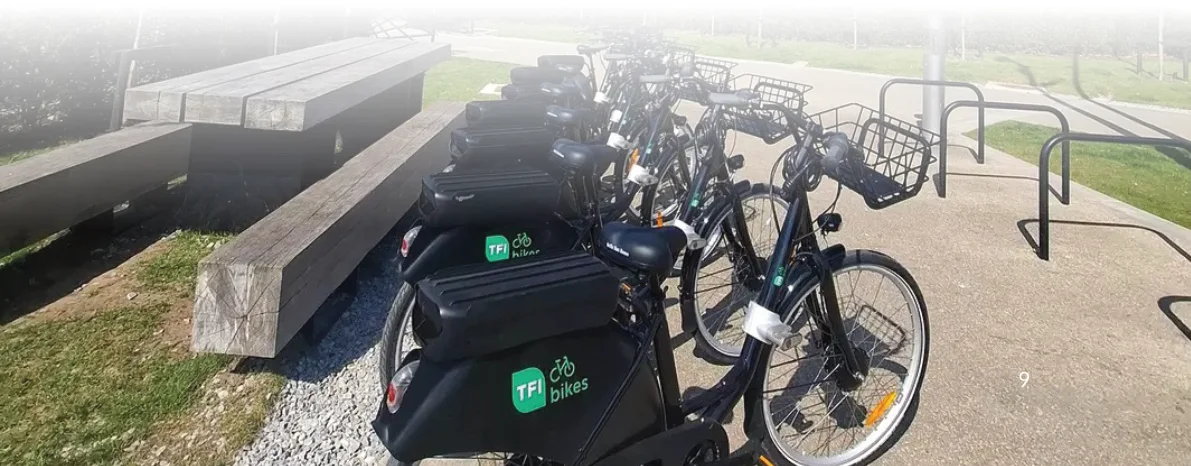
Figure from page 11
Figure from page 12
Hubs pilot programme detailed below, it is no longer considered necessary for the NTA to establish an additional pilot programme for regional growth centres and key towns specifically.
process will commence for the project in 2026.
Action 33, to conduct and monitor a pilot project in Leitrim to deliver nonemergency health transfer service and develop an implementation strategy has also been modified. A three-year pilot project was developed by the NTA and Local Link in partnership with the HSE, and successfully integrated public, disability, and health transport services. Following a 2024 independent review, the pilot is being mainstreamed. As the focus is now on mainstreaming the pilot in line with commitments in the Programme for Government and the forthcoming new National Disability Strategy, development of an implementation strategy is not currently being progressed.
Action 87, ‘Expand shared car, bike and powered personal transporters (PPT) services at transport hubs and interchanges’ includes one output for delivery by the end of 2023: the development of a strategy for the rollout of expanded shared services. This has evolved into a more comprehensive plan for a Mobility Hubs pilot programme which will test the network effect of mobility hubs across five diverse urban settlement areas (e.g. a major urban area, a large urban area and three regional towns) and the impact of hub density on user uptake. The pilot programme will involve the creation of approximately 300 branded hubs of varying sizes across these areas to complement, and integrate with, existing and planned public transport services. A Preliminary Business Case for this project seeking funding from the Climate Action Fund (CAF) received approval in principle from the Department of Climate, Energy and the Environment (DCEE) in July 2024. It is intended that a Detailed Business Case will be completed in Q4 2025 and that the tendering
Finally, the development of pedestrian enhancement plans for the regional growth centres and key towns (Action 26) has been incorporated into the Area Based Transport Assessments which are being undertaken in all key towns. These plans are being developed by the Local Authorities, with guidance from the NTA.
Delayed
it is intended that an assessment of light rail will be completed as part of the review of the Galway Transport Strategy (now called the Galway Metropolitan Area Transport Strategy or GMATS). This is awaiting An Coimisiún Pleanála’s determination on the re-submitted N6 Galway City Ring Road application.
Fourteen of the actions in the Action Plan have passed their deadline as set out in the Plan but are not yet fully complete. While all of these actions have progressed and several have completed most of the proposed outputs set out in the Action Plan, further progress is required to fully deliver these actions.
Technical work on Action 40 to develop a demand management scheme for the Greater Dublin Area has been completed. It is anticipated that the scheme will be finalised following the expected publication of the national demand management strategy, ‘Moving Together’, in the coming months - subject to the necessary Government approval.
With regard to Action 12, to commence delivery of the DART+ Programme, the subactions related to DART+ West and DART+ South West have been completed. Both projects have received planning approval, although that approval is conditional in the case of DART+ West. However, the scope of the DART+ Coastal South project has evolved and this part of the programme is being progressed on a phased basis. Consequently, not all of the Action has been completed to date.
The development of a governance framework for the implementation of Mobility as a Service (MaaS) (Action 82) is delayed as the NTA progresses Next Generation Ticketing (NGT), although an initial paper has been developed and submitted to the Department. Once NGT has been delivered, work on finalising a governance framework for MaaS will resume.
Action 5 – The expansion of speed management measures on National, Regional and Local roads using Periodic Speed Limits at schools, Vehicle Activated Signs and Average Speed Cameras in collaboration with An Garda Síochána at appropriate high-risk locations – is also not complete, although a significant milestone was reached with the reduction of speed limits on local roads to 60km earlier in 2025. Further phases are now being progressed, and new average speed limit cameras were introduced on national roads in 2024 and 2025. Vehicle Activated Signs are being introduced where deemed appropriate and at the discretion of the local authority.
Delay Anticipated
Fifteen actions have a deadline of Q4 2025 in the SMP Action Plan, and it is now anticipated that they will not be fully completed in time.
Three of these actions relate to the electrification of the fleet. While notable progress has been made in delivering fuelling and charging infrastructure in several locations, a delay is anticipated in delivering Action 8 due to ongoing procurement of charging infrastructure for additional depots in Dublin, Cork, and Sligo. This delay has had a knock-on effect on the electrification of the Dublin Metropolitan and Sligo PSO bus fleet (Action 13 and 15), where low and zero-emission buses are ready for deployment but cannot enter service until the necessary charging infrastructure is in place.
In the case of Action 21, to continue appraisal and planning for new light rail in Dublin and Cork and consider the feasibility of light rail in Galway, substantial progress has been made. An application for a Railway Order for Luas Finglas was submitted to An Coimisiún Pleanála (ACP) in November 2024, while a non-statutory public consultation on the Emerging Preferred Route for Luas Cork was launched in April 2025. In the case of Galway,
Action 11, which concerns the delivery of Phase 1 of the Cork Area Commuter Rail Programme, will also not be fully delivered on schedule. Although the new platform at Kent Station opened for service in April, the second part of this action—the delivery of the Midleton Double-Tracking—is now not expected to be completed until Q1 2027, when the new signalling system for the Cork Area Commuter Rail is due to be commissioned.
documentation for the Advanced Enabling Works contracts.
Finally, Action 38, which aims to deliver public transport corridors with prioritised bus lanes on national radial routes to the M50, will also not be fully completed in line with the schedule envisaged in the SMP. The 2025 funding allocation will enable the progression of some civil works this year, but the necessary Intelligent Transport System (ITS) work is not yet in a position to proceed.
The expansion of the rail fleet (Action 20) is also slightly behind schedule. Though an initial 41 carriages have been delivered and are in service, a further 95 DART+ carriages are no longer expected to have completed delivery in 2025. Deliveries started in 2024 and will continue through to 2026. The new trains will enter passenger services following the completion of the ongoing testing and commissioning process.
Overall, the SMP Leadership Group and its Delivery Team will continue to monitor actions in this category to ensure they are progressed as quickly as possible, and to prioritise those actions which will have a direct and tangible impact in shifting journeys from private cars to more sustainable modes of transport.
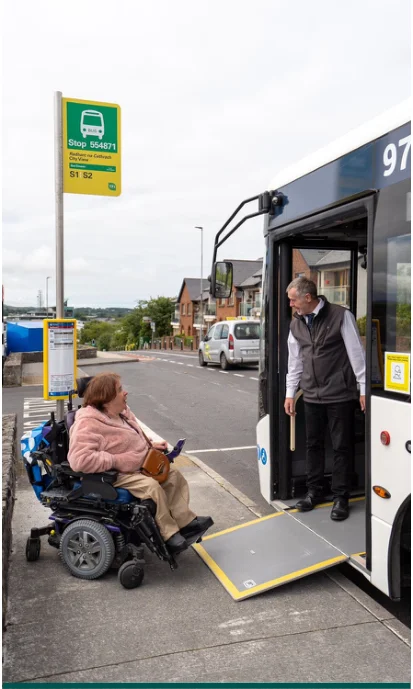
Figure from page 14
The target to have 350 km of Greenway either constructed or under construction by end 2025 (Action 30) will also not be met in this timeframe due to several issues including failure to secure planning on certain projects (e.g. Blessington Greenway). However, some good progress has been made in relation to achieving this target, with 240km of Greenway constructed or being constructed by the end of this year.
Regarding Metrolink, where a risk of delay was noted in the previous SMP progress report, the Railway Order (RO) was submitted on schedule to An Coimisiún Pleanála in September 2022, and an oral hearing on the application was concluded on 28 March 2024. A further statutory public consultation, requested by An Coimisiún Pleanála, commenced in August 2024 and concluded in October 2024. In advance of a decision on the Railway Order, which is currently awaited, work is also progressing on the development of the procurement strategy, and designers are actively preparing designs and tender
Pages 8–14 · View in original PDF