4.12 Key Sustainability Issues .................................................................................. 65
Prepared for: Transport Infrastructure Ireland
SEA of the National Cycle Network Plan SEA Environmental Report (Updated)
8.2 SEA Adoption Statement … 92 Appendix A: Summary of Scoping Submissions Table 1: Summary of Scoping
Submissions … 93 Appendix B: Corridor Options Assessment Tables … 104
Prepared for: Transport Infrastructure Ireland
SEA of the National Cycle Network Plan SEA Environmental Report (Updated)
1. Introduction
1.1 Overview
AECOM were commissioned to undertake an independent strategic environmental
assessment of the National Cycle Network Plan (referred to hereafter as the ‘NCN Plan’).
Strategic environmental assessment (SEA) is a systematic process of predicting and
evaluating the likely significant environmental effects of implementing a proposed plan or
programme, in order to ensure that these effects are adequately addressed at the earliest
appropriate stages of decision-making in tandem with economic, social and other
considerations.
This document updates the draft SEA Environmental Report which was published alongside
the NCN Plan for public consultation in May 2022. The Environmental Report was the main
output of the SEA process and provided stakeholders with an overview of the likely significant
effects of the NCN Plan and reasonable alternatives.
1.2 Background to the National Cycle Network (NCN) Plan
Transport Infrastructure Ireland (TII) worked with key stakeholders to prepare a new National
Cycle Network Plan (‘NCN Plan’). The NCN Plan maps existing cycling infrastructure and
identifies gaps where future investment could be focused to establish a comprehensive and
connected cycling network around Ireland.
The NCN Plan focuses on linking cities and towns of over 5,000 people with a safe, connected
and inviting cycle network. It includes plans to create cycle routes to destinations such as
transport hubs, centres of education, centres of employment, leisure and tourist destinations.
It will optimise the potential for people to cycle as part of their daily activities, such as work or
educational commuting. It will also integrate with existing and proposed cycle infrastructure.
Both the safety and security of cyclists will be central to the development of the NCN.
The NCN builds on previous work completed by TII and aligns with the work being undertaken
by the National Transport Authority (NTA) in developing urban and county level cycle networks.
It integrates with other cycle routes and networks in various stages of development, including
the EuroVelo routes, greenways and the Strategic Plan for Greenways in Northern Ireland.
The NCN plan will complement these other cycling development projects and will provide a
core spine that other networks and routes can connect to.
Prepared for: Transport Infrastructure Ireland AECOM
SEA of the National Cycle Network Plan SEA Environmental Report (Updated)
1.3 Scope / Geographical Coverage of the NCN Plan
The NCN Plan sets out a coherent and coordinated network of cycle corridors connecting
settlements with 5,000 inhabitants or more. It integrates with and complements other existing
and proposed cycle routes and networks.
The likely corridors identified through the NCN Plan mainly cover non-urban areas. Urban
cycle networks are being covered by work currently being undertaken by the National
Transport Authority (NTA).
Whilst the NCN Plan does not include specific or detailed routes, it does identify broad
corridors through which interventions should be targeted. These identified corridors will be
accompanied by recommendations relating to a minimum level of infrastructure required
across the network (e.g., segregated cycle path).
Figure 1.1 highlights the potential nodes that were focussed on through the development of
the NCN Plan.
It is an objective of the NCN Plan to ‘integrate with existing and proposed cycling infrastructure
in Northern Ireland, as appropriate’.
Both the Department for Infrastructure and Sustrans Northern Ireland have been consulted in
relation to the development of the NCN Plan with ongoing engagement planned to ensure
integration of planned cycle networks across the border.
Prepared for: Transport Infrastructure Ireland AECOM
SEA of the National Cycle Network Plan
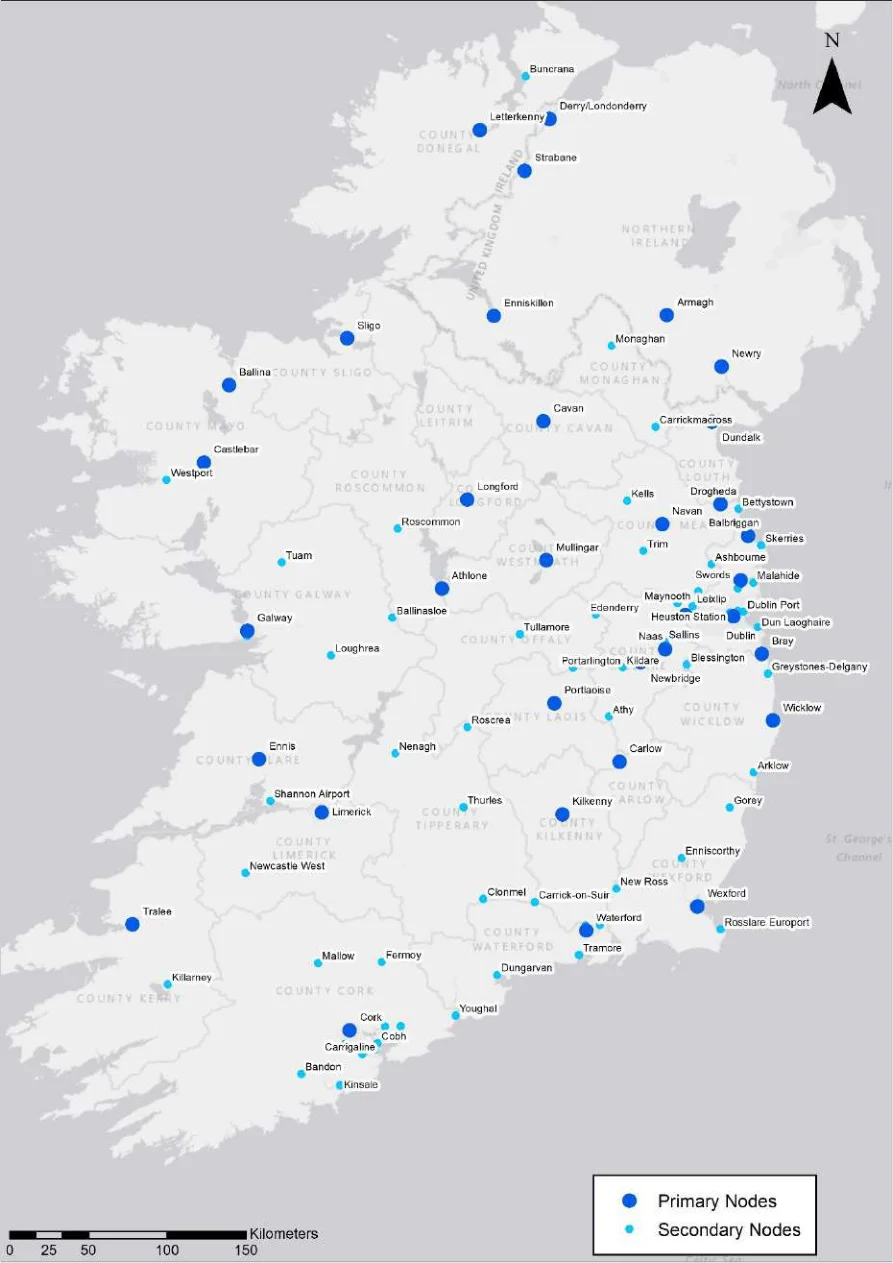
Figure 1.1: Map of the Nodes Focussed on Through the Development of the NCN Plan
Prepared for: Transport Infrastructure Ireland
SEA of the National Cycle Network Plan SEA Environmental Report (Updated)
1.4 Vision and Aims for the NCN Plan
The vision statement of the NCN Plan is to:
“Develop a safe, connected, and inviting cycle network between urban areas and key
destinations to achieve accessible, sustainable, and high-quality routes that will help to
reduce the carbon impact of transport and promote a healthy and inclusive society.”
The NCN aims to link towns, cities and destinations across Ireland with a safe, connected and
inviting cycle network; encouraging more people away from their cars and onto their cycles.
In this context the NCN aims to generate benefits for cyclists and communities across Ireland,
including:
Being the core cycle network for Ireland, connecting towns and destinations to which
other cycle networks will connect.
Acting as a multifunctional network available for commuters, leisure users and tourists.
Establishing a coherent and coordinated network that integrates with existing and
proposed cycle routes being developed by TII and other bodies.
Helping inform how local authorities prioritise Exchequer-funded investments in cycle
infrastructure.
Making use of existing infrastructure wherever possible including greenways and
declassified roads where there is enough space to provide safe and appropriate cycle
facilities.
Providing high-quality cycle infrastructure to promote safety, comfort and increased
participation in cycling. Minimum design standards will be developed for how the
network will be built.
Clearly signposting the network to identify and distinguish it from other cycle facilities.
1.5 Development Process for the NCN Plan
The approach to the Plan is structured around a five-stage process outlined in Figure 1.2. The
current stage in plan development is Stage 5 - Finalisation.
Prepared for: Transport Infrastructure Ireland AECOM
SEA of the National Cycle Network Plan SEA Environmental Report (Updated)
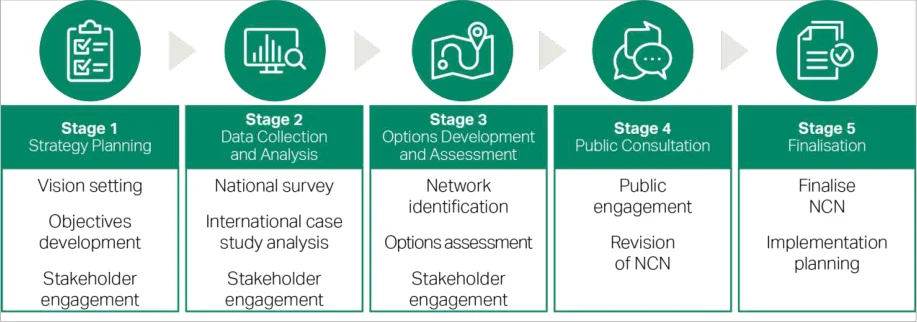
Figure 1.2: NCN Plan Development Process
Following consultation on the draft NCN Plan (which was undertaken in May 2022), responses
were analysed, and the NCN proposals were updated to reflect feedback received. Detailed
plans for the roll out of the NCN over the coming years will then be developed.
Prepared for: Transport Infrastructure Ireland
SEA of the National Cycle Network Plan
2. Approach to the SEA
2.1 Introduction
Strategic Environmental Assessment (SEA) is a process for evaluating, at the earliest
appropriate stage, the potential environmental implications of plans or programmes (P/Ps).
The SEA process involves appraisal and reporting, proposing mitigation measures and
monitoring environmental effects of plans, programmes, and strategies.
The purpose is to ensure that the environmental consequences of P/Ps are assessed both
during their preparation and prior to their adoption. The SEA process also gives specified
‘environmental authorities’, interested parties and the general public, an opportunity to
comment on the environmental impacts of the proposed P/P and reasonable alternatives, and
to be kept informed during the decision-making process.
SEA derives from the Directive 2001/42/EC - Assessment of Effects of Certain Plans and
Programmes on the Environment (the ‘SEA Directive’). Article 1 of the SEA Directive states
that:
“The objective of this directive is to provide for a high level of protection of the environment
and to contribute to the integration of environmental considerations into the preparation
and adoption of plans and programmes with a view to promoting sustainable
development, by ensuring that, in accordance with this directive, an environmental
assessment is carried out of certain plans and programmes which are likely to have
significant effects on the environment.”
The requirement for SEA in Ireland was introduced by:
European Communities (Environmental Assessment of Certain Plans and
Programmes) Regulations 2004 (S.I. No. 435 of 2004); as amended by European
Communities (Environmental Assessment of Certain Plans and Programmes)
(Amendment) Regulations 2011, (S.I. No. 200 of 2011); and
Planning and Development Strategic Environmental Assessment (SEA) Regulations
2004 (S.I. No. 436 of 2004), as amended by the Planning and Development (Strategic
Environmental Assessment) (Amendment) Regulations 2011 (S.I. No. 201 of 2011).
Schedule 2 (9) of S.I. No. 435 of 2004 highlights that an SEA “shall be carried out for all plans
and programmes…which are prepared for agriculture, forestry, fisheries, energy, industry,
transport, waste management, water management, telecommunications and tourism, and
which set the framework for future development consent of projects listed in Annexes I and II
to the Environmental Impact Assessment Directive”. 1 The SEA for the NCN Plan has therefore
1 Section 9(1) of S.I. No. 435 of 2004 as amended by S.I. No. 200 of 2011
Prepared for: Transport Infrastructure Ireland
SEA of the National Cycle Network Plan SEA Environmental Report (Updated)
been undertaken to meet the requirements S.I. No. 435 (as amended), referred to in this
Environmental Report as the ‘SEA Regulations’.
2.2 Hierarchy of Planning and Environmental Assessment
The hierarchy of planning and environmental assessment in which the NCN Plan is situated
is detailed on Figure 2.1 below.
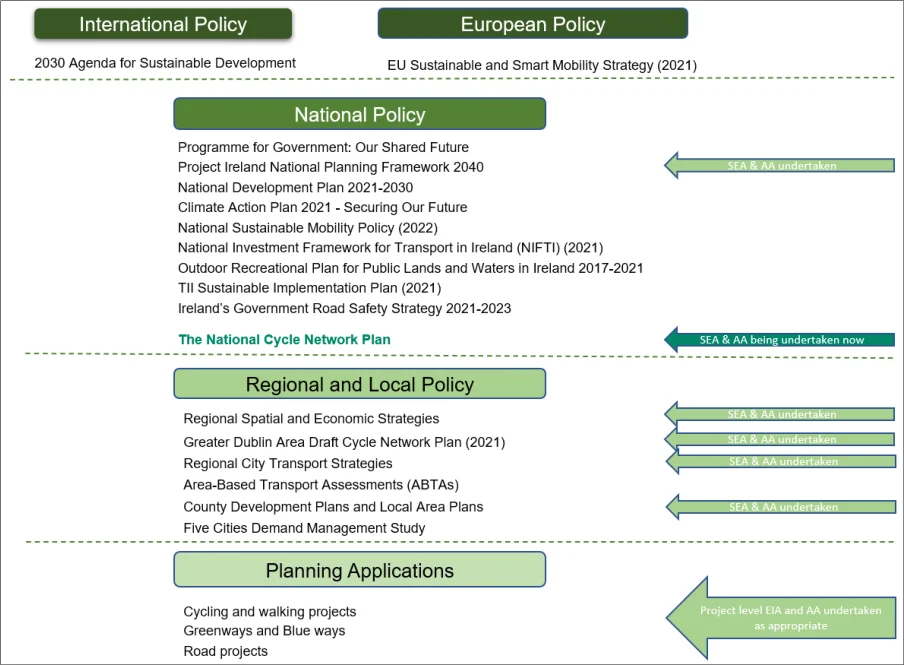
Figure 2.1: Hierarchy of Planning and Environmental Assessment
The National Planning Framework 2040 (NPF) was subject to a full SEA and Stage 2 AA. The
NPF will be given regional expression through land use plans including the Regional Spatial
and Economic Strategies (RSES), which are also subject to SEA and AA. SEA and AA
requirements apply to City and County Development Plans and Local Area Plans.
The priorities and objectives of the NCN Plan align with the objectives and priorities set out in
the NPF and transport strategies focused on providing a safe and connected cycle network
across Ireland.
2.3 Overview of SEA Process and Stages
SEA is a systematic process for evaluating the environmental consequences of proposed
plans or programmes to ensure environmental issues are fully integrated and addressed at
Prepared for: Transport Infrastructure Ireland
SEA of the National Cycle Network Plan SEA Environmental Report (Updated)
the earliest appropriate stage of decision making, with a view to promoting sustainable
development. The central focus of SEA is to enable environmental issues, and in particular
‘likely significant environmental effects’ of a Plans or Programmes (P/Ps), to be taken into
consideration during the plan or programme making process.
The key phases in the SEA process as outlined in the Environmental Protection Agency’s
(EPA’s) SEA Process Checklist2 are outlined in Table 2.1.
Table 2.1: Overview of SEA Process
Phase Description Status
The requirement to undertake a SEA is mandatory for certain Plan / Programme (P/P). Where SEA is not a mandatory requirement, the P/Ps is subject to a ‘Screening process’, to consider if it is likely to have significant effects on the environment, and therefore, if SEA is required.
Complete (November 2021)
- Screening
Preparation of a SEA Scoping Report highlighting that the Environmental Report is required to include:
Methods of assessment; Contents and level of detail in the Plan/Programme; The stage in the Plan/Programme-making process; and The extent to which certain matters are more appropriately assessed at different levels in the decision-making process in order to avoid duplication of environmental assessment. Transboundary consultation was undertaken with the relevant authorities in Northern Ireland.
Complete (March 2022)
- Scoping
The purpose of this stage of the process is to assess the likely significant impacts on the environment as a result of implementation of the P/P and consideration of reasonable alternatives.
Complete (May 2022)
- Environmental Assessment
The output from this stage is an Environmental Report which accompanies the draft P/P for consultation.
Transboundary consultation, was undertaken with the relevant authorities in Northern Ireland.
| 4. SEA Statement | Completion/adoption of the P/P taking account of likely | Current Stage (Final) | |
|---|---|---|---|
| significant environmental effects, any submissions or | |||
| observations received from consultations and integration of | |||
| mitigation and monitoring measures within the Plan. | |||
| The Environmental Report was updated to reflect | |||
| consultation comments, and an SEA Statement was | |||
| prepared, summarising: | |||
| • How environmental considerations have been | |||
| integrated into the P/P; | |||
| • How the environmental report, and any submissions or | |||
| consultations have been taken into account in the | |||
| preparation of the P/P; | |||
| • The reasons for choosing the P/P; and | |||
| • The measures decided for monitoring the significant | |||
| environmental effects of implementation of the P/P. |
2 EPA (2013).
Prepared for: Transport Infrastructure Ireland
SEA of the National Cycle Network Plan SEA Environmental Report (Updated)
In the context of the SEA process for the NCN Plan, the key stages (following SEA screening)
are set out in Figure 2.2.
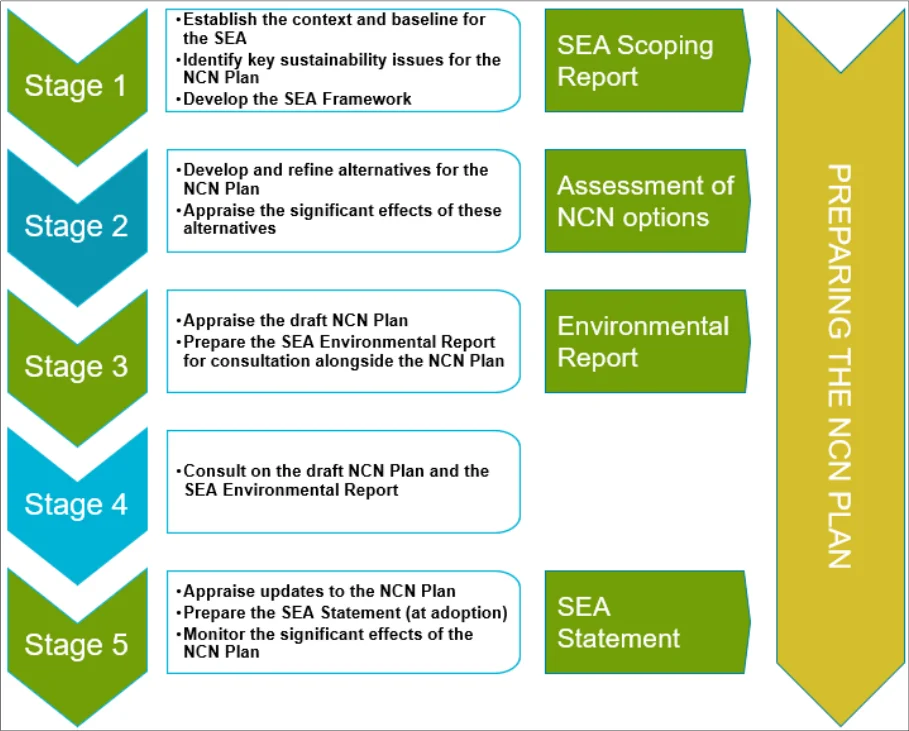
Figure 2.2: Key Stages of SEA Process for the NCN Plan
A more detailed overview of the SEA process for the NCN Plan is presented below.
2.4 SEA Screening (Stage 1)
An SEA Screening Report was prepared by AECOM for the NCN Plan in November 2021. The
screening sought to determine whether a full SEA process was required for the NCN Plan.
The report concluded the following:
“… the plan is likely to set the framework for subsequent plans and projects which have the
potential for significant effects on the environment. This includes, potentially, plans
requiring an SEA process or projects requiring an EIA process. For this reason, it is
concluded that a full SEA process is required to accompany the NCN Plan”
Given the plan timescales, and the strong likelihood of the NCN Plan requiring SEA, a
separate consultation on the SEA Screening Report was not undertaken for the Plan. The SEA
instead progressed to the next steps of the process, scoping.
Prepared for: Transport Infrastructure Ireland
SEA of the National Cycle Network Plan SEA Environmental Report (Updated)
2.5 SEA Scoping (Stage 2)
Article 5 of the SEA Directive requires that the competent authority responsible for the plan or
programme in question consult with ‘environmental authorities’ regarding the scope and level
of detail to be included in the environmental report.
To meet this requirement, a Scoping Report was prepared in early 2022 for the SEA of the
NCN Plan.
Reflecting the requirements of the SEA Regulations, the following information was presented
in the Scoping Report:
Context review: This explored the environmental and sustainability ‘context’ for the
SEA / NCN Plan through reviewing high level messages (e.g., internationally, from
central government and at the regional level) with a view to establishing the focus for
the SEA.
Baseline data: This established the baseline situation in the absence of the NCN Plan
(including the future baseline) in order to help identify the plan’s likely significant
effects.
Key issues: This identified particular problems or opportunities (‘issues’) that should
be a focus of the SEA.
Drawing on the evidence base established and key issues identified through the above
process, the Scoping Report presented an SEA Framework of objectives and assessment
questions which would be used to assess plan proposals and alternatives.
2.5.1 SEA Scoping Consultation
Statutory consultation on the SEA Scoping Report was undertaken with the ‘environmental
authorities’ for SEA in Ireland in March 2022.
Currently, the SEA ‘environmental authorities’ set out by the SEA Regulations are as follows:
Environmental Protection Agency (EPA);
Minister for Agriculture, Food and the Marine;
Minister for Housing, Local Government and Heritage [including the Development
Applications Unit]; and
Minister for the Environment, Climate and Communications.
As the NCN Plan may affect the environment in Northern Ireland, transboundary consultation
was also undertaken with the relevant authorities in Northern Ireland.
Prepared for: Transport Infrastructure Ireland
SEA of the National Cycle Network Plan SEA Environmental Report (Updated)
Five consultation responses were received on the SEA Scoping Report, including three from
the SEA environmental authorities in ROI and two from Northern Ireland authorities.
Responses were received from the following organisations:
Environmental Protection Agency (EPA).
Geological Survey Ireland (GSI) under the Department of the Environment, Climate
and Communications (DECC).
Department of Environment, Climate and Communications (DECC). Environmental
Protection and Circular Economy - Materials Management Divisions.
Northern Ireland Environment Agency (NIEA) under the Department of Agriculture,
Environment and Rural Affairs (DAERA).
Historic Environment Division (HED) under the Department for Communities (DfC).
The submissions provided information on sources of guidance, useful resources and
suggestions for items to be addressed / monitored.
Appendix A provides a summary of the submissions received from the environmental
authorities and transboundary consultees at scoping and provides an overview of how these
comments have been considered and addressed.
2.6 SEA Environmental Report (Stage 3)
Stage 3 comprises the preparation of the main output of the SEA process: the SEA
Environmental Report.
The SEA Regulations require that an environmental report is published for consultation
alongside the draft plan that shall “identify, describe and evaluate the likely significant effects
on the environment of implementing the plan…and reasonable alternatives taking account of
the objectives and the geographical scope of the plan”. The report must then be taken into
account, alongside consultation responses, when finalising the plan.
This SEA Environmental Report therefore assesses and evaluates the likely significant effects
of the NCN Plan and the alternatives. This is with a view to providing TII, stakeholders and the
public with a clear understanding of the likely environmental consequences of implementing
the NCN Plan.
The draft NCN Plan and SEA Environmental Report were made available for consultation via
the following website: https://ncn.consultation.ai/
The SEA environmental authorities, as well as any relevant transboundary authorities, were
notified so that they may make a submission or observation in relation to the SEA
Environmental Report and / or the draft NCN Plan.
Prepared for: Transport Infrastructure Ireland AECOM
SEA of the National Cycle Network Plan SEA Environmental Report (Updated)
Northern Ireland’s statutory stakeholders and environmental authorities were also notified on
the release of the draft NCN Plan and associated SEA Environmental Report.
Submissions made on the draft NCN Plan and associated documents, including the SEA, have
resulted in an update to this Environmental Report, in order to take account of consultation
responses and in order to take account of the minor changes that were made to the NCN Plan
following consultation.
2.7 SEA Adoption Statement (Stage 4, Final Stage)
During this final stage of the SEA process (Stage 4), TII will publish an SEA Adoption
Statement alongside the final adopted NCN Plan.
The SEA Adoption Statement includes how the SEA Environmental Report and consultations
have been taken into account, summarising the key issues raised during the consultation
process and in the Environmental Report indicating what / if action was taken.
The SEA Adoption Statement also includes the measures decided upon to monitor the
significant environmental effects of implementing of the plan.
2.8 Appropriate Assessment (AA)
Under the EU Habitats Directive Member States are required to ensure the protection,
conservation, and management of the habitats and species of conservation in all European
sites.
The Habitats Directive (92/43/EEC) was transposed into Irish law by both the Planning and
Development Act 2000 (as amended) and the European Communities (EC) (Birds and Natural
Habitats) Regulations 2011 (as amended).
Appropriate Assessment (AA) screening is required for any project in Ireland (Article 6(3) of
the Habitats Directive) with the potential to have a significant effect on a designated European
site. AA is the assessment of the implications of a plan, alone and in-combination with other
plans and projects, on the integrity of a Natura 2000 site, in view of its conservation objectives.
There is an overlap between both the SEA and AA processes as both assessment regimes
consider the potential impacts of a plan on biodiversity.
The Draft NCN Plan has undergone AA screening during its preparation. The conclusion of
the AA Screening3 was:
“At this strategic stage these corridors are intentionally wide to enable detailed design work
to be undertaken to capture the most appropriate route.
3 AECOM (2022).
Prepared for: Transport Infrastructure Ireland AECOM
SEA of the National Cycle Network Plan SEA Environmental Report (Updated)
Given this is and the multiple potential impacts associated with constructing new or
updating existing cycle routes, it is impossible to draw a conclusion of ‘no likely significant
effect’ in relation to the NCN Plan. Therefore, it is necessary to proceed to the next stage
of Appropriate Assessment. All potential NCN route corridors are screened in for the
Appropriate Assessment. “
The Draft Plan was subject to a “Stage 2 AA” as required by Article 6(3) of the Habitats
Directive (92/43/EEC) and a Natura Impact Report (NIR) was prepared and put on public
display.
The preparation of the Draft Plan, SEA and AA has taken place concurrently and the findings
of the AA have informed both the Plan and the SEA.
The NIR concluded:
“Given the flexibility of design of the proposed cycle routes it can be concluded that the
NCN would not have an adverse effect European sites alone.”
“Additionally, an in-combination assessment was also undertaken of relevant plans and
projects…
Given that each of the land use plans provide a policy for European site protection and
each will have undergone their own Appropriate Assessment alone and in-combination and
would have concluded no adverse effects before the plans could become adopted…
It can be concluded that the NCN Plan would not have an adverse effect on the integrity of
European sites, either alone or in combination with other plans and projects.”
The NIR also provided recommendations that should be included in the Final NCN Plan.
2.9 SEA Guidance
The SEA process has been undertaken to meet the requirements of Directive 2001/42/EC on
the Assessment of the Effects of Certain Plans and Programmes on the Environment (the SEA
Directive) and the national implementing legislation, S.I. No. 435 of 2004, as amended by
Regulations S.I. No. 200 of 2011.
The following principal sources of guidance were identified during the SEA process, including
in the preparation of the Environmental Report:
Department of Communications, Climate Action & Environment (DCCAE) (2019).
Climate Action Plan 2019, To Tackle Climate Breakdown.
Department of Environment, Community and Local Government (DECLG) (2013).
Integrated Biodiversity Impact Assessment – Streamlining AA, SEA and EIA
Prepared for: Transport Infrastructure Ireland AECOM
SEA of the National Cycle Network Plan SEA Environmental Report (Updated)
Processes: Practitioner’s Manual. EPA Strive Programme 2007-2013. Strive Report
Series No. 106.
Department of Environment, Community and Local Government (DECLG) (2013).
Circular Letter PL 9/2013: Article 8 (Decision Making) of EU Directives 2001/42/EC on
Strategic Environmental Assessment (SEA) as amended.
Department of Environment, Community and Local Government (DECLG) (2013).
Circular Letter PSSP 6/2011: Further Transposition of EU Directive 2001/42/EC on
Strategic Environmental Assessment (SEA).
Department of Environment, Heritage and Local Government (DEHLG) (2014).
Implementation of SEA Directive (2001/42/EC): Assessment of the Effects of Certain
Plans and Programmes on the Environment.
Environmental Protection Agency (EPA)(2003). SEA Methodologies for Plans and
Programmes in Ireland – Synthesis Report.
Environmental Protection Agency (EPA)(2008). SEA Process Checklist, 2008.
Environmental Protection Agency (EPA) (2013). SEA Resource Manual for Local and
Regional Planning Authorities.
Environmental Protection Agency (EPA) (2015). Developing and Assessing
Alternatives in Strategic Environmental Assessment - Good Practice Guidance.
Environmental Protection Agency (EPA)(2015). SEA Scoping Guidance Document.
Environmental Protection Agency (EPA) (2017). GISEA Manual - Improving the
Evidence Base in SEA.
Environmental Protection Agency (EPA) (2019 updated). Integrating Climate Change
into Strategic Environmental Assessment in Ireland - A Guidance Note.
Environmental Protection Agency (EPA)(2019). Tiering of Environmental Assessment
- The Influence of Strategic Environmental Assessment on Project-level Environmental
Impact Assessment.
Environmental Protection Agency (EPA) (2020). Good Practice Guidance on
Cumulative Effects Assessment in Strategic Environmental Assessment.
Environmental Protection Agency (EPA)(2020). Guidance on Strategic Environmental
Assessment (SEA) Statements and Monitoring.
Environmental Protection Agency (EPA)(2020). Ireland’s Environment - An Integrated
Assessment 2020.
Environmental Protection Agency (EPA)(2020). Second Review of SEA Effectiveness
in Ireland.
Environmental Protection Agency (EPA)(2021). SEA Pack, September 2021.
Environmental Protection Agency (EPA)(2022). SEA Spatial Information Sources
inventory, January 2022.
Prepared for: Transport Infrastructure Ireland AECOM
SEA of the National Cycle Network Plan SEA Environmental Report (Updated)
European Communities (EC) (1992). DIRECTIVE 92/43/EEC.
European Communities (EC)(2001). Directive 2001/42/EC on the assessment of
Certain Plans and Programmes on the Environment.
European Communities (EC) (2004).Guidance on Implementation of Directive
2001/42/EC.
European Communities (EC) (2013).Guidance on Integrating Climate Change and
Biodiversity into Strategic Environmental Assessment.
European Communities (EC). (2002). Assessment of plans and projects significantly
affecting Natura 2000 sites - Methodological guidance on the provisions of Article 6(3)
and (4) of the Habitats Directive 92/43/EEC.
European Communities (EC). S.I. No. 200 of 2011 - European Communities
(Environmental Assessment of Certain Plans and Programmes) (Amendment)
Regulations 2011.
European Communities (EC). S.I. No. 435 of 2004 - Environmental Assessment of
Certain Plans and Programmes) Regulations 2004.
EPA AA GeoTool: https://gis.epa.ie/EPAMaps/AAGeoTool
EPA Air Quality Reports: https://www.epa.ie/publications/monitoring—assessment/air/
EPA Environmental Mapping / Geographical Information System (GIS) tools:
EPA SEA WebGIS Tool:https://gis.epa.ie/EPAMaps/SEA
EPA Strategic Environmental Assessment. Available at: https://www.epa.ie/our-
services/monitoring—assessment/assessment/strategic-environmental-assessment/
EPA Water QualityReports: https://www.epa.ie/publications/monitoring—assessment/
EPA WFD Application: www.catchments.ie
GEOHIVE Environmental Sensitivity Mapping (2022).
Department for Communities (DfC) (2022). Historic Environment Map Viewer.
Available at: https://www.communities-ni.gov.uk/services/historic-environment-map-
viewer
Department for Infrastructure (DfI) (2015). Strategic Planning Policy Statement for
Northern Ireland.
Department of Agriculture, Environment and Rural Affairs (DAERA) (2015).
Biodiversity Strategy for Northern Ireland to 2020.
Department of Agriculture, Environment and Rural Affairs (DAERA) (2021). Draft
Environment Strategy for Northern Ireland.
Department of Agriculture, Environment and Rural Affairs (DAERA) (2013). Northern
Ireland State ofthe Environment Report. Available at: https://www.daera-
ni.gov.uk/publications/state-environment-report-2013
Prepared for: Transport Infrastructure Ireland
SEA of the National Cycle Network Plan SEA Environmental Report (Updated)
Department of Agriculture, Environment and Rural Affairs (DAERA) (2022).
Designated Scientific Sites. Available at: www.daera-ni.gov.uk/landing-
pages/protected-areas
Department of Agriculture, Environment and Rural Affairs (DAERA) (2022). Regional
Landscape Character Map viewer. Available at: https://www.daera-
ni.gov.uk/services/regional-landscape-character-areas-map-viewer
Department of Agriculture, Environment and Rural Affairs (DAERA) (2022). Map
browser for NI protected sites and known priority habitat. Available at: www.daera-
ni.gov.uk/services/natural-environment-map-viewer
Department of Agriculture, Environment and Rural Affairs (DAERA) (2022). Natural
Environment Datasets.Available at: https://www.daera-ni.gov.uk/contacts/natural-
environment-related-datasets
NI Heritage (2019). Archaeology 2030 - A Strategic Approach for Northern Ireland.
Available at: niheritagedelivers.org
Northern Ireland Environment Agency (NIEA) (2013). A Second Assessment of the
State of Northern Ireland’s Environment.
Northern Ireland Environment Agency (NIEA) (2021). Water Framework Directive
Statistics Report.
Department of Agriculture, Environment and Rural Affairs (DAERA) (2020). Air
Pollution in Northern Ireland 2020. Available at:
https://www.airqualityni.co.uk/documents/technical-
reports/Air_Pollution_in_Northern_Ireland_2020_Issue1-screen-optimised.pdf
Department of Agriculture, Environment and Rural Affairs (DAERA) (2022).
Landscape Character of Northern Ireland. Available at: https://www.daera-
ni.gov.uk/articles/landscape-character-northern-ireland
Department of Finance (2022). Northern Ireland Statistics and Research Agency
(NISRA). Available at: https://www.nisra.gov.uk/
Prepared for: Transport Infrastructure Ireland
SEA of the National Cycle Network Plan SEA Environmental Report (Updated)
3. Review of Relevant Plans, Polices and Programmes
3.1 Introduction
This chapter sets out how the NCN Plan interacts with other key relevant plans, policies and
programmes and their environmental protection objectives. A review of other plans, policies
and programmes and the legislative framework is an important part of setting the context for
the SEA and the NCN Plan.
The SEA Directive states in Article 5(1) of Annex 1 that the environmental assessment must
identify:
“the environmental protection objectives, established at International, European Union or
national level, which are relevant to the plan or programme, or modification to the plan or
programme, and the way those objectives and any environmental considerations have
been taken into account during its preparation”.
Therefore, the NCN Plan is part of a larger picture of overall national policies that must work
towards a single set of overall objectives. Policies and objectives around issues such as land
use, development, population distribution, sustainability and climate action, for example, are
determined by other government agencies and authorities, but must be fully reflected in the
NCN Plan.
This appendix is not intended to represent a comprehensive list of all legislation / plans /
programmes / guidelines, but rather a collation of the most relevant all legislation / plans /
programmes / guidelines.
3.1.1 UN Sustainable Development Goals
Since 2015, Ireland has been a signatory to the United Nations (UN) Sustainable Development
Goals (SDGs), which frame national agendas and policies to 2030. There are 17 SDGs which
form part of the 2030 Agenda, which sets out a 15-year plan to achieve these goals (Figure
3.1). These goals are mirrored through EU strategies such as Europe 2020 and the European
Regional Development Fund which emphasise smart, sustainable and inclusive growth.
Key priorities are to halt biodiversity loss, protect and improve the environment, and enable
the transition to a circular economy. As sustainability is at the heart of long-term energy
planning, it is important that the SDGs are integrated into Irish policymaking from the top tier
down.
Prepared for: Transport Infrastructure Ireland AECOM
SEA of the National Cycle Network Plan
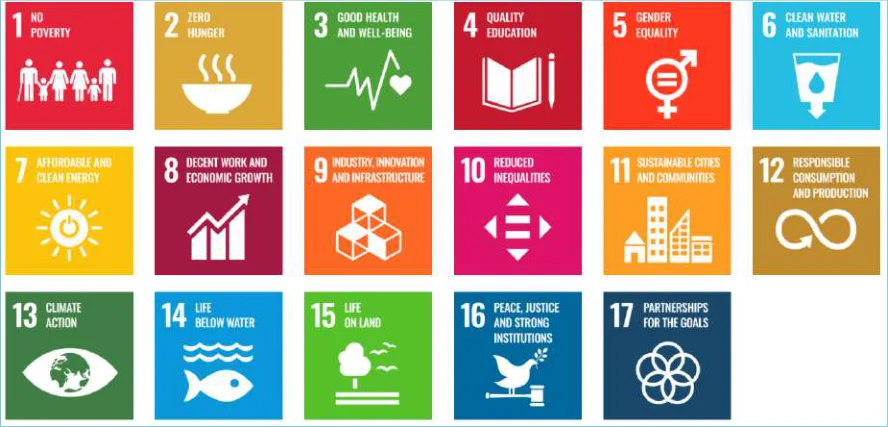
Figure 3.1: United Nations Sustainable Development Goals4
There is significant alignment between the UN SDGs and the Project Ireland 2040 National
Planning Framework National Strategic Outcomes (NSOs). For example, SDG 11 Sustainable
Cities and Communities aligns with NSO1 Compact Growth and NSO4 Sustainable Mobility.
Similarly, SDG 13 Climate Action aligns with NSO8 Transition to a Low Carbon and Climate
Resilient Society.
The development of the NCN Plan aligns with the following five UN SDGs, which are:
-
Good Health and Wellbeing.
-
Gender Equality.
-
Reduced Inequalities.
-
Sustainable Cities and Communities.
-
Climate Action.
The NCN Plan is consistent with these SDGs, in that it will develop a safe, connected, and
cycle network between urban areas and key destinations. The NCN Plan will also achieve
accessible, sustainable, and high-quality routes that will help to reduce the carbon impact of
transport and promote a healthy and inclusive society.
3.2 EU and National Legislation
There is a legislative framework for the protection of the environment and our natural
resources. Where relevant these are referenced in the plan-making process for the
development plan and the NCN Plan includes relevant objectives for integration with key aims
and requirements.
4 United Nations (UN) (2022).
Prepared for: Transport Infrastructure Ireland
SEA of the National Cycle Network Plan SEA Environmental Report (Updated)
Table 3.1 and Table 3.2 provide a list of the principal EU and national legislation and EU
frameworks respectively. These are not intended to be a register of all legislation / plans /
programmes / guidelines, but rather an examination of the key environmental protection
objectives relevant to the NCN Plan.
Table 3.1: Principal EU and National Legislation
EU Legislation National Legislation
Strategic Environmental Assessment (SEA) Planning and Development Acts 2000, as amended Directive (2001/42/EEC)
Environmental Impact Assessment Directive (2011/92/EU) as amended by (2014/52/EU)
Planning and Development Regulations 2001, as amended
European Communities (Birds and Natural Habitats Habitats Directive (92/43/EEC) Regulations) 2011 (S.I. No. 477 of 2011)
Birds Directive (2009/147/EC) on the Wildlife Act 1976, as amended Conservation of Wild Birds, 1979
Planning Development (Strategic Environmental Assessment) Regulations 2004 (S.I. 435 of 2004) as amended by S.I. 200 of 2011
Water Framework Directive (WFD) (2000/60/EC)
Groundwater Directive (2006/118/EC) The Water Services Act (2007 & 2013)
Climate Action and Low Carbon Development Act Marine Strategy Framework Directive 2015
Climate Action and Low Carbon Development Floods Directive (2007/60/EC) (Amendment) Act 2021
Urban Wastewater Treatment Directive Roads Act 1993, as amended (91/271/EEC)
Drinking Water Directive (98/83/EC) Waste Management Act 1996 as amended
EU Landfill Directive (1999/31/EC) National Monuments Act 1930-2004
Waste Framework Directive (2008/98/EC) as Heritage Act amended by Directive (EU) 2018/851
Environmental Noise Directive (2002/49/EC) Architectural Heritage and Historic Monuments Act
Environmental Liability Directive (2004/35/EC) Transposing Regulation for Directives
Air Quality Fourth Daughter Directive (2004/107/EC)
Air Quality Clean Air for Europe (CAFÉ) Directive (2008/50/EC)
Revisited National Emissions Ceilings Directive (EU 2016/2284)
Noise Directive (2002/49/EC)
Governance of the Energy Union and Climate Action Regulation (EU) 2018/1999
Prepared for: Transport Infrastructure Ireland AECOM
Table 3.2: EU Frameworks
A New Circular Economy Action Plan for a Cleaner More Competitive Europe (2020)
EU Sustainable and Smart Mobility Strategy European Landscape Convention 2000 (2020)
Eighth (8th) Environment Action Programme (EAP) to 2030 (TBC)
EU 2030 Climate and Energy Package
Relevant National & Regional Plans, Programmes and Guidelines
Table 3.3 presents a list of some of the main national and regional plans, programmes and
guidelines influencing the Plan.
Table 3.3: National & Regional Plans, Programmes and Guidelines
National & Regional Plans, Programmes and Guidelines
National Policy Framework for Alternative Fuel National Planning Framework (NPF) Infrastructure in Transport in Ireland (2017-2030)
National Investment Framework for Transport in National Development Plan (NDP) 2021-2030 Ireland (2021)
Integrated Implementation National Mitigation Plan 2017 (Transport)
Architectural Heritage Protection Guidelines for National Adaptation Framework 2018 Planning Authorities (2011)
Regional Spatial and Economic Strategies Heritage Ireland 2030
County and City Development Plans County Heritage Plans
National Landscape Strategy 2015-2025
National Energy and Climate Plan 2021-2030 County Landscape Character Assessments
Change Adaptation Framework including the Sectoral Adaptation
National Peatland Strategy Forestry Programme 2014-2020
National Policy Position on Climate Action and National Countryside Recreation Strategy (2018) Low Carbon Development (2014)
Regional / County based waste management Capital Investment Plan 2016-2021 strategies
Healthy Ireland: A Framework for Improved Health Ireland’s Environment - An Assessment (2020) and Wellbeing 2019-2025
Draft River Basin Management Plan for Ireland Healthy Cities and Counties (2019)
National CFRAMS Programme (2011) National Physical Activity Plan 2016
Flood Risk Management Plans Sport Ireland Participation Plan 2021-2024
and Flood Risk Management for Planning Authorities (2009)
Creating Green Enhancing Natural Capital for Human Wellbeing
Prepared for: Transport Infrastructure Ireland
SEA of the National Cycle Network Plan
National & Regional Plans, Programmes and Guidelines
National Biodiversity Action Plan 2017-2021 Food Wise 2025 (NBAP for 2021-2025 pending)
County Biodiversity Action Plans Food Harvest 2020
Management Plans for Natura 2000 sites Tourism Action Plan 2019-2021
All-Ireland Pollinator Plan 2021-2025 Tourism Policy Statement
Our Sustainable Future - A Framework for Sustainable Development for Ireland (2012) and Progress Report 2015
Irish Water National Water Resources Plan Framework Plan (2021)
Water Services Strategic Plan. A Plan for the TII’s Sustainability Implementation Plan (2021) Future of Water Services (2015) (Irish Water)
Irish Water Services Policy Statement 2018- Outdoor Recreational Plan for Public Lands and 2025 Waters in Ireland (2017-2021)
National Air Pollution Control Programme (NAPCP) (2019)
Greater Dublin Area Draft Cycle Network Plan (2021)
Draft National Clean Air Strategy for Ireland Other Regional City Transport Strategies (2022) (Consultation)
Draft Statutory Climate Change Adaptation Fáilte Ireland Visitor Experience Development Plan for the Transport Sector (2019)
Draft National Sustainable Mobility Policy Metropolitan Area Transport Plans
Smarter Travel - A Sustainable Transport Future - Transport Policy for Ireland 2009-2020
Regional developed by Fáilte Ireland)
Whole of Government Circular Economy Strategy 2022-2023
Development of new Solid Fuel Regulations for Ireland (Public Consultation) (2021)
The Greenway Strategy - Strategy for the Future Development of National and Regional Greenways (2018)
Dublin Region Air Quality Plan 2021 (Four Dublin Local Authorities)
National Investment Framework for WHO Global Air Quality Guidelines 2021 Transportation in Ireland
Traffic and Transport Assessment Guidelines (2014)
Urban Transport-Related Air Pollution (UTRAP) Working Group (2021)
Transport 21, as superseded by the Department of Public Expenditure and Reform document titled Infrastructure and Capital Investment (2012-2016)
3.4 Transboundary Policies. Plans, Programmes and Guidelines
Table 3.4 presents a list of some of the main transboundary (Northern Ireland) polices, plans,
programmes and guidelines influencing the Plan.
Prepared for: Transport Infrastructure Ireland
SEA of the National Cycle Network Plan SEA Environmental Report (Updated)
Table 3.4: Transboundary Policies, Plans, Programmes and Guidelines
Transboundary Policies, Plans, Programmes and Guidelines
Convention for the Protection of the Architectural Wildlife (NI) Order 1985 (as amended) Heritage of Europe (Granada, 1985)
Convention for the Protection of the Archaeological Wildlife and Natural Environment Act (NI) 2011 Heritage of Europe (Valletta, 1992)
Conservation (Natural Habitats, etc.) Regulations (Northern Ireland) 1995 (as amended)
Historic Monuments and Archaeological Objects (Northern Ireland) Order 1995
The Environment (NI) Order 2002 Protection of Wrecks Act 1973
Planning (Environmental Impact Assessment) Regional Development Strategy 2035 Regulations (Northern Ireland) 2017
Strategic Planning Policy Statement (SPPS) for Northern Ireland
Archaeology 2030 - A Strategic Approach for Northern Ireland
Planning Policy Statements (PPS – in particular PPS2 and PPS185
Strategic Planning Policy Statement for Northern Ireland
Biodiversity Strategy for Northern Ireland to Marine and Coastal Access Act 2009 2020
Draft Environment Strategy for Northern Ireland Marine Act (Northern Ireland) 2013
Climate Change Bill (NI) 2022 UK Marine Policy Statement (MPS) (2011)
Draft Northern Ireland Peatland Policy 2021- Draft Marine Plan for Northern Ireland (2018) 2040
Draft Green Growth Strategy for Northern Ireland
Sustainable Water - A Long-Term Water Strategy for Northern Ireland (2015-2040)
Northern Ireland Energy Strategy 2050 NI Water (2020) Our Strategy 2021-2046
The Water Environment (Floods Directive) Planning Act (Northern Ireland) 2011 Regulations (Northern Ireland) 2009
Fisheries Act 2020
5 It should be noted that the PPS’s will be superseded by Local Development Plans when they are adopted.
Prepared for: Transport Infrastructure Ireland
SEA of the National Cycle Network Plan SEA Environmental Report (Updated)
4. Environmental Baseline
4.1 Introduction
Presented below is a description of the present state of the environment, and a description of
how the baseline is likely develop should the plan not be implemented.
The baseline description is focused in the first instance on the Republic of Ireland (ROI)
however given that Ireland shares a land boundary with Northern Ireland (NI), there is potential
for environmental impact on population and human health, biodiversity, land and soils, water,
air quality, climatic factors, cultural heritage and landscape which are transboundary, and
potential for transboundary impacts are noted where relevant.
As highlighted in Section 2.3, the Scoping Report presented a context review which explored
the environmental and sustainability ‘context’ for the SEA / NCN Plan, the baseline information
for the SEA and a series of key issues which identified particular problems or opportunities
that should be a focus of the SEA. Drawing on this scoping work, the SEA subsequently
presented an SEA Framework of objectives and assessment questions against which the draft
plan and alternatives could be appraised.
This scoping information (and the information presented in this Environmental Report) has
been presented through the following themes:
-
Biodiversity (including Flora & Fauna).
-
Population and Human Health.
-
Land, Soils and Geology.
-
Water Quality.
-
Air Quality.
-
Climate Change (which includes mitigation and adaptation).
-
Cultural Heritage (including architecture and archaeology).
-
Landscape.
The selected SEA themes incorporate the ‘SEA topics’ suggested by Annex I (f) of the SEA
Directive6. These were refined to reflect a broad understanding of the anticipated scope of
NCN Plan effects.
A summary of the key issues and the full SEA Framework is presented below. The context
review and baseline data, have been updated to reflect comments received on the Scoping
Report consultation and Draft Environmental Report.
6 The SEA Directive is ‘of a procedural nature’ (para 9 of the Directive preamble) and does not set out to prescribe particular issues that should and should not be a focus, beyond requiring a focus on ‘the environment, including on issues such as biodiversity, population, human health, fauna, flora, soil, water, air, climatic factors, material assets, cultural heritage including architectural and archaeological heritage, landscape and the interrelationship between the above factors’ [our emphasis]
Prepared for: Transport Infrastructure Ireland
SEA of the National Cycle Network Plan SEA Environmental Report (Updated)
4.1.1 Ireland’s Environment - An Integrated Assessment 2020
The seventh State of the Environment Report published by the EPA (2020) - Ireland’s
Environment - An Integrated Assessment 2020, indicates that the overall quality of Ireland’s
environment is not what it should be.
As highlighted by the report, the environmental challenges that are currently facing Ireland cut
across different environmental topics, such as climate, air, soil, water, biodiversity and waste,
and across organisations and sectors, business and all levels of society. Unspoilt areas are
being squeezed out and Ireland is losing pristine waters and the habitats that provide vital
spaces for biodiversity. Climate change is also impacting the established economic, social and
natural structures of our world7.
There are 13 key State of the Environment messages identified by the report that require
vision and full implementation to be successful in order to protect the environment, health, and
wellbeing.
The State of the Environment Report highlights that high-quality green and blue spaces are
not just for nature but for peoples’ health and wellbeing. Chapter 11 of this report focuses on
environmental pressures from transport and looking at the transformation towards sustainable
mobility within the sector. Chapter 14 of this report looks as the importance of providing
integrated health-promoting environments in urban planning which can promote more active
travel, reduce air pollution through the use of fewer private vehicles, act as quiet areas buffered
from environmental noise and improve the physical and mental health of those cycling. Other
chapters in this report relevant to the NCN Plan, include Chapter 2 - Climate Change, Chapter
3 - Air Quality and Chapter 4 - Environmental Noise.
The relevant recommendations, key issues and challenges described in the EPA’s State of the
Environment Report will be taken into account during the development of the Draft NCN Plan
and SEA.
4.2 List of Datasets for the SEA
The datasets identified in the Table 4.1 below will be utilised throughout the SEA process.
7 EPA (2020). Ireland’s Environment - An Integrated Assessment 2020.
Prepared for: Transport Infrastructure Ireland AECOM
SEA of the National Cycle Network Plan
Table 4.1: List of Datasets for the SEA
Potential Data Sources SEA Theme
- Birds Atlas
- Invasive Species Ireland website
- National Biodiversity Action Plan
- National Parks and Wildlife Services (NPWS)
- RAMSAR
- UNESCO Biosphere Reserve
- DAERA - Designated Scientific Sites
- Northern Ireland Environment Agency
Biodiversity
- CSO Census
- EPA
- Fáilte Ireland
- Population centres, density and statistics
- Tourism – Dept of Tourism
- Northern Ireland Statistics and Research Agency (NISRA)
Population and Human Health
- CORINE Land cover Database
- EPA GIS datasets
- European Commission
- Geological Survey Ireland (GSI)
- Teagasc Soil Information
- UK Land Cover Map
- Geological Survey of Northern Ireland (GSNI)
Land Soils, Geology
• EPA GIS datasets • Catchments.ie • National Catchment Flood Risk Management Programme (CFRAM) • Office Public Works (OPW) • Geological Survey Ireland (GSI) • DAERA • Northern Ireland Environment Agency • Morphological Quality Index / River Hydromorphology Assessment Technique
Water
- EPA Air Quality in Ireland reports
- EPA datasets
- World Health Organisation (WHO)
- Northern Ireland Environment Agency (NIEA)
- DAERA – Air Pollution in NI
Air Quality
- CSO datasets
- EPA datasets
- Flood Risk Management Plans
- Met Éireann
- Sectoral Climate Change Adaptation Plans
- UNFCC
- Geological Survey Ireland (GSI)
- Climate Change Committee
- Northern Ireland Environment Agency (NIEA)
- Northern Ireland Climate Change Adaptation Program
Climate Change
Prepared for: Transport Infrastructure Ireland
SEA of the National Cycle Network Plan SEA Environmental Report (Updated)
Potential Data Sources SEA Theme
• National Monuments Service / Record of Monuments and Places (RMP) • National Inventory of Architectural Heritage (NIAH) • UNESCO World Heritage Sites • Department of Heritage • Built Heritage at Risk in Northern Ireland (BHARNI) database • Historic Map Viewer (DFI) • Historic Environment Division (HED) • NI Heritage
Cultural Heritage
- CORINE Land cover Database
- EPA datasets
- National Landscape Strategy 2015-2025
- DAERA - Regional Landscape Character Map viewer
- DAERA - Landscape Character of Northern Ireland
Landscape
4.3 Biodiversity
4.3.1 Introduction
Biodiversity is a measurement of the variety and variability of flora and fauna in an area and
any associated habitats. The importance of preserving biodiversity is recognised from an
international to a local level. There is an intrinsic value to biodiversity while also having value
in terms of quality of life and amenity.
Ireland has a rich diversity of ecosystems and wildlife in its terrestrial, freshwater and marine
environments. However, over the last number of decades, human impacts on biodiversity have
accelerated, which has resulted in increased damage and loss of habitats and species, the
diversification of wildlife and the degradation of our environment8. On a global scale,
biodiversity loss has been identified as one of the biggest threats facing humanity in the next
decade.
Under EU law, Ireland is obligated to protect and preserve biodiversity. This protection covers
species and habitats both within and outside designated sites. The Habitats Directive seeks
to ensure the appropriate conservation of natural habitats and of wild fauna and flora. The
Birds Directive (2009/147/EC) ensures the appropriate protection of Special Protection Areas
(SPAs) (sites which are classified for rare and vulnerable birds listed in Annex I of the
Directive).
The National Biodiversity Action Plan (NBAP) for Ireland provides a framework for
government, civil society and private sectors to track and assess progress towards Ireland’s
Vision for Biodiversity over a five-year timeframe from 2017 to 2021.The NBAP seeks to
address current issues and halt loss of biodiversity, in line with international commitments. The
goal was to reduce biodiversity loss and degradation by 2016 and progress toward a
8 Department of Culture, Heritage and the Gaeltacht (DCHG) (2017). National Biodiversity Action Plan 2017-2021.
Prepared for: Transport Infrastructure Ireland AECOM
SEA of the National Cycle Network Plan SEA Environmental Report (Updated)
substantial recovery be made by 2020. This follows the European Commission EU Biodiversity
Strategyto 2020 and the recent 8th Environmental Action Programme to 2030, to protect
biodiversity, pursing zero pollution to air water and soil, and reducing climate pressures. At the
time of writing this report the NBAP for 2021-2025 has not been released.
Designated Sites
To protect its biodiversity resources, Ireland has designated numerous sites and species of
conservation value and / or concern. These are outlined in Table 4.2 below.
Table 4.2: List of Designated Sites in Ireland
Number of Description
Sites
Biosphere reserves promote solutions reconciling the conservation of biodiversity with its sustainable use. They are learning areas for sustainable development under diverse ecological, social and economic contexts, touching the lives of more than 250 million people9.
2
In Ireland these sites comprise Dublin Bay and Killarney National Park.
Within OSPAR, MPAs are identified as areas for which protective, conservation, restorative or precautionary measures have been instituted for the purpose of protecting and conserving species, habitats, ecosystems or ecological processes of the marine environment.
OSPAR Marine Protected Area
19
They may include existing SACs and SPAs, as well as other areas established under international or regional agreements (e.g., OSPAR, Helsinki Commission [HELCOM]).
The Convention on Wetlands, called the RAMSAR Convention, is an intergovernmental treaty that provides the framework for national action and international cooperation for the conservation and wise use of wetlands and their resources10.
45
Wetlands are important ecosystems, which improve water quality, provide storm protection, flood mitigation, stabilise shorelines and maintain biodiversity. Ireland presently has 45 no. RAMSAR sites.
The Important Bird Areas (IBA) Programme is a BirdLife International initiative aimed at identifying and protecting a network of critical sites for the conservation of the world’s birds.
140
BirdWatch Ireland is responsible for promoting and updating the status of Ireland’s birds and their key sites11.
Special Areas of
439 (6 are offshore)
Special Areas of Conservation (SAC) are designated under the EU Habitats Directive (92/43/EEC).
SACs*
Special Protection Areas (SPAs) are designated under the Birds 165* Directive (2009/147/EC).
Protection Area
9 UNESCO (2022). Biosphere Reserves. 10 RAMSAR (2022). 11 Bird Life (2022). Data Zone.
Prepared for: Transport Infrastructure Ireland AECOM
SEA of the National Cycle Network Plan
Designation Description Type
Natural Heritage Areas (NHAs) are legally protected areas that are considered important for their habitats or which hold species of plants and animals whose habitat needs protection, including geological/geomorphological sites in need of protection through NHA designation.
Natural Heritage Area (NHA)
Pages 196–225 · View in original PDF