6.1 MtCO2eq by 2030, in line with the sectoral emissions ceilings established by Government in July
To support these targets, the NCN Plan has been designed to connect urban areas to each other and to strategic destinations (including transport hubs, centres of education, centres of employment, leisure destinations, and tourist destinations). Its development has been informed by an understanding of future users needs through an iterative process of consultation and collaboration with relevant stakeholders and delivery partners; particularly the Department of Transport (DoT), the National Transport Authority (NTA), and local authorities, and through consultation with other key stakeholders and with the public.
1.1NCN Scoping Study
A National Cycle Network Scoping Study undertaken by the National Roads Authority (now TII) in 2010 identified and mapped a proposed national cycle network. The study involved detailed engagement with numerous stakeholders and local authorities nationally and proposed national cycling route corridors. The approach and findings of this study provide valuable insights which are still applicable.
As part of the development of the NCN Plan, a review of the 2010 National Cycle Network Scoping Study was undertaken at the outset to investigate how it aligns with current requirements, and to determine how it could be used as a valuable input to inform the development of the plan.
The purpose of the 2010 Scoping Study was to outline the reasoning behind selecting specific route corridors in the 2010 proposed NCN. The study included a route corridor assessment and proposed network, illustrated in Figure 1.1. The study outlined the following vision for a National Cycling Network:
“Develop a National Cycle Network that will allow users to cycle between the main urban areas throughout the country. The network will be built to best practice standard, follow routes that maximise the number of potential users and its attractiveness to users, facilitate access for all, and ensure that short and long trips can be engaged in. The routes will, where possible, avail of existing routes and Stateowned lands, share use with walking and form the basis for linkages to more comprehensive rural and urban local networks”.
Although the scope and structure of the NCN Scoping Study and the NCN Plan do not match precisely, many of the elements from the Scoping Study have an equivalent element in the NCN Plan, as summarised in Table 1.1. Comparison between the various elements illustrates a high-level of compatibility between the 2010 Scoping Study and the current NCN Plan. Both aim to attract as many leisure cyclists and commuters as possible, maximising the extent of off-road facilities, while utilising as much existing infrastructure as possible.
National Cycle Network Plan
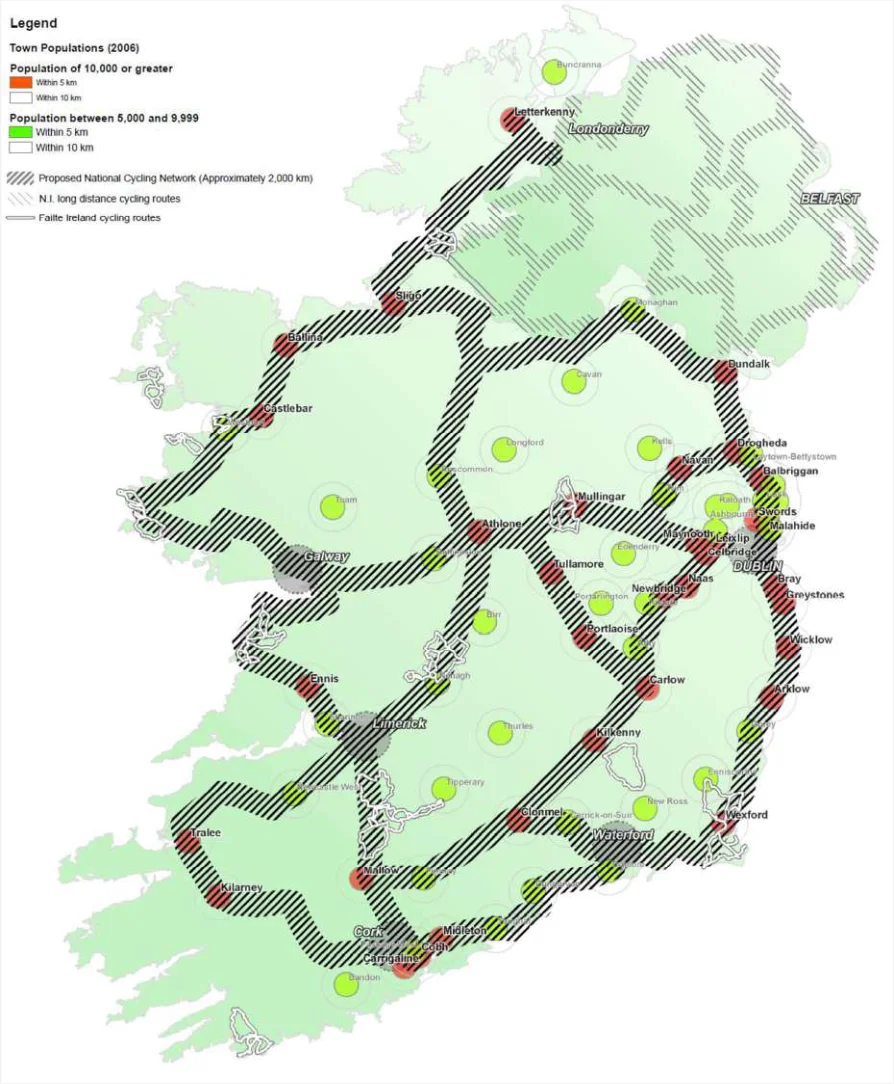
Figure 1.1: Proposed National Cycle Network from 2010 Scoping Study
National Cycle Network Plan
Table 1.1: Comparison between 2010 Scoping Study and NCN Plan
| 2010 Scoping Study Terms of Reference (TOR), Vision | NCN Plan Objectives (Obj) |
|---|---|
| and Route Corridor Criteria (RCC) | |
| Provide the basis for a fully integrated network of rural interurban cycle routes. (TOR) | Increase the number of cycle trips by improving the provision of safe and attractive cycling infrastructure. (Obj) |
| Route corridors must connect the major cities and settlements of greater than 10,000 population in order to attract the maximum number of users. (RCC) | Connect identified urban areas of 5,000+ population and those urban areas listed in the NTA’s urban cycle network strategy. (Obj) |
| The network should appeal to as many users as possible and should form the basis of linkages of both local rural cycle routes and urban connectors. (TOR) The network should facilitate commuter, leisure and tourism usage. (RCC) | Connect to strategic destinations outside of urban areas as appropriate (including centres of education, centres of employment, and leisure destinations). (Obj) Propose corridors to maximise the number of users. (Obj) |
| The network should cover all parts of the country and align with tourism and economic development. (TOR) Route corridor should be located in or connect to the proposed Fáilte Ireland network. (RCC) | Connect to strategic destinations outside of urban areas as appropriate (including transport hubs and tourist destinations), as appropriate. (Obj) |
| The length of the network that is off road or of greenway standard should be maximised with the aim of minimising the interaction with motorised vehicles. (TOR) | Encourage use of off-road infrastructure, where appropriate. (Obj) |
| The network should use existing cycle routes if appropriate. Special attention should be given to the opportunities of using both the disused rail network and canal / river tow-path networks as cycling / walking routes. (TOR) Routes corridors should either utilise or connect to existing road cycling infrastructure. (RCC) | Integrate with existing and proposed cycling infrastructure (including greenways, safe routes to schools, the EuroVelo network, Interreg projects), as appropriate. (Obj) Incorporate existing greenways, disused railways, canals, bypassed national roads, regional and local roads, long distance trails, as appropriate. (Obj) |
| The route framework should learn from existing successful national cycle networks, such as Britain and Denmark. (TOR) | Take lessons from best practice internationally in development of national cycle networks, particularly the UK and EU high-cycling countries. (Obj) |
| The cycling network should be integrated with public transport modes. (TOR) | Connect to strategic destinations outside of urban areas as appropriate (including transport hubs and tourist destinations), as appropriate. (Obj) |
| It should ensure that routes are provided in a manner that will allow cycling to develop as a viable mode for people’s transport and commuter needs, as well as ensuring development of recreational / leisure and tourist cycling. (TOR) | Support the development of cycling and walking culture in Ireland. (Obj) |
| The network will be built to best practice standard, follow routes that maximise the number of potential users and its attractiveness to users. (Vision) | Propose corridors to maximise the number of users. (Obj) |
| The routes will, where possible, avail of existing routes and State-owned lands. (Vision) | Incorporate existing greenways, disused railways, canals, bypassed national roads, regional and local roads, long distance trails, as appropriate. (Obj) Maximise the use of publicly owned land, where possible. (Obj) Where efficient and effective, encourage routes that use ‘quiet’, low traffic volume roads. (Obj) |
National Cycle Network Plan
| 2010 Scoping Study Terms of Reference (TOR), Vision | NCN Plan Objectives (Obj) |
|---|---|
| and Route Corridor Criteria (RCC) | |
| Route corridors should link to ports and major airports. (RCC) | Connect to strategic destinations outside of urban areas as appropriate (including transport hubs and tourist destinations), as appropriate. (Obj) |
| The proposed network should connect to the National Cycling Network in Northern Ireland. (RCC) | Integrate with existing and proposed cycling infrastructure in Northern Ireland, as appropriate. (Obj) |
| Enhance local environments and biodiversity where possible (e.g., pollinator plans, green corridors). (Obj) | |
| Future-proof cycle route capacity, taking account of population growth and additional demand from modal shift. (Obj) | |
| Promote the design of cycling infrastructure that is fully accessible to all users, regardless of age or ability. (Obj) Promote the design of cycling infrastructure that meets safety requirements. (Obj) Promote the design of cycling infrastructure that provides a safe and secure environment for all users. (Obj) | |
1.2Governance Approach for NCN Plan Development
To oversee development of the NCN Plan, a project governance structure was agreed including key stakeholders, as outlined in Figure 1.2.
The Project Board included representatives of TII and Department of Transport (DoT) and was responsible for the final approval of project documents and outputs. The Advisory Group included representatives of TII, DoT, the NTA and County and City Management Association (CCMA) members – representing local authorities. The Advisory Group’s role was to challenge the strategic direction of the project and review the various options at decision points during development of the NCN Plan.
The Technical Group included internal TII stakeholders who provided specialist expertise when reviewing project work and provided input and feedback at various stages including project vision statement and objectives, national and international best practice, network development, infrastructure requirement, integration with existing and planned networks, market research and survey questions
The Project Management Team was led by TII and supported by AECOM in day-to-day project delivery.
National Cycle Network Plan
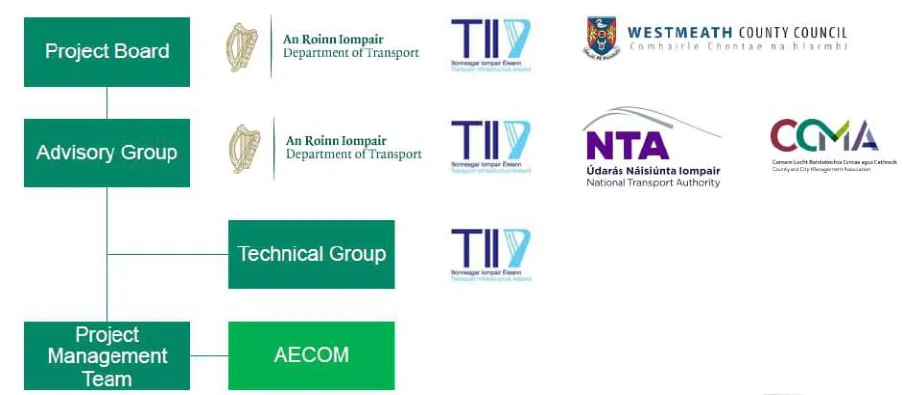
Figure 1.2: Project Governance Structure
1.3Methodology
The methodology for developing the NCN Plan consisted of a five-stage process, summarised in Figure 1.3 and outlined in further detail in Table 1.2. The approach incorporated multiple elements to provide key inputs, reference points and evidence to inform the development of the final plan, including:
Pages 13–17 · View in original PDF