9 Integration and Inclusion
9.2 Dublin-Belfast Economic Corridor
9.3 International Gateways
Dublin Airport and Dublin Port are two of the most important economic assets in the state. It is the responsibility of the NTA, through this Transport Strategy, to ensure that the landside transport network meets the requirements of these international gateways.
One of the growth enablers for the Eastern and Midland Region, of which the GDA forms part, is the development of the Dublin-Belfast Economic Corridor, including Drogheda, Dundalk and Newry.
In terms of Dublin Airport – as a major employer, passenger destination and freight hub – access by all modes is vital. Furthermore, by its nature, Dublin Airport requires bespoke transport solutions such as high-frequency high capacity bus vehicles which also cater for passengers with luggage; outof-hours and late night services for passengers and staff; and enhanced bus services in the wider North Dublin Area for staff travelling to work.
The Transport Strategy facilitates this national objective in a number of ways, including the following:
Investment in DART+ to Drogheda;
Delivery of MetroLink and major Park and Ride at M1 Lissenhall;
Improvements to Intercity, regional and commuter rail services on the northern line; and
Improved regional and Intercity bus services under Connecting Ireland.
This strategy incorporates MetroLink, BusConnects Dublin and demand management measures which will enhance and protect essential access to Dublin Airport, and ensure that it will operate in a sustainable fashion in terms of landside transport. Surface access to the Airport will be periodically reviewed and improved as necessary, including consideration of additional access from the western side of the airport campus.
The NTA will ensure that the implementation of the full range of Transport Strategy measures will integrate the policies and objectives of other agencies and administrations in the development of the Dublin-Belfast Economic Corridor.
In relation to Dublin Port, while the volumes of passenger trips generated are significantly lower than those generated by the Airport, they are of primary economic importance. The location of the port is also a factor which places additional emphasis on the need to cater appropriately for goods vehicles. This strategy incorporates additional road access for the South
Measure INT1 – Dublin-Belfast Economic Corridor
It is the intention of the NTA, in conjunction with all relevant agencies and Governments, to provide the investment in transport infrastructure and services which will foster the development of the Dublin-Belfast Economic Corridor.
9.4 Design and Planning of Schemes
Port, protection of the national road network, public transport, HGV management and demand management measures across the city-region which will facilitate more efficient operations of Dublin Port, in tandem with the requirements of the wider city. Additionally, there is a requirement for Dublin Port to be fully integrated into the regional transport system in order to facilitate passengers who wish to travel by ferry without the use of a private car.
IIn designing and planning transport infrastructure schemes, it can be tempting for agencies, stakeholders and the public to focus on the one primary objective of the scheme, without giving due attention to the myriad other aspects which need to be considered and the wider benefits which may accrue.
The NTA recognise that there are numerous ports and harbours in the GDA which require access and which may grow in importance during the lifetime of the strategy. It is the intention to ensure that these facilities are served by landside transport in the appropriate manner.
Examples of this include the step-change in the quality of the cycle network proposed as part of BusConnects Dublin, or the significant traffic calming and management improvements brought about by Luas in Dublin City Centre.
As such, the integration of all transport modes and wider transport considerations into the implementation of individual transport schemes is an important element.
Measure INT2 – International Gateways
It is the intention of the NTA, in conjunction with public transport operators, TII, and the local authorities, to serve the international gateways with the landside transport infrastructure and services which will facilitate their sustainable operation.
Measure INT3 – Integration of all Modes in Transport Schemes
It is the intention of the NTA, in the design and planning of transport schemes, to ensure that the needs of all transport modes are considered, as appropriate, based on the objectives of the scheme and on the road user hierarchy.
Throughout the lifetime of the strategy, the NTA will continue to work with Dublin Port Company, other port and harbour operators and DAA in respect of Dublin Airport, in monitoring, assessing and delivering these transport requirements.
| National Transport Authority Greater Dublin Area Transport Strategy 2022-2042 | |
|---|---|
| 9.5 Park & Ride and Interchanges 9.5.1 Park and Ride There is a substantial number of people in regional towns, the rural hinterland and to a lesser extent in the metropolitan area, who do not have ease of access to high quality public transport by walking or cycling. Appropriately located and designed Park & Ride facilities can |
options to reach a wide range of destinations in a sustainable manner and increase the usage of public transport, thereby maximising the value of investment in existing and new schemes.
A Park & Ride Development Office was established within the NTA in February 2020 as recommended in the Climate Action Plan 2019. Through this office a set of recommendations for the development of park and ride facilities have been developed. Those recommendations have been incorporated into the Transport Strategy and the locations selected for potential development are shown in Figure 9.1.
Park & Ride can intercept car trips where people are reliant on private car at an early point in their journey thereby reducing the distances travelled by private car with a corresponding reduction in carbon emissions and congestion.
Caution must be exercised in the planning of Park & Ride facilities to ensure that unintended consequences do not arise as a result of their provision, such as:
Measure INT4 – Park & Ride
It is the intention of the NTA to secure the development of a network of regional level bus and rail based Park and Ride facilities in the GDA at appropriate locations where the national road network meets, or is in close proximity to, high capacity bus and rail services.
Encouraging more dispersed development patterns by enabling longer distance commuting;
Allocating excessive public transport capacity to motorists and thereby promoting local car trips, including outbound trips, to the facility; and
The opportunity cost of developing land for extensive uses in a highly accessible location.
Figure 9.1: Park and Ride Strategy for the GDA
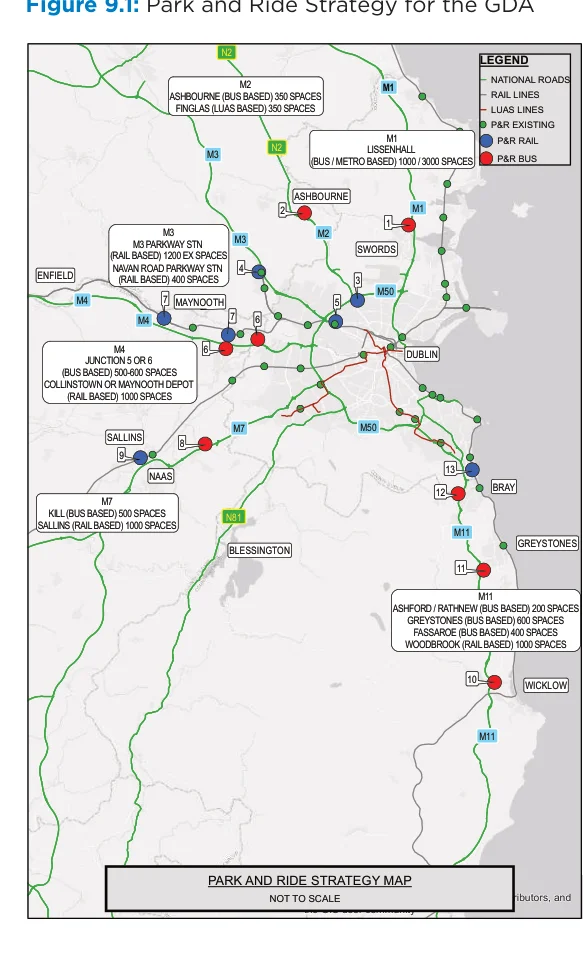
Figure from page 77
| Corridor | Number | Type of P&R | Location | Nearest Junction | Indicative No. of Spaces |
|---|---|---|---|---|---|
| A (M1/N1) | 1 | Bus/Metro | Lissenhall | Junction 4 | 1000/3000 |
| B(i) (M2/ N2) | 2 | Bus | Ashbourne | Junction 3 | 350 |
| 3 | Luas | Luas Finglas | Junction 1 | 350 | |
| B(ii) (M3/ N3) | 4 | Rail | M3 Parkway Station | Junction 5 | 1200 |
| 5 | Rail | Navan Road Parkway Station | Junction 1 | 400 | |
| C (M4/ N4) | 6 | Bus | Junction 5 OR Junction 6 | Junction 5/6 | 500-600 |
| 7 | Rail | Collinstown OR Maynooth Depot | Junction 6/7a | 1000 (500 initially) | |
| D (M7/ N7) | 8 | Bus | Kill | Junction 6 | 500 |
| 9 | Rail | Sallins | Junction 9 | 1000 | |
| F (M11/ N11) | 10 | Bus | Ashford/ Rathnew | Junction 16 | 200 |
| 11 | Bus | Greystones | Junction 11 | 600 | |
| 12 | Bus | Fassaroe | Junction 7 | 400 | |
| 13 | Rail | Woodbrook | Junction 5 | 1000 |
N2
LEGEND
NATIONAL ROADS
M2 ASHBOURNE (BUS BASED) 350 SPACES
M1
RAIL LINES
FINGLAS (LUAS BASED) 350 SPACES
LUAS LINES
P&R EXISTING
M1 LISSENHALL (BUS / METRO BASED) 1000 / 3000 SPACES
P&R RAIL
N2
M3
P&R BUS
ASHBOURNE
M1
2 1
M3 M3 PARKWAY STN (RAIL BASED) 1200 EX SPACES
M2
M3
SWORDS
4
NAVAN ROAD PARKWAY STN
ENFIELD
(RAIL BASED) 400 SPACES
3
M50
7
M4
MAYNOOTH
5
7 6
M4
6
M4 JUNCTION 5 OR 6 (BUS BASED) 500-600 SPACES COLLINSTOWN OR MAYNOOTH DEPOT
DUBLIN
(RAIL BASED) 1000 SPACES
M50
M7
SALLINS
8 9
13
NAAS
BRAY
12
M7 KILL (BUS BASED) 500 SPACES SALLINS (RAIL BASED) 1000 SPACES
N7 N81
M11
GREYSTONES
BLESSINGTON
11
M11 ASHFORD / RATHNEW (BUS BASED) 200 SPACES
GREYSTONES (BUS BASED) 600 SPACES
FASSAROE (BUS BASED) 400 SPACES WOODBROOK (RAIL BASED) 1000 SPACES
10
WICKLOW
M11
PARK AND RIDE STRATEGY MAP
Esri, HERE, Garmin, (c) OpenStreetMap contributors, and the GIS user community
NOT TO SCALE
9.5.2 Major Interchange Facilities / Mobility Hubs
Dublin Airport also comprises a major interchange facility with multiple bus services converging at this location, as well as a major taxi facility. This interchange will be enhanced through the delivery of MetroLink and improved local and orbital bus services as part of BusConnects.
As high-capacity bus routes, heavy rail plus light rail increase their coverage across the urban area of Dublin and the region’s settlements, the full benefit of this investment, (the “network effect”) can only be fully capitalised on by the development of high-quality interchange facilities or Mobility Hubs.
In general, high quality interchanges or Mobility Hubs can significantly broaden the transport offer for their catchment and add to the appeal and attractiveness of sustainable transport by ensuring that people can easily change services to access a wider range of places by these modes. They are an essential component of a regional transport system and will require particular focus as the strategy is implemented.
Examples of major interchanges in operation in the GDA include Bray and Dún Laoghaire stations and Tallaght, where a number of local bus routes meet rail services for onward travel to the city centre and elsewhere. Under BusConnects Dublin, a number of interchanges are currently in development and as the DART+ and light rail projects currently being designed are progressed, additional facilities will be developed. These will include major bus/bus, bus/rail and rail/rail interchanges. At these major interchanges, shared mobility options could be considered such as car club facilities, and significant numbers of secure and sheltered cycle parking and supporting services are also required. Taxis will also play a significant part in the overall public service offer at these locations.
Measure INT5 – Major Interchanges and Mobility Hubs
It is the intention of the NTA, in conjunction with TII, Irish Rail, local authorities, and landowners to deliver high quality major interchange facilities or Mobility Hubs at appropriate locations served by high capacity public transport services.
These mobility hubs must be carefully designed to ensure the transfer or waiting experience is as efficient, safe, and attractive as possible. They could also perform an additional placemaking function by providing access to additional services that benefit the surrounding neighbourhoods serving as a vital part of the urban fabric, integrating people as well as transport. In many cases, such as Liffey Valley and Tallaght, it is intended to deliver these facilities within the major retail and services centres.
These will be designed to be as seamless as possible and will incorporate a wide range of facilities as appropriate such as cycle parking, seating, shelter, kiosks selling refreshments plus the provision of travel information in printed and digital formats.
9.6 Revised Fare Structure
9.5.3 Other Interchanges
In addition to the major interchanges and Mobility Hubs linked to high capacity services, any point on the transport system where services intersect is considered an interchange and aspects of Measure INT4 will also apply to all of these locations. With the introduction of significantly enhanced orbital bus services as part of BusConnects Dublin, it is anticipated that the role of interchange will increase. The pedestrian environment, in particular how convenient and safe it is for passengers to cross roads between stops, becomes critical in these locations as improvements to services occur and as passenger numbers increase. The quality of the information and signage for passengers changing services is also a key factor in making the interchange as easy as possible.
As part of the Bus Connects Dublin programme, fares have been simplified in a way that has made interchange between Bus, Dart and Luas seamless, resulting in a more affordable, efficient and integrated public transport system.
The new fares structure comprises a short-distance fare on single leg journeys (approximately 3kms or less) and a 90 minute fare that will allow a customer any combination of travel on Bus, Dart/Commuter Rail and Luas services.
Provided customers commence the final leg of their journey within 90 minutes of the start of their overall trip, the new 90 minute fare will permit travel on all Bus, Luas and Rail services in Dublin including Dart and Commuter Rail services (up to a certain distance on the heavy rail services).
Measure INT6 - Interchange
A new youth fare will also be introduced in the early phase of the strategy period as part of this restructuring.
It is the intention of the NTA, in conjunction with local authorities and transport operators, to ensure that passengers wishing to change between services on the transport network are provided with as safe, convenient and seamless interchange experience.
Measure INT7 – Fare Structure
It is the intention of the NTA that the new fare structure will be monitored throughout the period of the strategy and further changes implemented where appropriate.
9.7 Next Generation Ticketing
9.8 Mobility as a Service
One of the NTA’s overall objectives is to develop a state-ofthe-art ticketing system that ultimately makes payments more convenient for passengers. The Next Generation Ticketing (NGT) element of BusConnects Dublin will implement an account based ticketing system as the preferred option. This system aims to use cashless technology, allowing for payments to be made using cEMV (contactless credit and debit cards), mobile phones and tokens, all linked to a payment account. In addition to the bus system, NGT will also be implemented across other public transport modes including Metro, Luas and Heavy Rail allowing for a seamless multimodal trip. The BusConnects Dublin NGT element, in conjunction with simpler fares, will also facilitate the bus boarding process and reduce dwell times at bus stops.
Mobility as a Service (MaaS) describes a mobile application that allows a single consumer portal for all forms of mobility to be planned, procured and compared. Economic research points to pricing as the primary driver of behaviour change, and through MaaS, customers can be better informed about the price of different mobility options. In the GDA, this concept has been integrated into the Next Generation Ticketing, which will provide a foundation for the future development and roll out of MaaS. The development of such services by the private sector will also be monitored and integrated where appropriate.
Measure INT9 – Mobility As A Service
It is the intention of the NTA to investigate the potential for MaaS to play a role in the GDA transport system and the use of the Next Generation Ticketing roll-out as a basis for its implementation, as appropriate.
Measure INT8 – Next Generation Ticketing
It is the intention of the NTA to deliver Next Generation Ticketing in the short term, facilitating seamless multimodal travel and reducing dwell times at bus stops.
9.9 Behavioural Change
9.9.1 Smarter Travel Workplaces and Campuses
Smarter Travel Workplaces and Campuses is a public awareness programme working with large employers and colleges to implement voluntary travel plans based on the concept of Community Based Social Marketing.
Behavioural Change in the transport sector encompasses a wide range of measures which aim to encourage and incentivise sustainable travel behaviour. They can be targeted at individuals, neighbourhoods, workplaces, schools and colleges. Generally, they involve promotional campaigns and information dissemination which complement the investment in transport infrastructure and services taking place as part of other programmes, although in many cases investment in things like cycle parking and signage can form part of a programme.
A growing number of Irish employers are engaging in Smarter Travel, working with their employees to facilitate travel choice in favour of more sustainable transport, resulting in reduced costs, enhanced employee wellbeing and more effective parking management. The program has over 200 partners nationwide including clusters of companies in some locations. These include many of the largest employers in Ireland plus many local authorities and hospitals.
The NTA have been running Smarter Travel Workplaces and Campuses in some form since the agency’s inception in 2009 and have managed the Travel Module of An Taisce’s Green School Programme on behalf of the Department of Transport over that period as well.
Smarter Travel Campus is a hands-on programme working with third level institutions to implement campus travel plans to encourage and support students and staff to walk, cycle, take public transport or carpool on the commute to campus.
While the strategy focuses on these programmes and their potential expansion, other major traffic generators such as sports clubs and associations could develop their own behaviour change programmes in order to address issues such as local congestion and informal parking on-street and on open spaces close to playing pitches.
The results from this direct engagement with workplaces and campuses have been extremely positive. A reduction in the use of the private car in the range of 10-24% has been achieved through the programme. The outcome of this programme, however, is not measured solely by the numbers of singleoccupancy car trips being removed from the roads, but also by the fostering of a sustainable transport culture in places where the car had previously played a predominant role.
Behavioural Change is an integral part of the NTA’s functions and responsibilities and will continue as such over the period of the Transport Strategy.
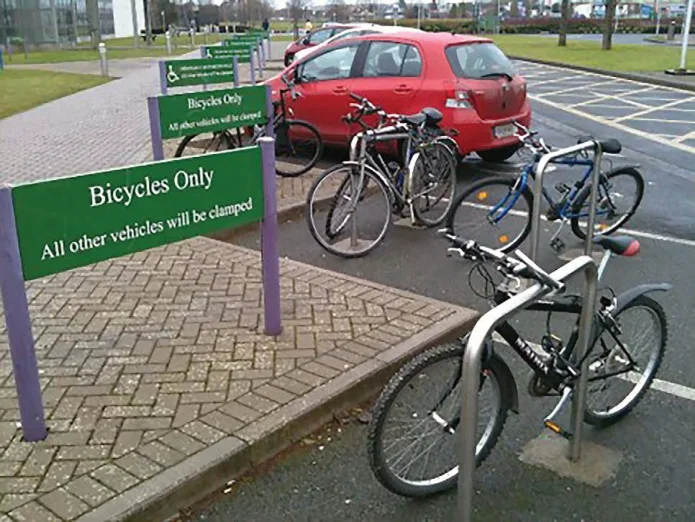
Figure from page 83
Measure INT10 – Smarter Travel Workplaces and Campuses
The NTA will continue to expand the Smarter Travel Workplaces and Campuses Programme in order to directly influence travel behaviour in the GDA and to maximise the use of public transport, walking and cycling infrastructure and services to be developed under the Transport Strategy.
9.9.2 Green-Schools Travel
Green-Schools is Ireland’s leading environmental management and education programme for schools. Travel is the fourth module of the programme and through a wide range of measures and a high level of hands-on engagement with school communities, this programme has been extremely successful in promoting the sustainable travel agenda and reducing car use for travel to school. The success of the Green-School Travel programme is based on two factors. The first is that the Green- Schools Travel module is delivered through their effective ‘7 Step’ methodology (as set out on the Green Schools website), which acts as a guide to teachers and pupils.
Measure INT11 – Green Schools Travel
The NTA will continue to support An Taisce in the operation and expansion of the Green-Schools Travel Module as a key measure in fostering of a sustainable transport culture from a young age and in reducing car use to school.
The second success factor is that experienced An Taisce Green- Schools Travel Education Officers are on hand to assist schools interested in changing travel behaviour. They offer resources, advice, and the opportunity to network with other schools. The NTA is committed to the maintenance and expansion of this programme on a national basis.
9.9.4 Sustainable Travel Incentives
9.9.3 Residential Travel Planning
There are a number of measures which have been introduced to incentivise sustainable travel behaviour via the taxation system, including:
Residential Travel Planning or Personal Travel Planning programmes involve delivering a set of measures to a neighbourhood or development area. The overall aim is similar to workplace, campus or schools programmes, but the programmes are delivered on a door-to-door personalised basis. They include undertaking surveys; providing personalised travel information; holding events; and monitoring and evaluation. As they relate to large populations and require an individualised and personal approach, these programmes require significant resources, including personnel.
Emissions-based Motor Tax;
Cycle-to-Work Scheme; and
Taxsaver ticket
In conjunction with Government and other agencies, the NTA will explore further measures which may be appropriate in promoting sustainable travel behaviour, in particular the use of public transport and cycling.
They are often used in single large developments, such as major apartment schemes and new development areas such as Adamstown – a pilot project was undertaken here in 2010 – but could be rolled out to any location in the GDA. The development of major new infrastructure and significant improvements to public transport services as part of the implementation of the Transport Strategy may offer an opportunity for this type of direct engagement with communities.
Measure INT13 – Sustainable Transport Incentives
The NTA, in conjunction with Government and other agencies, will over the period of the transport strategy, explore the potential for additional sustainable transport incentives to encourage more people to transfer to public transport and cycling.
Measure INT12 – Residential Travel Planning
The NTA, in conjunction with the local authorities and the transport operators, will consider the role of Residential Travel Planning programmes as a means of encouraging sustainable travel behaviour across the GDA.
9.10 Small Public Service Vehicles
Measure INT14 – Small Public Service Vehicles
Taxis provide an important transport service offering doorto-door trips and form a key component of the overall public transport system. Taxis offer the ability to complete one-off trips that are difficult to provide for efficiently by other modes and are an intrinsic part of the region’s public transport system. They can be of particular importance for disabled and elderly people who may not be in a position to drive or readily use public transport. There is therefore potential for taxis to play an important role in Mobility Hubs and Interchanges as set out in 9.4.2. The following measures will be brought forward in cooperation with the local authorities and the taxi industry over the period of the strategy.
The NTA, with the cooperation of the local authorities and the taxi industry, will support the operation of an efficient and effective taxi service for the GDA through the following actions:
• The provision of appropriate additional taxi rank space in towns and cities, taking into account the needs of all transport users;
• Continuing to review the national maximum fare for taxi use approximately every two years;
• Investigating the need for driver welfare facilities to be provided at public transport interchanges and in town centres;
• Incentivising the use of low and zero emissions vehicles including investigating the opportunities for the provision of charging points at appropriate taxi rank locations; and
• Ensuring that the fleet transitions to be a 100% accessible fleet during the period of the Transport Strategy.
9.11 Equality in Transport
Measure INT15 – Equality in Transport
9.11.1 Introduction
The NTA, in conjunction with the transport operators, local authorities, TII, An Garda Síochána, and other stakeholders will endeavour to ensure that the transport system is designed, operated, and managed in a manner which seeks to eliminate discrimination.
Transport is not a public good which can be accessed equally by all members of society. There are a number of grounds under which people can experience discrimination and inequality in transport, in particular on the grounds of disability, gender and age. Transport agencies and operators are required under legislation to design and operate infrastructure and services in a manner which does not lead to such discrimination.
9.11.2 Inclusivity Campaigns
The public transport system aims to be a reliable and accessible system but also where people feel confident and safe to travel on. Campaigns will continue to be run on all modes of public transport to remind people of politeness and etiquette for others as we travel together. Anti-racism; JAM Card (a card which allows people with a learning difficulty, autism or communication barrier tell others they need ‘Just A Minute’ discreetly and easily); LGBTQ+; and Respect for staff campaigns will continue to be highlighted on the public transport system.
To take the example of gender, there are specific concerns around access to public transport for women and girls, in particular late at night, and the safety and security of walking and cycling for women and girls is also a major issue. Some of these matters are addressed by the NTA through our behaviour change programmes (section 9.9) and others via detailed design of walking and cycling schemes.
In addition to these aspects, it is also an objective to ensure that the transport system welcomes all potential users, without discrimination.
Measure INT16 – Equality and Inclusivity Campaigns
These issues, while there is a transport-specific element to them all, cannot be solved by transport alone. Discrimination and crime against people are wider social problems that can only be fully addressed at that level; however, those responsible for delivering transport infrastructure and services, have a major role to play.
The NTA, in conjunction with the transport operators, will continue to implement inclusivity campaigns across the GDA’s public transport network.
9.11.3 Equality Impact Assessments
Inclusivity Campaigns: Anti Racism campaignposter

Figure from page 87
Join us on the journey
There is a requirement to ensure that the Transport Strategy meets the standards of equality across the nine grounds under which people may potentially experience inequality, as follows:
(top) and the
Gender;
JAM Card
Racism has no place
(bottom)
on Public Transport
Marital status;
Family status;
Age;
Disability;
Sexual orientation;
Religion;
Ireland
Race; and
Membership of the Traveller community.
While many transport measures within the Transport Strategy seek to address inequality by improving access to the transport system for all ages and abilities; and while the system itself may be considered to be generally neutral under a number of these headings, an Equality Impact Assessment has been undertaken and assessments will be carried out at the project level on major projects in the implementation of the strategy, as appropriate.
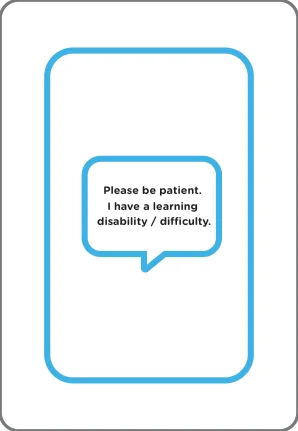
Figure from page 87
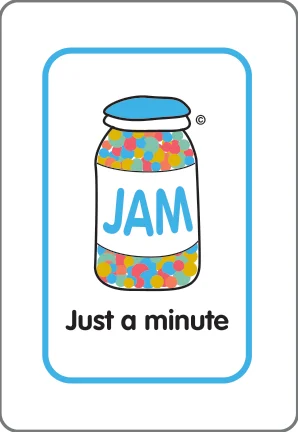
Figure from page 87
Please be patient.
I have a learning disability / difficulty.
Measure INT17 – Equality Impact Assessments
The NTA, in conjunction with transport agencies and local authorities, will ensure that projects and schemes arising out of the Transport Strategy, will be subject to equality impact assessment, as appropriate.
9.11.4 Late Night Transport
Measure INT19 – Travelling at Night
The provision of night-time transport options is essential for any modern city. Late night transport is critical to meet the travel needs of late-night/early-morning commuters, to serve the night-time economy of Dublin City, major suburban centres and regional towns, and to provide a reliable transport alternative to the private car.
The NTA will work with transport operators, local authorities and An Garda Síochána to improve security and perceptions of security for people using public transport, and walking and cycling at night by improving lighting at public transport stops and stations and along access points to and from stops; assisting local authorities to design in passive surveillance and high quality lighting along pedestrian routes; and to reduce anti-social behaviour around stops and stations.
In recent years, the NTA has begun to introduce 24-hour bus services and is committed to expanding the standard public transport offer outside of the traditional peak periods and beyond the traditional schedules, subject to the provision of necessary funding.
The safety of people walking and cycling at night time is also an important factor and will need to be considered more carefully in the design of transport schemes and services.
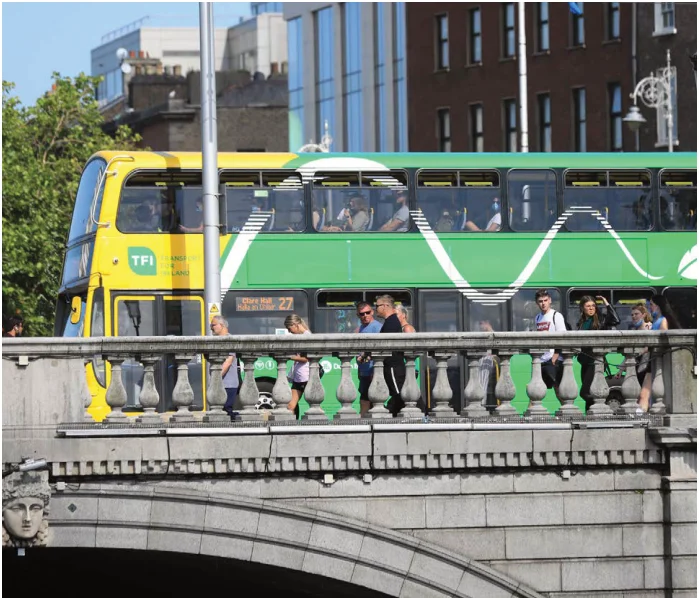
Figure from page 88
Measure INT18 – Late Night Transport
In order to serve those who travel to work outside the AM and PM peaks; to support the night-time economy of Dublin City and the wider GDA; and to generally broaden access to public transport at all times for all trip purposes, the NTA will expand a range of public transport services to run on a 24-hour basis as appropriate.
9.11.5 Accessible Infrastructure
on some vehicles. Wheelchair lifts require significantly more space at footpath level to allow the wheelchair lift to operate.
There are many bus and rail stations on the network that did not have universal design in mind when they were originally built many decades ago. In order for all people to be able to utilise public transport, the infrastructure must not create barriers to people in accessing the services. Significant work has already been undertaken in retrofitting train and bus stations to provide enhanced accessibility for disabled people but further work is required to ensure that all stations are fully accessible.
A retrofit programme to create suitable stops at which to operate coach wheelchair lifts is ongoing and will be continued as part of this Transport Strategy. In addition, the NTA has invested in newly developed low floor coach vehicles, which allow more convenient access by wheelchair ramp from conventional bus stops.
There are many lifts in existing train and tram stations, which are essential for some passengers being able to access a platform or station building. Lifts that break down or are out of service for long periods of time cause a customer to lose confidence in being able to access that station and potentially stop them from using public transport altogether. Significant funding is being provided to replace and/or renovate older lifts to ensure that they are in good working order for their passengers. Video surveillance of the lifts is being installed to reduce the potential of future breakdowns caused by vandalism.
Measure INT20 – Accessible Infrastructure
During the period of the Transport Strategy, the NTA will ensure that public transport infrastructure and facilities in the GDA are made accessible for all users and that additional resources for the maintenance and repair of lifts are made available.
In some locations, it has been deemed more appropriate to provide ramps as an alternative to lifts as they require no maintenance. However, they do provide wheelchair users and those with buggies with a less direct route to the station platform. The use of ramps will be examined on a case-by-case basis.
Most bus stops in the GDA are serviced by low floor buses and are accessible to wheelchair users who board the bus via a wheelchair ramp. On coach routes, which operate at higher speed and don’t permit standing passengers, wheelchair lifts are used
9.11.6 Accessible and Reliable Information
9.11.7 Travel Assistance Scheme
The NTA recognise the need for passengers to be able to plan their journey and get reliable information in an easy and accessible manner. The TFI website is constantly being updated so that customers have one place to go to get information on all the transport modes. The National Journey Planner App allows people access information on their journeys in real time to allow them to make an informed decision.
Using the Public Transport System can seem daunting for many disabled people. The Travel Assistance Scheme, which is funded by the NTA, provides a service to meet with individuals and show them how to travel from their home to their preferred destination until the person feels confident to do so on their own. This covers all of the State provided public transport services within the GDA.
At present, bus poles are a variety of red, grey and yellow poles at bus stops, which are maintained by different operators including commercial operators. The installation of a single style bus stop pole at all bus stops in Ireland will allow decluttering of the bus stop area. A yellow/green head plate and yellow carousel on the bus pole (providing additional visibility for the visually impaired), will have up to date information of the services stopping at that location. A QR code will allow a passenger to be connected directly to the Journey Planner App to obtain the real time information of the services stopping at that specific stop.
Measure INT22 – Travel Assistance Scheme
The NTA, in conjunction with the transport operators, will maintain and expand the Travel Assistance Scheme, with resources increased to address the changes to service patterns arising out of investment in BusConnects and Connecting Ireland.
Measure INT21 – Travel Information
The NTA will ensure that public transport information on websites, apps, on-street, at key destinations, and in-vehicle – in both digital and printed format – is standardised, up-to-date and universally accessible.
9.12 Transport User Advisory Group
9.13 Enforcement of Road Traffic Laws
The NTA has established a Transport Users Advisory Group. The Group is made up of regular users of public transport who interact with the various modes including train, tram, bus and taxi services as well as those engaged in active travel including cyclists and pedestrians. This also includes three people from organisations representing the interests of persons with disabilities.
The NTA and local authorities invest significant sums of public monies in the provision of transport schemes, such as cycle lanes, bus lanes and rail lines. The level of service that this investment provides is reliant on a high degree of compliance with road traffic laws and such compliance is not always achieved. In particular, the following offences can have a significant adverse impact on the utility of transport infrastructure:
It is anticipated that the work of this group will facilitate direct engagement and feedback in a systematic way leading to an enhanced customer and user experience of the transport system.
Parking on footpaths;
Parking on cycle tracks and cycle lanes;
Disabled Parking Spaces being illegally used by nondisabled persons;
Loading from cycle tracks and cycle lanes;
Measure INT23 – Transport User Advisory Group
Motorists driving in bus lanes;
The NTA will foster and enhance the direct relationship between the transport system and the public and stakeholders via the Transport User Advisory Group in order to deliver and maintain improvements to the networks and services.
Motorists speeding in residential areas;
Truck drivers striking railway bridges;
Motorists stopping on Luas tracks;
Motorists failing to observe a safe distance when overtaking cyclists;
Speeding on motorways leading to turbulence and congestion;
Red-light jumping causing collisions with trams and
9.14 Construction Management
suspension of services;
Failure to stop at railway level crossings causing collisions with barriers and suspension of services;
A number of major transport infrastructure schemes are planned to commence construction in the short-term. This includes BusConnects Core Bus Corridors, MetroLink and DART+. These will lead to changes in how people will travel along and between the corridors affected. Additionally, the realisation of the GDA Cycle Network will lead to construction impacts across the entire region as various elements and projects come on-stream.
Cyclists travelling on footpaths or on pedestrianised streets;
Cyclists breaking red lights, in particular at pedestrian crossings;
Footpaths being blocked by construction material and other working equipment; and
Dangerous driving leading to collisions and a hostile environment for pedestrians and cyclists.
In the medium to long-term, several major transport projects will be under construction throughout the strategy period.
The NTA, local authorities and An Garda Síochána will continue to cooperate with each other and other relevant agencies, such as the Road Safety Authority and TII, in addressing the above issues. A number of proposals and methods will be considered including greater use of camera technology (including on-board cameras), education campaigns and additional legislation.
The NTA, and other agencies, will seek to minimise the level of disruption these projects will cause and ensure that up-to-date travel information is provided. This will ensure that the efficient and safe movement of people and goods continues throughout the GDA.
Measure INT25 – Construction Management
Measure INT24 – Enforcement of Road Traffic Laws
The NTA, in conjunction with the local authorities, TII, Irish Rail, and other agencies will ensure that the level of disruption to the transport system and to wider activity throughout the region will be minimised, and that up-to-date travel information is provided during the construction of transport infrastructure projects.
The NTA, in conjunction with the local authorities, the Road Safety Authority, TII, transport operators and An Garda Síochána, will ensure that investment in transport infrastructure and services is protected through comprehensive enforcement of road traffic laws, including exploring innovative new methods, and will support public information and education campaigns around this issue.
Figure from page 94
10. Walking, Accessibility and Public Realm
Pages 74–94 · View in original PDF