5 Strategy Aim and Objectives
- Strategy Aim and Objectives
5.1 Introduction
NTA Priorities: “Priority 1. Undertake strategic transport planning seeking the optimal alignment of land use and transport policy and practice, enabling an increased proportion of travel by sustainable transport modes.
In crafting a 20 year transport strategy, it is vital at the outset to develop a clear understanding of what it is you are trying to achieve. Based on the challenges set out earlier, plus the plans, programmes and policies at the international, national and local level, in particular the investment priorities of NIFTI, and on the statutory role of the strategy, the following aim and objectives has been established for the Transport Strategy.
“Priority 2. Promote the use of more sustainable modes of transport.
“Priority 3. Implement an effective infrastructure investment programme that delivers sustainable and public transport infrastructure in a cost effective manner.”
5.2 Strategy Aim
The overall aim of the Transport Strategy is:
“To provide a sustainable, accessible and effective transport system for the Greater Dublin Area which meets the region’s climate change requirements, serves the needs of urban and rural communities, and supports the regional economy.”
National Transport Authority Statement of Strategy 2018-2022.
Figure from page 39
5.3 Strategy Objectives
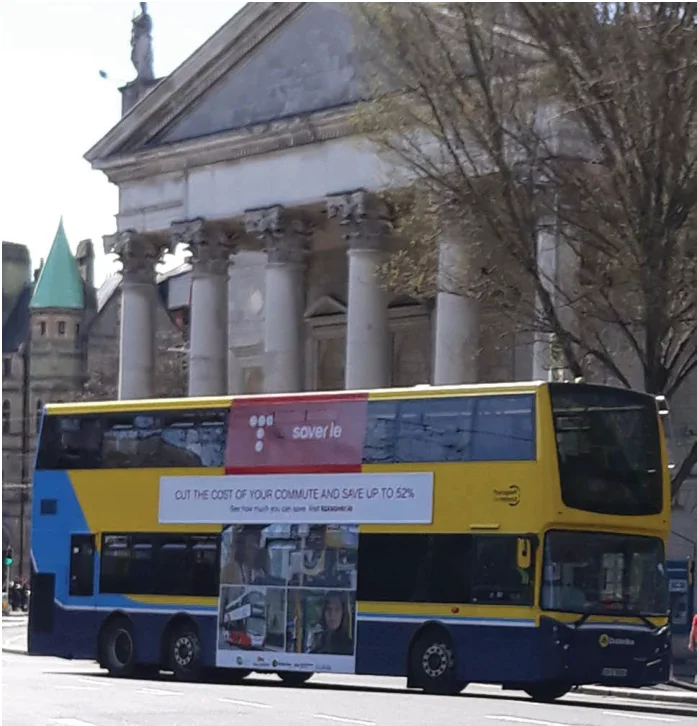
Figure from page 40
Four objectives have been developed to support the delivery of the overall aim of the Transport Strategy. These are set out below.
5.3.1 An Enhanced Natural and Built Environment
To create a better environment and meet our environmental obligations by transitioning to a clean, low emission transport system, increasing walking, cycling and public transport use, and reducing car dependency.
5.3.2 Connected Communities and Better Quality of Life
To enhance the health and quality of life of our society by improving connectivity between people and places, delivering safe and integrated transport options, and increasing opportunities for walking and cycling.
5.3.3 A Strong Sustainable Economy
To support sustainable economic activity and growth by improving the opportunity for people to travel for work or business where and when they need to, and facilitating the efficient movement of goods.
5.3.4 An Inclusive Transport System
To deliver a high quality, equitable and accessible transport system, which caters for the needs of all members of society.
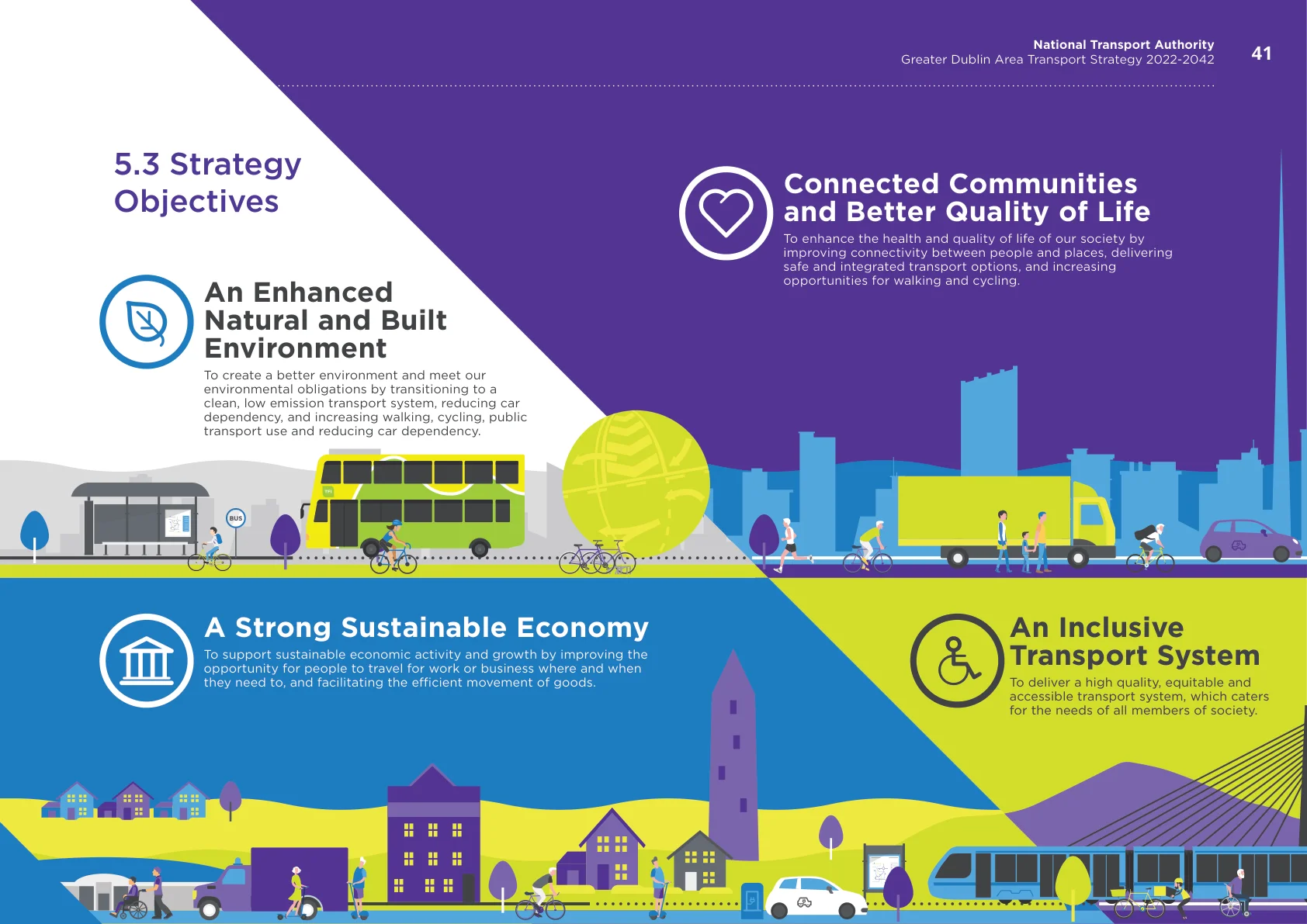
Figure from page 41
Strategy Objectives
5.3 Strategy Objectives
Connected Communities and Better Quality of Life
To enhance the health and quality of life of our society by improving connectivity between people and places, delivering safe and integrated transport options, and increasing opportunities for walking and cycling. An Enhanced Natural and Built Environment
To create a better environment and meet our environmental obligations by transitioning to a clean, low emission transport system, reducing car dependency, and increasing walking, cycling, public transport use and reducing car dependency.
TFI
BUS
A Strong Sustainable Economy
An Inclusive Transport System
To support sustainable economic activity and growth by improving the opportunity for people to travel for work or business where and when they need to, and facilitating the efficient movement of goods.
To deliver a high quality, equitable and accessible transport system, which caters for the needs of all members of society.
Figure from page 42
6. Public Consultation
- Public Consultation
6.1 Pre-Draft Consultation
“We should re-engineer our towns and cities for public transport, cyclists and pedestrians and invest in sustainable transport solutions that meet the needs of rural and urban communities. For example, the concept of the ’15-minute city’ is receiving greater attention as a means to reduce congestion, enhance public spaces, revitalise local economies, increase public transport efficiency and improve quality of life.
The views and opinions of the public and stakeholders in the development of the draft Strategy was considered a central element of the process. Section 12 (8) of the Dublin Transport Authority Act sets out the requirement to engage with a number of stakeholders and members of the public at the outset during the preparation of the draft Strategy.
To this end, the NTA prepared a Pre-Draft Issues Paper in November 2020. This Issues Paper highlighted some of the main considerations and opportunities for the new Transport Strategy, and sought public and stakeholder input into its development at the inception stage.
Furthermore, open public spaces in the GDA should be realigned to apply more sustainable travel measures such as additional pedestrian crossings, cycle facilities and bus routes to increase sustainable accessibility and allow our public spaces to be used in a more sustainable way.”
A full Public Consultation then commenced from 23rd November 2020 to 22nd January 2021, and the public were asked to assist in the development of the strategy goals and objectives, and to help identify transport requirements and opportunities. Parallel to this a list of key stakeholders were contacted and asked for their views.
Engineers Ireland – Pre-draft Submission on the Transport Strategy, January 2020
Paper were prepared, and direct contact was made with various Disability Groups.
Due to the Covid-19 related restrictions it was not possible to undertake in-person events, and instead the consultation was run online with the public given an opportunity to submit commentary via a pre-prepared questionnaire and, if required, via a written submission portal. To best achieve accessibility for all members of the public, accessible versions of the Issues
To ensure maximise exposure of the Strategy Consultation, an extensive publicity campaign was undertaken, with advertisements placed in national and local newspapers, on radio, on social media and also utilising outdoor advertising on bus shelters – see Figure 6.1.
Pages 39–43 · View in original PDF