16 Climate Action Management
- Climate Action Management
16.1 Introduction
“Effective Transport Demand Management measures will be needed to respond to the increasing mobility needs of the growing population and economies of the five cities, while continuing to manage congestion, reduce greenhouse gas emissions, improve air quality and improve the urban environment.
This chapter sets out the arrangements that will be implemented, in addition to the other specific measures in this Strategy, to ensure that transport in the GDA makes the required contribution to the national target of reducing transport emissions by 50% by 2030. According to the analysis and emissions modelling undertaken by the NTA in the development of the strategy, the measures presented in the previous chapters go a significant way towards this. Further measures will be required, most specifically additional demand management measures to reduce the relative cost of sustainable modes, and greater use of alternative fuels.
Taking decisive and rapid action to address these issues will be a major challenge, but the benefits for our cities’ residents and visitors are huge – cleaner air, a sustainable use of the world’s scarce resources, more connected and healthier communities and liveable vibrant cities.”
As set out in the previous chapters, the Strategy aims to provide an effective and sustainable transport system across the region and to accommodate future travel growth in a managed and balanced way. However, without complementary demand management measures, which have the objective of reducing emissions by 50% by, inter alia, encouraging greater use of alternatives to the private car, the full benefits of the Strategy will not be achieved.
Five Cities Demand Management Study, Recommendations Report, Government of Ireland, 2021
greenhouse gas emissions, the Act requires a total reduction of 51% in such emissions over the period to 2030, relative to a baseline of 2018. This overall target has been disaggregated into sectoral targets, with the transport sector required to achieve a 50% reduction.
In addition, there is now a legislative requirement that public bodies must take account of the Climate Action Plan and Low Carbon Development (Amendment) Act 2021 in the performance of their functions. Specifically in relation to
As identified in Section 4.2, this is a very significant and challenging target, which will require fundamental changes in the area of transport over the next decade. Central to those
16.2 2030 Climate Change Target
changes will be the need to increase the proportion of travel by sustainable modes and reduce the level of usage of Internal Combustion Engine (ICE) powered vehicles.
Ireland’s total greenhouse gas emissions in 2018 were approximately 60.9 MtCO2eq (mega tonnes CO2 equivalent). The transport sector accounted for 20% of this amount, approximately 12.2 MtCO2eq. On a national basis the 50% reduction target will require transport emissions to be reduced to an overall level of 6 MtCO2eq by 2030.
Achieving such a rate of reduction in the GDA is even more challenging as the 2018 baseline figure reflects an already high mode share for sustainable modes compared to the rest of Ireland and the fact that trips in the GDA, in particularly Metropolitan Dublin, even when undertaken by car, are comparatively shorter and therefore emit less CO2.
Within the overall national figure for transport, the 2018 emissions total for travel within the GDA has been estimated by the NTA to be 3.2 MtCO2eq.
While the provision of new and additional transport infrastructure and transport services will encourage and deliver increased movement by sustainable modes, such provision will be insufficient on its own to achieve the level of emissions reduction required by 2030. Accordingly, additional demand management measures will need to be put in place to complement the additional transport provision and achieve the overall 50% reduction goal.
It is worth noting that in the absence of mitigation measures, and assuming current patterns continue, the level of greenhouse gas emissions for the GDA would increase to approximately 3.4 MtCO2eq by 2030, reflecting population and employment increases in the region over that period.
Applying the 50% reduction to the 2018 emissions figure for the GDA, establishes the 2030 target for the GDA as being 1.6 MtCO2eq. This is shown in Figure 16.1.
It should also be noted that the increased capacity across the public transport and cycle networks in particular, as set out in the previous chapters, and as is currently being rolled-out as part of NTA investment programmes, is being provided in a manner which is forecast to accommodate the increased demand arising from the significant anticipated shift to these modes.
16.3 Achieving the Target
The most effective way to reduce carbon emissions from transport is to target long-distance trips by petrol and diesel cars and goods vehicles and remove them from the network. This can be done in the following ways:
The following sections set out the additional demand management measures that will need to be adopted.
yConvert the car and goods fleet to zero emissions vehicles; and
yTransfer long distance private car trips to public transport.
It should also be noted that the GDA, Dublin in particular, is working from a lower emissions per capita basis than rural areas due to the pre-existing alternatives and due to shorter than average journey distances, and therefore achieving a further 50% reduction is more challenging.
MtCO2Eq
4.0
This following sections set out the arrangements for the reduction in emissions from transport to meet the 50% target in the GDA.

Figure 16.1: GDA Emissions Target
3.5
3.0
16.4 Electrification and Bio-Fuels
2.5
One of the main policies to reduce greenhouse gas emissions in the transport sector is the transition away from fossil fuel powered vehicles to electric vehicles. At a national level, the Government’s Climate Action Plan sets out the intention to increase the number of electric vehicles in the State to 936,000 vehicles by 2030 comprised of:
2.0
1.5
1.0
0.5
y840,000 passenger cars;
0.0
y95,000 electric vans and trucks; and
2018 2030 Business As Usual 2030 Target
y1,200 electric buses.
This is an ambitious level of transition to electric vehicles and will contribute substantially to reducing greenhouse gas emissions.
As such, while the investment in metropolitan public transport and cycling is necessary for the GDA to function efficiently, and while broader social and environmental objectives cannot be met without the step change in investment in sustainable modes, the primary focus for reducing carbon emissions from transport are long-distance trips by petrol and diesel vehicles.
The Climate Action Plan 2021 also sets out a policy to increase the volume of biofuels used in the road transport sector as a blended fuel for petrol and diesel powered vehicles. It proposes a 10% blend penetration rate in petrol and 20% penetration in diesel by 2030. This has been assumed to be in place by 2030.
16.5 Initial Emissions Assessments
were identified for assessment in combination with three alternative overall demand management approaches, being:
The NTA’s Regional Modelling System has been used to calculate the level of greenhouse gas emissions’ reduction under various scenarios.
Approach 1 – Increased fuel prices;
Approach 2 – Additional electrification (including hydrogen vehicles) and freight changes, and
As identified earlier, the overall target required to be achieved in 2030 is an overall emissions level of 1.6 MtCO2eq. across the GDA, reduced from a “business as usual” forecast level of 3.4 MtCO2eq.
Approach 3 – Congestion charging / low emission zones plus road pricing / tolling.
The “Core Measures” included in each approach assessment comprised:
An assessment has been undertaken of the forecast emissions level in 2030, taking account of the additional transport infrastructure and transport services set out in the Transport Strategy proposals, in addition to the vehicle electrification and increased use of bio-fuels proposals. This assessment forecasts that with all of these elements in place, the likely emissions outturn for the GDA in 2030 will be approximately 2.0 MtCO2eq.
Reduction of free workplace parking in urban areas;
Putting in place increased parking charges in urban areas;
Adjustment of traffic signal timings across the metropolitan area to better facilitate movement by sustainable modes; and
Commitment to provide sufficient passenger capacity on public transport services to absorb increased transference.
Each of the three approaches was then considered, with the Core Measures included in each case, to establish how that approach would address the deficit to fully achieve the 50% reduction target.
While this package of measures does deliver a very significant level of decrease in greenhouse gas emissions, it does not fully achieve the required 50% reduction target – a further reduction in the order of 0.4 MtCO2eq is needed to reach the prescribed threshold.
16.6.1 Approach 1 – Fuel Price Increases
Approach 1 is focussed on altering the cost of vehicle operation, being petrol/diesel vehicles.
To deliver the additional reduction, further measures to decrease the usage of petrol/diesel powered vehicles are required.
An assessment was undertaken to establish the level of fuel price change that would be necessary to achieve the required additional emissions reductions under this approach. That assessment identified that a significant increase would be necessary to achieve the required decrease in the usage of
16.6 Addressing the Deficit
To address the shortfall to achieving the overall target, a set of core demand management measures (the “Core Measures”)
petrol/diesel powered vehicles, albeit that such increase could be spread out over a number of years.
Hydrogen powered vehicles use a fuel cell powered by hydrogen to operate the vehicle electrically. But a key downside to the operation of such vehicles is the high costs currently associated with hydrogen fuel.
However, fuel pricing is a national issue rather than a regional matter and could only be implemented by Government. In addition, this issue is likely to be separately considered under the Climate Action Plan reviews and the carbon budgets envisaged under the Climate Action Plan and Low Carbon Development (Amendment) Act 2021.
Assessment work undertaken has identified that a transition of about one third of the HGV fleet to electrified use, probably using hydrogen fuel cells, would achieve the necessary additional emissions’ reduction.
16.6.2 Approach 2 – Additional Electrification
However, hydrogen power is an embryonic technology for HGV use and it is too early to rely upon the successful advancement of this propulsion technology for widespread use in order to reach the emissions target.
A second approach to the full achievement of the emissions’ target is through additional electrification. Under this approach, an accelerated level of transition to electrically powered vehicles would be incentivised such that the increased take-up of such vehicles provides the required additional emissions reductions.
It is clear, however, that the freight sector can make a significant contribution to the meeting of the national climate change targets, and the regional objectives for the GDA. In addition to the potential to operate a proportion of HGVs using hydrogen generated power (or other emerging technology), other freight– related initiatives to reduce carbon emissions include:
It was noted in section 16.5.1. that the target level of electrification is already very ambitious, in particular for cars. Accordingly, it is likely that this approach would require an increased electrification of other vehicle types.
Increased use of rail freight for longer distance carriage of appropriate freight traffic;
Heavy Goods Vehicles make up a high component of the residual emissions in 2030 following the implementation of the planned strategy elements by that date plus the electrification and bio-fuels arrangements set out in the Climate Action Plan. It comprises about 50% of the residual emissions, at 1.1 MtCO2eq.
Greater transfer of goods movements towards smaller vehicles such as vans and smaller rigid vehicles which can more readily transition to zero emissions;
An accelerated transition of the LGV fleet to fully electric zero emissions vehicles; and
While battery operation of HGVs over long distances is not currently a viable solution, given range limitations, hydrogen powered HGVs do represent a technically feasible solution.
The use of consolidation centres for more efficient deliveries.
levels appropriately set, such a configuration can achieve the required additional emissions reduction.
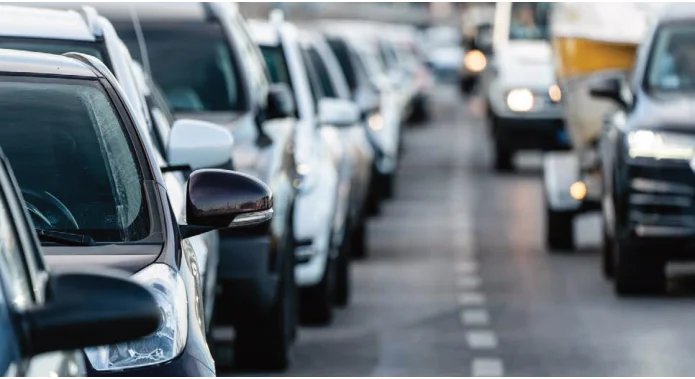
Figure from page 208
However, this is only one permutation from the multiple potential configurations. Accordingly, the exact arrangements in respect of such an approach will require detailed evaluation at the implementation stage, which will need to assess different alternatives to appropriately select and calibrate the final configuration.
16.7 Other Factors
While the earlier sections of this chapter focus on the need to achieve the vehicle emissions target, there are additional reasons for the implementation of certain demand management measures. For instance, the conversion of all vehicles to electric vehicles would fully achieve the climate change objectives in transport, but would do nothing to reduce congestion. If car use continued unabated, traffic congestion would still persist and worsen, resulting in a diminished quality of life for many commuters struggling through long commutes in congested traffic conditions.
16.6.3 Approach 3 – Congestion / low emission zones plus road pricing / tolling
Under this approach there are a number of different fiscally based arrangements that could be put in place to reduce the level of car travel and promote a greater transference to sustainable modes. These include congestion charging, low emission zone (or zones), tolling and/or road pricing.
In addition, there is a need to ensure that the national road network can appropriately perform its primary role of catering for strategic traffic, in particular vehicles involved in the transportation of goods and products, public transport vehicles, and other usage which contributes to national and regional economic development. This means that the level of usage by non-strategic traffic needs to be controlled on these elements of the overall road network to preserve its core functionality.
Various configurations and combinations of these options are feasible to achieve the required additional emissions reduction target.
One potential scenario would be the implementation of a low emission zone or a congestion charge zone inside the M50, coupled with additional tolling points on the M50 and on the national road approach routes to the City, combined with through traffic restrictions in Dublin City centre. With charging
16.8 Final 2030 Emissions Assessment
Ensuring that urban centres are people focussed and not disproportionately designed around catering for vehicles is an objective of national, regional and local planning policies. This means that management of vehicle numbers, in particular car numbers, is essential in those areas to support the place-making ambitions set out in various policies and plans. Linked to this is the need to improve air quality in urban centres in advance of achieving full vehicle electrification, which may require measures such as the implementation of low emission zones.
The implementation of the Transport Strategy elements intended for delivered by 2030, coupled with the planned vehicle electrification and increased use of bio-fuel set out in the Climate Action Plan 2021, will see transport emissions in the GDA decrease from a “business as usual” figure of 3.4 MtCO2eq in 2030 to 2.0 MtCO2eq, also in 2030. This represents a reduction of 38% from the 2018 GDA emissions total of 3.2 MtCO2eq.
Accordingly, there are numerous factors, additional to the greenhouse gas reduction targets, supporting, and requiring, management of the level of car use in order to deliver on other objectives.
Additional measures are required to further reduce emissions to meet the 50% reduction target of 1.6 MtCO2eq. A number of alternative approaches, as set out above, are available to achieve this supplemental reduction.
It should also be borne in mind that potential exists for unintended negative environmental consequences to emerge as a result of implementing measures to reduce overall carbon emissions. An example of this would arise if inappropriate levels of traffic were permitted to divert to local roads and streets to avoid tolls or traffic management measures, thereby worsening air quality in a residential area and increasing noise.
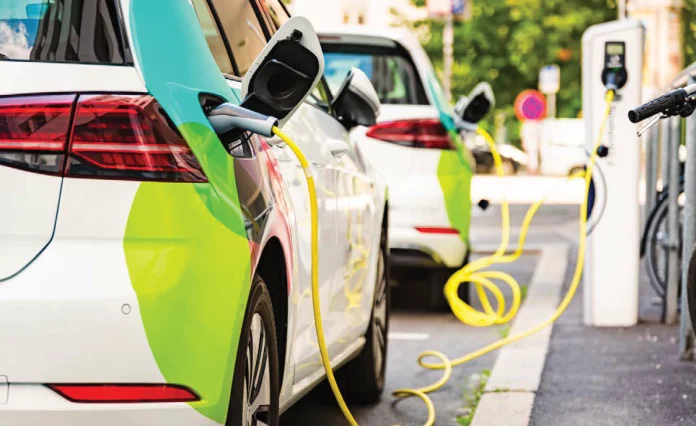
Figure from page 209
Measure CLIMATE1
The NTA, in conjunction with the local authorities and TII will, in the implementation of measures to reduce overall carbon emissions from transport, seek to avoid or mitigate negative localised impacts on noise and air quality through the application of appropriate local measures.
It is acknowledged that Approach 1 (increased fuel price) is a national policy issue rather than a regional matter. It is likely that general carbon pricing policy will see increased fuel costs of some level over the coming years to reflect the overall objective of reducing fossil fuel use.
Measure CLIMATE2
To ensure full compliance with the 50% carbon emissions reductions targets by 2030, the NTA will develop, and secure the implementation of, appropriate demand management measures to achieve the required emission reductions.
In relation to additional electrification (Approach 2), the already planned level of electrification by 2030 is highly ambitious and the potential to further ramp this up in relation to car electrification is limited. Accordingly, most of the remaining emissions reduction target will fall to be achieved by a transition to other zero emission vehicles in addition to cars; changes in the freight area and the types of demand management measures set out under Approach 3.
The NTA will undertake a detailed assessment to establish the optimal framework of demand management measures, which is likely to include, inter alia, additional roadspace reallocation to sustainable modes (e.g., converting general traffic lanes and / or parking to public transport lanes and / or cycle lanes – including lanes on the main radial routes approaching urban centres; pedestrianising streets; removing motorised traffic from streets; redesigning junctions to provide greater capacity for cyclists; urban design and placemaking schemes, etc.), parking restraint, zonal charging, additional tolling / road pricing and/or further vehicle electrification plus changes in freight arrangements.
However, there are various permutations of such proposals available and further detailed assessment will be required to establish and calibrate the optimal framework. That assessment work to develop the optimal framework will be undertaken at an early point in the lifetime of the Strategy, and will take account of policies set out in updates to the Climate Action Plan and derived from the carbon budgets to be established under the Climate Action Plan and Low Carbon Development (Amendment) Act 2021.
A Demand Management Scheme in accordance with the Dublin Transport Authority Act 2008, will be prepared and published by the NTA within two years of the adoption of the Transport Strategy. The primary objective of this scheme will be the realisation of the 50% CO2 emissions reduction target in full for the GDA.
That work will form part of a “Demand Management Scheme” that will be prepared by the NTA in accordance with the legislative provisions set out in Section 71 of the Dublin Transport Authority Act 2008, whose objective will be to establish measures to fully achieve the transport emissions target for the GDA.
Figure from page 210
Initial consultations in relation to demand management proposals will be undertaken during 2023.
16.9 Emissions Levels in 2042
Emissions targets are clearly established for 2030 under the provisions of the Climate Action Plan and Low Carbon Development (Amendment) Act 2021. That Act also sets out the objective to achieve a “climate neutral economy by no later than the end of the year 2050”. Accordingly, while no specific targets are set for 2042, the final year of this strategy, it is intended that emissions will continue on a downwards trajectory between 2030 to 2050.
The continued electrification of the transport fleet and the implementation of the remaining elements of this strategy will further reduce greenhouse gas emissions within the GDA. Assessment work carried out has indicated that greenhouse gas emissions from transport in the GDA will reduce to below 1 MtCO2eq by 2042.
Measure CLIMATE3
Through the implementation of the full measures set out in this strategy, in combination with the plans and programmes of Government, the NTA will contribute to a reduction in CO2 emissions from transport in the GDA to below 1 MtCO2eq by 2042.
Pages 203–211 · View in original PDF