6.2 Zero Emission Vehicles
6.2 Zero Emission Vehicles Ireland (ZEVI)
The Government has established the Zero Emission Vehicles Ireland office. ZEVI will co-ordinate and deliver the policy pathway for low-emission vehicles.
ZEVI will draw on international best practice and will leverage expertise from across a number of organisations that deliver EV policy measures and support services. It will be responsible for the strategic coordination of EV policy and strategy, management of EV grants and incentives, and
Cross-border engagement across all levels of Government will be required to support the development of public charging networks on an all-island basis. Based on a principle of
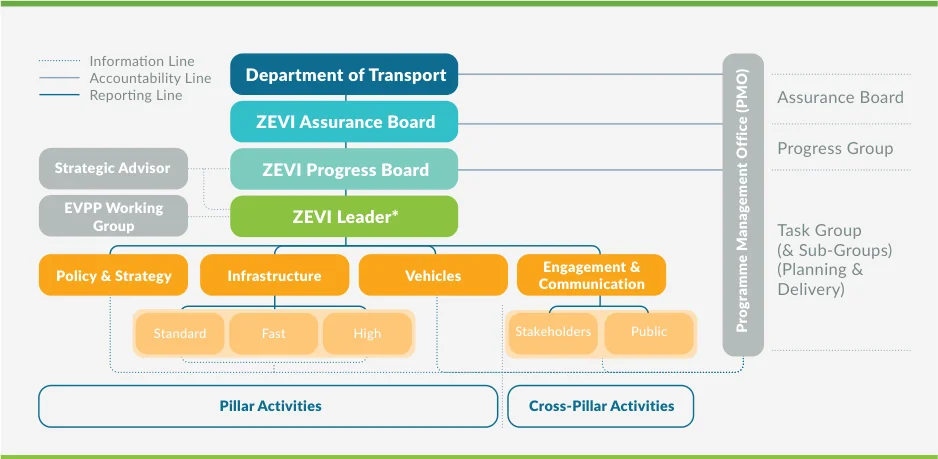
Figure 3: ZEVI Organisation, Structure, and Governance
Information Line Accountability Line Reporting Line
Department of Transport
Programme Management Office (PMO)
Assurance Board
ZEVI Assurance Board
Progress Group
ZEVI Progress Board
Strategic Advisor
EVPP Working
ZEVI Leader*
Group
Task Group (& Sub-Groups) (Planning & Infrastructure Delivery)
Engagement & Vehicles Communication
Policy & Strategy
Stakeholders Public
Standard Fast High
Pillar Activities Cross-Pillar Activities
the Implementation Plan for this EV Charging Infrastructure Strategy.
ZEVI has four pillars of focus: Policy & Strategy, Infrastructure, Vehicles, and Communications and Engagement.
ZEVI will bring together the various vehicle grant schemes that are currently in place. These grants are a crucial part of addressing gaps in the market and ensuring early-adopter EV uptake. This is especially important until the lifetime costs of electric vehicles are priced similarly to fossil-fuel vehicles. As this price parity moves closer, such supports will be gradually phased out84, and it is expected that Government funds will focus on the delivery of charging infrastructure.
The ZEVI Assurance Board and Progress Board bring together the key enablers for the delivery of this strategy (ZEVI, SEAI, NTA, TII, and ESB Networks) with other key stakeholders such as the CCMA and the CRU.
In addition to the Assurance and Progress Boards, there is a wide range of stakeholders who will contribute to the objectives of the strategy and without whom, the strategy could not be delivered successfully. To facilitate this wider collaboration, ZEVI established three infrastructure stakeholder groups and one vehicles stakeholder group to share knowledge and best practice, and to identify barriers and potential solutions.
ZEVI will coordinate and support the development and rollout of publicly-accessible charging infrastructure. It will collaborate with the public and private sectors, as well as service providers, to deliver destination charging, residential neighborhood charging, and Alternative Fuel Infrastructure Regulation (AFIR) infrastructure targets (particularly along the TEN-T Network)85.
MGroup 1: Public Sector Energy Delivery Group
MGroup 2: Public Sector EV Infrastructure
Delivery Group
The ZEVI office sits within the Department of Transport. The organisation and governance of the office is outlined in Figure 3, above.
MGroup 3: Public-Private Infrastructure
Stakeholder Group
84 Dept of Transport (2021) Electric Vehicle Policy Pathway Working Group report, pp. 10-11, p. 21.
85 See proposed Alternative Fuels Infrastructure Regulation and proposed TEN-T Regulation revision.
representatives from a range of organisations.
MGroup 4: Public-Private Vehicles Stakeholder
Group
The delivery group will provide expertise to support the delivery of a comprehensive national EV charging network. At an early stage, it will identify issues and challenges emerging in the implementation of this strategy and provide solutions and guidance where appropriate. The group will work to integrate EV infrastructure provision into the planning framework, while considering local energy provision. The group will also consider whether new regulations are required to facilitate the provision and installation of EV infrastructure.
In addition to engaging with stakeholders through these formal groups, ZEVI will engage strongly with citizens. This will be done through the website, social media channels, and a comprehensive communications program.
Pages 59–61 · View in original PDF