9.7 Access to Arts, Culture, Language and Heritage
9.7 Access to Arts, Culture, Language and Heritage
Culture, language and heritage are an integral part of Irish life. Their importance in society remains undiminished, from their deep intrinsic value, to their wider social import and benefit, and their economic potential in terms of creative industries and cultural tourism.
Cultural Heritage
The Region’s rich cultural offer includes visual and performing arts, music, spectator sports, festivals and carnivals and a diverse and innovative food scene. It also includes a unique natural and built heritage including National Parks and nature reserves, National Monuments and Cultural Institutions, historic cities, towns and villages. (see Chapter 7 Environment & Climate for more information on Natural Heritage). The Region also benefits from a growing community of Irish speakers, particularly in Dublin, which, with all of these other elements contributes to the Region’s opportunities to support and enhance cultural tourism.
Cultural heritage is the fabric of our lives and societies. It surrounds us in the buildings of our towns and cities, our landscapes, natural sites, monuments and archaeological sites. Cultural heritage brings communities together and builds shared understandings of the places we live. Intangible cultural heritage refers to the practices and traditions that are central to the lives and identities of our communities, groups and individuals.
Sustaining and investing in cultural infrastructure is a core consideration of the Strategy. The opportunities for economic development through support for the expansion of the creative industries, and in particular the audio visual sector, are also a focus under this RSES given the importance of Dublin and Wicklow to the sector nationally. There are significant opportunities for a co-ordinated national, regional and local approach to support the development of creative places (studios, performance spaces, collaborative work spaces) that meet local needs and aspirations.
The role of arts, culture, and language in providing for enhanced wellbeing and social cohesiveness is recognised with participation in cultural activity directly linked to individual and societal wellbeing and quality of life. There is significant provision of arts and cultural facilities with nearly all national cultural institutions and several regionally significant facilities located in the Region.
Additionally, arts and culture have a key role to play in highlighting the distinctiveness of place in our cities, towns and rural areas and they play a significant role in defining Ireland’s international profile, as a place of culture, learning and creativity, thus assisting to attract tourism and investment. Cultural tourism forms a central plank of the Irish tourism industry and a very significant generator of foreign exchange earnings (See Chapter 6 Economy and Employment).
Local authorities provide a key link in the relationship between national policies and the cultural experience of people in their everyday lives.
CASE STUDY:
South Eastern Creative Corridor
The South Eastern Creative Corridor74 is is an initiative of the Local Enterprise Offices (LEOs) in Wicklow and the South East which aims to support the development and growth of enterprises in the creative audio visual sector, including the animation and film industry, with the aim of job creation as well as the development of a sustainable creative industry cluster in the region.
The year long business development programme was launched in Wicklow County Campus in 2016 and offered enterprise owners an intensive programme of training, mentoring, networking and access to finance in order to assist participating businesses to increase sales, improve profitability, explore new markets and take full advantage of the opportunities in the sector. Funding for the initiative, which was led by the Wicklow LEO, was provided by Enterprise Ireland under the Regional Action Plan for Jobs competitive fund.
74 http://creativecorridor.ie/

Figure from page 215
Quality of Life
Language
Archaeological Heritage
The Eastern and Midland Region is diverse and multilingual. 2016 Census results show that 363,000 (15.6 %) of the Region’s residents spoke a foreign language, other than Irish or English at home, with Polish by far the most common language, followed by French, Romanian and Lithuanian. The total number of persons who could speak Irish in the Region was 787,000 (34%) of residents.
The Region’s historic environment, represented in its built form, landscape heritage and archaeology, provides a depth of character that benefits the Region’s economy, culture and quality of life. The built environment, combined with its historic landscapes, provides a unique sense of place, whilst layers of architectural history provide an environment that is of local, national and international value.
In line with An Stráitséis Fiche Bliain don Ghaeilge 2010 – 2030 (20 Year Strategy for the Irish Language 2010 – 2030) ‘Investing in Our Culture, Language and Heritage’ seeks to develop a flagship Irish language and cultural hub in Dublin. There is also a commitment to expand the use of the Irish language as the community language of the Gaeltacht.
The Region’s heritage assets include World Heritage Sites, built and natural conservation areas, protected structures, parks and gardens, monuments, archaeological remains, canals and waterways, peatlands, hedgerows and ancient woodlands.
The Region is home to the world renowned UNESCO World Heritage Site at Brú na Bóinne. In addition, the Region is home to a number of UNESCO candidate sites including the historic city of Dublin and medieval monastic sites at Clonmacnoise, Durrow, Glendalough, Kells and Monasterboice and representatives of the Royal Sites of Ireland at Dún Áilinne, Hill of Uisneach, and Tara Complex.
There are two Gaeltacht districts within the Region, both in rural County Meath – Ráth Cairn and Baile Ghib. According to 2016 census returns, these Irish speaking communities have a population of 1,776 representing approximately 1.85% of the national Gaeltacht population. A Language Plan will be prepared for the Limistéir Pleanála Teanga (Language Planning District) for Ráth Chairn and Baile Ghib in accordance with the Gaeltacht Act 2012.
CASE STUDY:
These Gaeltacht districts are endowed with a unique linguistic and cultural heritage and demonstrate significant capacity and capability in terms of its highly developed forms of social capital and community resilience. These dynamic social and communal features represent at once an important socioeconomic and sociolinguistic differentiator and also act as a key regional development asset which can contribute to efforts in achieving effective regional development objectives75.
CHERISH
The CHERISH project76 (Climate, Heritage and Environments of Reefs, Islands and Headlands), funded by the EU’s Ireland-Wales Programme, will employ new technologies to analyse coastal and island archaeology and heritage sites most affected by climate change.
The project aims to raise awareness and understanding of the past, present and near future impacts of climate change, storminess and extreme weather events on the rich cultural heritage of the regional seas and coast, with Skerries Islands as one of the case studies.
75 The NPF supports the implementation of language plans in Galetacht Language Planning Areas, Gaeltacht Service Towns and Irish Language Networks (National Planning Objective 29).
76 http://www.discoveryprogramme.ie/

Figure from page 216
Regional Spatial & Economic Strategy
Architectural Heritage
Heritage Led Regeneration
Local authorities, through their city and county development plans and designation through the Record of Protected Structures (RPS) and Architectural Conservation Areas (ACAs), enable places of architectural value to be protected. Good heritage management should be incorporated into spatial planning to promote the benefits of heritage led urban regeneration in historic towns, for example through the protection of historic urban fabric, the reuse of historic buildings and the enhancement of places of special cultural or natural interest. The National Inventory of Architectural Heritage (NIAH) is an invaluable built heritage resource for local authorities and the general public.
Planning for the regeneration of a historic town needs an integrated approach that balances the protection of the built heritage and the sustainable development of historic urban areas with the needs of modern living and takes account of the concerns and aspirations of the community and key stakeholders. This requires the coordination and management of sometimes conflicting demands and interests of different stakeholders. However, the development of a common vision for the town, supported by a coordinated and integrated series of objectives and a programme of realistic, achievable actions, will balance the conservation of the heritage with the needs of those who live in and use the historic town.
The Region is home to towns and villages from medieval times such as Carlingford, Drogheda, Trim and Athlone to the historic planned towns such as Birr, Abbeyleix, Castlepollard and Tyrrellspass. Fishing villages are dotted along the east coast such as Clogherhead, Balbriggan, Skerries, Dalkey and Arklow. The Region is home to a number of designated Irish Heritage Towns; Dalkey, Trim, Kells, Kildare, Athy, Baltinglass, Abbeyleix, Tullamore and Birr. These built heritage assets are a non-renewable resource that contribute to our understanding of our past, and the well-being and quality of life of our current citizens and also represent an opportunity for sustainable economic development.
Bringing unused or underused spaces within our towns back into use has many advantages. In addition to reviving the economic value of an urban area, it also removes abandoned and derelict sites, and reduces the pressure to build on greenfield sites, on valuable agricultural land.
Local distinctiveness is key to each town having a unique selling point. The character and distinctiveness of the historic built environment are central to the future success of Irish towns. There are opportunities for local authorities and other stakeholders to target funding initiatives for heritage led regeneration.
The repair and reuse of historic buildings is an integral part of sustainable development. Design consideration should promote the regeneration of historic buildings to provide contemporary family homes. The provision of high quality public realm and recreational spaces are also considerations for encouraging and promoting urban living and can make urban living more attractive.
Other initiatives to promote placemaking and the economic vibrancy of historic town centres include the Navan Town Centre Health Check and Wicklow and Balbriggan historic public realm plans, which are linked to the statutory local area plans. Community led village design statements were also piloted in Julianstown (rural pilot) and Sandymount (urban pilot), in partnership with Meath County Council and Dublin City Council.
Many of our historic towns retain fragmentary remnants of their former medieval defences. The Irish Walled Town Initiative is a network of medieval towns across Ireland supported by the Heritage Council. There are 8 walled towns in the Region – Ardee, Carlingford, Drogheda, Castledermot, Athy, Athlone, Trim and Dublin.

Figure from page 217
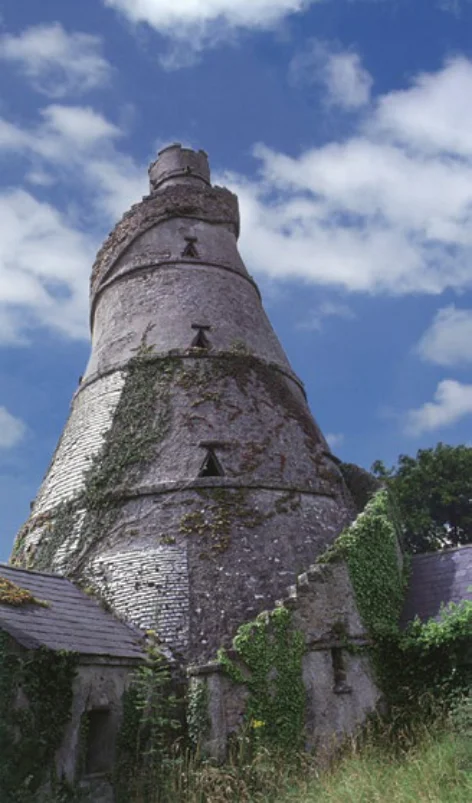
Figure from page 217
REGIONAL POLICY OBJECTIVES:
Arts, Culture, Language and Heritage
RPO 9.24: Promote and facilitate the role of arts and culture in recognition of its importance to people’s identity and the potential for economic development through a unique cultural tourism offering throughout the Region.
RPO 9.25: Seek to work with all relevant stakeholders to promote equality of access to and engagement with arts and cultural services and in the promotion of culture and heritage led urban and rural regeneration.
RPO 9.26: Seek to build on the success and support the clustering of the film and audio visual sector in the Dublin and Wicklow areas and to support training of film workers and crew around the Region, as well as exploiting opportunities for the industry outside of these hubs.
RPO 9.27: EMRA will support local authorities to work with local communities to promote historic towns in the Region in the practice of heritage led regeneration, to promote the sensitive and adaptive reuse of historic building stock and industrial structures where appropriate, and to strengthen their capability to draw down European and national funding.
RPO 9.28: Support the implementation of language plans for the Region’s Gaeltachts and the identification of Gaeltacht Service Towns and Irish Language Networks in the Region, and to promote the development of the Gaeltacht in Meath in a manner that protects and enhances the distinctive linguistic and cultural heritage, whilst meeting the needs and aspirations of both residents and visitors alike.
RPO 9.29: Support the designation of the UNESCO candidate sites in the Region.
RPO 9.30: Support the sensitive reuse of protected structures.
Regional Spatial & Economic Strategy
10
Infrastructure
Pages 214–218 · View in original PDF