9.6 Access to Childcare, Education and Health Services
9.6 Access to Childcare, Education and Health Services
Successful places also support a wide range of services and facilities that meet local and strategic needs and contribute towards a good quality of life. These include facilities in relation to health, education, libraries, childcare, community centres, play, youth, recreation, sports, cultural facilities, policing, places of worship, burial grounds and emergency facilities.
Social infrastructure plays an important role in developing strong and inclusive communities. The Regional Assembly supports enhanced co-ordination between local authorities, service providers and stakeholders including the local community through Local Community Development Committees (LCDCs) to identify social infrastructure needs and to respond to population growth and changing demographics and the resulting demand for facilities.
It is expected that the number of children will continue to increase until the mid 2020s and decline only slowly thereafter. This means that the continued provision and enhancement of facilities and amenities for children and young people, such as childcare, schools, playgrounds, parks and sportsgrounds, is a priority and will continue to be for the foreseeable future.
Optimally, schools need to be located along sustainable transport corridors (i.e. walking, cycling, public transport). Car dependency is a significant mode of school transport in the Region. As far as is practicable, in addition to factoring sustainable access as a condition for new schools and educational infrastructure, a programme of settlement retrofit is needed to facilitate safe walking, cycling or ease of access to public transport alternatives.
Social infrastructure should be easily accessible by walking, cycling and public transport. Shared use and co-location of facilities should be encouraged, in order to align service provision, use land more efficiently and facilitate opportunities for further inclusion and community participation.
Childcare and Schools
Provision of quality affordable childcare places is critical, both developmentally for children and also as an effective labour market intervention. Affordability of childcare is a factor, particularly so for low-income families, and is deemed as a barrier to employment73.
The RSES aims to address mis-alignment in the Region across a range of factors including school provision, facilities and child-friendly amenities. School provision is a key part of social infrastructure to be provided in tandem with housing provision. The RSES will seek to prioritise the alignment of targeted and planned population and employment growth with educational investment, including the provision of new schools on well-located sites within or close to existing built-up areas that meet the diverse needs of local populations.
Through local authority county development plans and local area plan policy, co-ordinated decision making on school locations between the Department of Education and Skills and local authorities should be provided and a planned approach to education provision to locate new school facilities within access to public transport and active travel modes should be promoted.

Figure from page 211
73 Indecon International Economic Consultants Indecon Report on Support for Childcare for Working Families and Implications for Employment, Prepared for Donegal County Childcare Committee, November 2013

Figure from page 212
Regional Spatial & Economic Strategy
Third Level Education and Lifelong Learning
REGIONAL POLICY OBJECTIVES:
Access to high quality education and training has an important role to play in developing sustainable and balanced communities in the Region. Third level institutions and higher education providers in the Region are a critical enabler of economic development, providing continuing professional development, advanced research, and facilities to support business growth and clustering. Universities are also vital in providing higher order skills necessary to attract and retain major international companies. Third level education should be complemented by further education and apprenticeship training.
Childcare, Education and Life Long Learning
RPO 9.20: Support investment in the sustainable development of the Region’s childcare services as an integral part of regional infrastructure to include:
• Support the Affordable Childcare Scheme. • Quality and supply of sufficient childcare places. • Support initiatives under a cross Government Early Years Strategy. • Youth services that support and target disadvantaged young people and improve their employability.
Higher education institutions play a key role in driving sustainable regional development. In a dynamic and fast paced skills environment, education and training providers are challenged to respond to workplace skills needs. Regional Skills Fora work in tandem with education providers and businesses to meet the emerging skills needs and to address any gaps in their respective regions. Education Training Boards (ETBs) deliver labour-market focused programmes delivering key skills to employers, supported by the Regional Skills Fora. ETBs also deliver a range of part time adult and community education programmes that provide a key pathway to participation in society.
RPO 9.21: In areas where significant new housing is proposed, an assessment of need regarding schools provision should be carried out in collaboration with the Department of Education and Skills and statutory plans shall designate new school sites at accessible, pedestrian, cycle and public transport friendly locations.
RPO 9.22 To support the role of Higher Education Institutions and Educational Training Boards in addressing skills shortages and life-long learning needs in the Region, and to support the further development of multi-campus Technological Universities to drive research and innovation.
The development of multi-campus Technological Universities will lead the development of skills and talent in the Region. The RSES supports Athlone Institute of Technology in achieving its status as part of a Technological University by merging with a least one other Institute of Technology. The Technological University Dublin (TU Dublin) comprising Dublin Institute of Technology and the Institutes of Technology in Tallaght and Blanchardstown, will drive research and innovation in the Dublin region.

Figure from page 212
The EMRA will support the provision of high quality education and training provision, including the allocation of sufficient sites and the development of childcare facilities, schools, colleges and universities in appropriate locations to cater for population growth targets under the RSES, to provide for greater educational choice to facilitate improvement in skills, and to assist in tackling disadvantage.

Figure from page 213
Quality of Life
Healthcare
The availability and access to health services is central to creating healthier places. In addressing lifestyle induced illness and an aging population, the provision of educative and primary health care can support lifestyle adjustments that help people avoid tertiary care, leading to a more effective and less burdened health-care system.
Gaps in the Region’s healthcare infrastructure, in particular the demand and capacity for primary care, acute care and social care services need to be addressed to meet the health care needs of a growing and ageing population, including the recommendations of the Trauma Steering Group – A Trauma System for Ireland.
REGIONAL POLICY OBJECTIVES:
Provision of Health Services
RPO 9.23: Facilitate the development of primary health care centres, hospitals, clinics, and facilities to cater for the specific needs of an ageing population in appropriate urban areas in accordance with RSES settlement strategy and core strategies of development plans.
Enhancement of the quality of the built and natural environments can improve mental and physical health and reduce health inequalities and enable healthy choices to be made. This includes improved access to green spaces and the provision of new Green Infrastructure (see Chapter 7 Environment and Climate).
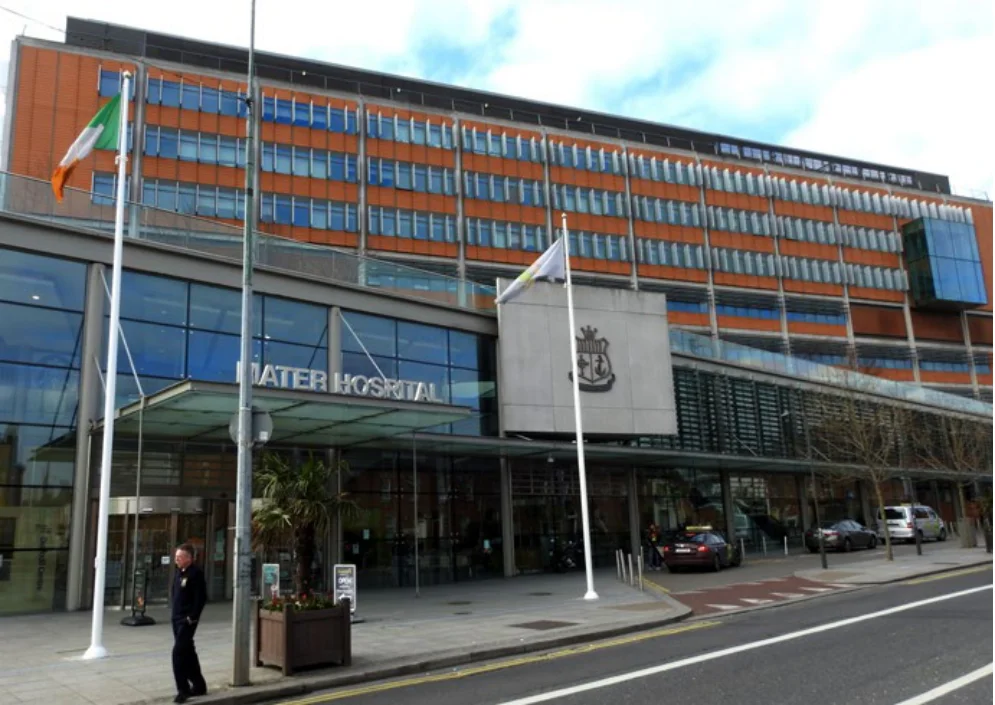
Figure from page 213

Figure from page 214
Regional Spatial & Economic Strategy
Pages 211–214 · View in original PDF