9.1 Introduction
9.1 Introduction
The place or environment in which we live or work, including its physical nature and social environment or community, has a profound impact on physical and mental health wellbeing, and quality of life. Irish culture has a longstanding identification with place. Placemaking is an essential link between spatial planning and facilitating improvements to people’s quality of life and developing places that are attractive to live, work, visit and in which to invest.
The key principle of healthy placemaking is the driver for this chapter to deliver on a number of the Regional Strategic Outcomes on compact growth, regeneration, integrated transport and landuse, rural development, human health and creative places to create healthy and attractive places, to improve our quality of life.
Over the lifetime of the Regional Spatial and Economic Strategy population growth and changing demographics will require a policy response to ensure positive health outcomes for older people, for children, families and young people and to support the integration of migrants and address social exclusion and isolation, see Figure 9.1.
The availability of, and access to, services is key to creating healthier places. This includes access to adequate housing and employment choice, supported by good healthcare and education, quality public realm and access to nature, the arts and cultural heritage.
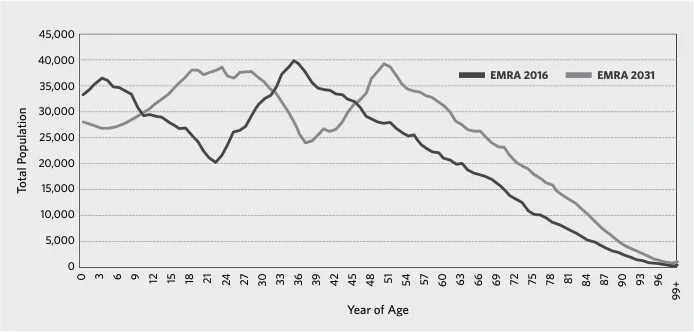
Figure 9.1 Changing Demographic Profile – Age Structure 2016 to 2031
EMRA 2016 EMRA 2031
Year of Age
Figure 9.1 Changing Demographic Profile – Age Structure 2016 to 2031 Source: CSO
Figure from page 199
Pages 198–199 · View in original PDF