6.3 Economic Strategy
6.3 Economic Strategy
The vision for the Region is a growth that is sustainable, competitive, inclusive and resilient. This requires the development of a strong economic base that is supported by enterprise, innovation and skills. The aim is for a vibrant and diversified enterprise base with strong and healthy clusters bringing disruptive technology innovations to national and global markets, with a responsive and efficient labour market.
Clustering: These are initiatives that create, maintain, or upgrade an economic stronghold, by strengthening linkages or facilitating collective action to improve the cluster-specific business environment. Modern cluster policies aim to put in place a favourable business ecosystem for innovation and entrepreneurship in which new players can emerge and thus support the development of new industrial value chains and emerging industries. Clusters are more a reflection of cross-industry linkages and ‘related diversification’ than of narrow specialisation23. Clusters in the vast majority of cases are not ‘created’, rather they emerge, because different locations provide different types of opportunities for specific companies to invest, succeed and grow. Clusters are the result of a cumulative process, take a long time to develop and are inherently unpredictable. Nevertheless, the State can play a facilitative and supportive role. There is potential to further strengthen collaboration and clustering activities between foreign and Irish owned enterprises, and between enterprises, Higher Education Institutions (HEIs), and the research base.
With immediate challenges emerging such as global issues and potential vulnerabilities within Ireland’s enterprise base, this RSES adopts a threefold approach:
• Firstly, sustaining what we have in the immediate term
• Secondly, transforming our enterprise base for longer term resilience, and
• Thirdly, building on our strengths to be successful in international trade while managing potential vulnerabilities.
The RSES seeks to achieve this vision through the following economic principles;
Smart Specialisation: Smart specialisation is part of the EU’s cohesion policy and the Europe 2020 Strategy that focuses on each region’s strengths and the activities that support these strengths. As a place-based approach, it is characterised by the identification of strategic areas for intervention based both on the analysis of the strengths and potential of the economy and on an Entrepreneurial Discovery Process (EDP) with wide stakeholder involvement. IDA, EI, LEOs, SFI and all enterprise agencies as well as Regional Enterprise Plans (REPs) and Local Economic and Community Plans (LECPs), ensure industry, education institutions and communities play a key role in this entrepreneurial discovery process.
Orderly Growth: Though the identification of locations for strategic employment development in line with our Growth and Settlement Strategy, compact growth will be achieved. This involves managing and facilitating the growth of Dublin and to increase the scale of our Regional Growth Centres to be able to provide the range of functions to their hinterlands. This needs to be facilitated by appropriate, effective and sustainable infrastructure development in these centres, and at the same time avoid sprawl. This encompasses connectedness aimed at facilitating a network of skills and talent living in our settlements. It requires a support network of infrastructure - including broadband - in order to make the Region more connected and competitive. This will help to deliver high quality jobs that are well-paid and sustainable.
Smart specialisation focuses on boosting productivity, regaining lost competitiveness, increasing export intensity and diversity of markets, taking measures to improve our attractiveness as a location for investment either national or foreign, and to increase our entrepreneurial activity. Smart specialisation also recognises that supporting strong and dynamic enterprises and investing in Science, Technology and Innovation will accelerate the economic and societal return on investment. Strengthening enterprise engagement with academic research and driving more commercialisation of publicly performed research is an essential component of supporting an innovative and enterprising economy.
23 Smart Guide to Cluster Policy, Guidebook Series – How to support SME Policy from Structural Funds, European Commission, 2016. Much of the dynamism of clusters derives from ‘economies of scope’ rather than static ‘economies of scale’.

Figure from page 125
Economy & Employment
Placemaking: From an enterprise development perspective, investment in the creation of place is key to realising regional potential. Business leaders and entrepreneurs make the decision about where to establish, invest or expand. Internationally, and in Ireland, the trend is increasingly toward urban areas of scale and concentrations of economic activity. The global environment has become increasingly competitive – not only in terms of attracting Foreign Direct Investment (FDI), but also in terms of the challenges facing our Irish owned enterprises as they aim to gain a foot-hold in, or diversify their export markets. Entrepreneurs and Irish owned enterprises are increasingly mobile and they are making location choices in a global context. Indeed, many now face international competition on their doorstep, reinforcing the imperative to innovate and to invest in areas of the business that improve competitiveness. In addition and in line with RSO 2 of Compact Growth and Urban Regeneration, there is a need to reduce consistent poverty rates and deprivation indices in the Region and to avoid depopulation of the smaller towns and rural areas. Similarly, region-wide unemployment blackspots require attention by identifying and addressing their causes.
In general, companies are attracted to invest in locations where they can access human capital (skills and talent), higher education institutes and lifelong learning prone environments, where people will want to live and work and where the surrounding infrastructures are supportive of business. It is a combination of factors, such as innovation capacity in the location, continuous flow of infrastructure investments to ensure connectivity, competitive services and amenities, property solutions, housing, quality of life and access to trade and markets, that delivers efficiencies, economies of scale and wider societal benefits. The Smart City concept (see section 6.6) plays to our strengths in ICT and our small international scale, and in this respect constitutes an opportunity to develop a differentiated offering, to attract mobile talent, entrepreneurship, FDI, and to stimulate innovation across all enterprise.
Future Proof and Risk Management: With emerging global development and challenges, such as Brexit, tax developments, trade wars, it is important to constantly foresee and horizon scan to identify unforeseen challenges and be ready to act upon them accordingly. See section 6.7.

Figure from page 125

Figure from page 126
Regional Spatial & Economic Strategy
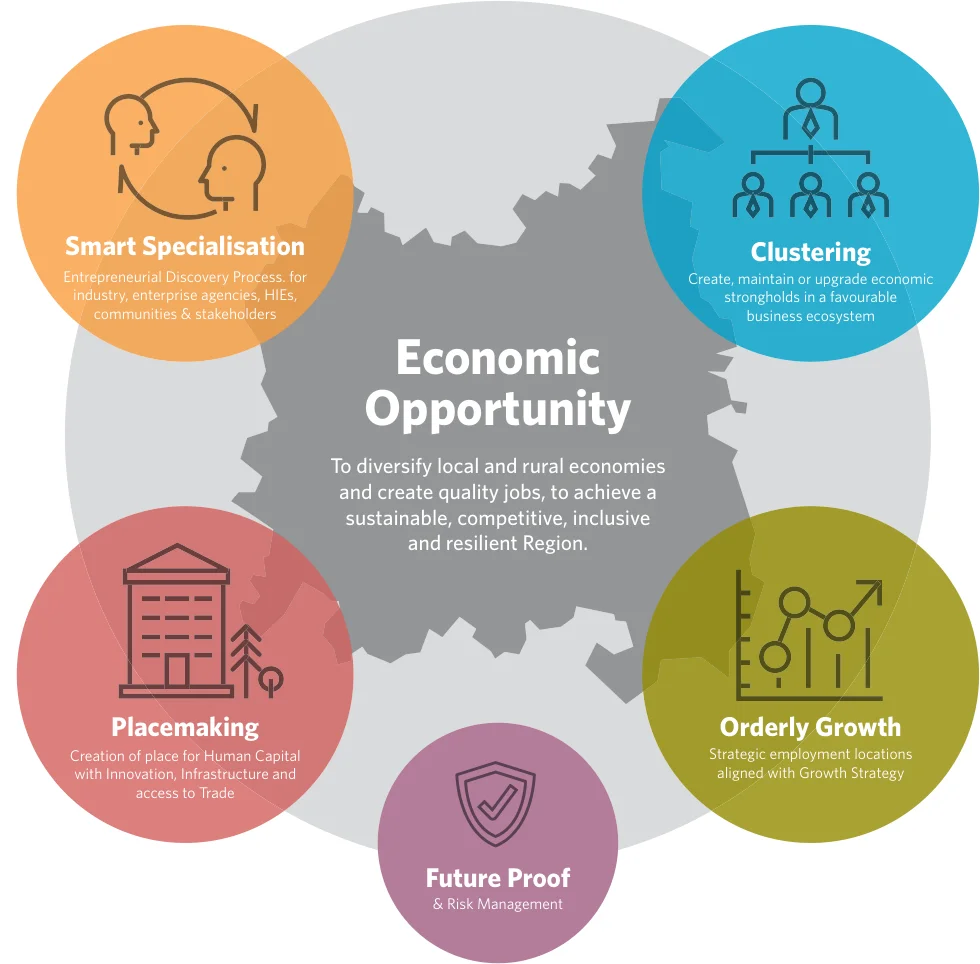
Figure 6.3. The Economic Strategy
Smart Specialisation
Entrepreneurial Discovery Process. for
industry, enterprise agencies, HIEs,
communities & stakeholders
Placemaking
Creation of place for Human Capital
with Innovation, Infrastructure and
access to Trade

Figure from page 127
Economy & Employment
Developing a Competitive and Resilient Economic Base
Spatial Enterprise Strategy
Quality of Places: Creating the Right Environment
Enterprise 2025 sets out a portfolio approach to sectoral development – recognising that sectors contribute in different ways in the economy, delivering value added, export growth and quality of employment throughout Ireland, see Figure 6.4.
Placemaking represents an opportunity to develop a sustainable competitive advantage for the Region. Creating the right environment for enterprise and employment to thrive can deliver high-quality places, as they become attractive locations to work, live, invest, study and visit. Chapter 9 Quality of Life addresses these issues in more detail.
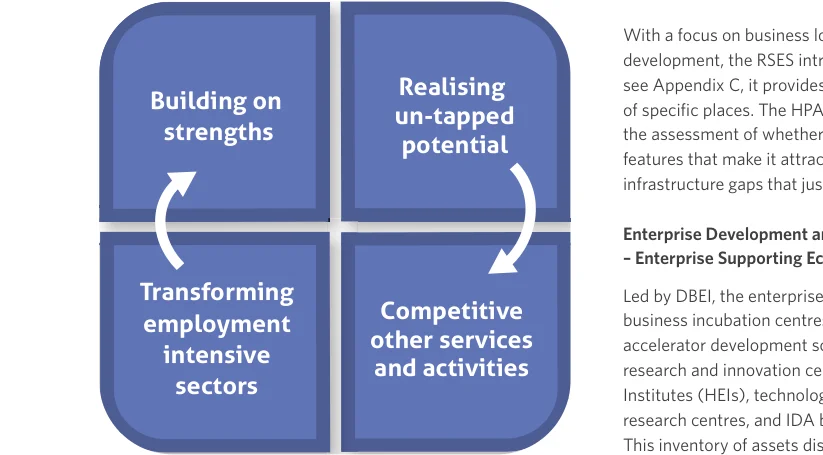
Figure 6.4: Enterprise 2025 Renewed Sectoral Cohorts (Portfolio approach).
With a focus on business location decisions and enterprise development, the RSES introduces a Health Place Audit (HPA) see Appendix C, it provides a framework to audit the quality of specific places. The HPA is an instrument that enables the assessment of whether or not a specific place has the features that make it attractive for business, and to identify infrastructure gaps that justify and give significance to projects.
Realising un-tapped
Building on
strengths
potential
Enterprise Development and Innovation Assets – Enterprise Supporting Ecosystem
Transforming
Led by DBEI, the enterprise supporting ecosystem comprises business incubation centres, community enterprise centres, accelerator development schemes, local enterprise offices, research and innovation centres with Higher Education Institutes (HEIs), technology gateways, technology centres, research centres, and IDA business and technology parks. This inventory of assets distributed in the Region aims to enable and stimulate collaboration within and across regions, playing a key role in shaping and implementing Technology Innovation Poles. Figures 6.5 and 6.6 map these assets, and Appendix C provides a complete list of these assets.
Competitive other services
employment
intensive
and activities
sectors
Figure 6.4: Enterprise 2025 Renewed Sectoral Cohorts (Portfolio approach). Source: DBEI (2018).
The RSES will seek to encourage collaboration between industry and local stakeholders to grasp opportunities for enterprise development. The emergence of new opportunities can be facilitated through providing a favourable ecosystem for innovation and enterprise and a framework to stimulate the bottom-up dynamics seen in clusters and cluster initiatives.
Figure from page 127

Figure from page 128
Regional Spatial & Economic Strategy
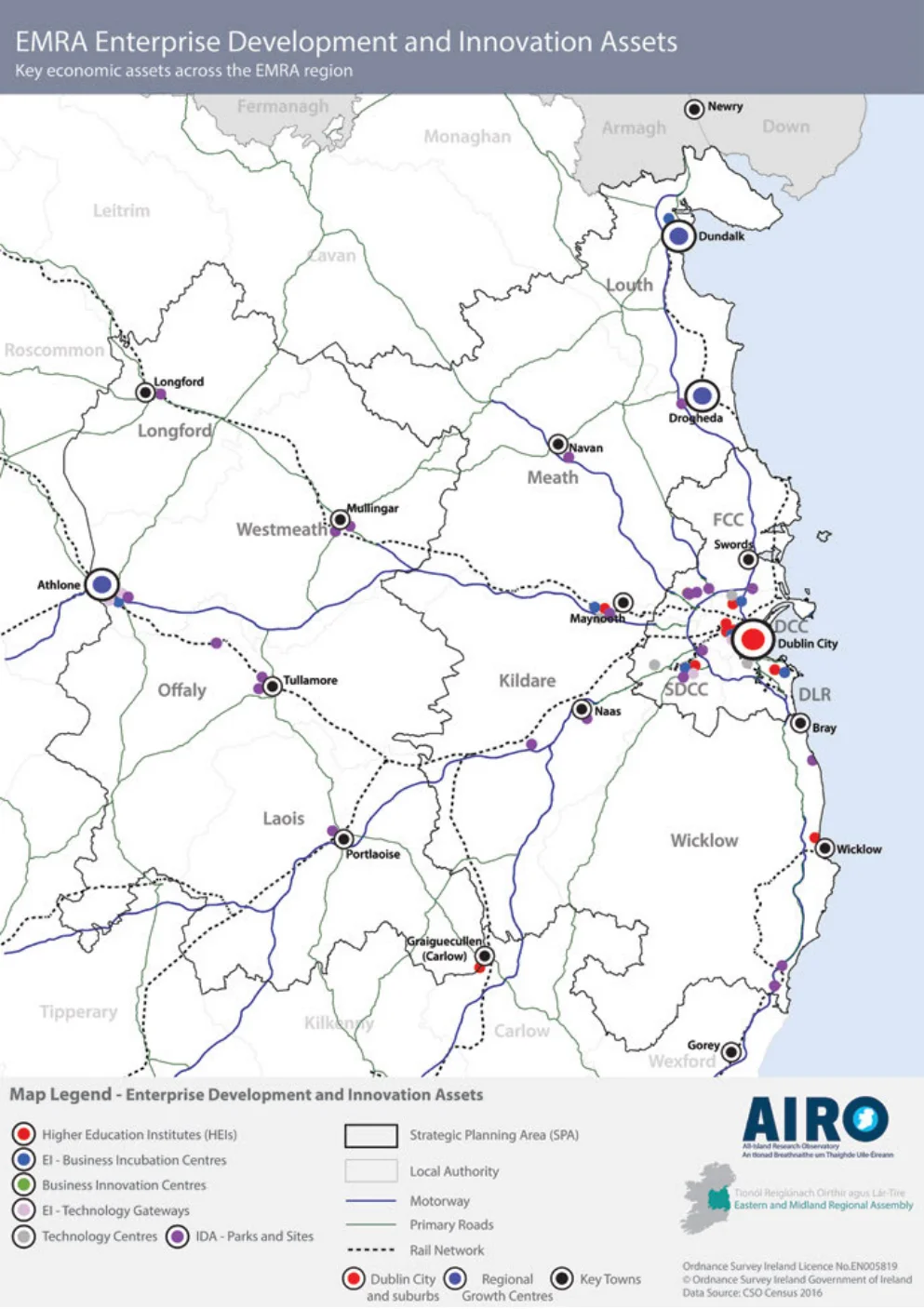
Figure 6.5 EMRA’s Enterprise Development and Innovation Assets Map

Figure from page 129
Economy & Employment
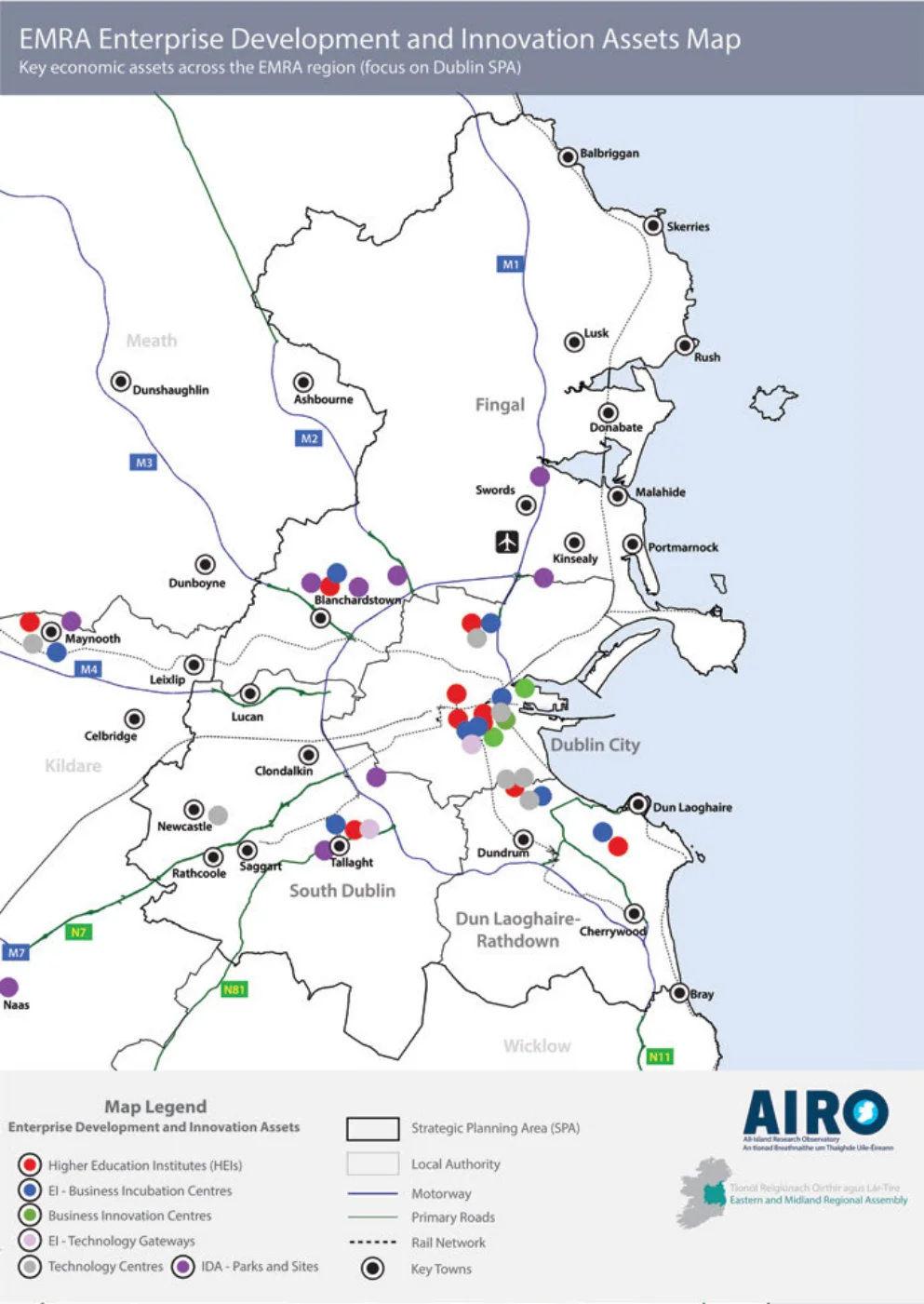
Figure 6.6 Dublin SPA’s Enterprise Development and Innovation Assets Map

Figure from page 130
Regional Spatial & Economic Strategy
GUIDING PRINCIPLES
GUIDING PRINCIPLES
Guiding Principles to Identify Locations for Strategic Employment Development
Guiding Principles for Investment Prioritisation in Placemaking for Enterprise Development
These considerations were used as principles to identify the locations for strategic employment development as set out in Chapter 4 People and Place and Chapter 5 for the MASP. Local authorities in development plans and through LECPs should apply the same principles.
• Local authorities, REPs, and LECPs in their preparation of projects to bid for funds, shall give due regard to factors already identified as enablers of enterprise development24, that is availability of human capital, proximity to a third level institution, transport infrastructure; broadband infrastructure; and, a diverse local sectoral mix.
Planning to accommodate strategic employment growth at regional, metropolitan and local level should include consideration of:
• Capacity of places needs to be considered, having regard to implications of commuting on quality of life.
• Location of Technology and Innovation Poles - Institutes of Technology (IoTs) and Universities, as key strategic sites for high-potential growth of economic activity.
• Align to national strategy and approach for data centres – right location for use and energy demand.
• There is opportunity for the health / wellbeing sector with new hospitals, for instance St James.
• Current employment location, density of workers, land-take and resource/infrastructure dependency, including town centres, business parks, industrial estates and significant single enterprises.
• Focus on densification of existing built urban footprint around existing public transport corridors.
• Give due regard to enhanced functioning of global services centres, for instance the International Financial Services Centre (IFSC) and advanced manufacturing centres.
• Locations for expansion of existing enterprises.
• Locations for new enterprises, based on the extent to which they are people intensive (i.e. employees/customers), space extensive (i.e. land), tied to resources, dependent on the availability of different types of infrastructure (e.g. telecoms, power, water, roads, airport, port etc.) or dependent on skills availability.
• Identify and prioritise locations considering capacity, analysis of assets, with a vision for the City and the Region.
• Facilitate data gathering and cross promotion through local business intelligence units in local authorities. EMRA may facilitate shared evidence base through a regional data system/dashboard.
• Locations for potential relocation of enterprises that may be better suited to alternative locations and where such a move, if facilitated, would release urban land for more efficient purposes that would be of benefit to the regeneration and development of the urban area as a whole, particularly in metropolitan areas and large towns.
• Explore a ‘second site’ strategy for multinational corporations (MNCs) in outlying locations.
- Location specific sectors can be addressed more clearly
- energy, marine, greenways, blueways, and peatlands.
• Within large urban areas where significant job location can be catered for through infrastructure servicing and proximity to public transport corridors.
24 McCoy et al. (2018) The Impact of Broadband and Other Infrastructure on the location of New Business Establishments. Journal of Regional Science.

Figure from page 131
REGIONAL POLICY OBJECTIVES:
Competitive and Resilient Economic Base
RPO 6.1: Support the national economic agencies, Local Enterprises Offices, Regional Enterprise Plan Steering Committees, local authorities and other relevant stakeholders, with their plans for job creation and enterprise development with an emphasis on:
• an enterprise base with increased productivity and more diversification – including diversification of their markets - with high levels of innovation, skills adaptability, and relatively low costs of doing business.
• maintaining full-employment with unemployment rates of each Strategic Planning Area not exceeding the State average by more than one percentage point
• applying the Guiding Principles for strategic employment and investment prioritisation in placemaking for enterprise development presented in this RSES.
Figure from page 131

Figure from page 132
Regional Spatial & Economic Strategy
Pages 124–132 · View in original PDF