6.2 Profile
6.2 Profile
Regional Context: Jobs and Enterprise Base Profile
With employment levels nearly back to peak levels before the last economic crisis, the Region’s enterprise base is well diversified with a strong proportion in services. These range from internationally traded financial and global businesses, to retail, locally traded, tourism, and public sector. Although its share in manufacturing is relatively low, it still employs more than 90,000 people.
The Region has strong concentrations and/or large employers in Biopharma, ICT, Food and Engineering sectors. There is a cohort of internationally successful Irish owned enterprises involved in engineering, serving a range of markets such as automotive, medical devices, and agri-tech. From records of state enterprise development agencies, a number of sectors displaying high levels of productivity can be identified, such as ICT related (services, facilities and consultancy), Machinery and Equipment, Electrical Equipment and Chemicals. However, overall in the Region, Services are the dominant sector.
The classification of economic activity into goods (manufacturing) and services facilitates provides an insight into the infrastructure requirements of these sectors for the RSES. Manufacturing has specific requirements for transportation infrastructure which is particularly relevant to the movement of physical goods to their markets. In the case of services, it is more about the type of infrastructure that enhances quality of life, and placemaking that attracts and retains the talent needed to operate these services. The following graph demonstrates the economic composition profile for each SPA, local authority and analytical areas21.
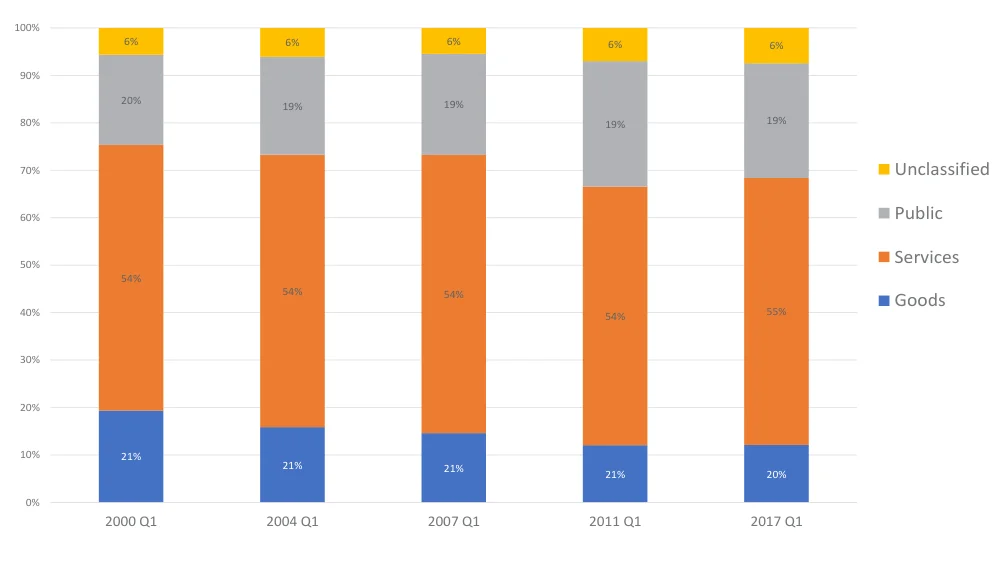
Figure 6.1 Eastern & Midland Region Total Employment
100%
| 6% | 6% | 6% | 6% | 6% | ||||
|---|---|---|---|---|---|---|---|---|
| 20% | 19% | 19% | 19% | |||||
| 19% | ||||||||
| 54% | 54% | 54% | 55% | |||||
| 54% | ||||||||
| 21% | 21% | 21% | 21% | 20% |
90%
80%
Unclassified
70%
Public
60%
Services
50%
Goods
40%
30%
20%
10%
0%
2000 Q1 2004 Q1 2007 Q1 2011 Q1 2017 Q1
Figure 6.1 Eastern & Midland Region Total Employment Source: DBEI
21 While the greatest concentration of jobs related to ICT, Finance and Science occur in Dublin City with more than 120,000 jobs, in contrast Longford hosts less than 1,000 of this type of jobs.

Figure from page 123
Economy & Employment
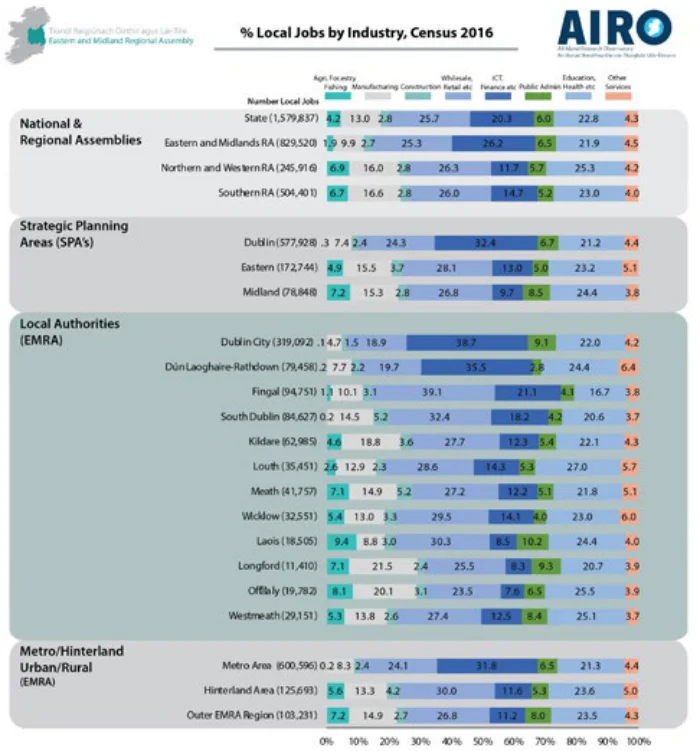
Figure 6.2 Percentage of Local Jobs by Industry
Strengths and Opportunities22 for the EMR
The Dublin Strategic Planning Area (SPA) enjoys features that are very attractive to enterprises to locate and operate, such as its population size, a varied enterprise base, access and connectivity to national and international markets, available skills and talent pool, and sophisticated consumers as a testbed. Nevertheless, Dublin faces capacity constraints that undermine its functionality in areas such as housing and infrastructure.
In general, there is a challenge of satisfying the developmental needs of Dublin so that it can continue to fulfil its role as an international and national driver and economic entity in its own right, while at the same time addressing the economic potential of the rest of areas in the Region. The RSES addresses the challenge in two ways. Firstly, through an orderly growth of the Region, where the growth of Dublin is managed and facilitated, and where Regional Growth Centres increase their critical mass, all supported by an integrated network of settlements. This is addressed with the Growth and Settlement Strategy presented in Chapters 3 Growth Strategy and 4 People and Place. Secondly, the Strategy is about placemaking to facilitate the development of resilience and competitiveness in the Region’s economic base, supported by entrepreneurship, skills and innovation. The Strategy aims to create the ideal conditions for enterprises and people to thrive, to create wealth and to improve quality of life for all.
The Dublin-Belfast Economic Corridor - as the largest economic agglomeration on the island of Ireland, with the cities and towns along the Corridor home to a population of around 2 million people - offers an opportunity to develop critical mass and enhance potential.
The Eastern SPA is strong in manufacturing, hosting a number of foreign owned investments of significant scale in the Technology and Pharmaceutical sectors. The Midlands SPA has strong concentrations of foreign and Irish owned companies in manufacturing - predominantly in medical devices, pharma/bio, food and engineered products.
22 The current REPs and LECPs in the region have enabled coordination of local stakeholders to identify strengths, weaknesses, opportunities and threats to each locality and sub-region.

Figure from page 124
Regional Spatial & Economic Strategy
Pages 122–124 · View in original PDF