3.1 Developing a Growth Strategy for the Region
3.1 Developing a Growth Strategy for the Region
Asset-Based Approach
The RSES is tasked with the development of planning and economic development policy for future needs in the Region based upon consideration of the availability of land, resources, environment and infrastructure capacity. A key part of developing the Growth Strategy is the examination of alternatives and approaches as part of the Strategic Environmental Assessment (SEA) including the ‘business as usual’ approach which sees a continuation of current trends.
An asset-based approach to spatial development identifies and builds on a combination of the social, economic and natural assets that are available within a settlement, in order to determine an overall growth strategy and settlement hierarchy. This holistic approach, recognises the step change required to ensure that growth is sustainable in the long term, and to ensure that settlements identified for significant population and/or employment growth are supported by the requisite investment in infrastructure and provision of employment, amenities and services.
While all areas within the Region shall collectively contribute to its success and in turn draw strengths from the sustainable growth of the Region, there is a requirement to identify which places have the greatest assets and potential to become a focus for population and/ or employment growth and to act as regional economic drivers. Regional assets and resources need to be fully realised to enable all places to reach their full potential.
Central to this is the development of an evidence-led ‘asset base’, which can be used to identify settlements which have the greatest capacity and potential for growth, while ensuring that the future growth is sustainably managed within the capacity of those settlements. The ‘asset base’ developed for the RSES was informed by the preparation of regional profiles and spatial analysis7 as part of the evidence baseline and supplemented by settlement profile information that was provided by the 12 local authorities in the Region, which set out current and planned capacity to deliver sustainable compact growth in a number of identified settlements.
Chapter 2 Strategic Vision of the RSES identifies a number of key Regional Strategic Outcomes (RSOs) that feed into the development of the Growth Strategy including the need to protect and enhance strategic connectivity, to support economic development, rural communities and to promote compact growth and integrated transport and landuse.

Figure from page 28
Regional Spatial & Economic Strategy
The asset base compiles information across 25 different indicators which considers not just historic population growth, but a wider number of relevant factors to build a holistic profile of regional settlements, in terms of their scale and functions, human capital and placemaking assets, enterprise ecosystem, connectivity, environmental and infrastructure capacity. The asset-based criteria outlined in Table 3.1 was developed to identify a settlement hierarchy set out in Chapter 4 People and Place and the development of policy and objectives for Key Towns in the Region.
See Appendix A for more information on the data and indicators which were collated to develop an asset/potential based settlement profile of Key Towns in the Region.
As part of our commitment to evidence-based policy making and evaluation, EMRA will make the regional baseline data available as a shared evidence base for the region and encourages other public bodies and local authorities to use this data, particularly to inform the preparation and implementation of development plans (DPs), local area plans (LAPs) and local economic and community plans (LECPs). See also Section 9.3 ‘Asset Test for the strategic location of new residential development’.
| Table 3.1 ASSET/POTENTIAL BASED CRITERIA APPROACH TO GROWTH STRATEGY | ||
|---|---|---|
| ASSET-BASED CRITERIA - aim is to enable places to fully realise their potential | As expressed in; Settlement Strategy | As expressed in; Economic Strategy |
| SCALE Centres of scale which have the critical mass to drive growth. | Settlement typology based on rate of growth, scale, development capacity and availability of strategic sites. | Critical mass (and diversity) in population and enterprise base to attract and maintain employers and employees. |
| FUNCTION Functional role and level of services including provision of employment. | Mapping of Functional Urban Areas to determine commuting catchments, level of self-sufficiency and connections to other towns. | Development of regional/ county level economic profiles and performance of settlements, including economic assets. |
| HUMAN CAPITAL Talent attraction and skills development. | Access to schools, third level education and health services are key to talent attraction. | Availability of labour force demographics, skills matching, and talent attraction policies to develop employment opportunities. |
| PLACEMAKING High quality vibrant public spaces and enhanced quality of life. | An attractive public realm and access to amenities, facilities, arts, culture and heritage as a key determinant of placemaking policy. | Developing attractive places to live work and invest in. Linked to ‘functionality’ to meet enterprises and labour force expectations. |
| ENTERPRISE ECOSYSTEM Enterprise clusters and networks. | Better alignment of housing and strategic employment locations and strengthened local economies. | Spatial economic engines and areas of influence and ecosystems of innovation and entrepreneurship. |
| CONNECTIVITY Transport capacity and accessibility and communications. | Integration of land use and transportation planning, underpinned by analysis of travel patterns and potential for sustainable modes. | Global / national / regional connectivity includes ICT, transport and infrastructure (Hard) and networks and collaborations (Soft). |
| NATURAL CAPITAL Environmental sensitivities, resources and assets. | Integration of recommendations and proposed mitigation measures, arising from SEA/AA/FRA underpinned by a regional Green Infrastructure and ecosystem services approach. | Significant resource potential of renewable energy, circular economy and green/blue economy. |
| INFRASTRUCTURE Enabling infrastructure to drive regional growth. | Collaboration with providers to deliver key telecommunications, transport, utilities and social infrastructure. | Strategic employment locations enabled by physical, technology infrastructure, and supporting services. |
Table 3.1 Asset/Potential based criteria approach to Growth Strategy

Figure from page 29
Growth Strategy
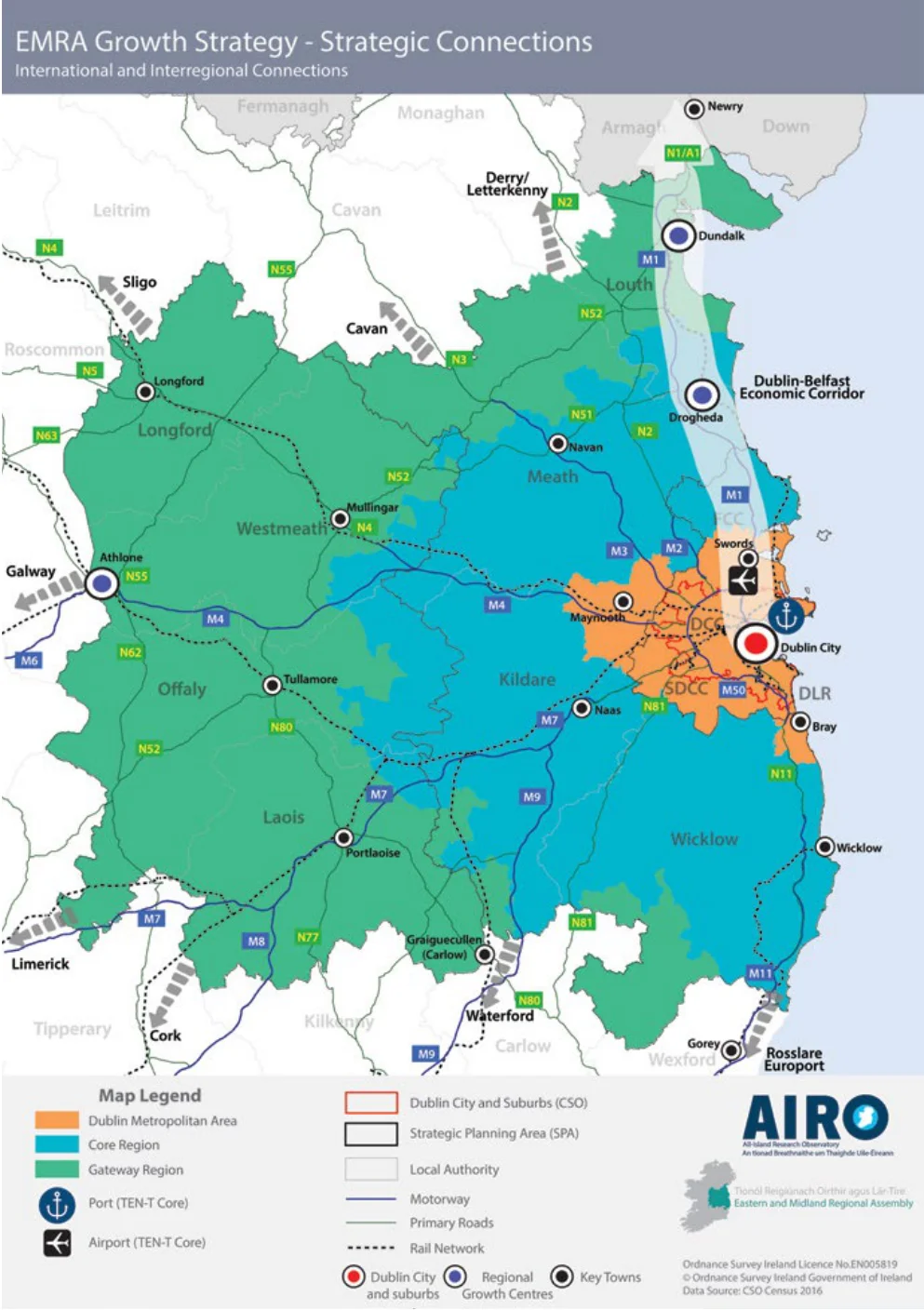
Figure 3.1 Growth Strategy – Strategic Connections

Figure from page 30
Regional Spatial & Economic Strategy
Strategic Connections
Strategic Connections to the Southern Region
The Dublin to Cork rail corridor is strategically important linking the two largest cities in the State, and part of the EU TEN-T core network, which aims to protect and enhance strategical international connections between Belfast, Dublin and Cork. The Dublin to Cork rail corridor also provides commuter rail services to the Dublin hinterlands. The RSES supports a feasibility study for the provision of highspeed rail links between Dublin and Limerick/Junction Cork and enhanced rail services including the extension of the DART to Celbridge/Hazelhatch in north Kildare. There is potential to promote links between the Grand Canal, the Barrow Line and to further develop the Barrow Blueway connecting Carlow-Graiguecullen on the boundary with the Southern Region and extending south to Waterford.
The growth strategy for the Region is underpinned by a settlement strategy (set out in Chapter 4 People and Place) and an integrated land use and transportation strategy (Chapter 8 Connectivity) which seeks to protect and enhance global connectivity and regional accessibility, including the Trans European TEN-T road, rail and port network. Investment in sustainable mobility will be delivered through local transport plans (LTPs), to be prepared by local authorities in collaboration with transport agencies, to include, but not limited to, Athlone, Dundalk, Drogheda, Portlaoise, Mullingar, Tullamore, Longford, Balbriggan, Navan, Naas, Newbridge, Wicklow-Rathnew, Ashbourne, Arklow and urban areas in the Dublin Metropolitan Area.
Integrating the Environment
The RSES seeks to protect and enhance strategic connections in the Region, including;
The Growth Strategy has been developed as part of an iterative process which provides an opportunity to integrate key aspects of the Strategic Environmental Assessment (SEA) into the development of scenarios which set out different options for the type of growth that might arise in the Region.
Eastern Corridor; Dublin - Belfast Economic Corridor to Rosslare Europort
Cross boundary coordination is a significant element of the Strategy and will be even more so with the onset of Brexit, playing a critical role in supporting economic growth and competitiveness. The Dublin-Belfast Economic Corridor is the largest economic agglomeration on the island of Ireland with the cities and towns along the Corridor home to a population of around 2 million. The Corridor connects the large towns of Drogheda, Dundalk and Newry by high-capacity national road and rail links, major airports of Dublin Airport, Belfast International Airport and Belfast City Airport and Belfast and Dublin ports. The Eastern Corridor extends south to Rosslare Europort, which is an important economic and transport link, particularly in the post Brexit scenario. The RSES supports a feasibility study for high speed rail between Dublin and Belfast and enhanced rail services on the south-eastern line to include the extension of DART services to Drogheda.
A key part of the Growth Strategy is the examination of alternatives and approaches as part of the Strategic Environmental Assessment (SEA) including the ‘business as usual’ approach which sees a continuation of current trends.
Business as Usual
The NPF has highlighted the problems associated with a ‘Business as Usual’ approach where future growth is purely market driven without any policy interventions.
Recent analysis in projecting the current trends scenario suggests an ongoing shift in population and jobs towards the counties around Dublin resulting in unsustainable pressures on Dublin and a greater distance between where people live and where people work, which would lead to missed opportunities for the utilisation of existing infrastructure and services. The SEA for the NPF also highlighted serious environmental issues that would arise from further sprawl outside our cities and larger towns including a degraded environment, loss of farmland and habitat to predominantly greenfield development and increased risk of groundwater pollution. Business as usual is not therefore considered to be a reasonable option.
Strategic Connections to the Northern and Western Region
Athlone is strategically located in the centre of Ireland as a gateway to the west between Dublin and Galway. Cross border co-ordination of future development will be supported by investment in sustainable mobility including increased recreational use of the Grand Canal and completion of the Dublin to Galway Greenway which is designated as a trans-European Eurovelo Route. Longford is strategically located as a portal to the northwest on the Dublin to Sligo rail corridor, also serving the key towns of Mullingar and Maynooth. Planned upgrades to the M/N4 motorway, enhanced rail services on the Dublin-Sligo line including DART to Maynooth and increased recreational use of the Royal Canal as part of a Dublin to Westport Greenway, will improve northwest connectivity. Dublin to Cavan generally follows the N/M3, while development of the cross border A5 route connecting to the N/M2 will improve connectivity between Dublin and the border counties to Derry and Letterkenny.

Figure from page 31
Growth Strategy
Development of Alternative Scenarios
The selection of scenarios is informed by the Regional Strategic Outcomes (RSOs) and 3 Key Principles as set out in Chapter 2 Strategic Vision of the RSES along with key issues identified in the RSES engagement and SEA process. The consideration of alternatives is set out in full in the SEA Environmental Report and can be summarised and reflected below in the three broad questions that were asked;
The NPF sets the framework for scenarios that can be reasonably considered at regional level, based on; regional parity between the growth of our Region and the two other regions (North Western and Southern Regions); regional concentration toward cities (Dublin) and regionally important larger settlements (Athlone, Drogheda, Dundalk); a focus on consolidated growth in existing builtup areas; sequential provision of infrastructure with some critical infrastructure in place to promote investment.
- What is the optimum spatial strategy to drive growth in the Region, and should growth be more concentrated in a few large settlements or dispersed across a number of regional settlements?
To test these three questions, a range of options were considered which included discrete alternatives and more value-driven scenarios, which can combine certain complementary scenarios. The preferred scenarios formed the basis for the RSES Growth Strategy, See Table 3.2;
-
What policy and actions are required to drive transition to low carbon/climate resilience and to protect biodiversity and at what scale can they be most effective – national, regional or local?
-
What economic policies do we need to support a strong regional economy and should we focus on a few competitive sectors and/or areas, or spread our resources and investment more widely?
| Table 3.2 Selection of preferred scenarios for the Eastern and Midland RSES | ||
|---|---|---|
| Type | Alternatives assessed | Preferred scenario |
| 1. Spatial Strategy | The NPF identified regional concentration and consolidated urban growth as the most sustainable approach to growth patterns in the regions. The SEA for the EMR assessed a number of alternatives based on the extent to which growth is either concentred in Dublin and the identified Regional Growth Centres or highly dispersed throughout a number of towns in the Region. The optimum settlement strategy was informed by consideration of an evidence baseline identifying the key assets, potential for growth and environmental capacity of settlements. | The optimum spatial strategy combines the growth of Dublin and regional centres with a selected number of large self-sustaining settlements that have the assets and capacity to grow in a sustainable manner while minimising impacts on the receiving environment. This option offers the best opportunity to align services with population and economic growth, promote compact growth in urban settlements and make the best use of infrastructure including public transport thereby reducing transport emissions and improve regional accessibility. |
| 2. Climate and Biodiversity | A number of scenarios at different scales were considered to drive transition to low carbon/ climate resilience and to protect and enhance biodiversity from; inclusion of existing national strategic policies; to developing a regional green infrastructure and ecosystem services approach and; inclusion of site level alternatives for adaptation/mitigation, informed by strategic flood risk and Natura Impact appraisal. | Current trends indicate that implementation of existing national policies alone will not be sufficient to meet climate targets therefore additional measures are required. The preferred scenario combines this with complementary approaches including the development of a regional Green Infrastructure and ecosystem services approach together with site-based alternatives for adaptation/mitigation of impacts in strategic development locations. |
| 3. Economic Strategy | A number of economic growth scenarios were considered and these were dictated by different policy approaches to enterprise development, which ranged from focussed spatial and/or sectoral specialisation to a wider distribution and dispersal of investment and across the Region/ sectors. Assessment was informed by consideration of identified strategic economic assets and by national policy including Enterprise 2025. | The preferred Economic Strategy promotes smart specialisation strategies based on identified strengths and competitive advantages, combined with cluster policies that promote economies of scale and network effects in certain locations. The Strategy should also support diversification of local economies and development of innovation and entrepreneurial ecosystems for sustained national growth that can withstand external shocks. |

Figure from page 32
Regional Spatial & Economic Strategy

Figure from page 32

Figure from page 33
Growth Strategy
Pages 27–33 · View in original PDF