1.3 What is a Regional Spatial and Economic Strategy (RSES)?
1.3 What is a Regional Spatial and Economic Strategy (RSES)?
A RSES is a strategic plan which identifies regional assets, opportunities and pressures and provides appropriate policy responses in the form of Regional Policy Objectives. At this strategic level it provides a framework for investment to better manage spatial planning and economic development throughout the Region.
The RSES will be implemented in policy by way of review by local authorities of all development plans and Local Economic and Community Plans (LECPs) after the adoption of this Strategy. Key state agencies and sectoral bodies will also have to consider their strategies and investment plans in light of the adoption of the RSES.
The RSES provides a:
• Spatial Strategy – to manage future growth and ensure the creation of healthy and attractive places to live, work, study, visit and invest in.
• Economic Strategy – that builds on our strengths to sustain a strong economy and support the creation of quality jobs that ensure a good living standard for all.
The RSES will be realised by the delivery of European and National funding that will achieve the Regional Strategic Outcomes (and NPF National Strategic Outcomes) expressed in the Strategy. These funds will focus on the priorities and key aspects of the RSES to sustainably grow the Region to 2031 and beyond.
• Metropolitan Plan – to ensure a supply of strategic development areas for the sustainable growth and continued success and competitiveness of the Dublin Metropolitan Area.
• Investment Framework – to prioritise the delivery of key enabling infrastructure and services by government and state agencies.
The RSES is informed by:
• Project Ireland 2040 – the National Planning Framework and the National Development Plan, economic and other relevant policies of the government, including climate change plans and the ten-year capital investment plan.
• Climate Action Strategy – to accelerate climate action, ensure a clean and healthy environment and to promote sustainable transport and strategic green infrastructure.
• Consultation process – Three public consultation display periods during the process. An initial public and stakeholder consultation process with an issues paper and 171 submission received. A 12 week public consultation period on the Draft RSES where 312 submissions were received. And a further 4 week public consultation period on propsed material amendments to the Draft RSES with 106 submissions received.
The principal statutory purpose of the RSES is to support the implementation of Project Ireland 2040 and the economic policies and objectives of the Government by providing a long-term strategic planning and economic framework for the development of the Region. The RSES is required under the Planning and Development Act 2000 to address employment, retail, housing, transport, water services, energy and communications, waste management, education, health, sports and community facilities, environment and heritage, landscape, sustainable development and climate change.
• Engagement process - Engagement and collaboration with key stakeholders in the Region through Technical Working Groups and Senior Officials Advisory Group.
• Socio- Economic Profile – a Regional Profile and Map Viewer was prepared for the Region in collaboration with the All Island Research Observatory (AIRO) in Maynooth University, as part of our commitment to evidence informed policy making and evaluation.
The RSES is a significant evolution of regional policy making and replaces the current Regional Planning Guidelines (RPGs). These provided strategic policy and recommendations at a regional level with which both county and city development plans have to be consistent in policy making. Three RPGs have been operational in the Region – the Border (which includes Louth), the Midland and the Greater Dublin Area (GDA) RPGs, 2010-2022.
• Strategic Environmental Assessment (SEA) – a parallel SEA, Appropriate Assessment (AA) and Flood Risk Assessment (RFRA) process informs each stage in the making of the RSES.
The regional tier of governance in Ireland sits in the middle of the planning hierarchy and the policy making at this level has to be consistent with the NPF, as does that at a local level with the RSES, see Figure 1.2 which shows the Spatial Planning Hierarchy in Ireland.

Figure from page 9
Introduction
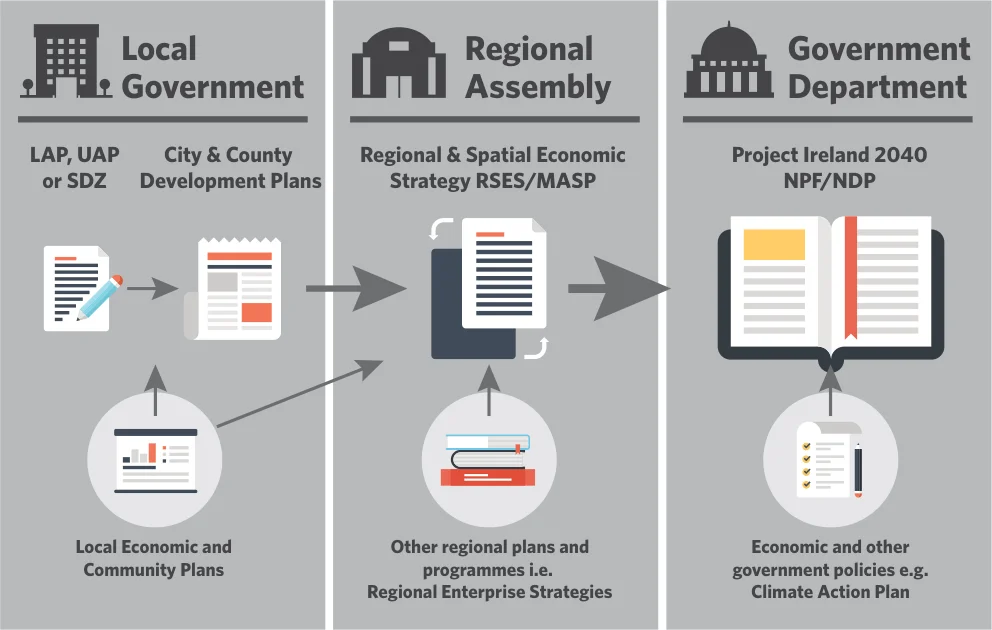
Figure 1.2 Spatial Planning Hierarchy in Ireland
Local Government Government Department
Regional Assembly
LAP, UAP
City & County Development Plans
Regional & Spatial Economic NPF/NDP
Project Ireland 2040
or SDZ
Strategy RSES/MASP
Local Economic and
Other regional plans and
Economic and other government policies e.g.
Community Plans
programmes i.e. Regional Enterprise Strategies
Climate Action Plan

Figure from page 10
Regional Spatial & Economic Strategy
Pages 8–10 · View in original PDF