9.9 Education for sustainable development
9.9 Education for sustainable development
Education for sustainable development is a key component in promoting sustainability and addressing the climate crisis
During the period to which this report refers, the climate crisis placed sharp focus on the concept of sustainability and sustainable living for our societies and economies. Education for Sustainable Development (ESD) is an important aspect of the United Nation’s (UN’s) strategy to support and promote sustainability and to address the climate crisis.
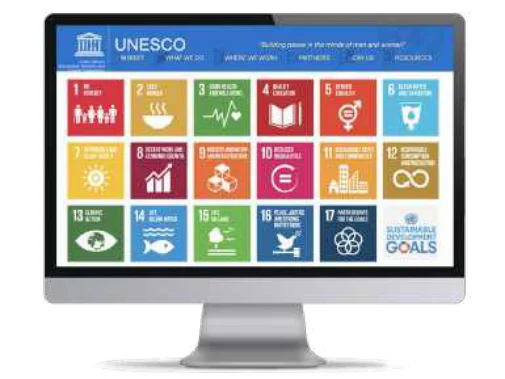
Figure 9.3: Education for sustainable development
Source: UNESCO. Available at: https://en.unesco.org/themes/education/sdgs/material
Education for sustainable development (ESD) is informed by the United Nation’s Sustainable Goals and involves providing experiences for children and young people to begin life-long learning on the ‘what, how and why’ of sustainability.
ESD is an umbrella term that can be linked to a range of policy areas including:
■environmental issues (climate change, disaster risk reduction, biodiversity, environmental
protection, natural resource management, urban decay, water security)
■socio-economic issues (economic growth, poverty, food prices, child labour, social exclusion,
justice, debt-security, human rights, health, gender equity, cultural diversity, production and consumption patterns, corporate responsibility, population growth, migration)
■political issues (citizenship, peace, ethics, human rights, democracy and governance)
(United Nations Economic Commission for Europe, (2005); UNECE, (2009)).
A key goal of ESD is to support children and young people to become informed and engaged global citizens. It allows them to develop an appreciation of the interconnectedness between social, economic and environmental systems.
ESD is not confined to discrete subject areas; it takes place across and beyond the curriculum, including through co-curricular and extra-curricular programmes and activities. It requires a variety of teaching approaches that allow children and young people to work independently and collaboratively, think critically, communicate effectively, make informed decisions, solve real-world problems and lead their own learning.
The Department progressed the National Strategy on Education for Sustainable Development
In consultation with key stakeholders, the Department developed the National Strategy on Education for Sustainable Development in Ireland 2014-2020. Implementation continued during the period to which this report refers.
| The National Strategy on Education for Sustainable Development 2014-2020 is one of the key strategies underpinning the Action Plan for Education 2016-2019. Education for Sustainable Development provides a framework to support the contribution that the education sector is making, and will continue to make, towards a more sustainable future at a number of levels: individual, community, local, national and international. The key objective of the Strategy is to ensure that education contributes to sustainable development by equipping children and young people with the relevant knowledge (the ‘what’), the key dispositions and skills (the ‘how’) and the values (the ‘why’) that will motivate and empower them throughout their lives to become informed active citizens who take action for a more sustainable future. The strategy presents a set of key principles that underpin that objective, and includes eight priority action areas that are considered to be key leverage points to advance the ESD agenda in Ireland: ■ leadership and coordination ■ data collection and baseline measurement Sustainability’ for ‘Education ■ curriculum at pre-school, primary and post-primary 2014- Ireland, in Development Sustainable for Education on Strategy National The 2020 ■ professional development ■ further education and training ■ higher education and research ■ promoting participation by young people ■ sustainability in action 2014 July | ||
|---|---|---|
| 2014- for Education Ireland, Sustainability’ in on Development Strategy 2020 for ‘Education National Sustainable The 2014 July | ||
Progress was made in each of the priority areas identified in the education for sustainable development strategy
In 2018, the Department carried out an interim review of the National Strategy on Education for Sustainable Development 2014-2020 in consultation with stakeholders. The report of the review, National Strategy on Education for Sustainable Development in Ireland Report of Interim Review and Action Plan for Q4 2018-Q4 2020, presents progress-to-date on each of the recommendations in each of the Priority Action areas identified in the Strategy. Key findings include:
■During the period 2014-2017, Irish Aid contributed over €11m towards the delivery of Global
Citizenship Education (GCE) programmes and projects in Ireland, including those related to ESD. This funding was provided through the strategic partnerships established by Irish Aid in key areas and also through the annual grant scheme.
■World Wise Global Schools (WWGS) trained 880 post-primary teachers in 2016-2017 and
806 in 2017-2018. From 2016-2018, 300 post-primary schools received in-school support from WWGS.
■A hub for ESD resources was developed on Scoilnet, with over 250 resources related to ESD.
This can be found at: https://www.scoilnet.ie/esd/
The National Council for Curriculum and Assessment published a study that reviewed opportunities for education for sustainable development within the curriculum frameworks
In 2018, the NCCA produced a paper Education for Sustainable Development: A study of the opportunities and linkages in the early childhood, primary and post-primary curriculum. This study reviewed curriculum frameworks and syllabus/specification documents in relation to ESD. It identified opportunities for building on existing curriculum practice and on potential linkages between subjects in primary and post-primary schools to support ESD. The study highlighted that opportunities for ESD and linkages will change and develop as plans for curriculum review and reform are realised across the various educational sectors.
Education for Sustainable Development:
A study of opportunities and linkages in the primary and post-primary curriculum
The Inspectorate progressed some of its targets under the Education for Sustainable Development Action Plan 2018-2020
Priority Action 4.19 in the Education for Sustainable Development Action Plan 2018-2020 sets out the following target for the Inspectorate:
‘Develop advice for schools to support implementation of national strategies such as Education for Sustainable Development, in the context of advisory activities related to school self-evaluation’
Due to the pandemic, this work was postponed until the 2021/2022 school year and is currently ongoing.
The Inspectorate liaised regularly with the Curriculum and Assessment Policy (CAP) unit in respect of developments in ESD. It also continued to develop inspection processes and resources to take account of, and promote, ESD. Inspectors typically observe ESD through the lens of the Social Environmental and Science Education (SESE) and science subjects in a range of inspection models, including curriculum evaluation and subject inspections. As part of this work, during the 2021/2022 year, the Inspectorate will review provision and practice in relation to ESD in early learning and care (ELC) settings, primary schools and post-primary schools.
The Inspectorate is working to develop and build a shared understanding of education for sustainable development
Initial work on ESD within the Inspectorate commenced in 2019, with a view to developing and building a shared understanding of ESD across the Inspectorate and in schools. In April 2020, the Inspectorate established a working group to develop the work further. During the period to which this report refers, the Inspectorate ESD working group has undertaken a range of activities to promote a shared understanding of the concept. The group has:
■engaged in research and examined key documents around ESD, including the UN Sustainable
Goals, Curriculum and ESD, Department of Education and Governmental Strategy around sustainability and ESD, as well as the evaluation and reporting activities of Inspectorates in other jurisdictions
■examined and highlighted where opportunities for the promotion of ESD exist within our
existing quality frameworks (ELC, primary and post-primary)
■proposed a small number of recommendations to the LAOS Review Group, to help make
ESD more visible in the framework
■developed a short statement to help inspectors reach a shared understanding of what is
understood by ESD
■provided CPD to all inspectors on ESD and sought their views on how ESD might be evaluated
as part of our existing inspection models
■commenced the development of short, sector-specific documents to support inspectors to
understand the ‘what, how and why’ of ESD across the curriculum in the ELC and in primary and post-primary sectors
■developed a proposal for a composite evaluation of ESD.
An important aspect of the Inspectorate’s work and commitments for the period 2020-2023 is the need to help children and young people develop their knowledge, skills, competences and values around sustainability. The Inspectorate intends to publish a composite report on ESD in ELC settings, primary schools and post-primary schools in 2022. This composite report will draw on data and examples of good practice encountered during the course of scheduled inspections during 2022. We envisage that the composite report findings and recommendations on ESD will inform good practices in settings and schools, in the Inspectorate, and in the wider education system. This report, in conjunction with the Inspectorate’s broader understanding of ESD, will aim to widen the lens through which we evaluate and report on ESD in settings and schools.
Pages 276–279 · View in original PDF