9.7 Creativity
9.7 Creativity
Critical and creative thinking (CCT) skills and competencies are recognised as an important
element of learning for all. This is reflected in findings from international research, with the
Organisation for Economic Co-operation and Development (OECD)149 highlighting the
importance and centrality of creativity to citizens’ wellbeing, as well as the social and
economic benefits that creative thinking skills provide. The societies and economies in
which today’s children and young people will live will require them to be responsive, flexible, adaptable and creative. Consequently, creativity, critical thinking and innovation
are important areas for early learning and care (ELC) settings and schools to consider over
the coming decade.
In the Irish context, the Government has recognised the value of creativity in promoting wellbeing, the arts, and for its potential economic and social benefits. This has led to an all-of-government focus on creativity, through the Creative Ireland Programme. This programme is built around key themes: Creative Youth, Creative Communities, Creative Places, and Creative Nation. The programme extends to 2022 and one of its key themes is a focus on creative opportunities and engagements for children and young people. The Inspectorate has representation on the Creative Ireland Expert Advisory Group and engages regularly with the Creative Youth Programme as part of its commitment to the development of strategic partnerships.
149 Vincent-Lancrin, S., Gonzalez-Sancho, C., Bouckaert, M., Luca, F., Fernández-Barrerra, M., Jacotin, G., Urgel, J. and Vidal, Q. (2019) Fostering Students’ Creativity and Critical Thinking: What it Means in School. Available at: https://www.oecd-ilibrary. org/education/fostering-students-creativity-and-critical-thinking_39557c9f-en
The Government funds a range of initiatives to promote creativity
Under the creative youth pillar of the Creative Ireland Programme, the Government funds a range of initiatives that promote creativity in children and young people. Key initiatives during the period to which this report refers include: Scoileanna Ildánacha/Creative Schools; Creative Clusters; Teacher Artist Partnership (TAP); Arts in Junior Cycle CPD; Creative Engagement; Local Creative Youth Partnerships; the Arts in Education Portal; Arts and Culture in Education Research Repository (ACERR); and Music Generation.
Creative Youth
The creative youth pillar of the Creative Ireland Programme was a successor to the Arts in Education Charter, which was co-launched by the Minister for Education and Skills and the Minister for Arts, Heritage and the Gaeltacht in 2013.
Creative Youth - A Plan to Enable the Creative Potential of Every Child and Young Person was published in December 2017 and stated the Government’s commitment to ensuring that every child in Ireland has access to tuition, experience and participation in music, drama, arts and coding by 2022.
The key objectives of Creative Youth and the measures that have been supported as part of its implementation are to:
■expand young people’s access to creative initiatives and activities
■focus on the inclusion of every child
■support positive and sustainable outcomes for children and young people through
creative engagement across formal and non-formal settings.
The plan applies to:
■schools: enhancing arts and creativity initiatives in schools and ELC settings
■teacher CPD: increasing and enhancing teacher CPD opportunities across primary, post-
primary and ELC settings
■out-of-school: improving cross-sectoral collaboration to support creativity for children and
young people in the community.
| Creatvi e Schools Creative Schools is a flagship initiative of the Creative Ireland Programme to enable the creative potential of every child. The initiative is led by the Arts Council in partnership with the Department of Education and the Department of Tourism, Culture, Arts, Gaeltacht, Sport and Media. It builds on commitments set out in the Arts in Education Charter, in particular in relation to Arts Rich Schools (ARIS). Creative Schools aims to put the arts and creativity at the heart of children and young people’s lives. The initiative supports schools to develop and implement their own Creative School plan. It also aims to develop and strengthen the relationships between schools and the broader cultural and community infrastructure within which they operate. Participating schools receive additional funding and the support of a creative associate to support them in developing their creative plan. | ||
|---|---|---|
Creative Clusters
Creative Clusters is one of the key ‘in-school’ initiatives of Creative Youth. Creative Clusters was launched by the Department in 2018 as a pilot initiative. It is co-ordinated nationally by the Department in partnership with Education Support Centres of Ireland (ESCI), and is funded through the Schools Excellence Fund-Creative Clusters Initiative.
A Creative Cluster typically consists of between three and five schools/Youthreach centres who collaborate on the design, implementation, evaluation and dissemination of an innovative arts and creative learning project that supports them in addressing a common issue or challenge.
Creative Clusters include schools at different stages of their journey in using creativity in the classroom. Clusters consist of primary schools only, post-primary schools only or a combination of primary and post-primary schools. Engagement with the programme is on the basis of a two-year cycle.
CPD: Teacher Artist Partnership and Arts in Junior Cycle
Under the Creative Ireland Programme, the Department of Tourism, Culture, Arts, Gaeltacht, Sport and Media provides funding towards CPD for primary and post-primary teachers.
Teacher Artist Partnership (TAP)
The Teacher Artist Partnership (TAP) CPD summer course and residency programme is an arts-ineducation initiative that enables artists to work in partnership with primary teachers. The initiative is administered through Tralee Education Centre, with support from the Department of Education, and the Department of Tourism, Culture, Arts, Gaeltacht, Sport and Media. TAP was launched as a pilot in 2014 and was mainstreamed following publication of a research report on the pilot in March 2016.
TAP summer courses, which operate in all of the twenty-one full-time Education Centres in Ireland, take place in either July or August, and each course is delivered by trained Teacher Artist Facilitators. The initiative also includes funded Artist-in-Residency opportunities whereby participating teachers and artists work together in collaboration in the school during the following academic year.
During 2020, the programme introduced an accredited online course.
Arts in Junior Cycle
Arts in Junior Cycle comprises a series of professional development experiences for teachers to support engagement with the arts and learning in Junior Cycle. The workshops, which embody the principles and key skills that underpin the Framework for Junior Cycle and the Arts in Education Charter, provide teachers with practical and creative methodologies to engage with learner outcomes in their classrooms.
The initiative is based on partnership and collaboration with key elective partners across the arts and education sectors. The initiative is administered through Junior Cycle for Teachers (JCT) and at Monaghan Education Centre.
Creative Engagement Programme of the National Association of Principals and Deputy Principals
The Creative Engagement Programme, which was set up by the National Association of Principals and Deputy Principals (NAPD) in 2004, is co-funded by the Department of Tourism, Culture, Arts, Gaeltacht, Sport and Media. The programme promotes creativity and initiative, and aims to encourage post-primary school students to engage with the arts.
Under the programme, grants up to €2000 are awarded to schools for arts education under clearly-defined criteria, and projects are undertaken on a jointly-funded basis with the school involved. The projects allow arts practitioners to work with students in schools to enable them to produce work in visual art, music, theatre, dance, film and poetry.
Local Creative Youth Partnerships
Local Creative Youth Partnerships (LCYPs) is a pilot initiative that was launched in 2018 under Creative Youth.
The LCYPs are led by local Education and Training Boards (ETBs). The partnerships are networks that enable information sharing and collaboration among local creative youth service providers to improve the use of existing resources, practices and initiatives in an ETB area.
They combine a wide range of human and infrastructural resources to develop and provide out-of-school, creative activities for children and young people that complement, and work with, the formal school settings.
A total of up to €300,000 per year was made available for the pilot up to the end of 2020.
Arts in Education Portal
The Arts in Education Portal, which is led by the Department, was established in 2015. Its founding was an objective of the Arts in Education Charter, which is supported by Creative Youth. The Department of Tourism, Culture, Arts, Gaeltacht, Sport and Media and the Department of Education provide funding for the continued development of the Charter actions and the portal.
The portal is the key national digital resource of arts and education practice in Ireland. Its ethos is building a community of practice within arts and education, and providing a space where both artists and teachers can be supported and inspired. The portal provides an unprecedented opportunity for young people to engage productively with arts-in-education in Ireland.
Arts and Culture in Education Research Repository
The Arts and Culture in Education Research Repository (ACERR) was launched in September 2020. It was developed as part of the Creative Ireland Programme, with support from the Dormant Accounts Fund150 , by an association of institutions that are committed to promoting Arts and Cultural Education, and Arts in Education Research. Its creation fulfils one of the commitments in the Arts in Education Charter.
The ACERR has joined the Digital Repository of Ireland151 to deposit materials relating to arts and culture in education securely in a trusted digital repository. The ACERR intends to facilitate long-term preservation of arts and culture in education content from a broad range of backgrounds. It will facilitate data in a range of media, including video and images that will help researchers convey and demonstrate the findings of their research to the general public. Access to the repository is free.
| Music Generatoi n Music Generation is Ireland’s national music education programme. Music Generation is co-funded by U2, the Ireland Funds, the Department of Education, and Local Music Education Partnerships. It aims to transform the lives of children and young people through access to high quality performance music education in their locality. Through local music education partnerships, the programme aims to create rich and diverse ways for participants to engage in vocal and instrumental tuition delivered by skilled professional musicians, across all musical genres and styles. In December 2017, the Irish Government announced its commitment to support the nationwide expansion of Music Generation by 2022. | ||
|---|---|---|
| ounced | ||
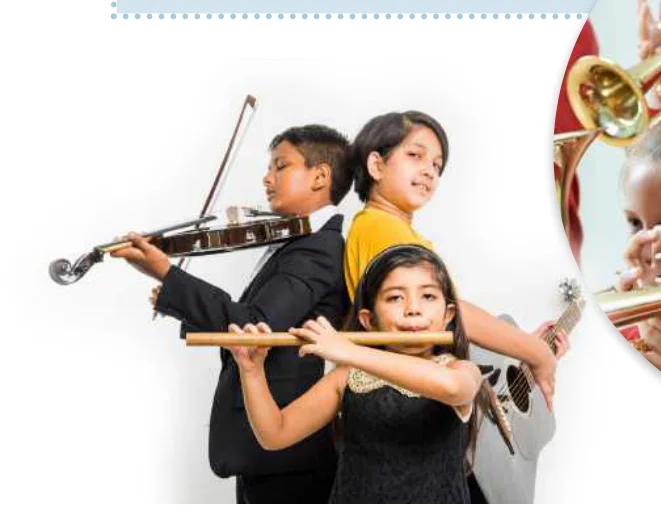
Figure from page 270
150 Information on the Dormant Accounts Fund is available at: https://www.pobal.ie/programmes/dormant-accounts-fund-daf/ 151 The Digital Repository of Ireland is a national digital repository for Ireland’s humanities, social sciences, and cultural heritage data.
Initiatives to promote creativity are progressing well
| Early indications are that these initiatives are progressing well. The Creative Youth Plan contains eighteen specific actions. The following summarises some of the key areas where considerable progress has been made since the publication of the Plan in December 2017: | Ild Óige á no au ct hh Creative Y person young and child every of potential creative the enable to plan A óg duine ngach i agus leanbh ngach i cruthaitheachta na cumas le ligean a scód chun Plean s |
|---|---|
| ■ By the end of the 2019/20 school year, over three-hundred schools had participated in Scoileanna Ildánacha/Creative Schools. ■ The Creative Clusters initiative commenced in the 2018-19 academic year person young and child every of potential creative the enable to plan A óg duine ngach i agus leanbh ngach i cruthaitheachta na cumas le ligean a scód chun Plean with the establishment of twenty-three clusters comprising seventy-one schools countrywide. By the end of 2020, 220 schools had participated. ■ Since 2014, 1,491 teachers and over 300 artists have taken part in TAP, with eighty-five facilitators trained to deliver the programme. In addition, there have been 655 residencies. The Inspectorate review of the TAP online summer course in 2021 found that the content was of a very good quality, and that it provided participants with a very clear understanding of how to develop best practice in teacher/artist partnerships to enhance arts education experiences in schools. Research has been undertaken to support the development of a new CPD model for early learning and care. ■ Cruinniú na nÓg, the national day of free creative activities for children and young people, was launched in 2018 and was rolled out in partnership with every local authority. To date, the Creative Ireland Programme has run three very successful Cruinniú na nÓg days, including a wholly online and virtual event in 2020. ■ The 2019 Local Creative Youth Partnerships (LCYP) pilot initiative enabled three ETBs to establish networks to facilitate information sharing and collaboration between local creative youth service providers to improve the use of existing resources, practices and initiatives. ■ Full training in accessing the voice of the child was provided to those delivering initiatives such as Creative Schools, Creative Clusters and the LCYP pilots. This also helped to inform the development of programmes for Cruinniú na nÓg. ■ A range of projects to increase and enhance access to out-of-school provision have been supported, including in the areas of music education, creative writing and youth drama. | person young and child every of potential creative the enable to plan A óg duine ngach i agus leanbh ngach i cruthaitheachta na cumas le ligean a scód chun Plean s |
Figure from page 271
Creativity is being reflected in the development of curriculum frameworks
Throughout the period to which this report refers, the National Council for Curriculum and Assessment (NCCA) worked to ensure that creativity and critical thinking were reflected in the development of curriculum frameworks. For example, the key skill of Being Creative is embedded in junior cycle subject specifications which were informed by the framework.152 It is also a key competency in the Draft Primary Curriculum Framework (2020).
As other curriculum frameworks are developed or amended, it is intended that creativity and critical thinking competencies will be signposted clearly within them.
152 Department of Education and Skills (2015) Framework for Junior Cycle 2015. Available at: https://www.gov.ie/en/publication/ aed00b-framework-for-junior-cycle/ or https://ncca.ie/en/junior-cycle/framework-for-junior-cycle/
Inspection findings indicated that a shared understanding of creativity in educational contexts was not evident
While the arts offer a unique opportunity to develop children and young people’s creative thinking, creativity is frequently conflated with learning in arts education. It has not always been recognised by either the system or by schools generally that creativity should form part of learning in all domains, and that it should permeate all aspects of this learning.
Inspection findings across all sectors during the period to which this report refers indicated that a shared understanding of critical and creative thinking in educational contexts had not yet been established. As a consequence, it had been challenging for schools to embrace an understanding of the multiple ways in which creativity might be promoted. Inspectors identified a need to clarify the meaning of creativity as part of learning, and to link this with actions relating to critical and creative thinking across all curriculum domains. To progress this, the Inspectorate developed the following understanding of creativity as it relates to teaching and learning:
The Inspectorate’s understanding of creativity in teaching and learning:
In education, creativity is children’s and young people’s use of their imaginative capabilities to transform their thinking, and produce original and innovative ideas and solutions to problems. It involves children and young people engaging with others to investigate and hypothesise about existing knowledge, challenge assumptions, play with possibilities and take risks. The creative process results in products and outcomes in the form of original and innovative ideas, perspectives and artefacts that are of benefit to the learner themselves and to others in wider society. The creative process in education is iterative and involves the growth and acquisition of competencies, such as crafting, demonstrating, improving and persisting.
While the arts provide a unique platform within which artistic innovation and creativity can flourish, creativity can and should be a feature of all disciplines. Creativity should permeate all domains of the curriculum, at all levels from early learning and care to higher education. There are opportunities for children and young people to develop their imaginative, creative and innovative capacities in their play, in music, drama, visual arts, literature and dance, as they write and as they learn and acquire language, in mathematics and in the sciences, as they design and make, when they work with food or when they engage in innovation and entrepreneurial activities. All learning provides opportunities for creativity to be nurtured and developed.
The Inspectorate produced an action plan for its engagement with creativity from 2020-2022
In late 2019, the Inspectorate prepared an action plan to guide its engagement with creativity in the period 2020-2022. The action plan followed on from the Inspectorate’s Annual Conference in 2019, the theme of which was ‘Unlocking Creativity in Teaching and Learning’.
The action plan was built on four pillars:
Pillar 1: Agree a shared understanding and help inspectors to build learning and expertise around creativity – Creativity Network and CPD for inspectors
Pillar 2: Evaluate and report on creativity in schools, ELC settings and centres for education
Pillar 3: Provide resources for schools, ELC settings and centres for education to support self-evaluation and development of creativity
Pillar 4: Develop and enhance the Inspectorate’s strategic partnerships
The Inspectorate developed initiatives to promote creativity in teaching and learning
Following on from the 2019 Annual Conference, the Inspectorate established a working group and a professional network for creativity in education to promote and support creative thinking in teaching and learning across all curriculum areas and sectors from early learning and care to post-primary.
The Creativity Working Group was set up to advance the promotion of creativity in learning as part of inspection. Its work has included:
■carrying out an audit on the presence of creativity within the Inspectorate’s three quality
frameworks for the ELC, primary and post-primary sectors
■developing sector-specific documents on creativity to support inspectors to recognise, value
and report on good practice relating to creativity in settings and schools
■developing a proposal for a composite report on creativity that will draw on the findings of
inspections during 2022, and report on examples of positive practice encountered in ELC settings, primary and post-primary schools and centres for education
The working group undertook an audit of the Inspectorate’s inspection frameworks. It proposed that additions be made to existing statements of effective and highly-effective practices within inspection frameworks and that some new statements of practice be included, with a view to ensuring that creativity in teaching and learning would be encouraged and affirmed during inspections and school self-evaluation.
The professional network does not focus solely on arts-based subjects, but instead investigates how creativity can be integrated across curriculum areas and sectors, and contributes to developing pupils’/students’ divergent and convergent thinking skills. The group has produced two newsletters for inspectors to keep them up-to-date with current thinking and informed of related ‘creative’ events e.g. Creative Schools.
The Inspectorate plans to publish a composite report on creativity in teaching and learning
The Inspectorate plans to publish, in late 2022, a composite report on creativity in teaching and learning in settings and schools. It is envisaged that the report findings and recommendations will inform and promote good practices in settings and schools, in the Inspectorate, and in the wider education system. Typically, inspectors observe creativity through the lens of the arts in a range of inspection models, such as curriculum evaluation and subject inspections. This report, in conjunction with the Inspectorate’s broader understanding of creativity, will also endeavour to widen the lens through which inspectors evaluate and report on creativity and critical thinking in settings and schools.
Promoting creativity and encouraging schools to incorporate creativity and critical thinking into their work is included in the Inspectorate Strategic Plan 2021-2024.
Pages 266–273 · View in original PDF