7.3 Promoting the participation of
7.3 Promoting the participation of children and young people
There is an ever-growing awareness of the importance of valuing and facilitating the voice of children and young people
In 2015, Ireland was the first country in Europe to develop a national strategy on children and young people’s participation in decision-making.127 The goal of this strategy is to ensure that children and young people have a voice in their individual and collective everyday lives across five national outcome areas. The strategy is guided and influenced by Article 2 of the United Nation’s Convention on the Rights of the Child, (UNCRC) and Article 3 of the EU Charter of Fundamental Rights.
At a national level, structures such as Comhairle na nÓg provide young people with opportunities to participate in influencing local and national policy, planning and decision-making, while serving as a mechanism for consultation. Comhairle na nÓg has evolved from Goal 1 of the National Children’s Strategy (2000)128, which identified that children and young people should have a voice in matters that affect them, be consulted where appropriate, and have a right to have their say. In December 2019, the Comhairle na nÓg National Executive launched an online toolkit, Our Voices Our Schools for school management and teaching staff. This resource, which was sponsored by the Department of Children and Youth Affairs (now the Department of Children, Equality, Disability, Integration and Youth (DCEDIY)) seeks to improve the participation of young people in decision-making in the school system.
The National Strategy on Children and Young People’s Participation in Decision-Making and Our Voices Our Schools, are both underpinned by the Lundy model of child participation (Figure 7.1) and promote a rights-based approach to involving children and young people in decision-making. The National Strategy on Children and Young People’s Participation in Decision-makinghighlights how the early promotion of student voice and the participation of learners in decision-making, and in pupil/student councils can benefit learners. Such benefits can include improved engagement and attainment levels, reduced rates of early school-leaving, improved discipline and improved communication, planning and organisational skills.
Figure from page 215
127 Department of Children and Youth Affairs (DCYA) (2015) National Strategy on Children and Young People’s Participation in Decision-Making 2015-2020. Available at: https://www.gov.ie/en/publication/9128db-national-strategy-on-children-andyoung-peoples-participation-in-dec 128 Department of Health and Children (2000) Our Children - Their Lives: National Children’s Strategy, 2000-2010. Available at: http://www.dcya.gov.ie/ viewdoc.asp?Docid=64&CatID=13&mn=&StartDate=01+January+2000
The Inspectorate’s approach to engagement with pupils and students during its inspection is informed by Article 12 UNCRC, the Lundy model and the National Participation Strategy.
Figure 7.1: The Lundy model of child participation
VOICE
The Right to Express Views
SPACE
ARTICLE 12
The Right to have Views
given Due Weight
INFLUENCE AUDIENCE
The Lundy model interprets Article 12 UNCRC as meaning that, before anyone can express a view, they must be given opportunities to form that view. The model comprises four elements, which have a rational chronological order:
■Space: children must be given safe, inclusive opportunities to form and express their view
■Voice: children must be facilitated to express their view
■Audience: the view must be listened to
■Influence: the view must be acted on as appropriate
Source: Lundy, L. (2007) ‘Voice is not enough: Conceptualizing Article 12 of the UNCRC’, British Educational Research Journal, 33(6) pp.927-42
Síolta, The National Quality Framework for Early Childhood Education and professional development for early years educators support the promotion of children’s participation in early learning and care settings
Children’s rights and children’s participation are central to quality practice in the early learning and care (ELC) sector. The first Standard in the Síolta quality framework states that ensuring that each child’s rights are met requires that she/he is enabled to exercise choice and to use initiative as an active participant and partner in her/his own development and learning. Children’s active participation in choices about their daily activities are supported not only by the National Síolta Aistear Initiative, but by a wide range of supports for the quality of ELC.
The Department of Children, Equality, Disability, Integration and Youth (DCEDIY) is currently developing two types of training to support the use within ELC settings of the National Strategy on Children and Young People’s Participation in Decision-Making 2015-2020: one for early years educators working directly with children, and another for those who will provide training for early years educators in use of the framework. The training will focus on use of the Everyday Spaces Checklist in educators’ work with children.
DCEDIY has also provided a capacity building grant to support implementation of the National Framework for Children and Young People’s Participation in Decision-Making. This grant supports organisations to acquire resources that facilitate participation.
DCEDIY funds a number of support organisations who provide training, advice and guidance for ELC and school-age childcare (SAC) settings. Support organisations include Better Start, City and County Childcare Committees, and national voluntary childcare organisations. These organisations provide quality practice supports underpinned by Aistear and Síolta, including supports for ELC and SAC settings on partnership with parents and on children’s participation.
Early learning and care settings and schools are making efforts to give children and young people opportunities to express their views and participate in decision-making, but to a limited extent
Early years education inspections (EYEIs) conducted during the period to which this report refers, provide examples of encouraging children to make decisions democratically, such as choosing a preferred learning activity, having freedom of movement at times during the daily routine or voting on which story to read. Findings indicate that early years educators recognised the value of giving children a choice in their play activities. However, inspection reports made references frequently to the need for settings and early years educators to provide increased opportunities and support for children to express their thoughts and ideas, and for them to engage in decision-making.
In many reports of inspections in primary and post-primary schools during this period, there was acknowledgement that pupil/student participation in decision-making was being fostered and progressed through the development of pupil/student councils.
Notwithstanding this very positive development, inspection findings during the period to which this report refers, indicated that promotion of pupil/student participation tended to be somewhat limited to a number of specific activities and initiatives. The findings also indicated that there was potential to improve the quality of pupil/student involvement in leadership in over a quarter of primary schools, and in almost a quarter of post-primary schools. Overall, there was a need to enhance and extend the opportunities for pupils/students to take on leadership roles in their schools.
A high proportion of pupils and students did not feel that they have a say in how things are done in school. Meaningful opportunities should be provided for the participation of children and young people in decision-making
The responses to surveys administered to pupils in primary and students in post-primary schools during the period to which this report refers, indicate that a high proportion of pupils and students did not feel that they had a say in how things were done in their school. Less than half (48%) of primary pupils surveyed indicated they had a say, and a significant minority (32%) reported that they did not know (Table 7.5). At post-primary level, the majority (57%) of students surveyed reported that they did not feel that they had a say in how things were done in their school, with less than a quarter (23%) feeling that they had a say (Table 7.6). While the vast majority of post-primary schools had student councils, and pupil councils were a feature of many primary schools, the extent to which pupils/students have a say in how things are done in their school is an area for further consideration and development.
These findings suggest that schools need to reflect on the extent to which the perspectives of children and young people are heard by all staff, by the school’s leadership and management team, and by the board of management, and that the issues of greatest concern to them are acted upon positively and supportively. The tools provided in the DCEDIY National Strategy on Children and Young People’s Participation in Decision-making (2019) will support schools and settings in planning, conducting and evaluating child and youth participation processes and initiatives effectively, and also in giving their pupils and students a greater say in decision-making within the schools and settings.
Table 7.5: Pupils have a say in how things are done in the school: WSE-MLL in primary schools and special schools: September 2016 - December 2020
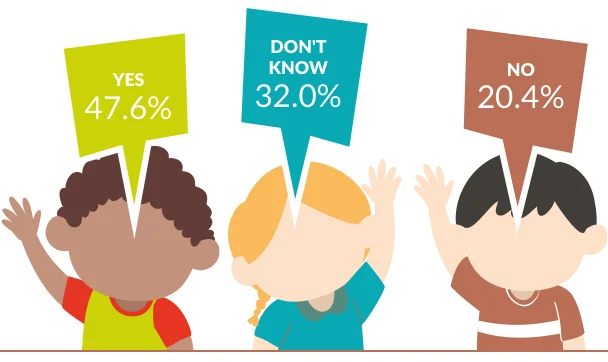
Table 7.6: Students have a say in how things are done in the school: WSE-MLL in post-primary
DON’T KNOW 32.0%
YES 47.6%
Source: Inspectorate, Department of Education
Table 7.6: Students have a say in how things are done in the school: WSE-MLL in post-primary schools: September 2016 - December 2020
DON’T KNOW 20.5%
STRONGLY
STRONGLY
AGREE 5.2%
AGREE 17.7%
DISAGREE
28.5%
Source: Inspectorate, Department of Education
Pages 215–218 · View in original PDF