5.4 Key messages
5.4 Key messages
Student learning
■Irish students continue to perform well in international assessments in English reading,
Mathematics and Science; there is scope to improve outcomes for students with higher abilities, including exceptionally-able students.
■The proportion of students studying subjects at higher level has increased steadily in almost
all subjects.
■Schools have made good progress in relation to whole-school literacy; vocabulary development
and oral literacy were identified as areas for further development in inspections of English.
■The quality of student learning in Irish, while good or very good in the majority of schools,
was significantly below the standards achieved in other core subjects.
■Levels of experiential and constructivist learning in Science, Technology, Engineering, and
Mathematics (STEM) subjects have increased; some of the findings from international assessments indicate that challenges in the teaching of Mathematics remain.
■Students had high quality learning experiences in Physical Education and Social, Personal and Health
Education; such experiences are key to the maintenance and advancement of student wellbeing.
■The additional guidance and counselling resources provided in response to the COVID-19 pandemic
are a welcome additional support for students; however, further system supports in Guidance and Counselling will be required.
Teaching and assessment
■The Junior Cycle Framework is being implemented successfully in many schools; cross-curricular
sharing of expertise, focused on inclusive task design and the further alignment of subject department plans with the new subject specifications, are areas for development.
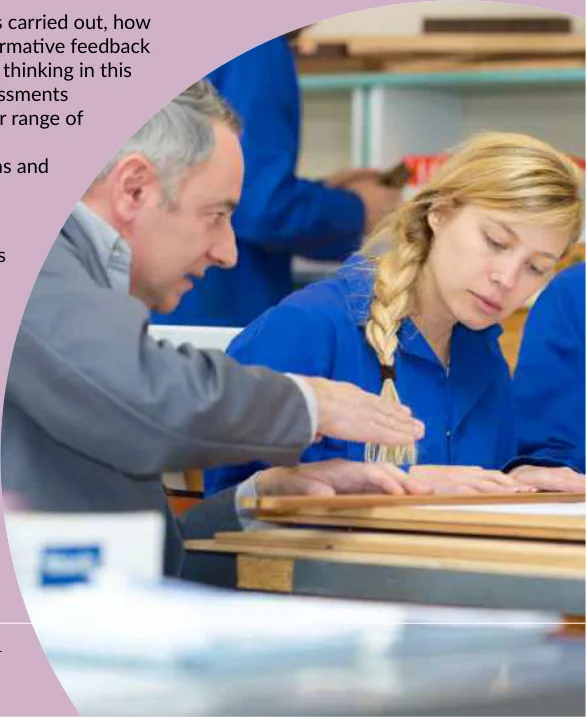
Figure from page 171
■Challenges remain in relation to how assessment is carried out, how
assessment findings are used, and the quality of formative feedback that students receive; COVID-19 led to much new thinking in this area. The implementation of classroom based assessments (CBAs) in Junior Cycle has meant the use of a wider range of assessment approaches and has given teachers opportunities to engage in collaborative discussions and moderation meetings concerning students’ achievements.
■High-quality learning environments, and high levels
of student enjoyment and motivation are evident in post-primary schools; collaborative learning practices for students require further development.
■The use of information and communications
technology as a teaching and learning tool became much more effective during the pandemic, having been underdeveloped prior to the pandemic.
Page 171 · View in original PDF