5.2.4 Assessment
5.2.4 Assessment
There is scope to enhance the quality of feedback provided to students on their work
The overall quality of assessment was good or very good in 71% of inspections (Table 5.11). However, it was just satisfactory in 26% of schools and was less than satisfactory in 2.7% of them.
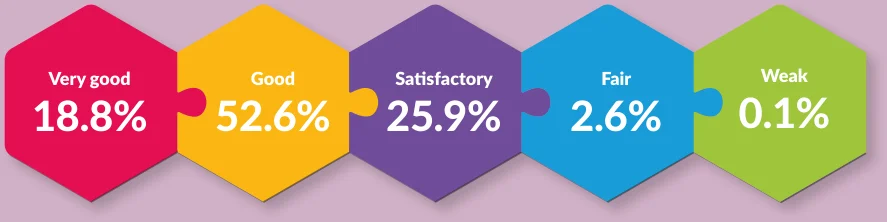
Table 5.11: Overall quality of assessment in post-primary schools: September 2016 - December 2020
Weak 0.1%
Very good 18.8%
Good 52.6%
Satisfactory 25.9%
Fair 2.6%
Source: Inspectorate, Department of Education
Where assessment was found to be less than good, the quality of feedback provided to students on their work tended to be a core issue. There was also scope to make greater use of open-ended questioning and higher-order questioning in lessons. In some schools, there was a need to embed formative assessment practices across the school, and to actively share best practice among teachers in this regard. These findings were reflected in student responses to inspection surveys administered during WSE-MLL inspections in which 63% of students concurred with the statement that their teachers talk to them about how to improve
their learning, while over 20% of students disagreed that this was the case (Table 5.12).
Table 5.12: Student responses to the statement: Teachers talk to me about how to improve my learning (Student surveys: WSE-MLL inspections): September 2016-December 2020
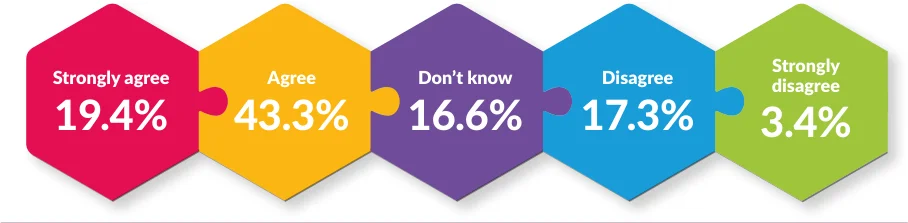
Table 5.12: Student responses to the statement: Teachers talk to me about how to improve
Source: Inspectorate, Department of Education
In most subjects, an increasing proportion of students are taking state examinations at higher level
A notable development across most subjects has been an increase in the proportion of students taking state examinations at higher level in both Junior Cycle and Senior Cycle. While the proportion of students opting for higher level during the calculated grades and accredited grades processes in 2020 and 2021 was considerably higher than in previous years, higher level uptake had been increasing year-on-year. Various Department-led strategies, including the Science, Technology, Engineering and Mathematics (STEM) and Digital strategies, have contributed to progress in this regard through the establishment of standards against which schools can measure their progress across multiple areas of practice.
While the upward trend in the proportion of students opting for higher level should be celebrated, it should be noted that such a trend cannot continue indefinitely. There are many students for whom ordinary level remains the most appropriate option. While it remains the role of the school and of parents to inform students and to encourage high achievement, it should be the needs of the student that ultimately inform the final decision around level of study.
Pages 141–142 · View in original PDF