4.2.1 Teaching and learning
4.2.1 Teaching and learning
In primary schools and special schools, the overall quality of teaching was found to be good or very good in 86% of inspections conducted over the September 2016 to December 2020 period (Table 4.1). It was found to be satisfactory in 12% of inspections, and less than satisfactory in 1.9% of inspections. The overall quality of learning was also of a high standard; it was found to be good or very good in 85% of inspections, satisfactory in 12% of inspections and less than satisfactory in 2.6% of inspections.
Table 4.1: Quality of teaching and learning in primary schools and special schools: September 2016 - December 2020
| Overall quality of teaching | Overall quality of learning | |
|---|---|---|
| During incidental inspections, curriculum evaluations, WSE-MLL and WSE | ||
| Very good | 25.5% | 24.8% |
| Good | 60.8% | 60.1% |
| Satisfactory | 11.8% | 12.5% |
| Fair | 1.7% | 2.4% |
| Weak | 0.2% | 0.2% |
Source: Inspectorate, Department of Education
Teaching approaches were good or very good in a majority of lessons; however, active and pupil-centred teaching approaches were not used consistently
When teachers use methodologies that are appropriate to the learning objective and to the varying needs and abilities of pupils, they can stimulate substantial pupil response, facilitate deep engagement with pupils and achieve an appropriate balance between their own input and productive pupil participation.
At primary level and in special schools, teaching approaches were found to be good or very good in 70% of the lessons observed during unannounced inspections and in 80% of lessons observed during announced inspections (Table 4.2). They were found to be less than satisfactory in 8% of lessons observed during unannounced inspections and in 3% of lessons observed during announced inspections.
Features of good practice included teachers’ positive engagement with Aistear: the Early Childhood Curriculum Framework in infant classes. Findings also noted that where playful and engaging pedagogies were implemented effectively across the school, they enhanced the learning experiences of pupils. However, as also indicated in the last Chief Inspector’s Report, many teachers were not using active and child-centred teaching approaches in accordance with the Primary Curriculum, 1999. Overall, inspection findings for the September 2016 to December 2020 period indicate that there is a need for greater use in classrooms of active methodologies and approaches that stimulate innovation and creativity.
.
Table 4.2: Quality of teaching approaches in primary schools and special schools: September 2016 - December 2020
| Teaching approaches | Unannounced inspections | Announced inspections |
|---|---|---|
| Very good | 25.5% | 38.2% |
| Good | 44.1% | 41.8% |
| Satisfactory | 22.7% | 16.5% |
| Fair | 6.8% | 3.1% |
| Weak | 0.9% | 0.4% |
Source: Inspectorate, Department of Education Inspection findings show that catering for the varying abilities of pupils continues to present challenges for teachers
Differentiation refers to the means by which teachers tailor the way they teach and facilitate pupils’ learning to meet the variety of individual needs in their classrooms. Effective differentiation requires a responsiveness and agility on the part of the teacher to adapt to varying and emergent pupil needs and an ability to motivate, challenge and enthuse the pupils through the provision of meaningful and enjoyable learning experiences. Information gained from assessment can enable teachers to make more informed decisions when planning for differentiated learning.
Inspection findings from the September 2016 to December 2020 period show that catering for the varying abilities of pupils in primary schools and special schools is an aspect of provision that continues to require considerable attention and improvement. Differentiation was good or very good in about half (49%) of the lessons observed across unannounced inspections in primary schools and special schools (Table 4.3). A need to improve approaches to differentiation was identified in 51% of the lessons observed. In announced inspections, in-class support for the learning needs of pupils who were experiencing challenges in aspects of their learning was found to be good or very good in 69% of cases, with scope for improvement in the remaining 31%. Inspection findings also indicate that inadequate attention is being given to challenging exceptionally able pupils in aspects of the curriculum. These findings are reflected in those of the international assessment, Trends in International Mathematics and Science Study (TIMSS) 201961, which suggest that the highest performing pupils in Ireland in Mathematics and Science are under-performing, relative to their peers in countries with similar overall performance.
Examples of good practice in differentiation, as noted in inspection reports, included pupils working together in pairs or small groups in a way that maximised learning for all and encouraged the development of key skills such as communicating and using language. Where there was scope to develop practice, inspectors frequently advised that teachers plan for the provision of differentiated learning, and make more effective use of assessment data to inform learning and the teaching approaches and strategies required. They also advised that teachers consider mechanisms through which differentiation practices could be shared within and between schools, and how a greater level of consistency of practice could be achieved.
61 Trends in International Mathematics and Science Study (TIMSS) takes places every four years. The primary purpose of TIMSS is to gather high-quality data on students’ levels of achievement in two key domains of study – Mathematics and Science – at both primary (fourth grade) and post-primary (eighth grade) levels.
Table 4.3: Quality of differentiation in primary schools and special schools and quality of in-class support for learning needs in primary schools: September 2016 - December 2020
| Difef rentiation is evident (unannounced inspections) | In-class support for learning needs (announced inspections) | |
|---|---|---|
| Very good | 16.3% | 28.6% |
| Good | 33.1% | 40.3% |
| Satisfactory | 34.3% | 25.0% |
| Fair | 13.8% | 5.6% |
| Weak | 2.5% | 0.5% |
Source: Inspectorate, Department of Education

Figure from page 108
There were high levels of enjoyment of learning and motivation evident among pupils
Pupils’ enjoyment of learning and their motivation to engage in classroom activities were found to be good or very good in 86% of the lessons observed during whole-school and curriculum evaluations in primary schools and special schools (Table 4.4). This corresponds with the findings from the Inspectorate’s surveys of pupils during whole school type evaluations in the September 2016 to December 2020 periods in which 81% of pupils agreed that they enjoy their lessons and learning.
Table 4.4: Pupils’ enjoyment of learning and motivation in primary schools and special schools: September 2016 - December 2020

Figure from page 108
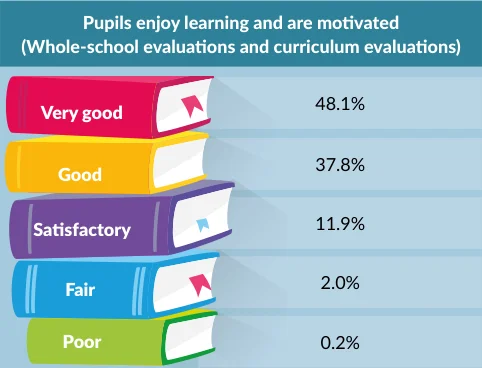
Table 4.4:
Pupils enjoy learning and are motivated (Whole-school evaluations and curriculum evaluations)
48.1%
Very good
37.8%
Good
11.9%
Satisfactory
2.0%
Fair
Poor
0.2%
Source: Inspectorate, Department of Education
There is scope to create enhanced opportunities for collaborative learning
The curriculum at primary level suggests that learning experiences should provide opportunities for social interaction and collaboration between pupils. Findings from unannounced inspections in relation to how pupils were enabled to collaborate appropriately in their learning were mixed. Of the lessons observed, 69% made good or very good provision for pupils to learn through talk and discussion (Table 4.5). However, opportunities for pupils to collaborate in their learning were more limited. Inspection findings show that good or very good provision for pupil collaboration was made in just 59% of lessons, while 14% of lessons observed did not have adequate provision for children to collaborate on learning tasks (Table 4.6).
Inspectorate research, which was carried out in November and December 2020, indicated that the range of measures put in place by schools to prevent the spread of the COVID-19 virus had impacted on opportunities for collaborative learning. Pupils, who participated in focus groups carried out by the Inspectorate in November 2020, advised of their concerns about fewer practical and collaborative learning activities. Similarly, in the Return to School survey administered by the Inspectorate in December 2020, just over one-third of teachers in primary schools who responded indicated that they continued to provide regular opportunities for pupils to work collaboratively during lessons.
Although schools were not required to implement social distancing measures in junior classes in primary schools, and pod structures were possible for senior primary pupils and also for older students in special schools, it appears that teachers were reluctant to provide opportunities for collaborative learning in classrooms from the time that schools first closed in March 2020. Subsequent guidance issued in March 2021 and August 202162 advised schools to re-establish collaborative learning opportunities, and it will continue to be important to build upon this in classrooms in the coming years.
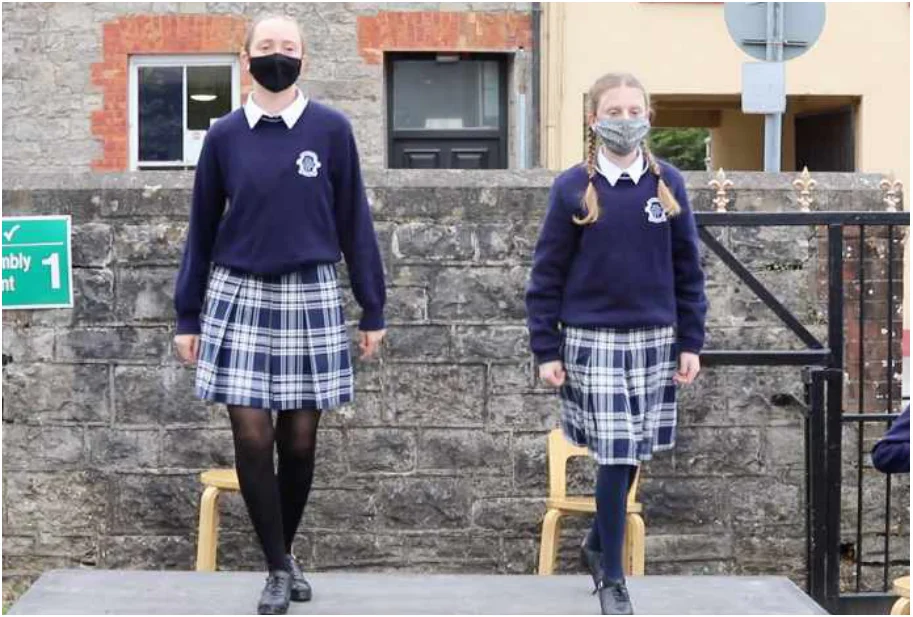
Figure from page 109
62 Department of Education (2021) Returning to school: Guidance for teaching and learning Junior Infants-2nd class. Available at: https://www.gov.ie/en/publication/6a739-returning-to-school-guidance-for-teaching-and-learning-junior-infants-2nd-class/ Department of Education (2021) Returning to school: Guidance for teaching and learning 3rd class-6th class. Available at: https:// www.gov.ie/en/publication/ea4e2-returning-to-school-guidance-for-teaching-and-learning-3rd-class-6th-class/ Department of Education (2021) Curriculum guidance: Teaching, learning and assessment 2021/2022. Available at: https:// www.gov.ie/en/publication/f9037-curriculum-guidance-teaching-learning-and-assessment-2021-2022/
Table 4.5: Provision of opportunities for pupils to learn through talk and discussion in primary schools and special schools: September 2016-December 2020
Table 4.6: Enabling pupils to work collaboratively in primary schools and special schools: September 2016-December 2020
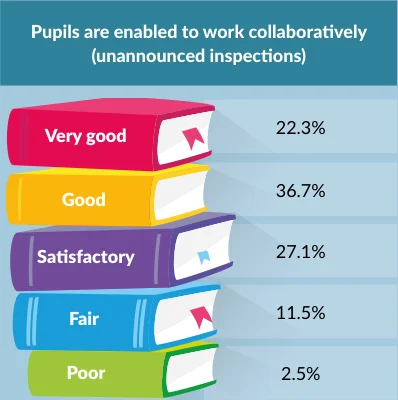
Table 4.6: Enabling pupils to work
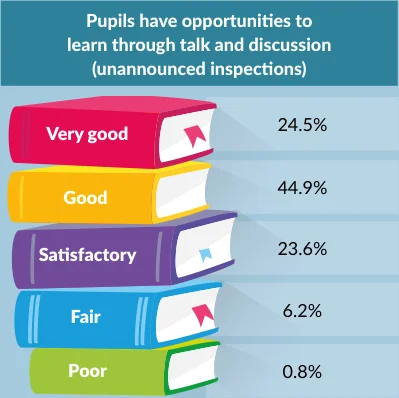
Table 4.5: Provision of opportunities for
Pupils have opportunities to learn through talk and discussion
Pupils are enabled to work collaboratively
(unannounced inspections)
(unannounced inspections)
24.5%
22.3%
Very good
Very good
44.9%
36.7%
Good
Good
23.6%
27.1%
Satisfactory
Satisfactory
6.2%
11.5%
Fair
Fair
Poor
Poor
0.8%
2.5%
Source: Inspectorate, Department of Education Source: Inspectorate, Department of Education
Many primary schools are making efforts to enhance learning by using play-based pedagogies in infant classes. Similar efforts are being made in junior classes in special schools. There is evidence of an erosion of play-based approaches as pupils progress through the school
Inspection findings indicate that many primary schools are making efforts to support and enhance learning in infant classes by using play-based approaches. Inspection findings also indicate that similar efforts are being made in junior classes in some special schools. However, there is also evidence that children experience these approaches less frequently as they progress beyond junior and senior infants in primary schools. Attempting to gain some of the benefits of Aistear: the Early Childhood Curriculum Framework, some schools have decided to provide at least some Aistear-style opportunities by creating ‘Aistear hours’ in their timetables. Such an approach is at odds with the principles underpinning Aistear. These principles provide for the consistent embedding of children’s learning in high-quality, interactive play experiences. A more comprehensive understanding of these principles and how they can be applied across the curriculum in infant classes would be beneficial for pupils’ learning experiences and outcomes. Inspection findings have also highlighted that by the time young children are six or seven years old and enrolled in first class, their experience of school could be predominantly one of frequent whole-class teaching. While this approach may be used as part of a range of methodologies, an over-reliance on whole-class teaching can limit opportunities for child-to-child and child-to-adult engagement.
There is scope to enhance the impact of digital technologies in classrooms and settings
In surveys administered during the September 2016 to December 2020 period, just over half (54%) of primary pupils indicated that they used digital technologies during some lessons. These findings indicate that there remains potential to strengthen and embed pupils’ use of digital technologies to support learning.
The experience of remote learning during the COVID-19 pandemic heightened the importance of schools embracing the potential of digital technologies to facilitate and enhance learning. To support schools, the Department published Guidance on Remote Learning in a COVID-19 Context: September–December 2020 and a number of circulars.63 In line with Circular 74/2020, all schools were required to have a communications/learning platform in place. They were also advised to incorporate planning for remote learning into their digital planning, which would also facilitate provision in the context of remote learning if required. The PDST developed a range of supports for schools, including a Blended Learning Toolkit and a reflective tool for contingency planning. In addition to the €40m in grant funding issued in 2019-2020 to support the implementation of the Digital Strategy for Schools 2015-2020, a further €10m in funding was distributed that year; this was to support ICT requirements for remote teaching, including essential
63 Department of Education Circulars 0031/2020, 0032/2020 and 0074/2020. Available at: https://www.gov.ie/en/circulars/? organisation=department-of-education
learning platforms and other ICT infrastructure, and to assist schools to support pupils/students at risk of educational disadvantage arising from the COVID-19 closures.
While only 61% of the respondents to the parent survey administered during the first three weeks of school closures in April 2020 agreed with the statement: My child uses digital technology to engage with the school with regard to his/her learning, engagement with digital technologies increased considerably during the period of school closures. Inspectorate research in the September to December 202064 period indicated that the use of technology to support teaching, learning and assessment had evolved considerably. This is in line with findings in education systems worldwide where alternatives to face-toface instruction had to be found. As a result, the online environment and other forms of digital communication were used by teachers, children and young people on an unprecedented scale.65
Findings from the Inspectorate research in Irish schools included the fact that teachers and school management had introduced or consolidated the use of online learning platforms to enable inclusive access and positive learning experiences. Schools also used their digital capabilities to good effect to support the learning of pupils at very high risk from contracting COVID-19, who had to continue their learning remotely in the September to December 2020 period. A key challenge for schools will be to build on the good practice established, and to capitalise fully on the potential of digital technologies to enhance teaching, learning and assessment in the years ahead.
There is scope to improve curriculum planning and preparation in a considerable proportion of primary schools and special schools
Some of the challenges concerning how well teachers cater for the varying needs of pupils and the lack of active and child-centred approaches may have their origins in weaknesses in curriculum planning and preparation by teachers. Findings from whole-school evaluations indicate that there is scope to improve curriculum planning in a considerable proportion of primary schools and special schools. The quality of curriculum planning was good or very good in just 67% of schools inspected, satisfactory in 25% of schools, and less than satisfactory in 7.7% of schools inspected (Table 4.7).
Figure from page 111
Table 4.7: Quality of curriculum planning (wholeschool evaluations) in primary schools and special schools: September 2016-December 2020
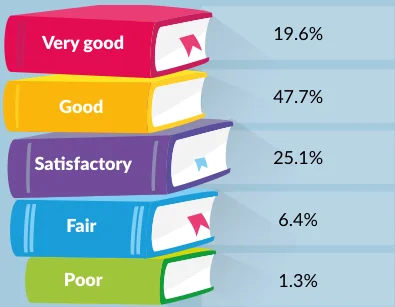
Table 4.7: Quality of curriculum planning (whole-
19.6%
Very good
47.7%
Good
25.1%
Satisfactory
6.4%
Fair
Poor
1.3%
Source: Inspectorate, Department of Education
64 The suite of return to school reports is available at https://www.gov.ie/en/publication/78605-return-to-school-summary-ofresearch-september-december-2020/ 65 See, for example: OECD (2020) Strengthening online learning when schools are closed: The role of families and teachers in supporting students during the COVID-19 crisis. Available at: https://www.oecd.org/coronavirus/policy-responses/ strengthening-online-learning-when-schools-are-closed-the-role-of-families-and-teachers-in-supporting-studentsduring-the-covid-19-crisis-c4ecba6c/
Pages 106–111 · View in original PDF