Youth and long-term unemployment in particular need of attention
Youth unemployment has also fallen in line with aggregate unemployment but remains at a high level – close to 26%. This is nevertheless lower than in the southern European countries of Italy, Greece, Portugal and Spain (Figure 4). High and persistent levels of unemployment among young people are reflected in the rise in the proportion of young people Not in Education, Employment or Training (the NEET rate). Among OECD countries, Ireland registered the fifth highest increase (3.7 percentage points) in the NEET rate since the beginning of the global financial crisis after Estonia, Greece, Italy and Spain.4 Where youth have experienced long spells of being out of work and out of school, they risks becoming permanently disconnected from the labour force and marginalised, potentially compromising employment and long-term career prospects. This underlines the importance and urgency of actions to encourage young people to acquire qualifications and experience sought after by employers, and to reduce the number of earlyschool leavers, as central elements of the Action Plan for Jobs.
4 In the case of Ireland, the bulk of the young NEET population either report being a student as their main status or are unemployed and likely to be on the live register and thus in contact with public providers of employment services.
Long-term unemployment (12 months or more) has risen sharply in Ireland from around 29% of all unemployment in Q4 2007 to just under 60% in Q3 2013, although there has recently been a welcome decline (Figure 5). As part of the Pathways to Work initiative – itself a component of the Action Plan for Jobs as of 2013 – theDepartment for Social Protection has set a target of moving 75 000 of the long-term unemployed at the beginning of 2012 into employment by end- 2015, including 20 000 in 2013 alone. Interim quarterly targets were being met comfortably by mid-20135. Unless more is done to help the long-term unemployed find jobs, however, there is a risk that some of the cyclical increase in unemployment may become structural. Creating jobs may not be sufficient to fully absorb the rise in long-term unemployment that took place following the crisis. The APJ must therefore be buttressed by strong labour activation policies.
As a percentage of the youth labour force (aged 15-24), Q4 2007 a- Q3 2013 b
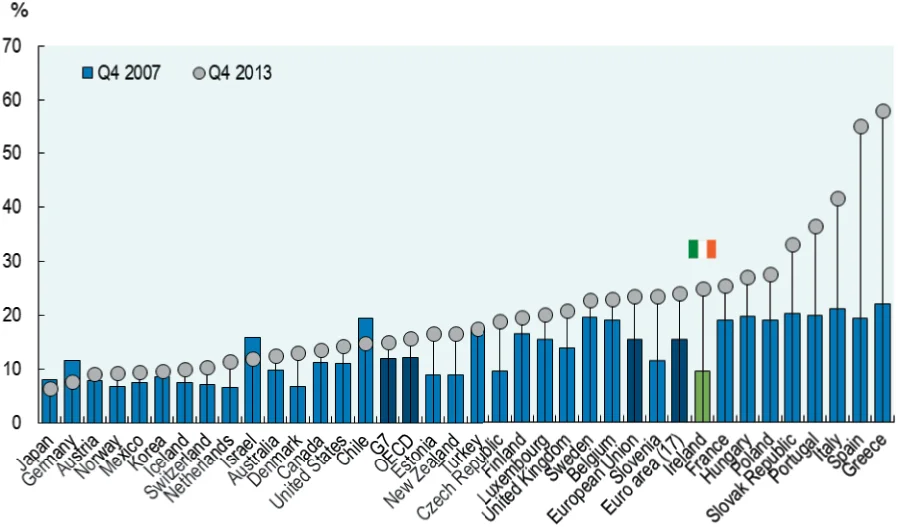
Figure 4. Youth unemployment remains high in Ireland
a Q2 2007 for Switzerland.
b Q3 2013 for Chile, Estonia, Greece, Hungary, Israel, Korea, Mexico, New Zealand, Norway, Switzerland, Turkey
and the United Kingdom.
Source: OECD Short-Term Labour Market Statistics Database.
Source: Pathways to Work Performance Report Q2 2013. http://www.welfare.ie/en/downloads/PTWQ2PerformanceReport.pdf
Long-term unemployment (more than one year) as a percentage of all unemployment a, b
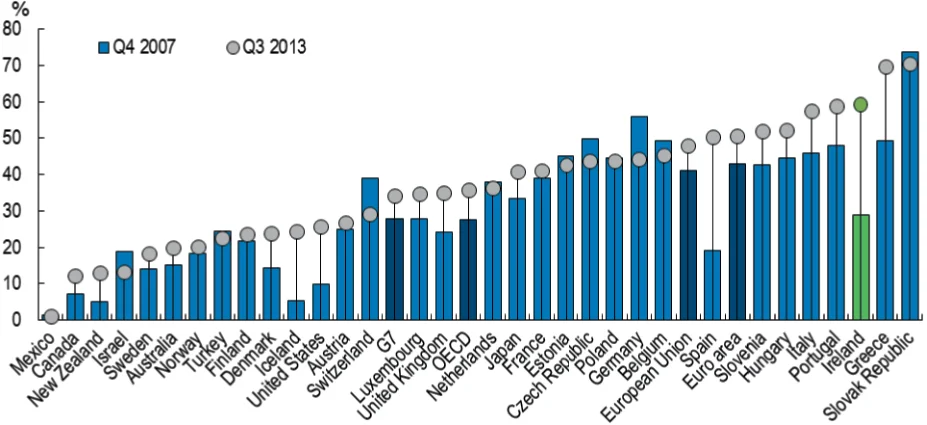
Figure 5. Tackling long-term unemployment is a key challenge for Ireland
a Data are not seasonally adjusted but are smoothed using three-quarter moving averages. “OECD” refers to the
weighted average of 32 OECD countries excluding Chile and Korea. Data refer to 2012 for Israel and Q2 2013 instead of Q3 2013 for the European Union, the Euro area, G7, France and the Netherlands.
b 2012 for Israel.
Source: OECD Short-Term Labour Market Statistics Database.
Pages 10–12 · View in original PDF