system
Employers have a defining role to play in any skills system, including at local level. Ireland participated in an OECD Review of Local Job Creation Policies, which examined the contribution of local labour market policy to boosting quality employment and productivity, focusing on how policies are actually implemented (OECD 2013a). The findings from this review suggest that, when compared to other OECD countries, Ireland’s employment and skills system could be better aligned with employer demand (see Figure 1 on next page).
In practice, a large number of employers used neither the National Contact Centre (NCC) nor their local employment office when recruiting, even for entry-level jobs, preferring to hire directly or via private jobs agencies. In 2013, almost 60% of surveyed employers indicated that they did not use the NCC as a recruitment source in the first place (IBEC, 2013). Follow-up surveys have indicated that among employers who have used the NCC, 84% stated that they had their vacancy filled within two months of engagement with 64% of these employers saying that they had done so with a Department of Social Protection-referred candidate. .
The government is conscious of the need for additional resources in this area, leading to the introduction of a new employer engagement strategy within Intreo, and a new network of offices which will operate as single points of contact for all employment search and income supports for the unemployed. This will also be a priority area for outsourced service providers under JobPath. In time, this should go some way towards creating a more responsive employment service.
In establishing this function, Ireland could draw on lessons from Australia where employment service providers have “reverse marketers”. Reverse marketers actively market jobseekers to potential employers where vacancies have not been advertised, and refer and place jobseekers into those jobs. These individuals provide a mechanism to stimulate demand for labour by preempting employers’ labour needs before they create a vacancy, and play an important role in the wider employment services framework by providing jobseekers with access to vacancies that may not otherwise exist. Reverse marketers target specific employers with whom the jobseeker is likely to be able to find sustainable employment. This requires a comprehensive understanding of the local labour market. This concept could be considered as part of the roll-out of employer engagement activities, in coordination with Local Enterprise Offices, with appointed individuals within local employment offices potentially undertaking this function.
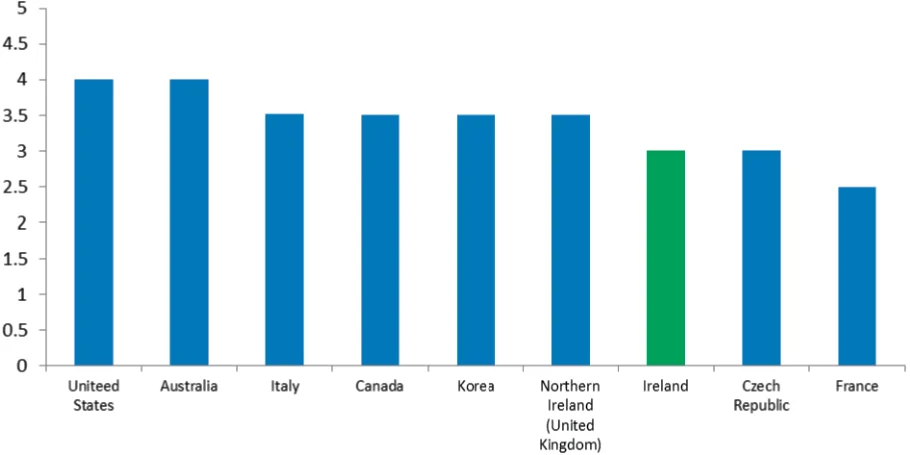
Figure 1. Employer engagement in the orientation of employment and training, 2013
Note: This indicator is a composite index developed by the OECD based on a qualitative assessment of the extent to which the employment and training system is oriented to employer demand. It is based on the degree of VET customisation, whether particular support is provided to SMEs, and the accessibility of workplace training. A score of 1 corresponds to sub-optimal actions and 5 to a comprehensive set of policies and practices. The same methodology has been applied to all countries shown in the chart above.
Source:OECD (2014, forthcoming), Job Creation and Local Economic Development, OECD Publishing, Paris.
The 2012 and 2013 Action Plans both highlight the importance of aligning skills with employer needs. The establishment of SOLAS and Education and Training Boards was an attempt to ensure that education and skills programmes are relevant to the demands of employers and individuals. Employers are to be represented directly on the Education and Training Boards, a welcome development which will assist in helping the Boards to give training providers detailed and authoritative information on local employers’ needs. It is important that employers can contribute fully, and that new Local Community Development Committees have sufficient private sector representation. Furthermore, the apprenticeship system is being reformed to open it up to a broader array of sectors and to more young people – a key ingredient in giving young people the chance to gain work-based training.
Employers are asking for a more active role in designing and delivering training programmes to ensure that programmes provide the skills they need in their workforce. Employers in the domestic sector are key contributors to regional competitiveness and dynamism but more needs to be done to respond to their hiring needs. Public training curricula offered by VECs and FÁS training has often been seen as slow to adapt to changing business needs, and trainers often do not have up-to-date skills themselves. Larger employers rely primarily on in-house training or private trainers to bring new employees (including graduates and people who completed state training) to the required skill levels. However, there are successful examples - such as Skillnets and FIT - in Ireland that could be expanded and which build on local networks and facilitate skills development opportunities among employers, especially SMEs.
A more responsive vocational education and training system would fully involve employers in the design and delivery of training. This is the practice in the United States, where community colleges can rapidly develop courses because they use industry representatives as trainers. Because these trainers are from industry, it also helps to ensure a good relationship with employers. In some cases, community colleges have created a separate branch of their institution from the part of the college which offers more traditional academic courses in order to more quickly respond to local needs. This dual institutional structure is particularly evident in California (OECD, 2013b).
The government could also keep in mind that in many cases, employers’ needs can be shortterm. It is therefore critical that other partners such as trade unions and the non-profit sector are also involved in training efforts, and that there is sufficient emphasis on equipping individuals with the generic skills which will enable them to be more adaptable and resilient.
Pages 15–17 · View in original PDF