2 Activating the Unemployed
Job creation in Ireland accelerated in 2013, helping to reduce the unemployment rate from elevated levels. The participation rate has also begun to rise, having declined markedly between 2007 and 2013, while net emigration remains a significant factor. The Irish authorities are in the process of re-orienting their labour activation apparatus from a traditionally passive stance, notably through the Pathways to Work initiative, elements of which form part of the Action Plans for Jobs. More needs to be done, however, to target activation efforts among long-term unemployed, low-skilled and young people. These groups are particularly at risk of becoming marginalised and permanently detached from the labour market.
The global economic and financial crisis hit the Irish labour market hard and the decline in employment was much steeper than the average across the OECD (Figure 1). Particularly steep falls occurred in youth employment rates (over 20 percentage points) and among the low skilled (15 percentage points). Consequently, unemployment climbed faster than in many other countries, reaching a peak of 15.1% in January 2012 (Figure 1). The Action Plan for Jobs was therefore a welcome and important initiative when launched in February 2012. It aimed to tackle one of the most urgent social and economic challenges facing the country.
as a percentage of the labour force
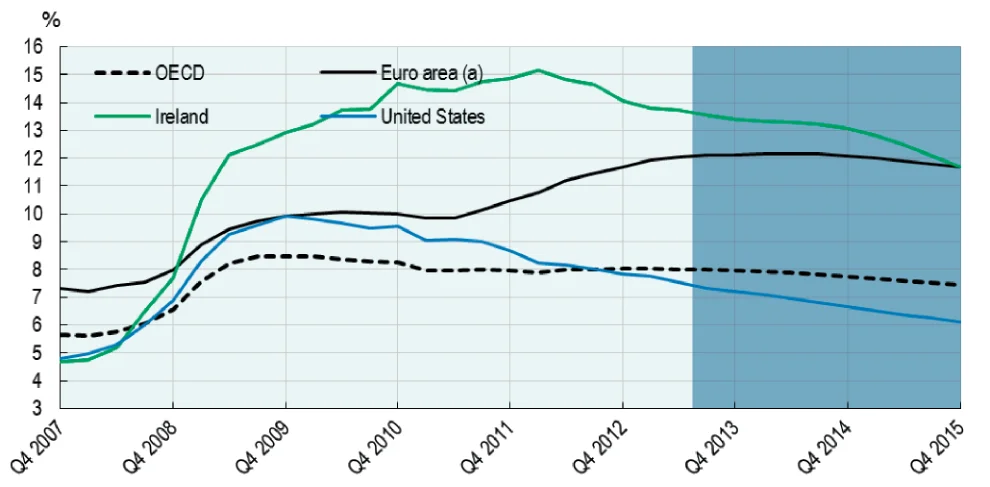
Figure 1. Unemployment has been falling in Ireland but from a high level a
a) Projections from Q3 2013 onwards. Source: OECD Short-Term Labour Market Statistics Database and OECD (2013), OECD Economic Outlook, Vol. 2013/2, OECD Publishing, Paris.
Between 2008 and 2011, the OECD area as a whole suffered a net loss of about 9 million jobs. Ireland, with Greece and Spain, suffered losses of over 8% (about 300 000 jobs), with the construction sector particularly badly hit. Between 2011 and 2012, Irish job losses continued in manufacturing and construction but were partly offset by job gains in agriculture, information and communication, and public administration (Figure 2). Irish employment performance also reflects some changes in the mix of occupations. Contrary to other European countries which experienced declining opportunities for managers during the crisis, in Ireland all categories of highly skilled workers gained employment (Figure 3).
Relative contribution to change in total employment by major sectors of economic activity
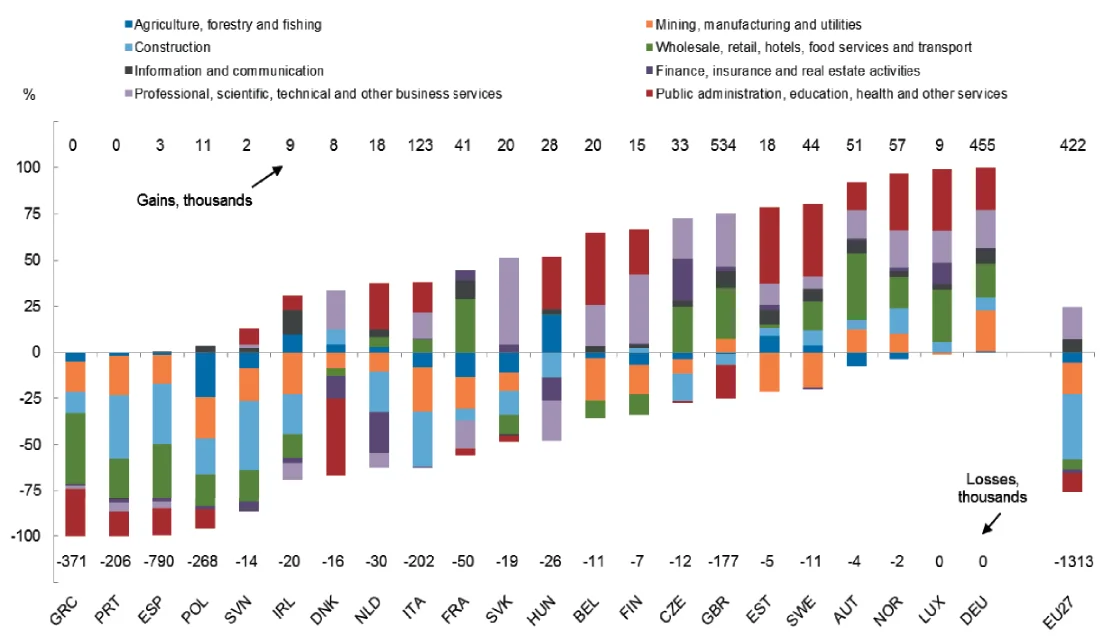
Figure 2. Where people lost or gained their jobs in Europe, 2011-2012
Source: OECD (2013), OECD Science, Technology and Industry Scoreboard 2013: Innovation for Growth, OECD Publishing, Paris.
Relative contribution to changes in total employment by major occupation groups
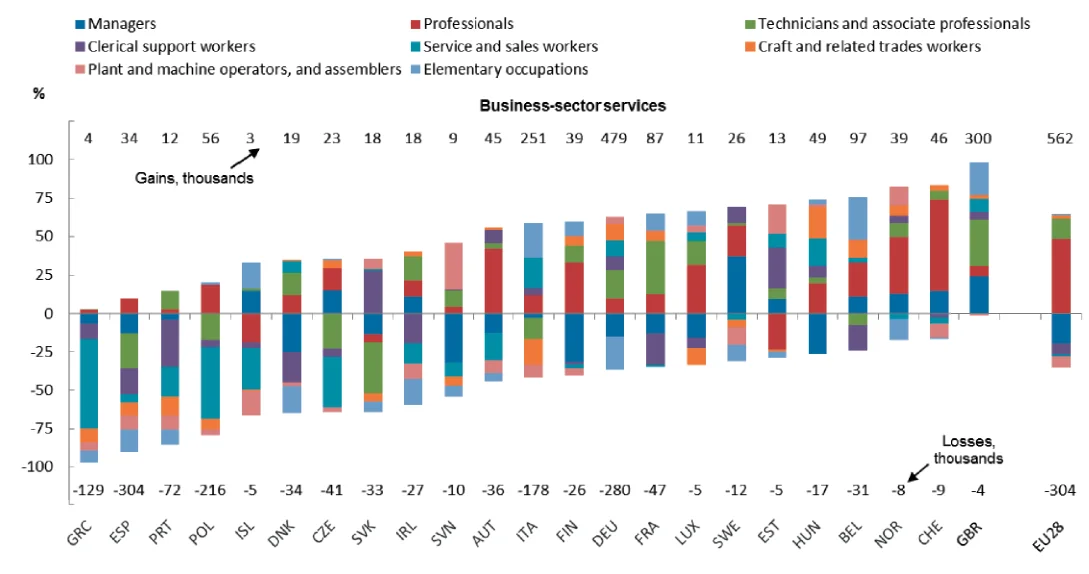
Figure 3. Changes in the skill mix in Europe, business services, 2011-2012
Source: OECD (2013), OECD Science, Technology and Industry Scoreboard 2013: Innovation for Growth, OECD Publishing, Paris.
Pages 8–10 · View in original PDF