Overview of Bronfenbrenner’s bioecological model
A core tenet of Bronfenbrenner’s model is that an individual child develops within an
ecological context, and in turn, interacts with and affects that context. Life does not
merely happen to a young child because interactions and pathways are influenced by
the child’s individual characteristics such as gender, ethnicity, health status and
temperament. In contrast to the first wave of Cohort 24 at age 9 months, by age 3
years the individual child will be much better placed to express their preferences to
their adult caregivers (something that was commented upon several times in the
course of the parent focus groups, see section 1.8).
The notion of ‘context’ includes other people and the child’s relationships with them
and, generally, the people that the child spends most time with are the most
influential for their development. This immediate context is described as the child’s
‘microsystem’ in the model (see Figure 1) and, at age 3, this would typically be the
child’s home and their childcare/early learning setting. From the perspective of
designing the survey, therefore, it is important to collect information on both the
8https://www.gov.ie/en/publication/078a1-programme-for-government-2025-securing-irelands-future/
physical aspects of the home and childcare settings, as well as the people (such as
parents) with whom the child regularly interacts.
The ’mesosystem’ layer in the bioecological model refers to the interactions between
other individuals in the child’s microsystem, and how that affects the context in which
the child is developing. Examples include the quality of the relationship between the
parents, and communication between parents and the childminder or early years
educator.
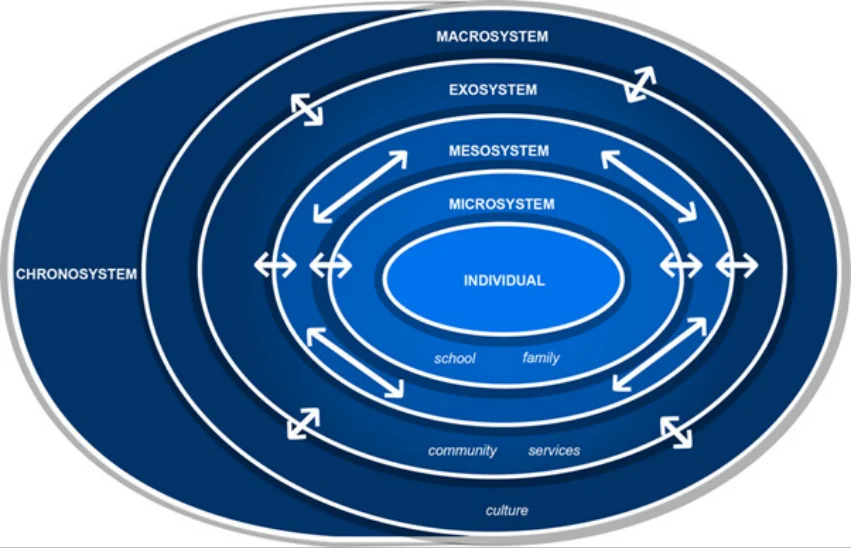
Figure 1.1: Bronfenbrenner’s bioecological model
The ‘exosystem’ layer in the model refers to the wider community context in which
the child grows up. For 3-year-olds, this would include the quality of the local area
(such as air quality and play spaces), the services available, and the parents’
workplace. As with other layers, interactions between elements/individuals are
important; for example, the amount of flexibility the parent’s employer allows in
terms of taking leave or working from home.
The ’macrosystem’ refers to characteristics of the wider environment within which
the child’s home and community are nested. It could include the influence of
religious beliefs on parenting, cultural expectations for different genders, the national
economic context, issues of public debate, and policymaking. Recent policies relating
to young children include free GP care for under 8’s, the right to paternity leave, and
the national childcare scheme. In terms of designing the survey instrumentation, the
impact of certain policies, for example, could be assessed by asking questions such as
whether the family have availed of childcare subsidies. It could also be indirectly
evaluated by repeating questions – such as number of GP visits – from the survey
with Cohort 08 at 3 to whom certain policies such as free GP care did not apply. For
this latter approach, consistency in the wording of questions across cohorts is very
important.
The final element in Bronfenbrenner’s bioecological model is the ‘chronosystem’, in
effect the different ways in which time can affect an individual’s development. One
aspect is the age of the individual, and how this might affect both their individual
capacities – still very much in the growth stage at age 3 – and the expectations that
other people will have of them. From the perspective of survey design, this lends
emphasis to the importance of selecting questionnaire items and assessments that
are appropriate for 3-year-olds and their families; sometimes this might have to be at
the expense of longitudinal consistency. Temperament is a good illustration of where
an age-appropriate measure would be particularly important, as what is ‘normal’ for a
3-year-old would be quite different to a baby or a 9-year-old.
Another aspect of the chronosystem is historical timing – for example, Cohort 24 will
have been born shortly after the Covid pandemic, so avoiding the worst of the
emergency in terms of lockdowns and restrictions but in an environment where the
virus is still circulating (in contrast to the early childhoods of Cohorts 98 and 08).
Finally, the chronosystem can also refer to the ‘mistiming’ of events; that is the
experience of life events at an atypical time which may alter an individual’s life
trajectory, such as the premature death of a parent.
1.5 Criteria for Questions / Scales
Pages 18–20 · View in original PDF