Goal 7:INV E ST IN AND SUP P O RT O UR ST AFF T O F URTH ER
Goal 7:INV E ST IN AND SUP P O RT O UR ST AFF T O F URTH ER E NH ANCE IND IVIDUAL AND CO L LECTIVE CAP ACITY , E NSUR E H IGH ST AND ARDS O F CO R PO RAT E GO V ERNANCE AND O P T IMISE AL L O UR R E SO UR CE S T O D E LIVER O UR ST R ATE GY, MISSIO N AND GO ALS
The Corporate functions covered under this goal include cross departmental areas of Governance, Human Resources, IT, Finance, Communications, Facilities Management (including Health & Safety) and Internal Audit.
INTERNA L RES P O NS E TO C O VID - 19 The Corporate functions played a leading role in supporting the Department and its Offices to continue to function and deliver enhanced services throughout the pandemic. Some highlights include:
All staff were equipped to work from home within days of Government direction and ICT systems were enhanced and upgraded, including video conferencing, to ensure all services continued to be delivered; Our buildings were made safe in line with public health guidance with signage, PPE and protocols to ensure social distancing and safety of staff who had to do essential work onsite; Systems were put in place to redeploy staff quickly to areas of urgent need to respond to the needs of enterprise – staff showed great flexibility to move into and create new roles; Our Department’s Vote doubled during 2020 reflecting the exponential ramp up in existing and new schemes to meet the needs of business; Our internal and external communications approaches moved online with a big increase in our social media presence and internal communications systems – innovative ways were found to engage staff at all levels and ensure high levels of connectivity; A new Enterprise Information Centre was established as a dedicated resource for information on the wide range of assistance available to business initially dealing with COVID-19 but then expanded to include Brexit information - the Centre responded to over 11,200 calls and emails in 2020. Following a survey of staff an internal COVID-19 Working Group involving 40+ staff from all grades and areas of the Department was set up to help inform steps that were taken to support staff working from home and the future blending working being planned; Promotion competitions and learning and development for staff moved online – this involved a redrawing of processes and procedures and new approaches including to onboard new staff and support staff mobility; We launched our first Wellbeing Framework on 1 May 2020 which included a series of new initiatives to support the physical, mental and social wellbeing of all staff.
US ING TEC H NO LO GY TO S EEK EFFIC IENC IES A ND IMP RO VE C US TO MER S ERVIC E The Department’s internal ICT service was significantly impacted by COVID-19. In response to the first lockdown, the Department had to shift at short notice from a predominantly officebased operating model to full remote working for all but a minority of staff who were needed on site. This involved the successful deployment of over 800 staff, using a mix of laptops and desktops, to remote working. In addition, video conferencing services were ramped up substantially to facilitate ongoing collaboration between staff, particularly in light of significant increases in many workloads in response to the crisis.
A number of improvements were made to the Department’s networks during the year to keep up with increased network traffic arising from remote working. Because of the shift to remote working, and the need to continue service delivery to the Department’s customers using remote delivery models, process improvements were rapidly rolled out in a number of business areas. These included employment permits processing and issue, processing of export licenses, and processes in the Labour Court.
Despite the need to respond rapidly to the crisis, a number of other initiatives were delivered during the year:
a new ICT strategy was finalised and agreed for the Department, which sets out our ambitions for ICT service delivery and change out to 2025;
the Companies Registration Office was assisted in the roll out of a very significant renewal of its customer facing and back office systems;
in the Intellectual Property Office of Ireland, a consolidation of its public f acing systems was delivered, which will enhance options for support;
assistance was provided to the Workplace Relations Commission to deliver a new module to help mediation services;
the Department continued its programme of moving services to the Build to Share shared services platform, including systems for risk management and internal helpdesk support;
given the additional risks posed by the move to remote working, a continued focus was placed on cyber security education and awareness, including the roll out of a phishing awareness campaign; and finally
a strong focus continued to be placed on delivering robust, secure and fit for purpose services, for both internal and external customers.
A DA P TING O UR A C C O MO DA TION A RRA NGEMENTS IN RES P O NS E TO C O VID- 19 In response to COVID-19, the Department and its Offices had to quickly implement a number of accommodation related measures to COVID-19 proof our locations for the health and safety of our staff and any visitors who were onsite undertaking any essential business. The Department and its Offices are based across 11 different buildings around the co untry. Typically, we share locations with other public bodies and/or with private sector companies
and so each location required a tailored response to reduce the risk of COVID-19 to each specific building. Measures in response included physical adjustments to office and communal areas to facilitate social distancing requirements, COVID-19 related signage, provision of certain PPE and new protocols regarding onsite presence in line with public health requirements.
FO C US O N S TA FF WELLBEING DURING C O VID - 19 From the outset the Management Board was very conscious of the need to support the staff of the Department to deal with the professional and personal challenges associated with the pandemic. We did this by allocating functional responsibility for Wellbeing to a Unit in the Department and we developed and launched our first Wellbeing Framework on 1 May 2020 to coincide with National Workplace Wellbeing Day. The Framework spans the four pillars of Physical Fitness, Mental Fitness, Nutrition and Social Wellbeing and was developed in consultation with staff who volunteered to be part of our Wellbeing Working Group. Initiatives delivered include: Wellbeing resources on our Intranet and a monthly Wellbeing Newsletter, Lunchtime webinars with the Civil Service Employee Assistance Service and experts on various health topics, a book club, yoga/pilates classes online.
To fully support staff and make sure they had up to date information on all corporate developments related to COVID-19 we set up a dedicated section on the Department’s intranet (Bob). In addition, the Secretary General issued an all staff email every day from mid-March until the end of June. From July, it moved to a weekly update and has continued since then as it has proven very popular with staff, connecting them and keeping them up to date with what the Department is doing to support enterprise through policy and programmes and what is happening at a corporate level.
H UMA N RES O URC ES A ND RES P O NS E TO C O VID - 19 Despite the significant increase in the Departments functions, many new schemes and a doubling of the Budget, the Department achieved all of this with a modest increase in staffing. Numbers serving in the Department were 927 (879.87 FTE) at the end of 2019 and 940 (895.51 FTE) at end 2020. With the change of Government in 2020, the Department saw changes in its structure and mandate with the transfer of some of its research functions to the newly established Department of Further and Higher Education, Research, Innovation and Science and the transfer in of employment affairs related activities from the Department of Employment Affairs and trade functions from the Department of Foreign Affairs.
Human Resources (HR) functions were significantly impacted by the COVID-19 pandemic in 2020: the wholesale shift to remote working and the resource needs that emerged in response to the crisis became the primary focus for HR across the year and required reprioritisation of certain work streams.
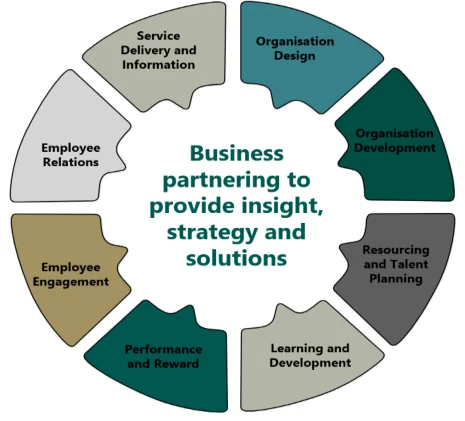
Figure from page 89
The evolution of remote working as the primary means of working throughout 2020 also created opportunities for the Department to use technology to further streamline and ‘move online’ where possible.
A staff survey conducted in June provided up-to-date data on staff needs and allowed for responsive actions to be taken.
Extra efforts were made by HR to engage with particular staff cohorts to ensure their needs were being met in light of the challenges of remote working and the pandemic. This included regular additional meetings with Unions through the Departmental Council, and one-to-one engagement with new entrants to the Department.
C O VID- 19 WO RKING GRO UP The staff survey conducted in June led to the development of an action plan and establishment of a COVID-19 Working Group to oversee progress, led by HR and the Facilities Management (including Health & Safety) Units, with over 40 colleagues from across the Department participating from all Divisions and each of the Offices. 14 high-level actions were identified which were underpinned by close to 50 initiatives/activities. These span across five thematic areas of Equipment & Ergonomics, Managing Staff Remotely, Health & Wellbeing, Communications for Teams and Remote Working now and in normal times.
REC RUITMENT, A S S IGNMENTS A N D WO RKFO RC E P LA NNING In light of COVID-19 restrictions, HR developed new methodologies for continued delivery of resource pipelines. Internal promotional campaigns and other competitions moved online. There were 16 internal competitions during 2020, comprising 218 applications; 15 of these competitions were managed virtually.
HR continued to liaise with the Public Appointments Service (PAS) to recruit general grades from open and interdepartmental recruitment campaigns. The PAS also managed a further 10 campaigns on behalf of the Department to recruit for positions in the Workplace Relations Commission and the Office of the Director of Corporate Enforcement, and to acquire specialist legal skills for the Department.
As part of the Department’s succession planning and to provide the ability to recruit specific skillsets in a timely manner, the Department applied for and secured a recruitment license from the Commission for PAS.
Using workforce planning and engagement with senior management, we ensured that a ‘fit for purpose’ workforce continued to be built, optimising skillsets and making the best possible person-to-post matches to deliver on the Department’s goals. An additional 40 staff were approved to strengthen policy units across the Department and 10 additional staff were approved for the Workplace Relations Commission. The additional posts were approved to deliver new commitments set out in the Programme for Government and to assist the Department’s response to COVID-19. Posts filled helped initiatives such as the design, development and rollout of vital schemes to assist businesses in Ireland impacted by the health crisis and a new Enterprise Information Centre.
Natural attrition, additional resources and promotional opportunities accounted for a significant ‘churn’ of staff during the year:
95 new entrants;
92 exits, including 32 retirements;
78 internal transfers; and
36 promotions.
In line with Civil Service Renewal, the Department has engaged strongly with the Civil Service Wide Mobility Schemes for all participating grade levels since its inception. The Department also continued to ensure adequate support for staffing in its nine Agencies and the State Boards under its aegis. There were 186 requests processed to deal with the filling of vacancies and establishment of new posts for Agencies, the large caseload partly attributable to the increased need for resources as a result of Brexit. LEA RNING A ND DEVELO P MENT In line with the strategic reprioritisation arising from the pandemic, in mid-March the majority of staff in the Learning and Development Unit were redeployed to assist in the Department’s response to COVID-19 and remained engaged in these activities for much of the year.
However, a portfolio of online training opportunities and learning resources was made available to staff throughout the Department. In the course of the year, over 300 staff attended a range of sessions related to the Department’s remit including competitiveness policy, national standardisation processes, the new European Commission and the legislative process.
Through the Advance Payment of Fees Scheme, the Department funded the enrolment of 21 staff in academic courses in 2020 and maintained its assistance for 28 staff continuing their studies for qualifications from Diploma though to Doctorate level in disciplines aligned to the Department’s strategic priorities such as Economic Science in Policy Analysis, Employment Law and Business Administration.
Mentoring and executive coaching offerings were adapted to facilitate online delivery and continued to act as significant tools to help staff growth and development. Some 70 staff participated as either mentees or mentors in the mentor programme. Targeted at senior management, 16 staff at Assistant Principal and Principal level accessed a course of tailored one-on-one sessions with professionally certified external executive coaches.
Leadership development was further aided through staff engagement in the Principal Officer Executive Leadership programme and the Taking the Lead – Women in Leadership Programme. The Senior Management Forum, delivered in January 2020, provided a strategic focus on the challenges and opportunities of climate action.
Over the course of the year, OneLearning, the Civil Service Learning and Development Service, increased its online offering, providing almost 30 different course types through virtual classrooms. In 2020, Department staff completed almost 350 OneLearning courses, 311 of which were virtual, in areas including people management, communication and presentation skills and customer services. We also designed an action research programme ‘Connected Teams’, anticipating that blended working in home, hub or workplace is here to stay, the objective of the initiative is planned to identify and promote best practice remote and blended working behaviours which will be rolled out in the first of half of 2021.
FINA NC E Funding the Department’s BREXIT and COVID-19 Response The Revised Estimates Volume published by the Department of Public Expenditure and Reform in December 2019 originally provided the Department with a gross allocation of €970.9m for use in 2020. The actual Estimate approved by the Dáil in June 2020 increased the Department’s allocation to €1.453bn. This was subsequently increased to €1.907bn in the Further Revised Estimate approved by the Dáil in November 2020. This almost doubling of funding of the Department Vote was key to enabling the Department, our Offices and Agencies to roll out essential and timely initiatives to assist businesses and consumers as they sought to navigate through the very significant challenges of COVID-19 and Brexit. This required detailed analysis and delivery of appropriate schemes to assist business at every stage of the pandemic
Among the headline schemes launched by the Department in 2020 were the Restart Grant, the Sustaining Enterprise Fund, the COVID-19 Products Scheme, the Ready for Customs Scheme, and the Business Continuity Scheme. The increased funding also allowed the Department to broaden its suite of access to finance measures by extending the facilities available under the Future Growth Loan Scheme, the Working Capital Scheme, the Microfinance Ireland Loan Scheme as well as introducing the discrete COVID-19 Credit Guarantee Scheme.
In addition to the new initiatives rolled out in 2020, the Department was also able to increase the funding to bodies such as the Local Enterprise Offices, Intertrade Ireland as well as
increasing the funding for existing Schemes such as the Online Retail Scheme and the Trading Online Vouchers.
The COVID-19 pandemic also required the Department to adapt its procedures to the remote working environment to ensure that it continued to successfully meet its obligations to its suppliers and employees.
C O MMUNIC A TIO NS When COVID-19 restrictions were imposed in early 2020, it was no longer possible to promote Departmental policies through stakeholder events and press launches. A greater emphasis was therefore placed on using digital channels to communicate the work of our Ministers, policy and programme development and implementation.
Among the campaigns run on our digital platforms were those to assist business through the impacts of COVID-19 and Brexit, including: the COVID-19 Supports for Businesses campaign; the National Return to Work Safely Protocol; the Credit Guarantee Scheme; the Online Retail Scheme; Shop Safely campaign; and Brexit supports for Business.
This change in emphasis was met with a corresponding greater engagement on our digital channels, most notably on LinkedIn, which increased almost fourfold from a base of just under 10,000 followers, and increasing to almost 50,000 followers by mid 2021. Posts on our LinkedIn account had over 1.6m impressions during the year.
The Department’s Twitter (@DeptEnterprise) following also grew, albeit more modestly than our LinkedIn engagement. The number of followers increased by more than a fifth to over 28,000 and our tweets received over 11.9m impressions. Engagement was primarily around COVID-19 supports for business, followed by Brexit supports, Shop Safely and the Disruptive Technologies Innovation Fund.
The Department’s website recorded over 2.4m sessions, from over 1.3m users in 2020. This was an increase of 36% and 83%, respectively, on 2019 figures. The most popular content being Employment Permits, COVID-19 business initiatives and the Work Safely Protocol. More traditional press engagement continued meanwhile, through the issuing of press releases and dealing with journalists’ queries from across all media platforms.
Internally, remote working fundamentally changed how staff within the Department interacted. The vast majority of staff moved from seeing colleagues and friends in person, to video or phone calls. In the absence of that human interaction, the Department’s intranet (Bob), grew in importance as a trusted source of corporate and social information. We found that those traditional occasions where we come together like Christmas, the celebration of retirements and our annual past members service were replaced with additional articles and high-quality video content on Bob. It was extremely positive that staff interacted strongly with these new photographic and video based social occasions, sharing personal stories of challenges faced and resilience they found when dealing with adversity and making the most of the year it was.
C H A NGE O F NA ME, TRA NS FER O F FUNC TIO NS A ND DELEGA TIO NS TO MINIS TERS O F S TA TE Following the change of Government, the Department’s name was changed and with it were some changes to functions. Work was undertaken across the Department to eff ect the new name with changes including to branding, emails address, website domain name, social media and internal communications. Delegation Orders were arranged to provide for delegation of business, employment and retail functions to Minister English and trade promotion, digital and company regulation functions to Minister Troy. Significant work was undertaken to implement decisions around the transfer of functions in and out of the Department. This work was undertaken in line with procedures set out in the Transfer of Functions Guidelines and Best Practise Handbook and included defining the scope of responsibilities to transfer, identifying staff and financial resources to transfer and making arrangements for the effective dates and consequent changes to our Vote. There were five separate streams of work involved, four relating to new functions coming into the Department and one relating to transferring out existing work. Science functions, including responsibility for Science Foundation Ireland and the Tyndall Institute, were transferred out to new Department of Further and Higher Education, Research, Innovation and Science with effect from 1 January 2021. Areas of work that transferred into the Department during 2020 included:
Trade promotion from the Department of Foreign Affairs; Employment rights, redundancy and insolvency policy from the Department of Social Protection; The Low Pay Commission from the Department of Social Protection; Balance for Better Business Group from the Department of Justice; Trading Online Vouchers from the Department of Communications, Climate Action and the Environment. INTERNA L RES P O NS E TO TH E C LIMA TE A C TIO N C H A LLENGE Resource Efficiency Action Plan 2019/20 The Department’s first Resource Efficiency Action Plan (REAP) was published in mid-2019 and is available on our website. It sets out numerous actions that we are undertaking internally across our buildings with a focus on 4 thematic areas of Energy, Waste Management, Water usage and Ecology/Plant life, with the second action plan due for publication in early 2021.
The REAP is driven by a very active internal ‘Green Team’ comprising over 40 members across the Department and its Offices who work collaboratively to raise awareness on ‘Green’ issues, implement initiatives and manage improvements in processes and buildings across the 4 thematic areas.
Since publication of the first REAP the Department’s ‘Green Team’ has identified 78 specific actions, completing 40 of them, with 23 other actions ongoing and 15 additional actions planned for commencement in 2021. The major project successfully delivered in 2020 was a LED Lighting upgrade completed on the Department’s headquarters at 23 Kildare Street, Dublin, as part of the OPW Optimising Power@Work programme.
Energy Performance The Sustainable Energy Authority of Ireland’s Annual Report 2020 on Public Sector Energy Efficiency performance shows that the Department has delivered 52.9% in energy savings since the baseline year (2009) well in excess of the initial 33% target set for public bodies and well positioned to deliver beyond the 2030 target of 50%.
Obligations to Monitor and Report on Green Public Procurement The Department of Public Expenditure and Reform Circular 20/2019 requires that starting with the 2020 Annual Reports each Department must report annually on its green public procurement (GPP).
Monitoring and evaluation of GPP is under consideration at EU level and most recently referenced in the EU Green Deal. The template in Appendix 3 includes the eight priority sectors listed in the Environmental Protection Agency’s 2014 Green Procurement Guidance for the Public Sector and shows the total value of contracts issued by this Department in 2020, valued at over €25,000 by priority sector, which have incorporated GPP.
C IVIL S ERVIC E RENEWA L The Department has strongly supported the actions set out in the Civil Service Renewal Plan and has played a leading role on several projects, including the assignment of staff to support this agenda in the Department of Public Expenditure and Reform. . The third Civil Service Employee Engagement Survey launched in 2020, representing an opportunity for staff to have their say on how their own organisations have responded to the challenging findings of previous surveys.
The annual Civil Service Excellence and Innovation Awards were ‘paused’ in 2020. Instead, a Virtual Recognition Event was held on 26 November to formally recognise and showcase the initiatives developed in response to the COVID-19 crisis in a challenging and fast changing environment; the Department’s considered a number of worthy projects and selected the project for the Contingency Plan to Ensure the Continuation of Ireland’s Employment Permit System. The Offices of the Department submitted the WRC Remote Working Information and Customer Service lo-call phone service, and the Labour Court Virtual Courtroom. Other innovative projects included the Enterprise Information Centre and Remote Video Interviews.
Innovate@ETE At the end of 2020, in line with the change in the Department’s official name, the former ‘dbeinnovation’ steering group was re-branded ‘Innovate@ETE’. In 2020, seven sub-groups of staff members carried out work programmes under the governance of the Innovate@ETE steering group. Key achievements in 2020 included:
-
Department’s Decade of Centenaries Committee: “The 23 Kildare Street Talks - The Countess, Casualties and The Civil Service”
-
Innovation Culture: Webinar on opportunities and barriers to innovation
-
Knowledge Management: Roadmap for action
-
Manager Behaviour: Development of a paper on ‘Coaching’ culture in the Department
-
Mobility: Working with COVID-19 group on ‘Principles of Remote Working’ document
-
Wellbeing: Schedule of events and fortnightly newsletter to support staff wellbeing
-
Green Team: Awareness and information campaign; energy, heating and water upgrades
P UBLIC S EC TO R REFO RM Action 6 of ‘Our Public Service 2020’ aims to ‘Promote a Culture of Innovation in the Public Service’. The Department has been playing a central role in progressing this Action with Secretary General, Dr Orlaigh Quinn, and Enterprise Ireland CEO, Julie Sinnamon, acting as designated leads. Assistant Secretary Pauline Mulligan is the Action’s Sponsor and is responsible for chairing the Action 6 team, established in May 2018 and comprising sectoral experts across the Public Service.
By end 2020 the group and its associated Project Management Of fice (PMO) in the Department of Public Expenditure and Reform have delivered the following initiatives:
Study on the maturity of our innovation system giving us a baseline for benchmarking progress;
Drafting and adoption of the Public Service Declaration;
Secondment of sectoral experts to the PMO;
Establishment of the Public Service Innovation Fund;
Establishment of the Public Service Innovation Network;
Widening of Civil Service Excellence & Innovation Awards to the broader Public Service for certain categories; and
Development and roll out of a range of innovation L&D offerings to build capacity and capability of staff to embed innovation in their day-to-day work.
The group aims to continue to support the ongoing Public Service reform agenda in 2021.
C O RP O RA TE GO VERNA NC E The Department places great emphasis on strong and effective corporate governance. The Management Board is supported by the team in Governance, Information and Management Support Unit in ensuring best practice and adherence to all our obligations. Governance Framework The Department’s Governance Framework sets out what we mean by governance, why it is important, how the Department does its work and how it operates to deliver on its mandate and functions. It ensures that the way the Department takes decisions and implements policies is more transparent to the public and, of equal importance, to the staff within the Department.
Compliance Framework A Compliance Framework is in place and provides an overview of all compliance assurance activity in the Department and identifies where responsibility for each compliance obligation lies.
Risk Management A series of risk awareness training sessions were provided during 2019 and 2020 for staff at Principal and Assistant Principal grades with two thirds of staff in those grades attending the sessions which were developed and delivered internally.
In March 2020, the final report of the Audit of Risk Management in the Department was received and the Audit Committee noted that the report provided assurance that good risk management practices were being adhered to and that the risk management structures in place in the Department were robust. The report found that there was a positive culture regarding risk management at senior management level in the Department.
In November 2020, the Management Board agreed a revised Risk Management Policy for the Department which included recommendations from the internal audit of risk, suggestions made by staff at the awareness and training sessions and a new risk scoring system to align with the eRisk application that is being developed by the OGCIO and is being introduced across the Department in early 2021.
INTERNA L A UDIT The Internal Audit function provided assurance to the Secretary General and advice regarding the Department’s financial and other internal processes and procedures during 2020, based on internationally accepted standards adopted for the Civil Service by the Department of Public Expenditure and Reform. Internal Audit’s role is to review the effectiveness of the internal controls in place across the Department and to evaluate how well risks are being managed by assessing the quality of risk management processes, systems of internal control and corporate governance processes, across the organisation.
Internal Audit Unit reviewed its annual work plan in 2020, in the context of the impact of COVID-19 on the Department’s business operations and priorities and adopted a balanced approach towards progressing audit activity. Areas reviewed in 2020 included a review of the risk management framework, a review of compliance with GDPR and data protection requirements and oversight of a sample of agencies under the aegis of the Department. The table below includes a listing of audit reports completed during the year.
| Audit Reports presented to the Audit Committee in 2020 | ||
|---|---|---|
| Risk Management | ||
| GDPR Compliance | ||
| IDA Ireland – Liaison & Governance | ||
| Science & Technology Development Programme – Liaison & Governance | Science & Technology Development Programme – Liaison & Governance | |
| Irish Auditing and Accounting Supervisory Authority – Liaison and Governance |
| Review of Systems of Internal Control 2019 | ||
|---|---|---|
| Subscriptions to International Organisations | ||
| Fixed Assets Management |
GENERA L DA TA P RO TEC TIO N REGULA TIO N Throughout 2020, the Department’s full time Data Protection Officer (DPO) continued to work with Business Units across the Department and its Offices in reviewing their personal data practices and assisting in the formulation of new policies and protocols. Work was also undertaken with a number of Business Units involved in delivering assistance to business in the context of the COVID-19 pandemic. In addition to the standard training and information sessions delivered by our DPO for staff, a number of tailored training sessions were also designed and delivered to assist staff in dealing with additional data protection compliance requirements posed by the COVID-19 pandemic. A dedicated data protection mailbox was also administered by the DPO to deal with data protection queries from members of the public.
In 2020, the Department and its Offices received 40 Subject Access Requests and these were processed in accordance with the provisions of the General Data Protection Regulation and Data Protection Acts 1988 to 2018.
REGULA TIO N O F LO BBY ING A C T, 2015 The Lobbying Act is designed to provide information to the public about who is lobbying whom about what. A list of our Designated Public Officials under this Act was updated in 2020 and is published on our website.
P RO TEC TED DIS C LO S URES A C T, 2014 The Department published its Annual Report on Protected Disclosures for 2019 on the Department’s website in June 2020.
P RO MP T P A Y MENT O F A C C O UNTS A C T, 1997 During 2020 the Department published on its website quarterly payment performance reports for both the Department and for the bodies under its aegis.
GENDER BA LA NC E O N S TA TE BO A RDS The Department continues to commit to encouraging gender balance on all State Board appointments. Senior Management of the Department always reference gender balance in board member selection. The current gender composition of a board is always considered by Ministers on appointments/re-appointments.
IRIS H LA NGUA GE S C H EME 2019- 2022 The Department’s Third Irish Language Scheme, which was approved by the Department of Culture, Heritage and the Gaeltacht, came into effect in 2019 and sets out the extent to which services are currently available through Irish and identifies areas for future development. Throughout 2020, the Department ensured that commitments made in relation to the provision of services in the Irish language were implemented.
C US TO MER C H A RTER A ND C US TO MER S ERVIC E A C TIO N P LA N 2019- 2021 The Department’s Customer Charter 2019-2021 is a public statement which sets out the standards and level of service customers can expect when dealing with our Department. The Customer Service Action Plan 2019-2021 details the ways in which the Department implements the key actions outlined in the Charter.
Throughout 2020, the Department ensured that the commitments made in relation to the provision of customer services under the Department’s Customer Charter 2019-2021 and Customer Action Plan 2019-2021, were implemented.
The Department’s internal Cross Divisional Monitoring Committee, which monitors the implementation of the commitments made in the Department’s Customer Action Plan and Irish Language Scheme met regularly throughout 2020. This forum served to ensure that any challenges arising regarding meeting commitments that were due for delivery in 2020 were addressed.
FREEDO M O F INFO RMA TIO N The Department’s Freedom of Information (FOI) Publication Scheme was first published in 2016 and updated in 2018 in accordance with Section 8 of the Freedom of Information Act 2014. The Scheme sets out information, under 6 headings, to assist members of the public in their understanding of the Department and its functions. In 2020 the Department received 218 Freedom of Information requests and these were processed in accordance with the provisions of the Freedom of Information Act 2014. P ERIO DIC C RITIC A L REVIEWS The Code of Practice for the Governance of State Bodies 2016 includes a requirement that Periodic Critical Reviews (PCRs) of Government Agencies should be carried out every five years. The Department of Public Expenditure and Reform published the Guide to Periodic Critical Review of Non-Commercial State Bodies in September 2020. Due to the exceptional nature of 2020 and the Department’s leading role in the whole-of-Government response to the COVID-19 crisis and in Brexit preparations, such PCRs for Agencies of this Department have been deferred to take place in 2022.
IRIS H H UMA N RIGH TS & EQ UA LITY C O MMIS S IO N A C T, 2014 In line with our obligations under this Act, the Department is committed to proofing its wider policies, procedures and services across its business areas to ensure the Department complies with its requirements in the area of human rights and equality.
In 2020, a team with representatives from each Division was formed to progress the implementation of the Public Services Human Rights and Equality Duty.
Examples of the Department’s work in the area of Human Rights and Equality include:
Workplace Relations Commission The WRC is the independent body set up by law to investigate or mediate complaints of discrimination. The WRC is covered by the European Convention on Human Rights. Discrimination happens when a person is treated less favourably than another person is, has been or would be treated. Victimisation is also covered by the legislation.
Corporate Social Responsibility Corporate Social Responsibility (CSR) is when businesses and other organisations integrate their social and environmental responsibilities into their mainstream business operations and business decisions are made with reference to wider sustainability issues. The Department provides the secretariat for the enterprise led CSR Stakeholder Forum which oversees the implementation of the actions in the National Corporate Social Responsibility Plan.
National Women and Girls Strategy The Department is represented on the Strategic Committee of the National Women and Girls Strategy 2017-2020. We contribute to the common actions such as the development of inhouse expertise in gender mainstreaming activities and considering gender impact in the development of new strategies.
National Disability Inclusion Strategy The National Disability Inclusion Strategy 2017-2021 takes a whole of Government approach to improving the lives of people with disabilities both in a practical sense and also in creating the best possible opportunities for people with disabilities to fulfil their potential. The Department is represented on and is progressing actions under both the National Disability Inclusion Strategy 2017-2021 and Comprehensive Employment Strategy for People with Disabilities 2015-2024.
In 2020, the Department’s Disability Consultative Committee (DCC) met once virtually and members were circulated with 18 emails throughout the year to provide updates on COVID - 19.Members were also circulated with information on relevant workshops and seminars held during 2020. Membership of the DCC is comprised of representatives from the Disability Stakeholder Group, the National Disability Authority and staff from across the Department and its Offices and Agencies.
Other Relevant Legislation In addition to the above, the Department operates within employment law and other relevant legislation that seek to ensure, amongst other things, human rights and equality, such as:
Civil Service Regulation Act, Public Service Management Act, Paternity Leave and Benefit Act, Equality Act, Industrial Relations Act, Workplace Relations Act, Data Protection Act, Employees (Provision of Information and Consultation) Act, Safety, Health and Welfare at Work Act, Maternity Protection Act, Carer’s Leave Act, Organisation of Working Time Act, Unfair Dismissals Act.
C H ILDREN FIRS T A C T, 2015 The Department has a Child Safeguarding Statement in place which has been developed in line with requirements under the Children First Act 2015, the Children’s First National Guidance and Tusla’s Child Safeguarding: A guide for policy, procedure and practice. The Department is committed to the implementation of this Child Safeguarding Statement and
the procedures that assist our intention to keep children safe from harm while working with staff of the Department.
Pages 86–100 · View in original PDF