Theme 4: Implementation of firm-level Industry 4.0 Strategies
3.3 Developments in International Education
Outlook for 2021
The soon-to-be published independent review of the Government’s International Education Strategy shows that 14% of full-time enrolments (over 44,000) students were international students during the 2019/2020 academic year. The original goal under Global Ireland 2025 was for international students to represent 15% of the total full-time student population by 2025. Progress on this commitment will be significantly affected over the coming years by the worldwide drop in the number of students choosing to study internationally as a result of the Covid-19 pandemic. Indeed, in 2020, the Covid-19 pandemic resulted in major challenges for the international education sector in common with other sectors of the Irish economy. Particular challenges arose in relation to the attraction of overseas students and faculty and to the modes of delivery.
The Government will, in consultation with all stakeholders, develop a new International Education Strategy in 2021, taking into account the findings of the review of the previous strategy and the challenges that the Covid-19 pandemic presents to our International Education engagements.
The new Erasmus+ programme 2021-2027 will see a significant increase in funding available to Ireland for higher education mobilities, allowing us to increase the numbers of HE students availing of a mobility opportunity in line with the target set out in Global Ireland.
In 2021, as a result of the Covid-19 pandemic, there will be an overall worldwide reduction in the numbers of students choosing to study abroad, therefore international student recruitment will become more competitive than before. In order to increase our competitiveness and protect our substantial market share in this area, we will engage in an intensive marketing and promotion campaign, in core and high potential markets. This campaign will involve the identification of new opportunities for Ireland in markets that we are not presently active and new delivery models of marketing and promotion in existing markets. Team Ireland abroad will continue working under the Education in Ireland Brand to create new, and engage further with, International student alumni networks.
There has been a similar impact on the economic output value of international education to the Irish economy, which it was hoped would reach €2.7 billion per annum by 2025. While the value for the 2019/2020 academic year stood at €2.38bn – a 46% increase over the course of the Government’s international education strategy (2016-2020) – prospects of further growth are not optimistic due to the drop in the number of students choosing to study internationally.
In 2020, we successfully advertised and awarded 60 fully funded competitive scholarships to non-EU/ EEA students for the 2020/2021 academic year. We will consider how best to increase the number of scholarships we award in line with the target in Global Ireland, over the next few months, while developing the next iteration of the Government’s International Education Strategy.
3.4 Sharing Irish Culture and Heritage
Promoting the Irish Language
The Irish language, one of Europe’s oldest languages still in use, is thought to have been spoken in Ireland for over 2,500 years. The language has a key role to play in making cultural and heritage connections, not least with the global Irish diaspora where the language strengthens links to home and maintains expressions of Irish identity through generations. The Department of Tourism, Culture, Arts, Gaeltacht, Sport and Media (DTCAGSM) is currently engaged in a wide variety of Irish language work which focuses on the Global Community.
DTCAGSM provides funding of over €1m per annum for teaching Irish in over forty universities worldwide. The objective of the funding is to promote and foster goodwill for the Irish language outside Ireland and to provide a platform on which the Irish language can be accessed and showcased as an international language. 2020 saw the addition of the University of Liverpool (Liverpool Campus) and the University of Jena in Germany to the scheme.
Trasna na dTonnta is an online dialogue or ‘cyberGaeltacht’, which takes place on Twitter. The aim of this event is to create a worldwide engagement around the Irish language by encouraging all those ‘across the waves’ who feel a connection with Ireland to post online messages ‘as gaeilge’. 2020 was the fourth year of the campaign, and tweets with the #trasnanadtonnta hashtag reached 8 million people worldwide, with over 50 million impressions. The 2020 edition saw the successful introduction of free online events in Irish (mindfulness, yoga, music sessions, conversation circles), and a new partnership with the GAA, as well as an expansion onto Instagram.
Fáilte ar line, a Massive Open Online Course, has been developed by Dublin City University with funding from DTCAGSM. Through this unique and innovative programme, participants are able to progress from beginner level to complete a degree in the Irish language – entirely online.
Outlook for 2021
Due to COVID-19, students were unable to travel to Ireland to participate in Gaeltacht courses, under the scholarship scheme run by DTCAGSM. It is hoped that additional Gaeltacht scholarships can be facilitated once travel is again possible.
The programme has had over 110,000 users in over 200 countries participating since its inception in 2018.
There are plans in place to continue to develop the Trasna na dTonnta programme over the coming year.
Promoting Irish Artists Overseas
Also commencing in April 2020, the Courage series of concerts presented many high-profile artists from music venues, National Cultural Institutions, and significant heritage sites, and achieved 3.5 million live views and over 12.3 million online.
The Government, through Culture Ireland, continues to support Irish artists to present their work in key global territories to critical acclaim. In 2020, Culture Ireland adapted its funding system to support online performances and introduced a more frequent grant process to facilitate this approach. Digital presentation has enabled Culture Ireland to reach an increased and more widespread global audience in a period where there is heightened need to reach out and maintain global cultural connections.
Support for programming Irish artists in Irish Cultural Centres in London, Paris and New York allowed Irish arts to reach the diaspora, as well as new audiences, and their digital programmes removed geographic barriers. For example, Irish artists presented by the Irish Arts Center, New York reached more than 178,000 people across 116 countries.
While not a replacement for physical presentation, the introduction of support for online digital presentations by artists globally has proven to have many advantages. There has been accelerated access to Irish artists, a broader reach without barriers on location and greater inclusivity with reduced ticket costs, flexible viewing time and no travel requirement.
Outlook for 2021
Culture Ireland is working to stay connected with international presenters and continues to introduce them to emerging Irish artists for future opportunities through its showcase programme.
A twofold increase was seen in the numbers attending the annual meeting of the Network of Irish Cultural Centres in the US, which was hosted by Culture Ireland and the NY Consulate online in January 2021.
In April and May 2020, through a new initiative, Ireland Performs, Culture Ireland presented 120 events, streaming artists from their homes, gardens and local spaces and reaching an audience of almost 1 million worldwide.
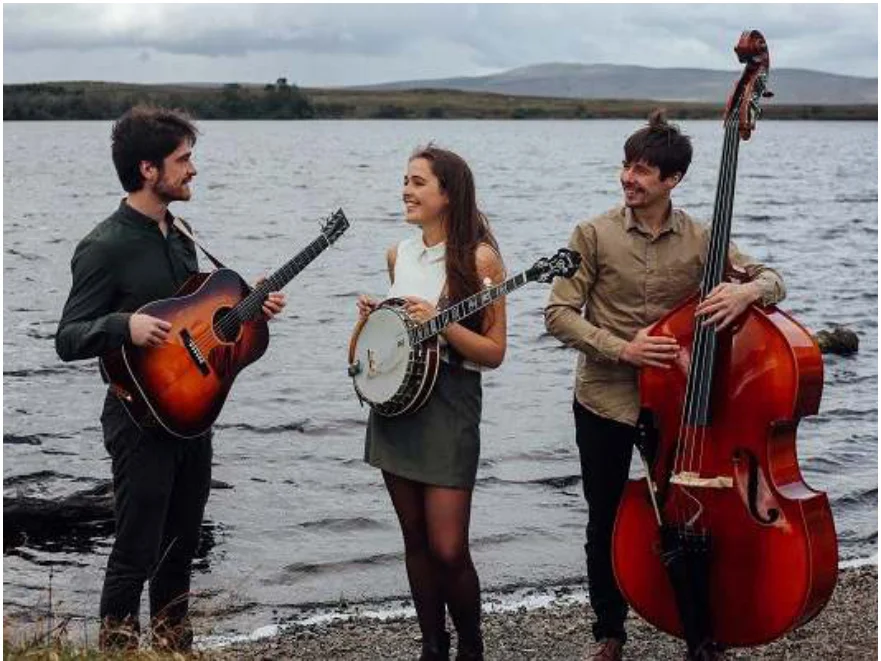
Figure from page 28
Image: Cup O’Joe #IrelandPerforms
Irish Film
The strength of the Irish animation sector was very much in evidence in 2020. The Kilkennybased animation studio, Cartoon Saloon, reached a global audience with its feature film ‘Wolfwalkers’ released in select US cinemas in November. Since its premiere at the Toronto International Film Festival, critics have already heralded the film as one of the most powerful animated works of the year.
Notwithstanding the enormity of the challenges presented by Covid-19, particularly to the cultural sector, steps taken in 2020 offer strong support to the industry for its recovery in late 2020 and its sustainability into the future. Additional funding was secured for Screen Ireland which will provide further investment and particular support for TV drama and animation.
Screen Ireland is examining scope to work more directly with emerging technologies and explore new platforms to help secure Irish animation’s long-term future as a global-facing industry with sustainable growth potential and has allocated specific funding for investment in new innovation, high concept development and business growth opportunities within the Animation sector, alongside a new Talent Development Academy for Animation. The aim is to reinforce and highlight Ireland’s growing position in Animation as a centre of excellence and to fund investment in a broad and diverse range of talent, genres, formats and business growth potentials, ensuring high-value national and international success.
A key facet in seeking to deliver on the Government’s ambition to enable Ireland to become a global hub for the production of film, TV drama and animation, is Ireland’s ability to attract additional international productions from overseas, though in the midst of a global pandemic, production mobility is severely hampered.
Nevertheless, the domestic screen sector has taken considerable steps to allow it to return to production in a safe manner, with a number of projects -– including large international projects such as The Last Duel – now effectively completed.
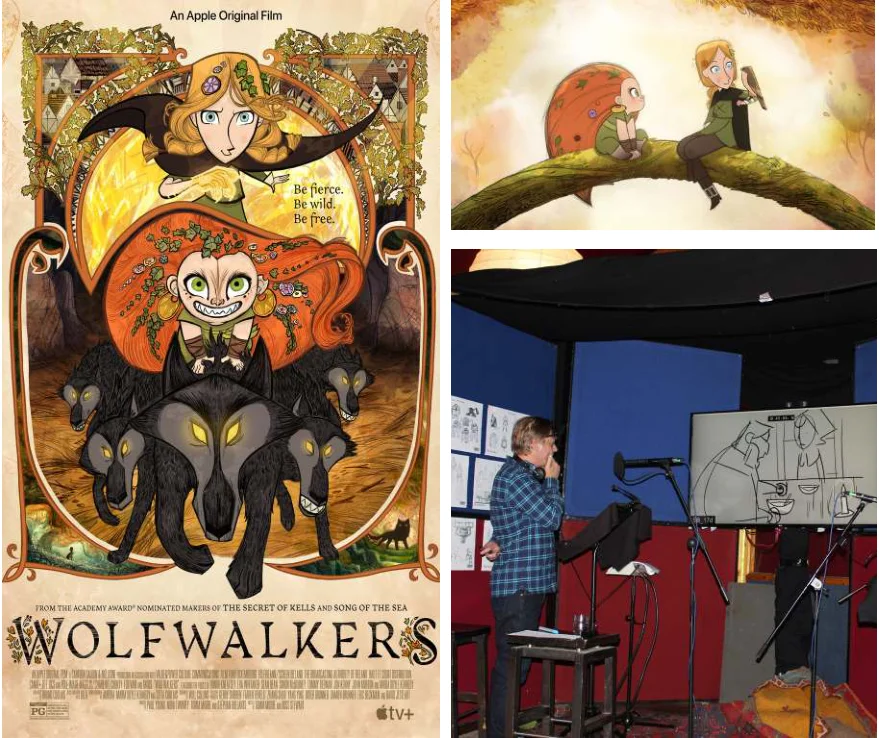
Figure from page 29
Sport
The National Sports Policy and the Government’s Tourism Policy recognise that sporting events should play a part in achieving our future tourism growth targets. Fáilte Ireland will continue to support sporting organisations in attracting those sports events which meet its events criteria and deliver a significant economic return.
The National Sports Policy 2018-2027, published in 2018, details the measures through which the Government will continue to support Irish sports people competing internationally, as well as develop the potential of sports tourism as a growth sector in the economy.
The current programme for government includes a commitment to develop a Major Events Policy and a Strategy to realise that policy. Major Events have the potential to drive participation in sport, contribute to our ongoing economic growth, to drive a sense of national pride and affect both how we see ourselves as a nation and how we are viewed internationally. These events can benefit trade, tourism, business, community pride and community engagement. In the past five years Ireland has won the bid to host Ryder Cup 2026, EURO 2020 and the Women’s Rugby World Cup, and has been invited to join a potential bid for 2030 FIFA World Cup. A number of other major events bids are also being considered.
One of the key goals in the National Sports Policy is to enable a greater number of Irish athletes and teams to systematically and fairly achieve worldclass results at the highest level of international competition. The Policy recognises the challenges around funding, governance and integrity in sport. It commits to increasing the level of Government investment in sport and, in order to ensure more certainty for sporting organisations and athletes in planning and preparing for Olympic and Paralympic Games, aims to deliver multi-annual funding for high-performance programmes in place of annual funding. The most recent round of funding grants awarded to Irish athletes were allocated on a twoyear basis.
Outlook for 2021
Doping continues to be one of the biggest threats to the integrity of sport and the Government is committed to continuing its support for Sport Ireland in its efforts to combat doping and ensure a level playing field for athletes and teams.
A key action in the National Sports Policy is the development of a new High-Performance Strategy for Irish sport. A strategy for the period up to 2032 will be published shortly.
Figure from page 30
Pages 26–30 · View in original PDF