6.2.2 On the water
▪Choose a recognised boardsailing
▪Never sail further from the shore
venue where you can learn from other sailors. Beginners should stick to enclosed waters.
than is necessary.
▪Avoid collisions.
▪Remain with your board no
▪Be aware of local bye-laws. Never
matter what happens, it is your largest buoyancy aid. Use the International hand distress signals if necessary (slowly and repeatedly raising and lowering arms outstretched to each side).
sail in designated restricted areas or areas crowded by swimmers.
▪Avoid offshore winds until
proficient, as sailing back upwind once tired or overpowered becomes much more difficult.
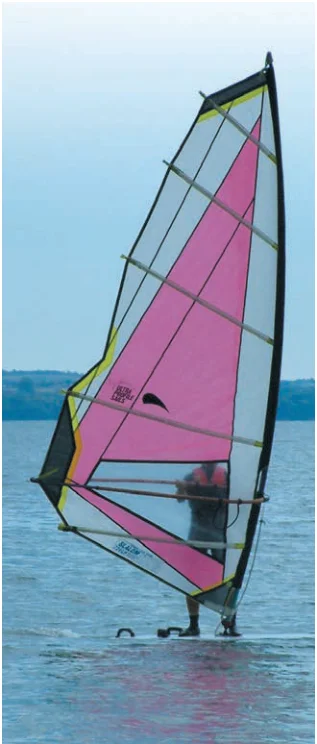
Figure from page 124
▪Be sure of your self-rescue
capabilities with any rig you may be using. If in doubt, do a practice drill.
▪Dress correctly - a wetsuit is
advised (unless the weather is very warm) plus hat, sunscreen (SPF factor 30 or higher and UVA protection) and long sleeves to protect from the sun.
▪It is recommended that persons
participating in windsurfing activities should always wear a PFD/lifejacket.
▪Be aware of your limitations. If in
doubt, don’t go out.
▪Avoid dehydration. Drink plenty of
water.
▪Consider carrying a VHF or a
phone in a waterproof case or a Personal Locator Beacon, or preferably more than one communication device.
6.2.2 On the water
▪Sail cautiously when leaving
and returning to shore to avoid running aground or colliding with others.
Page 124 · View in original PDF