11.6.3 Abandoning Ship
11.6.3 Abandoning Ship
▪Canopy – protects the crew
from the elements, reduces risk of exposure and improves the chances of the raft avoiding total inversion if capsized by a wave or inflating upside down.
The decision to abandon a ship should only be taken if absolutely necessary. Often a damaged or incapacitated boat will, even in adverse weather conditions, offer greater protection to a crew than entering the water or deploying a liferaft.
▪Inflatable Floor – offers improved
insulation against the cold.
▪Sea Anchor - offers relative
stability to the raft in the sea.
The decision to abandon a ship must be made taking into consideration a number of factors:
▪Boarding Aid – offers essential
assistance to a fully clothed person attempting to enter a liferaft from the water.
▪Condition of the boat, propulsion
and power capabilities.
Liferafts require regular servicing by trained personnel and at intervals laid down by their manufacturer, which should always be adhered to.
▪Internal flooding.
▪Bilge Pumping capacities and
capabilities.
▪Weather conditions.
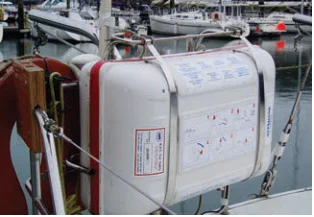
Figure from page 181
▪Communications with rescue
facilities.
▪Physical condition of crew.
If abandoning a craft to a liferaft, the following points should be adhered to:
▪Be familiar with the correct
method of launching. Read the instructions before departure and ensure other crew are familiar with the location of the liferaft and the means of deployment.
Liferafts should be stowed on board in a location where they can be rapidly deployed. They can be stowed either on deck or in a locker opening directly onto the deck. If stowed on deck, the storage should be able to withstand heavy weather. All liferafts rely on the attachment of their painter to a suitable strong point on board in order to initiate the inflation procedure.
▪For offshore cruising: Category
A and B should have a suitably equipped Grab Bag which can be transferred to the liferaft.
▪Before launching the liferaft, check
the water in the launching area is clear of people and obstructions.
Page 181 · View in original PDF