4 Electricity
Energy industries (primarily electricity generation) accounted for 11% of national
emissions in 2025 (EPA provisional estimates). Emissions from the sector decreased for
the fourth consecutive year by 7.1% in 2025, to an all-time low of 6.6 Mt CO2eq. Some
of this reduction is attributed to a growth in the use of imported electricity, whereby the
emissions associated with the electricity generation is counted in the source country
rather than in Ireland. Renewable provided 5.8% more electricity in 2025 according to
the EPA, with an increase in the renewable share in electricity generation from 39.8% in
2024 to 40.6% in 2025.
| Figure 6: Gap to Target – Electricity |
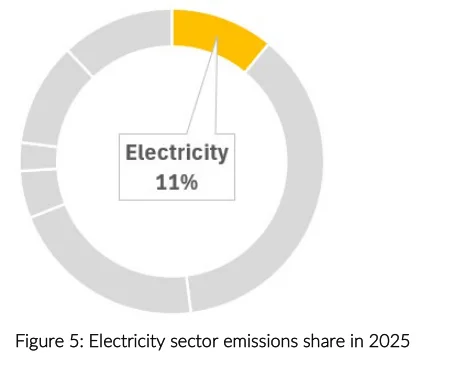
Figure from page 12
Figure 5: Electricity sector emissions share in 2025
In the latest EPA projections, GHGs from
industries by making them pay for each ton
of carbon dioxide they emit. The ETS regime
Energy Industries are forecast to decrease
is due for review in 2026. Since its
from 10.2MtCO2eq in 2018 to between 4
establishment in 2005, there has been a
and 4.7MtCO2eq in 2030. These
52% decrease in emissions for the relevant
projections include the impacts of growing
electricity demand and differences in the
sectors in Ireland, highlighting the
delivery of both interconnection and
importance of this policy tool in driving
renewables.
decarbonisation. Three of the 12 legacy
Electricity Actions were completed to date
Emissions from energy industries are
in 2026. This includes facilitation of hybrid
primarily governed by the Emissions Trading
connections to the grid as well as the
System (ETS) at EU level. This operates as a
development of consumer-led flexible
cap-and-trade system designed to reduce
demand processes.
the emissions of the EU’s most polluting

Figure from page 12
Page 12 · View in original PDF