3 Transport
Transport was responsible for 21% of total national emissions in2025 (EPA provisional
estimates). The emissions from this sector are the second biggest (after Agriculture) and
have experienced the largest increase of all sectors since 1990 with population growth
and increased travel demand. Despite the post-COVID rebound, Transport emissions in
2025 were 6.6% below pre-COVID levels. Figure 4 shows the expected rate at which
transport emissions will decline by 2030, depending on the speed and scale of policy
measures implemented.
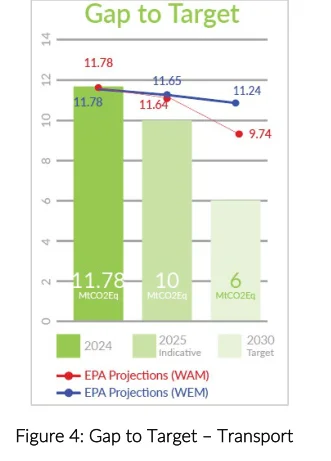
Figure from page 9
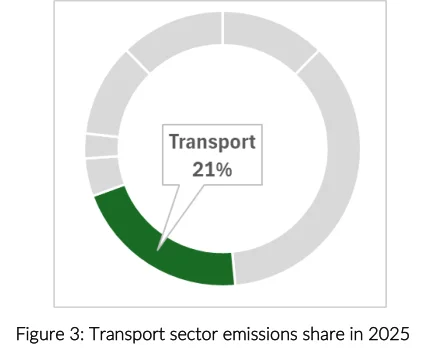
Figure from page 9
Figure 3: Transport sector emissions share in 2025
Transport emissions are expected to
Figure 4: Gap to Target – Transport
decrease from 12.4Mt in 2018 to between
In total, 18 high impact legacy Transport
9 and 10.5Mt by 2030 in the latest EPA
actions carried over for delivery into 2026,
projections. This is an improvement on last
of which 4 have completed to date. This
year’s projections and is largely attributed to
includes the development of an additional
faster battery electric vehicle uptake (see
200km of cycling infrastructure; biofuel
infographic). However, it is still short of the
blend rates increasing and a National
6Mt national sectoral target for 2030.
Demand Management Strategy published.
Transport is also the second biggest
Legacy transport actions remain from
contributor to GHGs after Agriculture under
CAP24 and CAP25 include those relating to
the EU’s Effort Sharing Regulation
EV charging, a finalised ports policy and
(responsible for 27.5% of ESR emissions in
shared mobility.
2025). The ESR requires an overall 42%
reduction on 2005 levels by 2030.
Page 9 · View in original PDF