2 Agriculture
Agriculture was responsible for 35% of national emissions in 2023 and the provisional
emissions for 2024 are also 35% (including LULUCF), making it the largest GHG emitting
sector in Ireland. This excludes additional agriculture-related emissions from grasslands
used for farming, which are accounted for within LULUCF. In 2023, agricultural
emissions decreased to 20.7 MtCO2eq, driven by reductions in fertiliser use, liming and
decreased milk production.
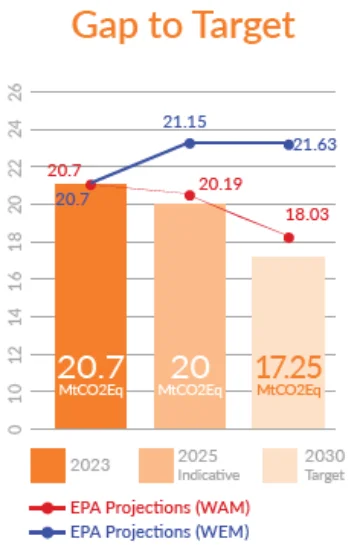
Figure 2: Gap to Target – Agriculture
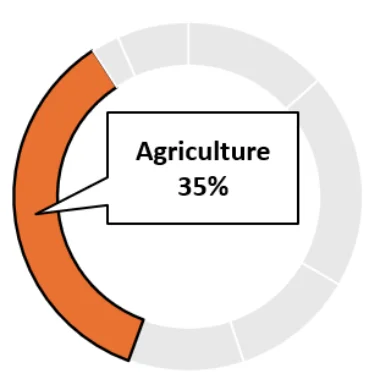
Figure 1: Agriculture sector emissions share in 2023
Theprovisional emissions for 2024 indicate that
agricultural emissions decreased by 1.7% or 0.35
Actions due for completion in Q2 and Q3
Mt CO2eq in 2024. This was primarily due to a
focused on emission reduction strategies,
2.9% reduction in the cattle herd. A 10.6%
including the use of alternative fertilisers and
increase in fertiliser nitrogen use partially
lowering emissions from the bovine herd. By Q3,
diminished the impact of reduced cattle numbers
measures promoting inhibited urea use and
on emissions.
publishing fertiliser sales had been completed
The EPA projects agricultural emissions will vary;
(see annex).
they could rise by 1% under existing measures or
By the end of Q3, a total tillage crop area of
decrease by as much as 16% from 2018 to 2030,
335,266 hectares had been reached, 24,734
if additional measures not yet in place are
hectares short of the 2025 target of 360,000
implemented. These are set out in the Climate
hectares. Organic farming also reached 248,000
Action Plan, AgClimatise, and the Teagasc
hectares, with a 2025 target of 250,000.
Marginal Abatement Cost Curve (MACC).

Figure from page 7
Page 7 · View in original PDF