6 Industry
Industrial emissions accounted for 11% of Ireland’s total emissions in 2023 (including
LULUCF) and the provisional emissions for 2024 are also at 11%. Manufacturing
combustion and industrial processes are the key emission sources. Industry emissions
are largely affected by cement production in Ireland, which in turn can be impacted by
economic cycles.
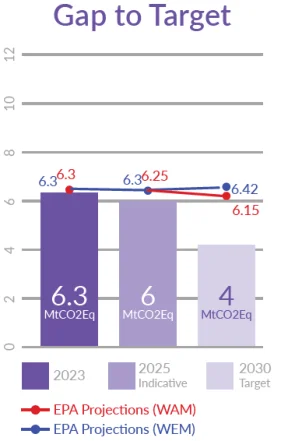
Figure 10: Gap to Target - Industry
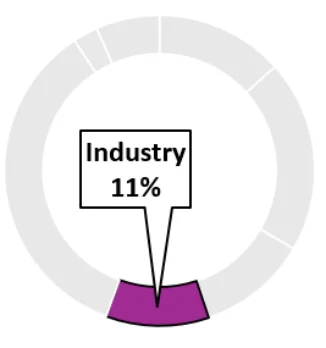
Figure 9: Industry sector emissions share in 2023
Provisional data for 2024 indicates that
emissions from Manufacturing Combustion
combustion and industrial processes falling
and Industrial Processes combined
by 15.6%, or 0.42 Mt CO₂eq, largely due to
accounted for 6.01 million tonnes of CO₂
reduced clinker production.
equivalent (Mt CO₂eq).
In Q3, actions focused on strategies,
Emissions from the Manufacturing
including energy efficiency and carbon-
Combustion sector decreased slightly by
neutral heating. An analysis of price
0.3%, or 0.01 Mt CO₂eq. Fuel use in the
differentials between fossil fuels and
sector declined, contributing to an overall
renewables, as well as potential tax
4.6% decrease in combined emissions from
incentives for energy audit
Manufacturing Combustion and Industrial
recommendations, was completed in Q3.
Processes, bringing total emissions in these
By the end 2024the fossil fuel share of
categories down to 6.0 Mt CO₂eq in 2024.
energy demand was 63.7%, short of the
Emissions from the cement sector also
2025 target of 45%.
declined, with total emissions from both
Figure from page 20
Page 20 · View in original PDF