6.4 Delivery of Climate Action Plans
6.4 Delivery of Climate Action Plans
The delivery and governance architecture for climate planning and reporting continues to be strengthened over successive plans to better reflect the scale and nature of the challenge ahead. This includes building on the existing foundation of policy development, while taking into consideration lessons learnt in previous years, and upgrading the structures, processes and public sector capacity required to deliver the plan. Key areas of change include:
Expansion of the delivery taskforce approach, with cross-departmental and multidisciplinary taskforces taking on responsibility for more actions;
Further streamlining of climate measures and actions to ensure the highest impact emissions abatement measures are prioritised;
More targeted climate reporting to better understand trends and assess interventions;
Increased transparency and accountability, with Agency-led actions to be reported alongside Department-led actions in published quarterly progress reports on future Climate Action Plans;
Identification risks to key deliverables by the Climate Action Delivery Board to ensure barriers to implementation are addressed.
6.4.1 Delivery Structures and Rhythm
6.4.1.1 Annual Cycle for Climate Action Plan Delivery
The annual cycle for climate action planning and reporting sets out the delivery processes that inform and support the preparation and implementation of our Climate Action Plans, providing further clarity and detail regarding the important milestones and actions required to deliver on our climate commitments. It was described in Climate Action Plan 2023 (CAP23) and has been refined to align with broader Government cycles, allowing responsible Departments time for collaboration and early review of sectoral proposals.40 It will be reflected in the development and delivery of future Climate Action Plans.
40 Compared to the version in CAP23, the finalised annual cycle has shifted the timeline for the proposed Memorandum for Government setting out current progress status and defining key shifts necessary in an upcoming Climate Action Plan from Q1 to Q2. This is to allow for the publication of the EPA’s Emissions Projections Report so that these projections can be integrated into the consideration of key shifts required. The annual cycle also incorporates additional guidance from the Department of Public Expenditure, NDP Delivery and Reform to emphasise the requirement for Government Departments to estimate the costs and effects of measures under consideration for the Climate Action Plan and ensure that their proposed measures are be aligned and integrated with the annual budget cycle.

Figure 6.1 – Climate Action Planning Cycle
Annual Climate Planning Cycle
Q4 Q3 Q1 Q2
Circulation of Draft Plan and Stages: Sectoral Engagement Approvals and Publication Planning & Preparation Wider Evaluation
Activities: DECC coordinates Departments proposing updated action plans that will meet their sectoral emissions ceilings, including ensuring overall coherence.
DPER/DFIN engagement with regards to socio - economic implications of the Plan
Chapter Leads identified
DECC prepares Memo for Govt setting out progress made and key shifts necessary in upcoming Climate Action Plan (following publication of EPA projections)
M/ECC writes to all relevant Ministers and State Bodies seeking their cooperation to engage with DECC and consider potential updates to the Climate Action Plan
Engagement with Government Ministers, leading to Government review and approval for an updated Climate Action Plan.
Following Cabinet Approval, the latest Climate Action Plan is published
Updates made to CAP templates and style guides
DECC will also ensure that sectoral plans deliver the carbon budgets and sectoral emissions ceilings, including determining new policy recommendations for consideration by Government.
Call for Expert Evidence (CfEE) launched
Public Consultation work via National Dialogue on Climate Action
Following CCAC reporting, Ministers with responsibilities for sectoral emissions report to JOC on the Environment and Climate Action, pursuant to section 14A of the Climate Act.
Working Groups begin meetings to discuss Action Plan and consider latest reports and recommendations on emissions and climate action.
Estimation of costs and effects of measures under considerations should form a core element of each Dept’s work on annual updates to the Plan. This work should be aligned and integrated with the annual budget cycle
Any requirements that may arise in relation to Strategic Environmental Assessment and Appropriate Assessment will also be addressed during this phase.
Sharing of process updates and drafts with Senior Officials Group, Cabinet Committee & Climate Action Delivery Board
The planning cycles consists of four phases as follows:
First Phase (Q1) – Department of the Environment, Climate and Communications Planning and Preparation
The Department of the Environment, Climate and Communications (DECC) commences the initial preparatory steps for the Climate Action Plan – Chapter Leads are identified; updates are made to templates and style guides; and the Call for Expert Evidence is launched. The Minister for the Environment, Climate and Communications writes to Ministerial colleagues and State Agencies seeking their cooperation and engagement for the next update to the Climate Action Plan;
Second Phase (Q2) – Sectoral Engagement
In the second phase of the planning cycle, DECC coordinates among Departments proposing updated action plans that will meet their sectoral emissions ceilings, including ensuring overall coherence. Support will be available from the Climate Action Modelling Group. Working Groups begin meetings to discuss the next Climate Action Plan and consider the latest reports and recommendations on emissions and climate action. Estimation of the costs and effects of measures should form a core element of each Department’s work, and this work should be aligned and integrated with the annual Budget cycle. Following publication of the EPA’s emissions projections report, DECC prepares a Memorandum for Government setting out progress made and defining key shifts necessary in upcoming plan. Process updates and drafts are shared with the Senior Officials Group, Cabinet Committee and Climate Action Delivery Board;
Third Phase (Q3) – Circulation of Draft Plan and Wider Evaluation
DECC circulates a draft Climate Action Plan integrating sectoral plans and identifying cross-cutting initiatives for review and input. DECC will also ensure that sectoral plans deliver the carbon budgets and sectoral emissions ceilings, including determining new policy recommendations for consideration by Government. DECC will engage with the Department of Public Expenditure, NDP Delivery and Reform (DPENDR) and the Department of Finance in relation to the wider socio-economic implications of the plan, recognising that capacity to undertake this type of analysis is currently being developed and there will be a time lag before it becomes available. Any requirements that may arise in relation to Strategic Environmental Assessment and Appropriate Assessment will also be addressed during this phase;
Final Phase (Q4) – Approvals and Publication
The final stage involves engagement with Government Ministers, leading to Government review and approval for an updated Climate Action Plan. Following Government approval, the annual Climate Action Plan is published. Following CCAC reporting, Ministers with responsibilities for sectoral emissions are invited to the Joint Oireachtas Committee on the Environment and Climate Action to discuss progress, emissions reductions, and the actions necessary to meet relevant emissions ceilings.
6.4.1.2 Annual Climate Action Reporting Cycle
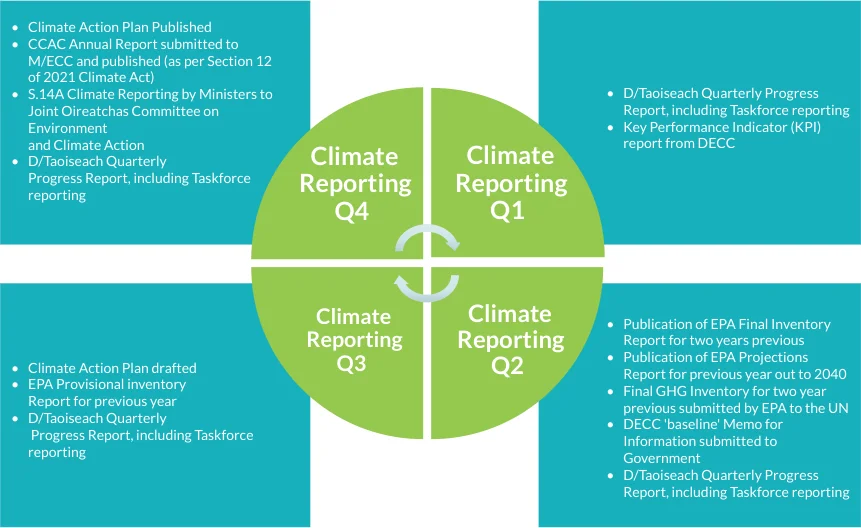
Figure 6.2 – Annual Climate Reporting Cycle
•Climate Action Plan Published •CCAC Annual Report submitted to M/ECC and published (as per Section 12 of 2021 Climate Act) •S.14A Climate Reporting by Ministers to Joint Oireatchas Committee on Environment and Climate Action •D/Taoiseach Quarterly Progress Report, including Taskforce reporting
•D/Taoiseach Quarterly Progress Report, including Taskforce reporting •Key Performance Indicator (KPI) report from DECC
Climate Reporting
Climate Reporting
Q1
Q4
Climate Reporting
Climate Reporting
•Publication of EPA Final Inventory Report for two years previous •Publication of EPA Projections Report for previous year out to 2040 •Final GHG Inventory for two year previous submitted by EPA to the UN •DECC ‘baseline’ Memo for Information submitted to Government •D/Taoiseach Quarterly Progress Report, including Taskforce reporting
Q3
Q2
•Climate Action Plan drafted •EPA Provisional inventory Report for previous year •D/Taoiseach Quarterly Progress Report, including Taskforce reporting
The Annual Climate Action Reporting Cycle comprises the following key publications,41 events, and milestones:
First Quarter
The Department of An Taoiseach publishes the final Quarterly Progress Report relating to the previous year, and DECC publishes a Key Performance Indicator (KPI) Report. Both reports provide important information on climate action.
Second Quarter
The EPA publishes its Final Inventory Report for the previous two years (which it also submits to the UN), and its Projections Report for the previous year out to 2040. Both reports provide baseline information for the Memorandum for Government referenced above. The Department of An Taoiseach publishes the first Quarterly Progress Report of the current year.
Third Quarter
Drafting of the Climate Action Plan is completed drafted. EPA publishes its Provisional Inventory Report for previous year, and the Department of An Taoiseach publishes the second Quarterly Progress Report of the current year.
Fourth Quarter
The Climate Action Plan is published. The CCAC’s Annual Report is submitted to the Minister for the Environment, Climate and Communications, and published. Relevant sectoral Ministers report to the Joint Oireachtas Committee on Environment and Climate Action. Taoiseach publishes the third Quarterly Progress Report of the current year.
6.4.2 Climate Delivery Taskforces
The creation of delivery taskforces has been an innovative approach to embedding climate as a core part of Government business. It addresses the challenging implementation of cross-cutting actions within Climate Action Plans. These taskforces will continue to operate into 2024 and beyond. Membership is drawn from across Government Departments and Agencies, as well as from key external stakeholders. The taskforces have fostered a collaborative approach in extremely challenging areas of climate policy, ensuring enhanced delivery over time. Summary detail on the taskforces and related structures is provided in table 6.2 below.
41 Key publications from major research bodies are also taken into account during the year (e.g. Teagasc MACC publications: Marginal Abatement Cost Curve 2023 - Teagasc | Agriculture and Food Development Authority).
Table 6.2 – Taskforce and Related Structures Summary
| Taskforce | Summary |
|---|---|
| Just Transition | A Just Transition Taskforce was established in 2023 which has brought the social partners together to make detailed recommendations to Government on the future structure, functions and membership of a Just Transition Commission |
| Citizen Engagement | A Climate Communications and Engagement Taskforce was established in 2022 to drive strategic climate communications and citizen engagement |
| Communications | A Climate Communications Coordination Committee, established in 2021, is chaired by the Department of An Taoiseach and coordinates climate-related communications across Government |
| Public Sector | A Public Sector Working Group (reporting to the Heat and Built Environment Taskforce) is undertaking a detailed assessment of the options available to support the delivery of the public sector’s decarbonisation objectives with a particular focus on incentivising early action |
| Electricity | An Offshore Wind Delivery Taskforce42 was established in 2022 and has developed a system-wide implementation plan. An Accelerating Renewable Electricity Taskforce was established in 2023 to identify, coordinate, and prioritise the development and implementation of the policies required to ensure we meet our 2030 onshore renewable electricity targets, as set out in CAP23 |
| Industry | An Industrial Heat Decarbonisation Working Group (reporting to the Heat and Built Environment Taskforce) is focusing on decarbonising industry and enterprise which is key to our future economic competitiveness |
| Residential Built Environment | A Heat and Built Environment Taskforce43 has been established to accelerate and drive delivery in relation to retrofitting, renewable heat, district heating and decarbonisation of the building stock |
| Commercial Built Environment | A Commercial Built Environment Working Group (reporting to the Heat and Built Environment Taskforce) focused on long- term decarbonisation of the commercial sector |
42 gov.ie - Offshore Wind Delivery Taskforce (www.gov.ie) 43 gov.ie - Heat and Built Environment Taskforce (www.gov.ie)
| Taskforce | Summary |
|---|---|
| Transport | A Leadership Group was established 2022 to drive delivery of the Sustainable Mobility Policy Action Plan and Pathfinder Programme |
| Agriculture | The Department of Agriculture, Food and the Marine has established five high-level Working Groups across Beef and Dairy; Inputs and Additives; Land Use, Land Change and Forestry (LULUCF); the Marine Environment; and Public Sector, to address barriers and challenges to implementation of climate action |
| LULUCF | A high-level Oversight Group, and Technical and Stakeholder Engagement Working Groups, have been established in 2023 to deliver Phase 2 of the Land-use Review |
6.4.3 Key Performance Indicators
A monitoring and reporting system to track progress against the key performance indicators (KPIs) set out in Climate Action Plans has been developed. Starting in 2024, DECC will publish an annual KPI Report, complementing the quarterly reporting by the Department of An Taoiseach, and the periodic reporting by the EPA and CCAC.
Pages 79–84 · View in original PDF