6 Industry
Industrial emissions accounted for 10% of Ireland’s total emissions in 2023.
Manufacturing combustion and industrial processes are the key emissions sources.
Industry emissions are largely affected by cement production in Ireland, which in turn
can be impacted by economic cycles.
| Figure 14: Gap to Target - Industry |
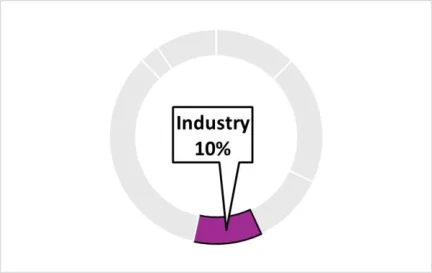
Figure 13: Industry sector emissions share
The EPA projections note that manufacturing
combustion emissions could reduce by 12-32% over
the period 2022-2030 in Ireland with the
implementation of energy efficiency measures and
renewable heat options (Figure 14). Achieving full
biomethane targets (with use split across building and
industry needs) is also required to meet the upper
end of this range.
Meanwhile, process emissions are projected to
increase by 4% between 2022 and 2030 in the EPA’s
WEM scenario due to anticipated growth in cement
production. There is no WAM scenario for process
emissions as no additional measures are yet identified
in annual CAPs, or otherwise, to address them.
The EPA was unable to model measures aimed at
decreasing embodied carbon in construction or the
use of Carbon Capture, Utilisation and Storage
(CCUS) in industry post-2030 due to unclear
implementation pathways. The industry SEC is thus
expected to be breached by a significant margin
currently.

Figure from page 24
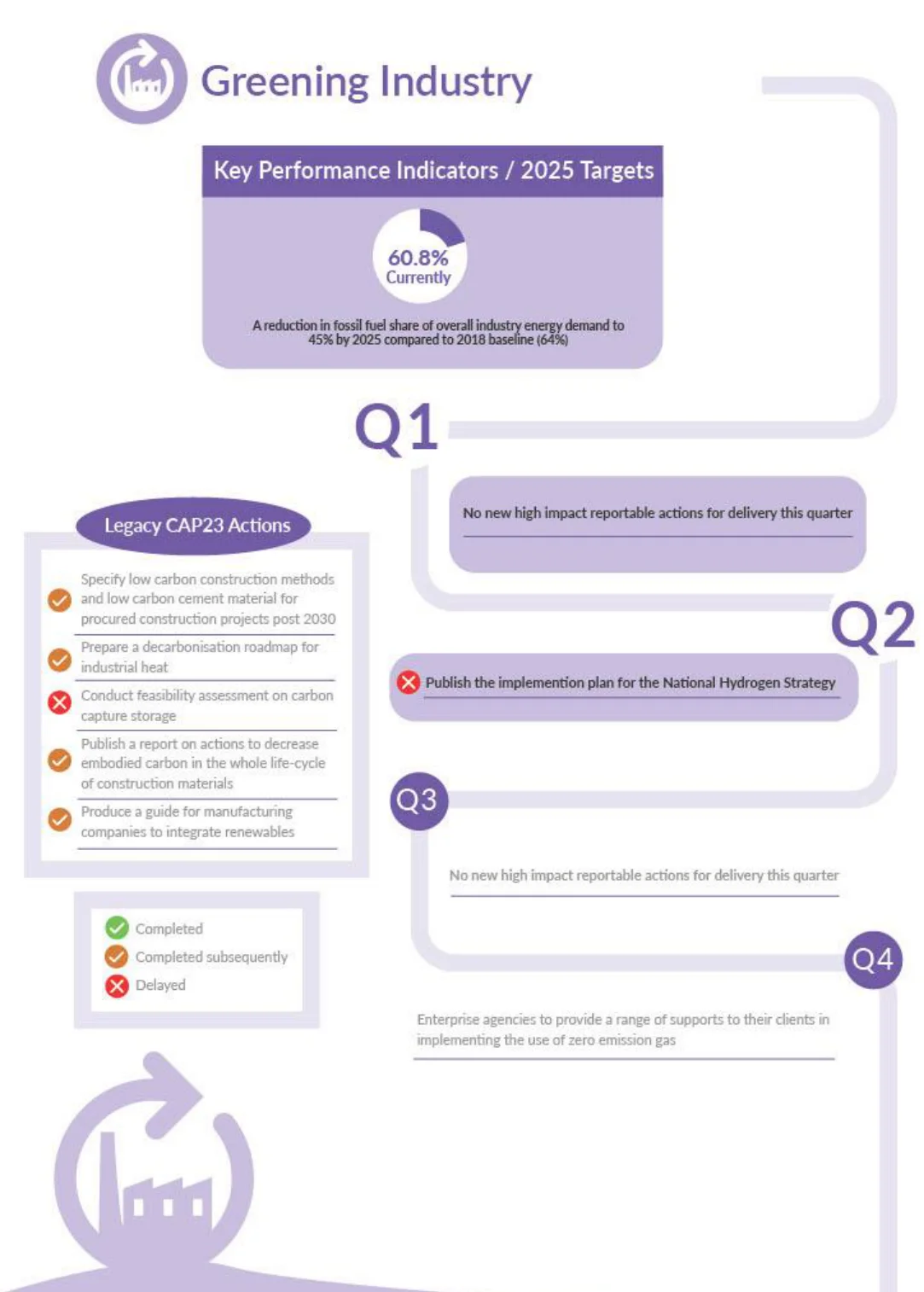
Figure from page 25
Industry – CompleteCAP23 Legacy Action
Did You Know? Industrial emissions account for c.10% of Ireland’s emissions, signalling the
important leadership role that manufacturing businesses (e.g. food and beverage, cement,
pharmaceutical, and chemicals) must play in reducing national carbon emissions.In June, under
Action EN/23/3, the ‘Decarbonisation of Industrial Heat Roadmap’ was published. It sets out
what the operating environment for energy used in manufacturing will look like in the future,
helping industry to make clear investment decisions that reduce emissions going forward.
What’s new? The Decarbonisation of Industrial Heat Roadmap identifies the key interventions
to decarbonise heat-use in manufacturing, including the supports that are available to companies,
forthcoming regulations, and the policies underpinning them. At the launch of the roadmap, €300
million in funding was also announced to help further drive the decarbonisation of Ireland’s
industrial emitters and ensure that they are supported in the transition. The funding will be used
by Enterprise Ireland and IDA Ireland to support client companies reduce their emissions
between now and 2030 through the Environmental Aid Scheme.
Industry - Delayed CAP24 Action
Did You Know? Under IN/24/8 in CAP24, a commitment was made to develop an implementation
plan for the National Hydrogen Strategy which published in July 2023. The implementation plan
did not complete by the end of Q2 as agreed, with initial delays in assigning resources cited as the
key reason. It is now expected to complete in Q3 2024.
Why is it needed? Green hydrogen boasts significant potential for both economic and
environmental wins. It offers new business and potential export opportunities, while also providing
for azero-carbon, secure energy system and reducing emissions in traditionally hard-to-abate
sectors. An implementation plan for the National Hydrogen Strategy is critical to establish the
necessary work programme and appropriate governance arrangements for its delivery.

Figure from page 26
Pages 24–26 · View in original PDF