4 Electricity
4 Electricity
Electricity Emissions Context
Share of GHGs
Energy industries accounted for 16.7% of national emissions
in Ireland in
in 2021. Renewables accounted for 34.7% of electricity
2021
generated in 2021. GHG emissions increased by 17.6% in
2021 from 2020 (Figure 5). This waws caused by a tripling of
14.4%
coal & oil use within electricity generation and decreased
renewable energy electricity generation in 2021; wind -16% &
hydro -20%. This was the first year of energy GHG increases
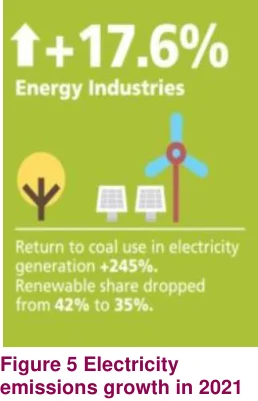
Figure from page 15
since 2016 (Figure 6).
CAP23 continues ambition to increase renewable electricity
generation to 80% by 2030, including the rapid acceleration of
offshore and onshore wind, and increased solar PV capacity.
This ambition is support by additional actions focused on
interconnectivity, demand management and improved storage.
The Plan further aims to produce green hydrogen from surplus
renewable electricity and introduces targets and actions to
create new flexible gas-fired generation of at least 2GW to
Figure 5 Electricity emissions growth in 2021
assist with energy security during the transition. Increased
attention is also given to accelerating other flexibilities (including storage) and demand side
management.
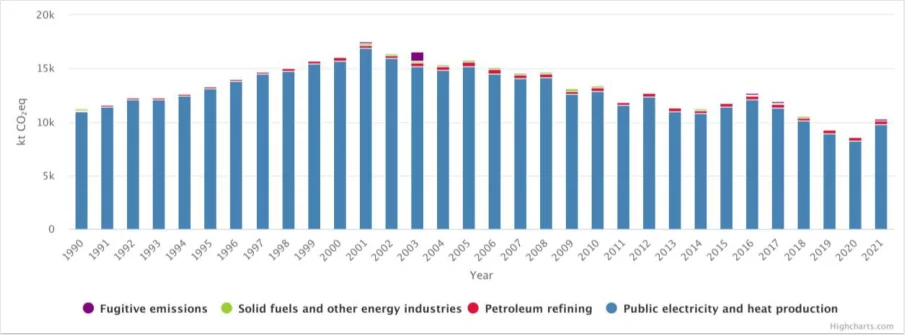
Figure 6 Energy Industry emissions trends 1990-2021 (EPA 2022)
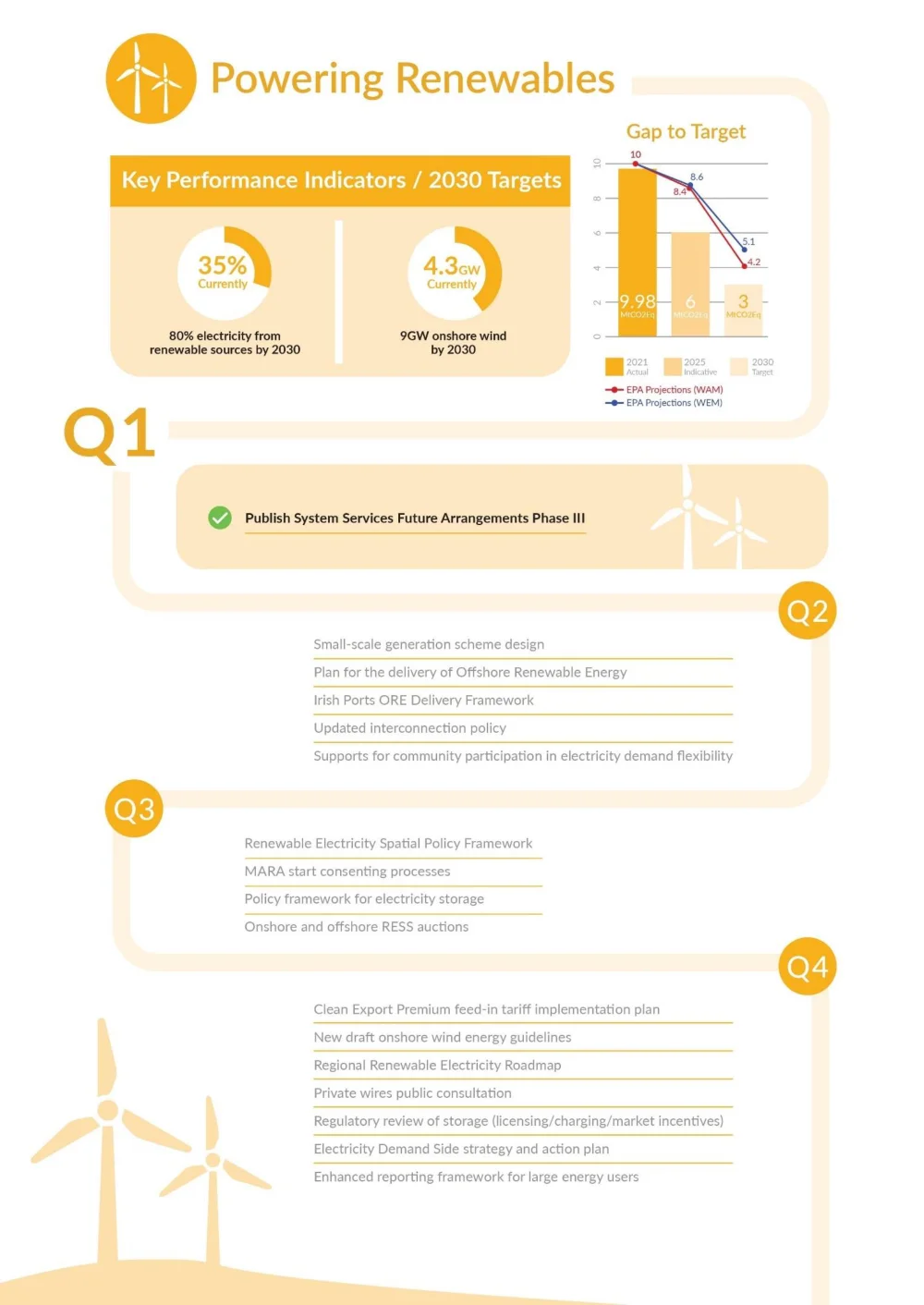
Figure from page 16
| In Focus in Q1 2023: Electricity | ||
| Did You Know? In Climate Action Plan 2023, the action BE/23/9 called for the | ||
| implementation of the Energy Efficiency Obligation Scheme. Under the Scheme, energy | ||
| suppliers must support energy efficiency projects in businesses, public services and | ||
| homes across Ireland, helping energy users save energy. | ||
| Companies who sell large amounts of energy have targets under the scheme. They must | ||
| offer supports to make your home or business more energy efficient (e.g. insulation, | ||
| window glazing, changed heating systems or information provision). For every unit of | ||
| energy saved, they achieve energy credits towards their targets. This will help Ireland to | ||
| reach national and European energy saving targets. | ||
| From 2014 - 2020 obligated parties supported energy efficiency in more than 290,000 | ||
| dwellings and over 3,000 businesses. This offset c.1.2Mt of CO emissions and resulted 2 | ||
| in recurring financial savings of approximately €240 million per year. | ||
| What’s new? The newly redesigned scheme is now being implemented as of January | ||
| this year. The scheme has been redesigned in response to amendments to the EU | ||
| Energy Efficiency Directive (EED) and the Government’s climate priorities. This will build | ||
| on the obligation scheme that has been in place since 2014 and will contribute | ||
| significantly to the delivery of Ireland’s energy-saving target under the revised EED. |
Pages 15–17 · View in original PDF