2 Agriculture
2 Agriculture
Agriculture Emissions Context
Share of GHGs
Agriculture is the single largest GHG emitting sector in Ireland.
in Ireland in
Additional agriculture-related emissions also arise in the Land
2021
Use, Land Use Change and Forestry (LULUCF) sector from
organic soils drained for farming uses (grasslands). Combined,
33.33%
emissions from agriculture and LULUCF account for c.45% of
Irish emissions.
Agricultural emissions increased by 3% in 2021, primarily due to
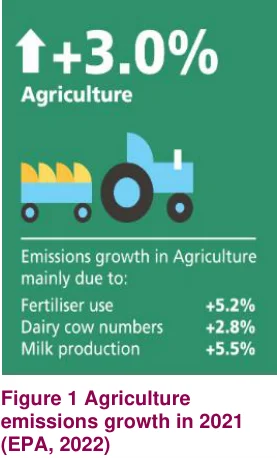
Figure from page 9
increased fertiliser use, dairy cow numbers and milk production
(Figure 1). Sectoral emissions overall are up 19.3% in the last ten
years (Figure 2). Methane from livestock (enteric fermentation and
manure management) accounts for 68% of Irish agricultural GHGs.
Ireland consistently has one of the highest EU greenhouse gas
emissions per capita, largely due to the disproportionate impact that
agriculture has as an industry here. This signals the importance of
decarbonisation in the sector.
CAP23 aims to reduce emissions in agriculture through reduced
Figure 1 Agriculture emissions growth in 2021 (EPA, 2022)
fertiliser use, farm income diversification for livestock reductions
through tillage, organics and renewable energy, reduced slaughter
ages, extended grazing, animal breeding and feed management.
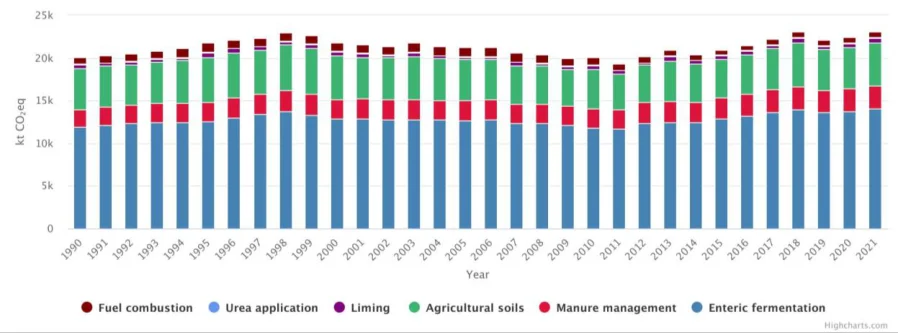
Figure 2 Agriculture emissions trends 1990-2021 (EPA 2022)
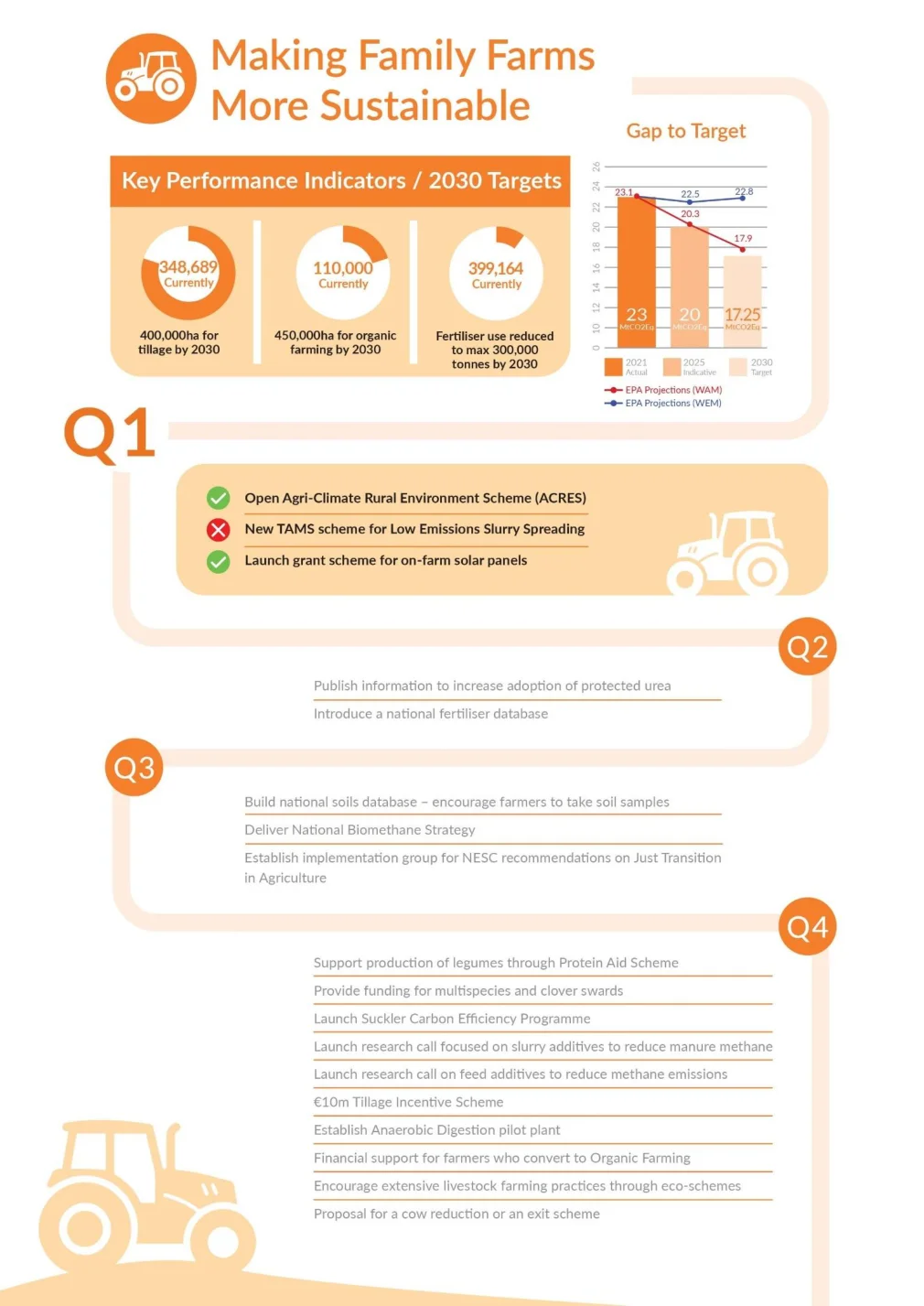
Figure from page 10
| In Focus in Q1 2023: Agriculture | ||
| Did You Know? A number of payment and support schemes opened to farmers in Q1 | ||
| 2023 under Ireland’s new Common Agricultural Policy Strategic Plan. This will continue | ||
| supporting farm incomes in producing world class, safe and sustainable food, and help | ||
| us achieve climate and environment ambitions. By structuring farm payments with | ||
| climate action in mind, farmers can now apply to schemes that help to reduce emissions, | ||
| limit pollution, restore biodiversity and sequester carbon. | ||
| What’s new? The €1.5billion Agri-Climate Rural Environment Scheme (ACRES) in | ||
| particular (AG/23/11) will help to improve biodiversity, climate, air and water quality | ||
| through both national and area-based actions. In Q1, 46,000 applications were received | ||
| and approved by DAFM. This enabled the achievement of a number of related LULUCF | ||
| actions in CAP23, allowing farmers to receive funding for, among other things, the | ||
| planting of cover crops to help stop soil erosion (LU/23/4), improving carbon | ||
| sequestration on mineral grasslands (LU/23/7), low input peat soils management | ||
| (LU/23/10) and tree and hedgerow planting (LU/23/21). |
Pages 9–11 · View in original PDF